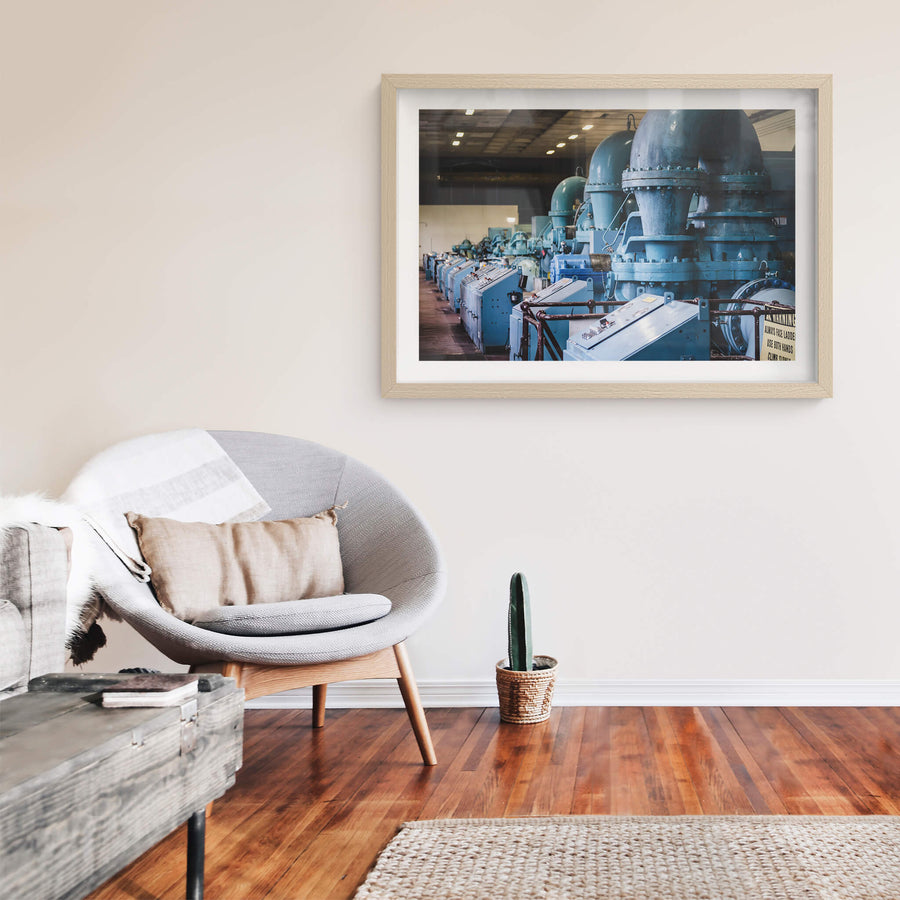
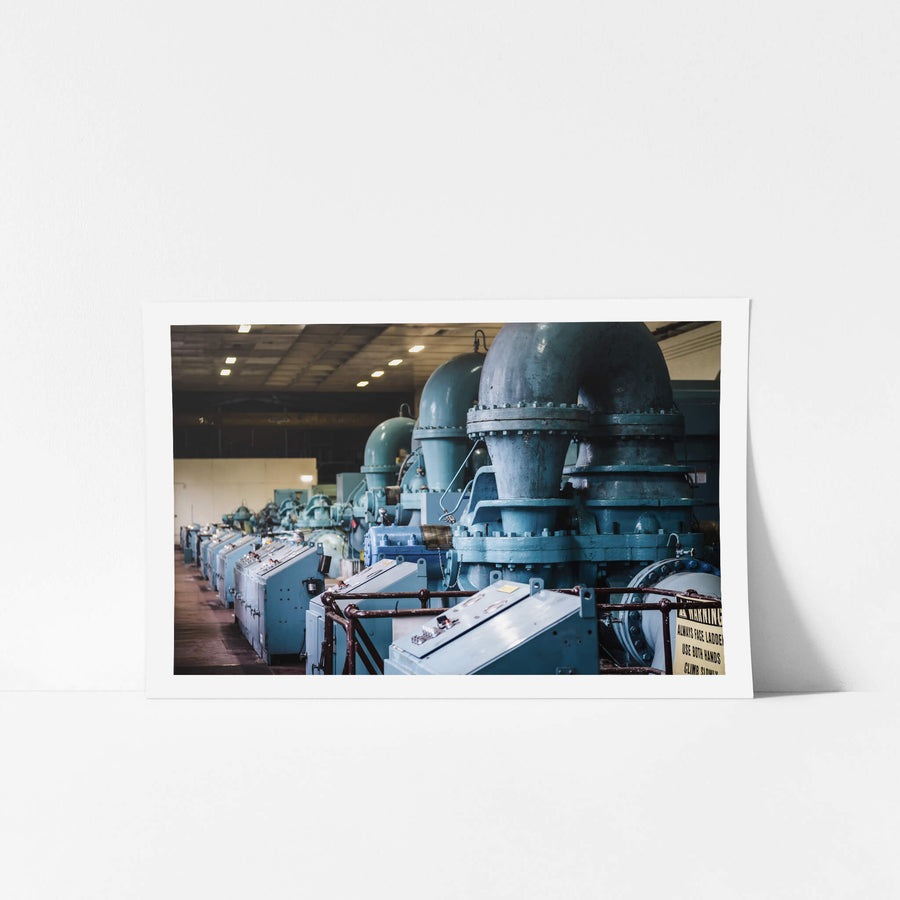
Pumping Hall Facing South

Provenance

Camera
NIKON D7000
Lens
24.0-70.0 mm f/2.8
Settings
78mm · f/2.8 · 1/6 · ISO 100
Paper
Ilford Galerie Smooth Cotton Rag 310 gsm

A long pumping hall interior faces south. Rows of derelict machinery occupy the floor. Diffused light falls from above. Surfaces show age and disuse. Equipment stands in place, unused.

Edition
Open edition

Open edition
Printed to order, no fixed quantity. Each print is hand-signed by the photographer.

Limited edition
A fixed number of prints exist. Once sold, the edition closes permanently. Each print is individually numbered and signed.

$100.00 AUD
Size
Type
Colour
Signed, numbered, with COA. Made to order in 5 to 10 business days (unframed). Shipped in protective packaging with edition certificate, paper-stock reference and a printed care guide.
See certificate sample →

Shipping Free shipping over $250. Ships worldwide, rates calculated at checkout.

Returns Damaged in transit? We replace it. Full policy →

Ships within 10 business days · signed & numbered

In situ
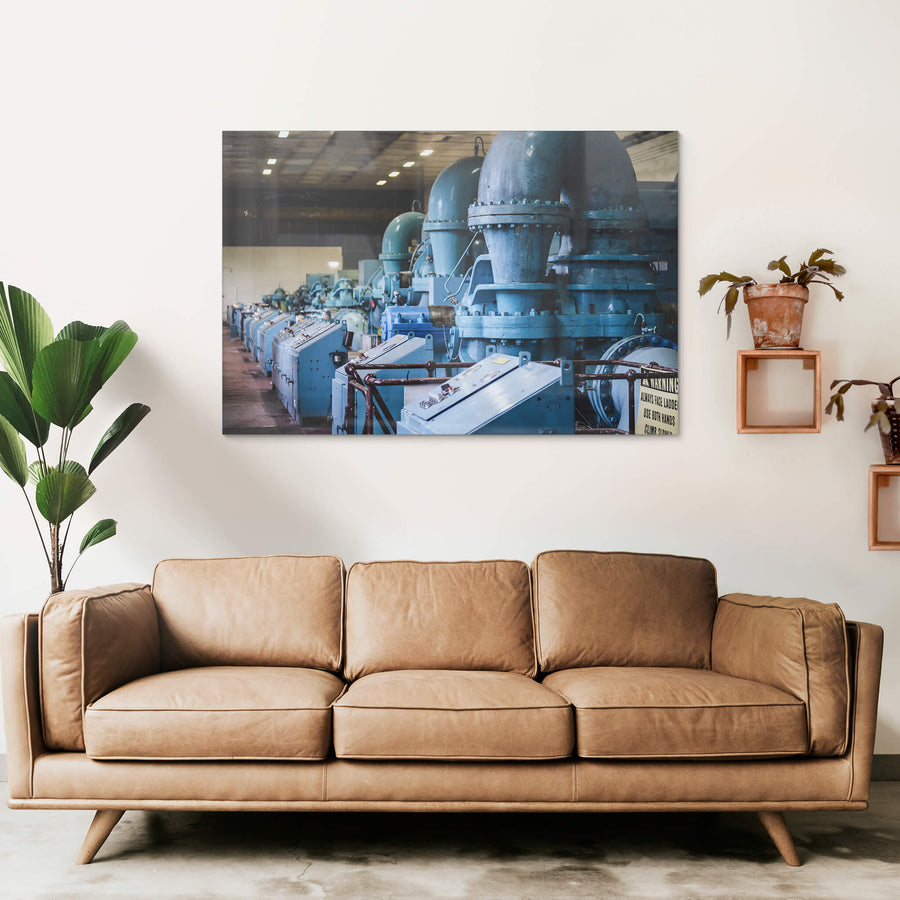
Pumping Hall Facing South at West Ryde Pumping Station, unframed print displayed in situ on a wall.Pumping Hall Facing South at West Ryde Pumping Station, white-framed print displayed in situ on a wall.Pumping Hall Facing South at West Ryde Pumping Station, black-framed print displayed in situ on a wall.Pumping Hall Facing South at West Ryde Pumping Station, raw timber-framed print displayed in situ on a wall.Pumping Hall Facing South at West Ryde Pumping Station, glass print displayed in situ on a wall.
01 PROVENANCE

Print datasheet

Title
Pumping Hall Facing South
Series
West Ryde Pumping Station
Catalogue
WRP-014
Process
Giclée
Captured
26 August 2015
Camera
NIKON D7000
Lens
24.0-70.0 mm f/2.8
Aperture
f/2.8
Shutter
1/6 s
ISO
100
Focal length
78 mm
Paper
Ilford Galerie Smooth Cotton Rag 310 gsm
Paper size
290 × 200 mm
Location
West Ryde, New South Wales, Australia
Recognised by
Highly Commended in Multimedia at the 2016 National Trust of Australia (NSW) Heritage Awards
02 LOCATION

West Ryde, New South Wales, Australia

Map · Mapbox · OpenStreetMap

03 THE STORY

About this print

The pumping hall of West Ryde Pumping Station stretches south in this 2015 photograph. Rows of derelict machinery occupy the floor, each unit standing in place, unused. Diffused light falls across the space from above, tracing the surfaces of equipment that has not moved in years. The hall is quiet in a way that speaks less to neglect than to transition: this is machinery left behind by a station that kept working around it. Station No. 2 was commissioned on 15 September 1921, and at the time it was the largest steam-powered water pumping station in Australia. The engine house was built in Federation Freestyle, its arched-headed steel windows and timber-louvred monitor roof giving the hall an industrial formality that outlasted the steam plant by decades. Coal arrived by rail, dropped into roof-level bunkers via lines that still ran along the building's ridge, gravity-fed to boilers that drove pumps serving Chatswood, Pymble, Wahroonga, Hermitage, Mobbs Hill, and Beecroft Reservoirs. Pulverised coal was adopted for the boilers between 1922 and 1927. A pneumatic ash collection system, described at the time as state of the art, was installed in 1923. The station grew: capacity reached 66 ML per day by 1956, then 90 ML per day by 1973. By the late 1960s, West Ryde Pumping Station was the last remaining steam-powered station in the Sydney Water system. Full electrification was completed in 1982. Thirteen electric pumping units plus one standby replaced the steam plant, bringing combined capacity to 700 ML per day and making it the largest domestic water pumping station in Australia at the time. The original 1921 engine house shell remained. The machinery that now stands silent in this frame is what that transition left behind. The station holds an Engineering Heritage National Marker, awarded in October 2017, and is listed on the NSW State Heritage Register (Item 01634, gazetted 15 November 2002). It continues to supply water to the North Shore suburbs of Sydney.

04 FROM THE FIELD NOTES

The pumping hall of West Ryde Pumping Station runs south, its machinery standing in rows beneath a wash of diffused light. Station No. 2 was commissioned on 15 September 1921 as the largest steam-powered water pumping station in Australia, supplying Chatswood, Pymble, Wahroonga, and beyond. The station's capacity grew steadily across the twentieth century, reaching 700 ML per day after full electrification in 1982. By then the steam plant was gone, replaced by electric pumps inside the original 1921 engine house shell. The hall recorded here holds what remains.

Brett Patman

West Ryde Pumping Station

The series

West Ryde Pumping Station

2015 · 17 photographs

Ryde Pumping Station, on the corner of Victoria Road and Hermitage Road in West Ryde, was the largest pumping station in Australia when its 1921 building was completed. The first station on the site went up in 1891, taking water from Potts Hill Reservoir and lifting it to Ryde tank and Chatswood through a pair of 146-horsepower vertical compound pumping engines moving 3,400 gallons a minute. The second and larger station was commissioned on 15 September 1921 and absorbed the work; the original station ceased pumping in November 1930 and was demolished in 1961. The 1921 station continues to operate as a working water utility, and was added to the NSW State Heritage Register on 15 November 2002. Engineering Heritage Australia recognised the place in 2017. The Lost Collective photographs are of the heritage interior of the working station.

View all in this series →

05 SIZE GUIDE

Print sizes

The anatomy view shows what this finish is as a physical object: paper margin, mat band, frame depth, acrylic profile. The comparison strip shows how each size sits relative to the others at true scale. Click a size or a finish to update both.

Anatomy · true ratio
TypeSizeWidthHeight
08 BY POST · NO SPAM

Read the full story

Articles when they're published. The history behind a place. The day of a shoot. The work between prints. No marketing, no schedule.

You're subscribed.