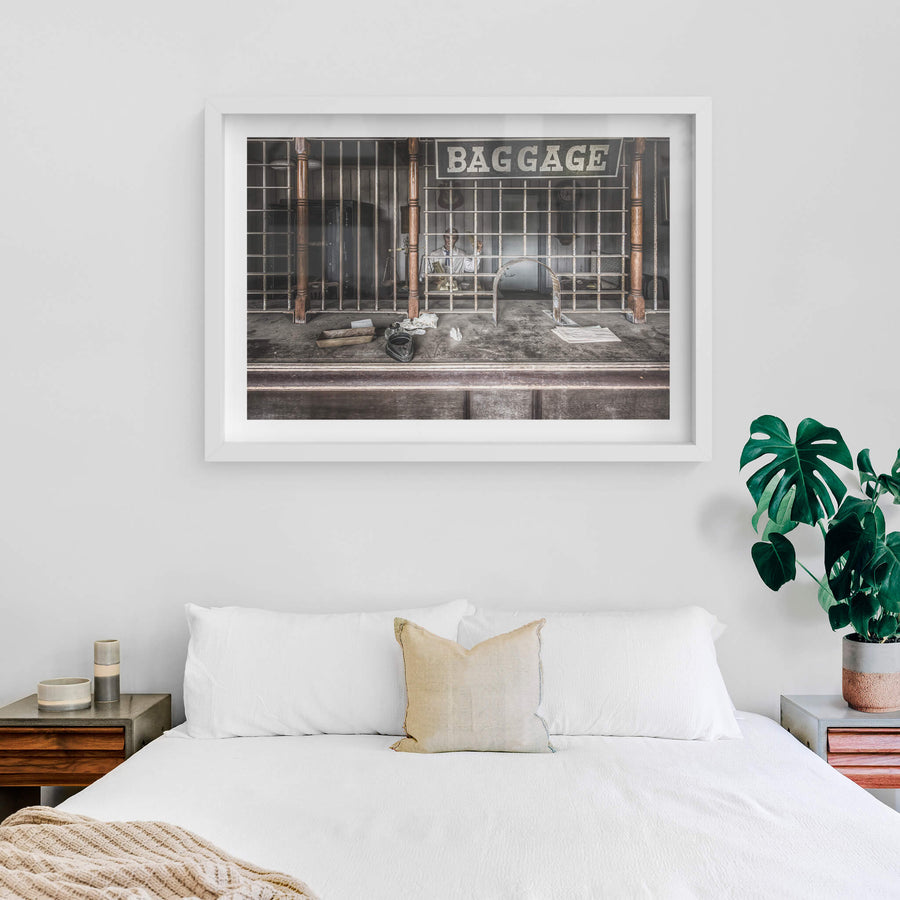
Bank

Provenance

Camera
NIKON D810
Lens
14.0-24.0 mm f/2.8
Settings
14mm · f/9.0 · 1/3 · ISO 100
Paper
Ilford Galerie Smooth Cotton Rag 310 gsm

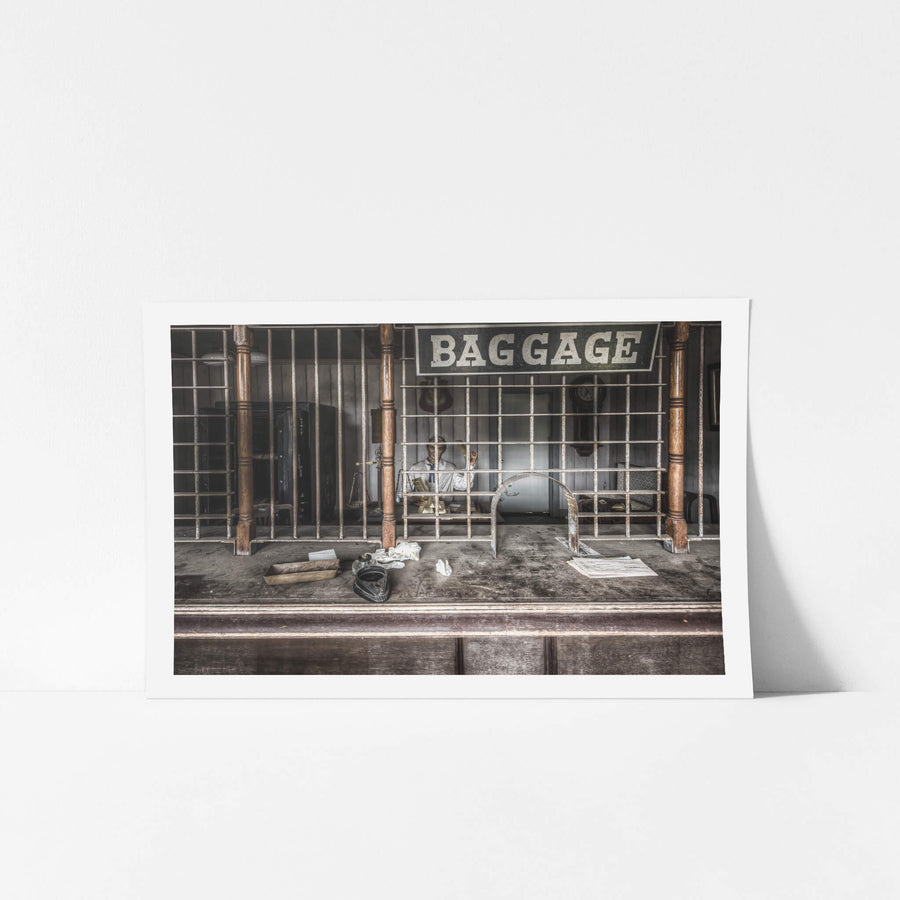
An empty bank interior with a teller's counter filmed in dust. Forgotten ledgers rest on the surface, undisturbed. Fading light falls across the counter from one side. Surfaces are coated in settled dust. No fittings or signage remain intact.

Edition
Open edition

Open edition
Printed to order, no fixed quantity. Each print is hand-signed by the photographer.

Limited edition
A fixed number of prints exist. Once sold, the edition closes permanently. Each print is individually numbered and signed.

$100.00 AUD
Size
Type
Colour
Signed, numbered, with COA. Made to order in 5 to 10 business days (unframed). Shipped in protective packaging with edition certificate, paper-stock reference and a printed care guide.
See certificate sample →

Shipping Free shipping over $250. Ships worldwide, rates calculated at checkout.

Returns Damaged in transit? We replace it. Full policy →

Ships within 10 business days · signed & numbered

In situ
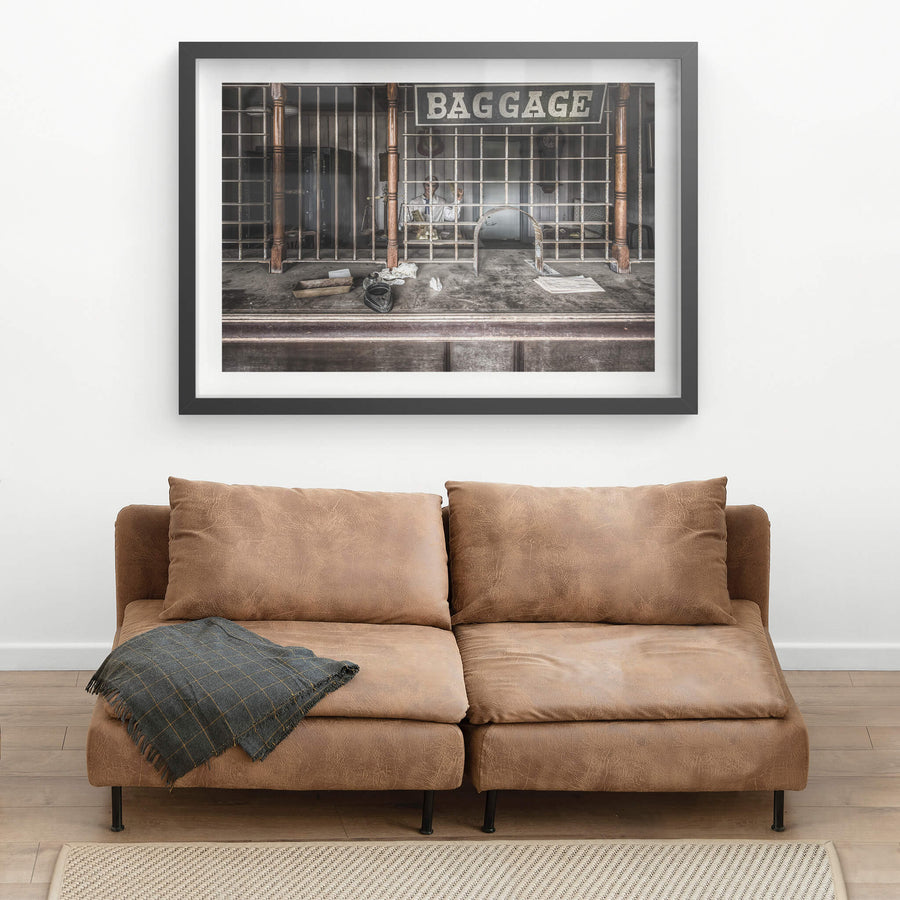
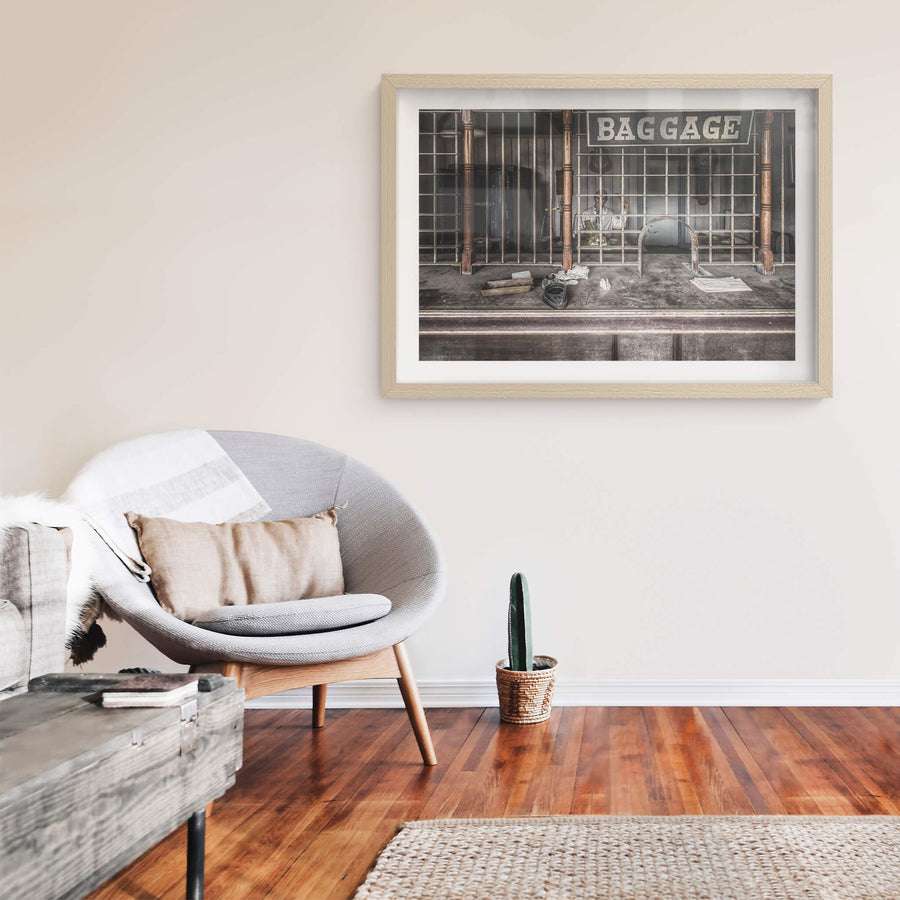
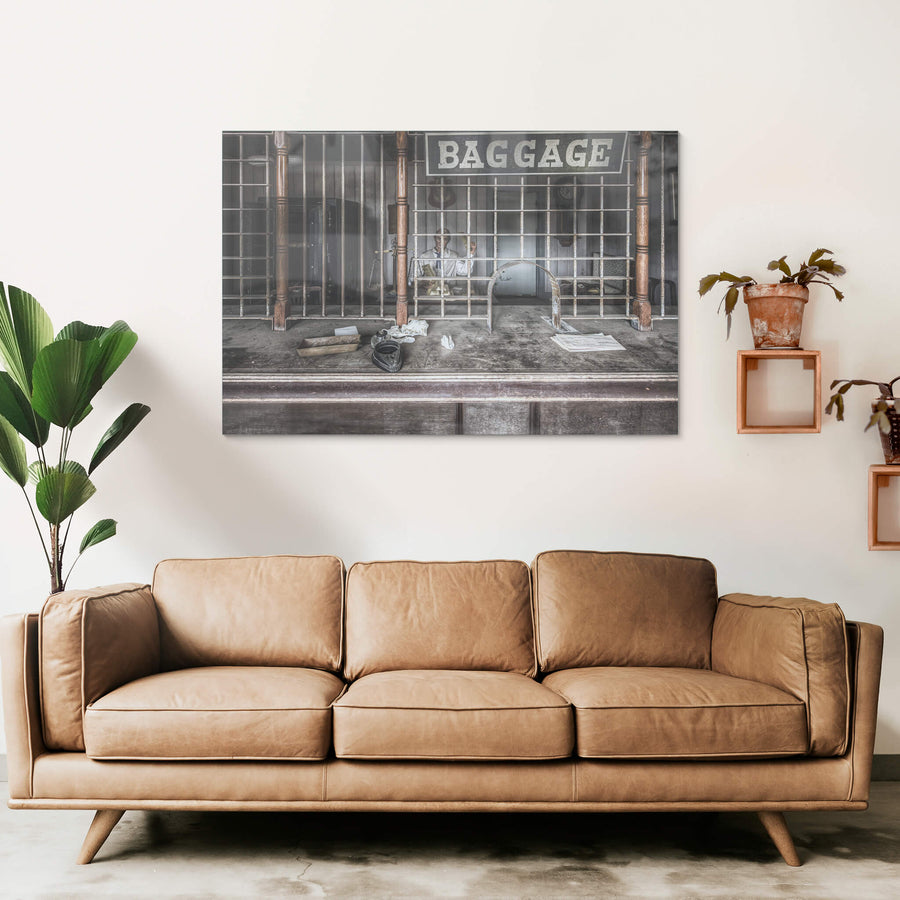
Bank at Western Village, unframed print displayed in situ on a wall.Bank at Western Village, white-framed print displayed in situ on a wall.Bank at Western Village, black-framed print displayed in situ on a wall.Bank at Western Village, raw timber-framed print displayed in situ on a wall.Bank at Western Village, glass print displayed in situ on a wall.
01 PROVENANCE

Print datasheet

Title
Bank
Series
Western Village
Catalogue
WVI-002
Process
Giclée
Captured
19 February 2014
Camera
NIKON D810
Lens
14.0-24.0 mm f/2.8
Aperture
f/9.0
Shutter
1/3 s
ISO
100
Focal length
14 mm
Paper
Ilford Galerie Smooth Cotton Rag 310 gsm
Paper size
290 × 200 mm
Location
Nasu-Shiobara, Tochigi, Japan
Recognised by
Highly Commended in Multimedia at the 2016 National Trust of Australia (NSW) Heritage Awards
02 LOCATION

Nasu-Shiobara, Tochigi, Japan

Map · Mapbox · OpenStreetMap

03 THE STORY

About this print

Western Village's frontier town was built to look like an 1880s American main street, and the bank was part of that streetscape. Timber-framed with a painted false front, it sat alongside the saloon, barbershop, sheriff's office, and hotel facade in the Western Land zone of the park. Inside, a teller's counter runs the width of the room. Ledgers rest on the surface, covered in the same dust that settles on everything here. Fading light comes in from one side and falls across the counter. Nothing appears to have been moved since the doors closed. Western Village opened in October 1973 as Kinugawa Family Ranch (鬼怒川ファミリー牧場), founded by Ōminami Ken'ichi and Ōminami Shizuko on family land in Kurihara, in what was then Imaichi City. The park was formally renamed Western Village and repositioned as a theme park in March 1982. It sat at the entrance to Kinugawa Onsen along National Route 121, its frontier town zone on the west bank of the Togawa River, the stretch of water the park called the Rio Grande. Through the 1980s and into the 1990s the park expanded: a 914 mm gauge steam railway, an Indian Theater in 1991, and in 1995 a one-third scale Mount Rushmore replica anchoring a new American Dream Land zone, the whole project costing ¥2.5 billion. Kinugawa Onsen's combined overnight stays peaked at approximately 3.41 million in 1993. By 2006 the regional economy had contracted sharply, lending had dried up following the nationalisation of Ashikaga Bank in 2003, and the park's debt had been acquired by Nissin Debt Collection, which filed for foreclosure at the Tokyo District Court in September 2006. Western Village closed to the public on 7 December 2006, and all staff were terminated in February 2007. This photograph was made in 2014. The ledgers were still on the counter. The frontier town was still standing.

04 FROM THE FIELD NOTES

Inside Western Village's frontier town bank, a dusty teller's counter holds ledgers that were never retrieved. The building was one of several false-front structures in the park's Western Land zone, built to replicate an 1880s American main-street in the mountains of Nikko. Operated by Ōtaka Enterprises Co., Ltd. from the park's formal Western Village rebrand in March 1982 until closure on 7 December 2006, the space has sat undisturbed since. The ledgers on the counter remain where they were last set down.

Brett Patman

Western Village

The series

Western Village

2016 · 18 photographs

Western Village began life in the early 1970s as Kinugawa Ranch, a family-owned country camp near Nikkō in Tochigi Prefecture. In 1975 it was rebuilt as a Western American themed amusement park: replica saloon, hotel, barbershop, bank, blacksmith, sheriff's office, chapel, two haunted houses, and a "mystery shack" with slanted interiors. Animatronic figures populated the buildings; live shows included whip cracking and apple-shooting. At its peak it drew close to a million visitors a year. Continuing investment outpaced revenue; the entrance fee was cut from ¥2,400 to ¥1,500 with little effect. The creditor NIS Group filed for foreclosure in April 2007. The animatronic figures are still in place.

View all in this series →

05 SIZE GUIDE

Print sizes

The anatomy view shows what this finish is as a physical object: paper margin, mat band, frame depth, acrylic profile. The comparison strip shows how each size sits relative to the others at true scale. Click a size or a finish to update both.

Anatomy · true ratio
TypeSizeWidthHeight
08 BY POST · NO SPAM

Read the full story

Articles when they're published. The history behind a place. The day of a shoot. The work between prints. No marketing, no schedule.

You're subscribed.