
Alternator Air Chamber
Provenance
- Camera
- NIKON D7000
- Lens
- 14.0-24.0 mm f/2.8
- Settings
- 21mm · f/8.0 · 1.3s · ISO 100
- Paper
- Ilford Galerie Smooth Cotton Rag 310 gsm
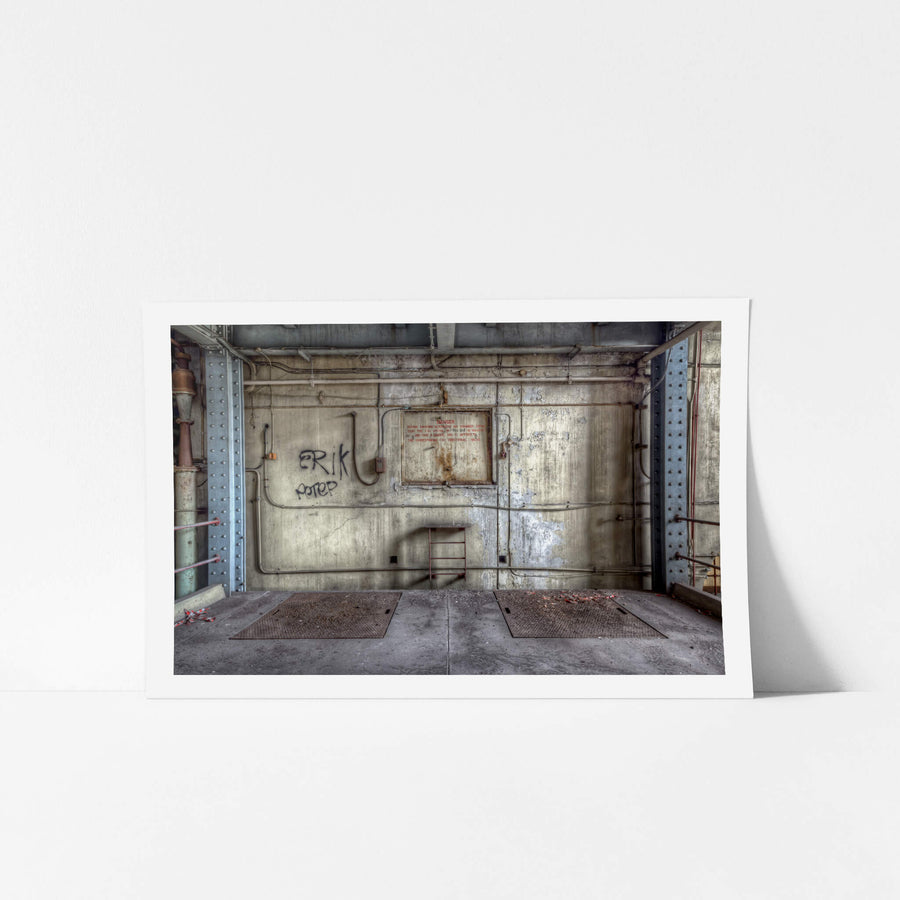
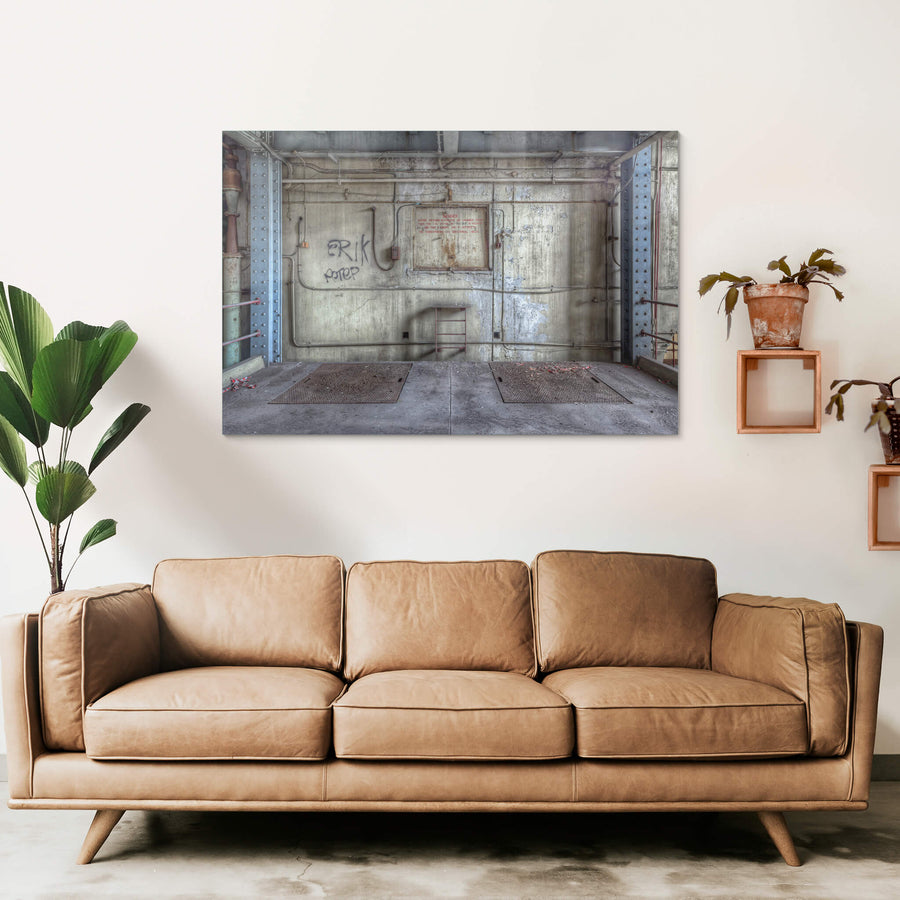
A sealed hatch sits above the air chamber at White Bay Power Station, steel columns framing the space around it. Pipes and wiring trace the walls. Faded warning lettering is still legible on the surfaces, left from the years when this was part of the working plant that kept the turbines running.
Open edition
Printed to order, no fixed quantity. Each print is hand-signed by the photographer.
Limited edition
A fixed number of prints exist. Once sold, the edition closes permanently. Each print is individually numbered and signed.
Shipping Free shipping over $250. Ships worldwide, rates calculated at checkout.
Returns Damaged in transit? We replace it. Full policy →
Ships within 10 business days · signed & numbered
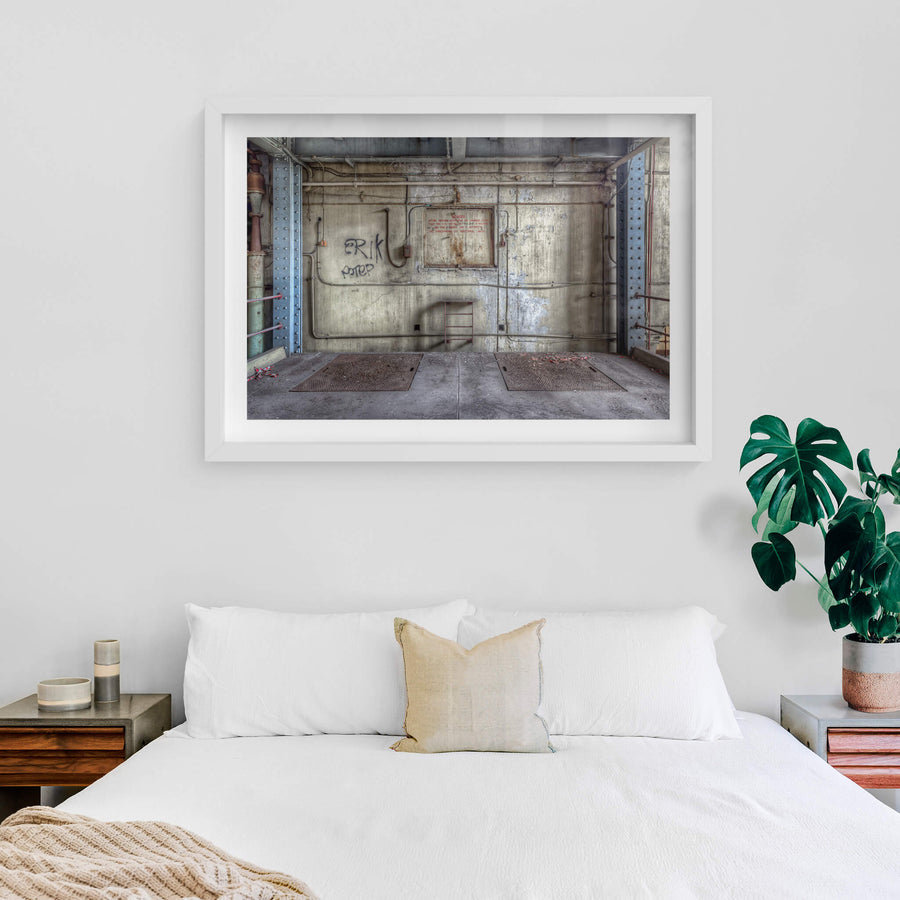
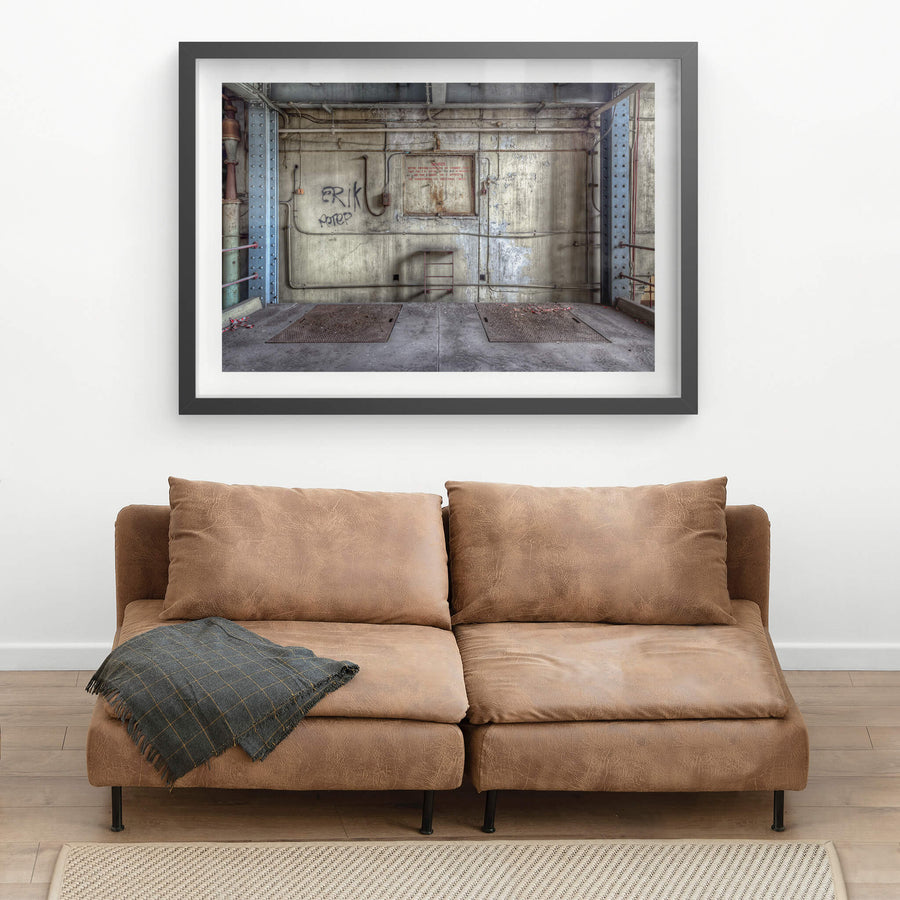
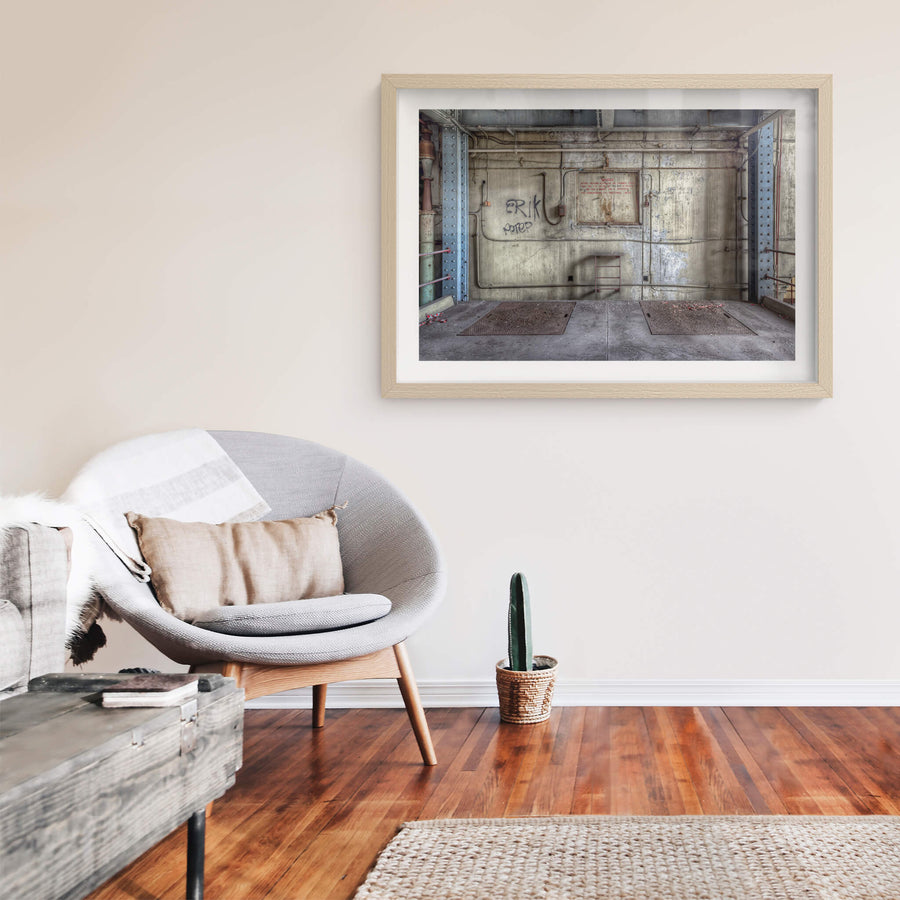
In situ
Print datasheet
- Title
- Alternator Air Chamber
- Series
- White Bay Power Station
- Catalogue
- WBP-003
- Process
- Giclée
- Captured
- 13 November 2015
- Camera
- NIKON D7000
- Lens
- 14.0-24.0 mm f/2.8
- Aperture
- f/8.0
- Shutter
- 1.3s s
- ISO
- 100
- Focal length
- 21 mm
- Paper
- Ilford Galerie Smooth Cotton Rag 310 gsm
- Paper size
- 297 × 210 mm
- Location
- Rozelle, New South Wales, Australia
- Authenticity
- C2PA verified provenance →
- Recognised by
- Highly Commended in Multimedia at the 2016 National Trust of Australia (NSW) Heritage Awards
Rozelle, New South Wales, Australia
Map · Mapbox · OpenStreetMap
About this print
A sealed hatch looms above the air chamber, once a critical access point in the intricate systems that kept the turbines running. Now rusted and worn, it stands as a relic of an era when precision and caution dictated the station’s operations.
Brett Patman
The series
White Bay Power Station
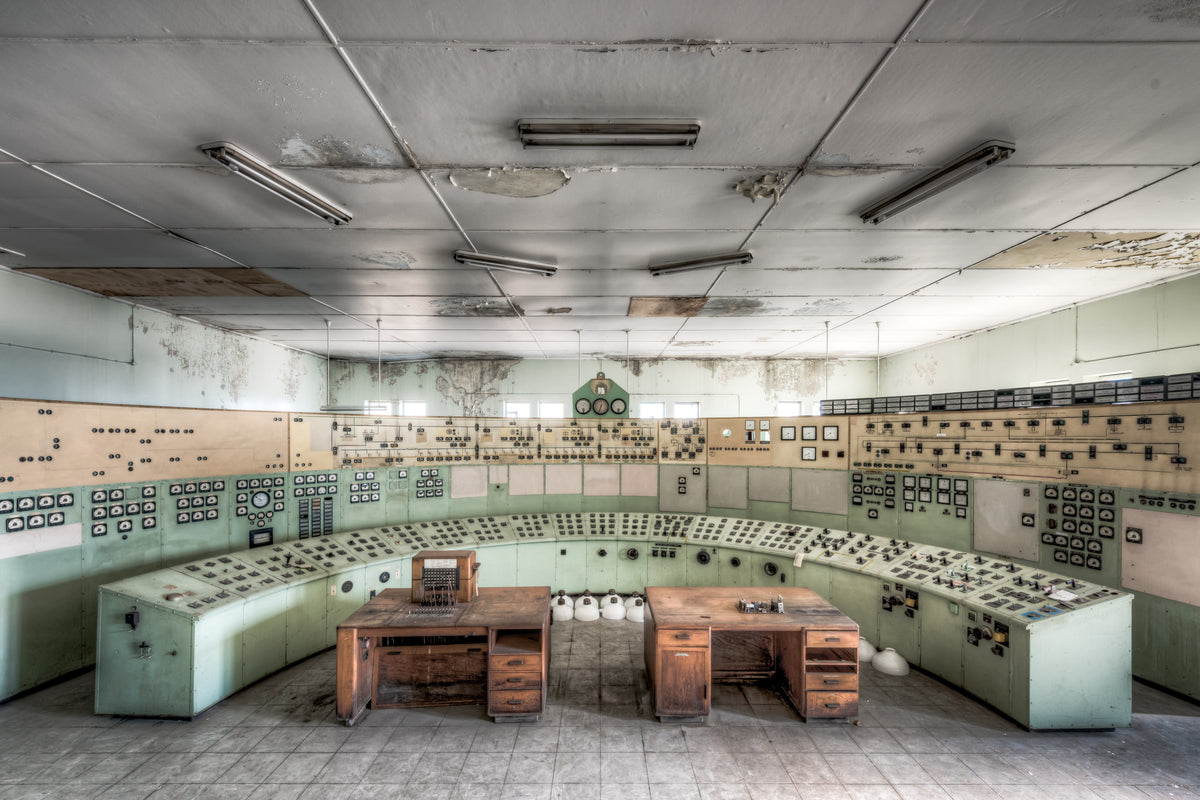
Bricklayers laid 3.7 million bricks at White Bay across three and a quarter years of Phase 1 construction, on Wanngal Country at the western edge of Rozelle. The New South Wales Government Railways ran the build through its own Construction Department. By 3 July 1913, boilers and alternators were running before the buildings that housed them were complete.
Print sizes
The anatomy view shows what this finish is as a physical object: paper margin, mat band, frame depth, acrylic profile. The comparison strip shows how each size sits relative to the others at true scale. Click a size or a finish to update both.
| Type | Size | Width | Height |
|---|


