Control Room Entrance

Provenance

Camera
NIKON D7000
Lens
24.0-70.0 mm f/2.8
Settings
24mm · f/8.0 · 13s · ISO 100
Paper
Ilford Galerie Smooth Cotton Rag 310 gsm

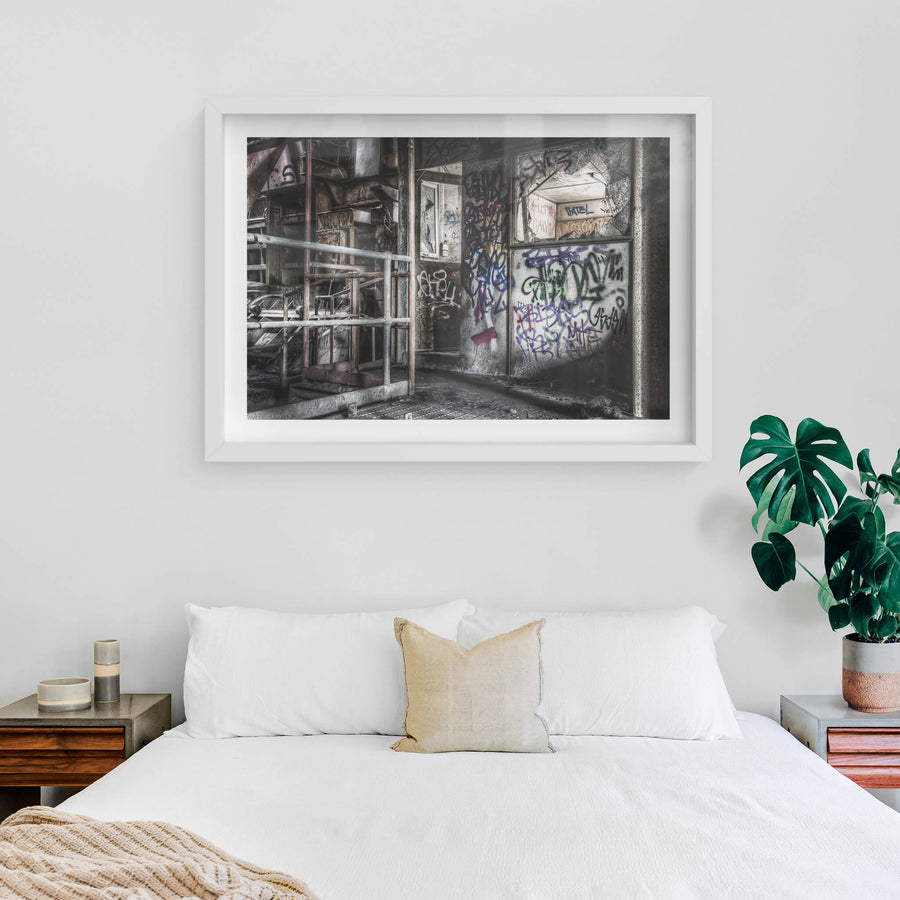
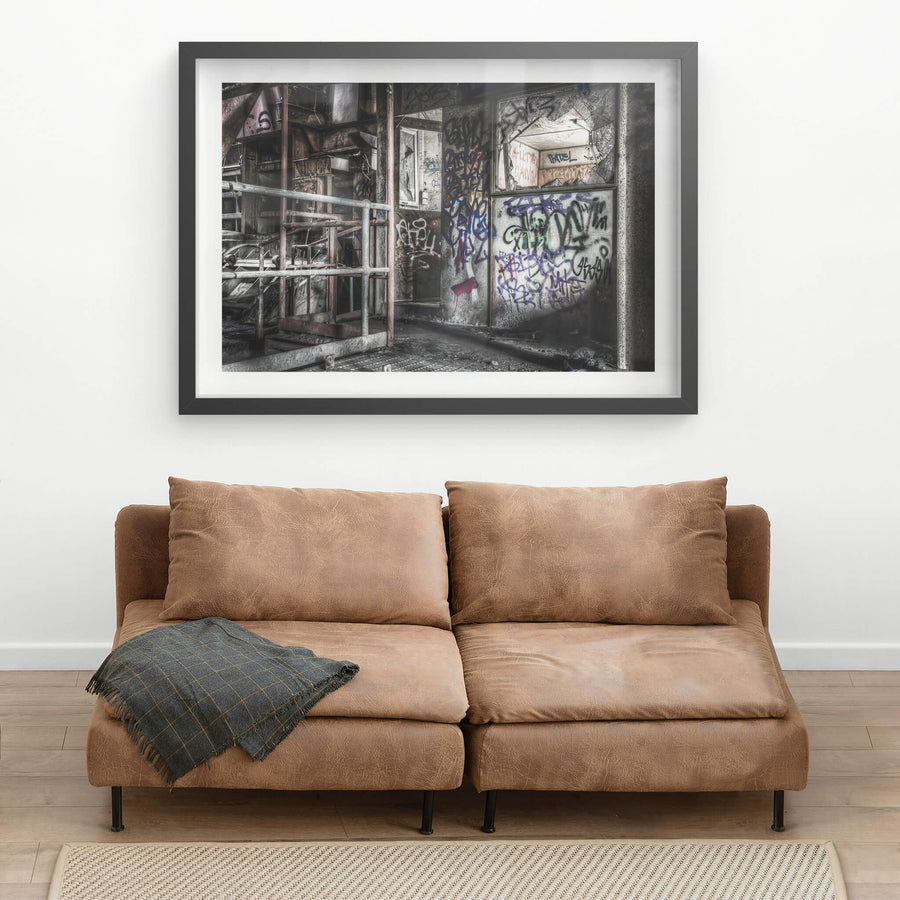
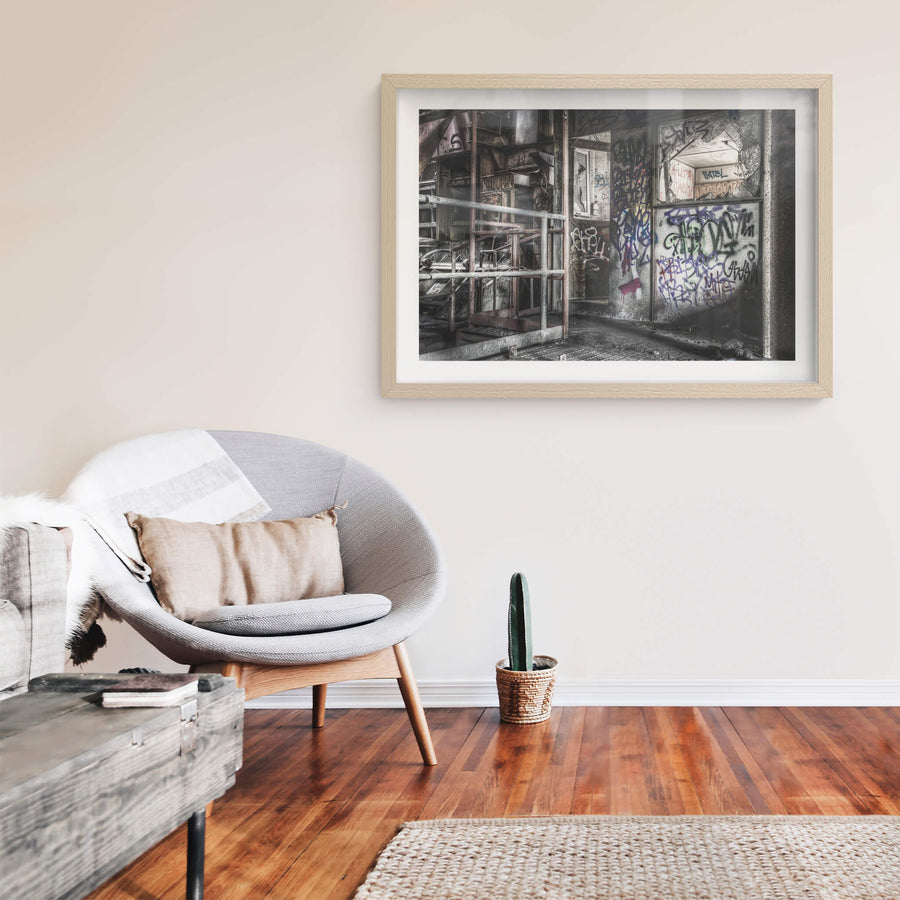
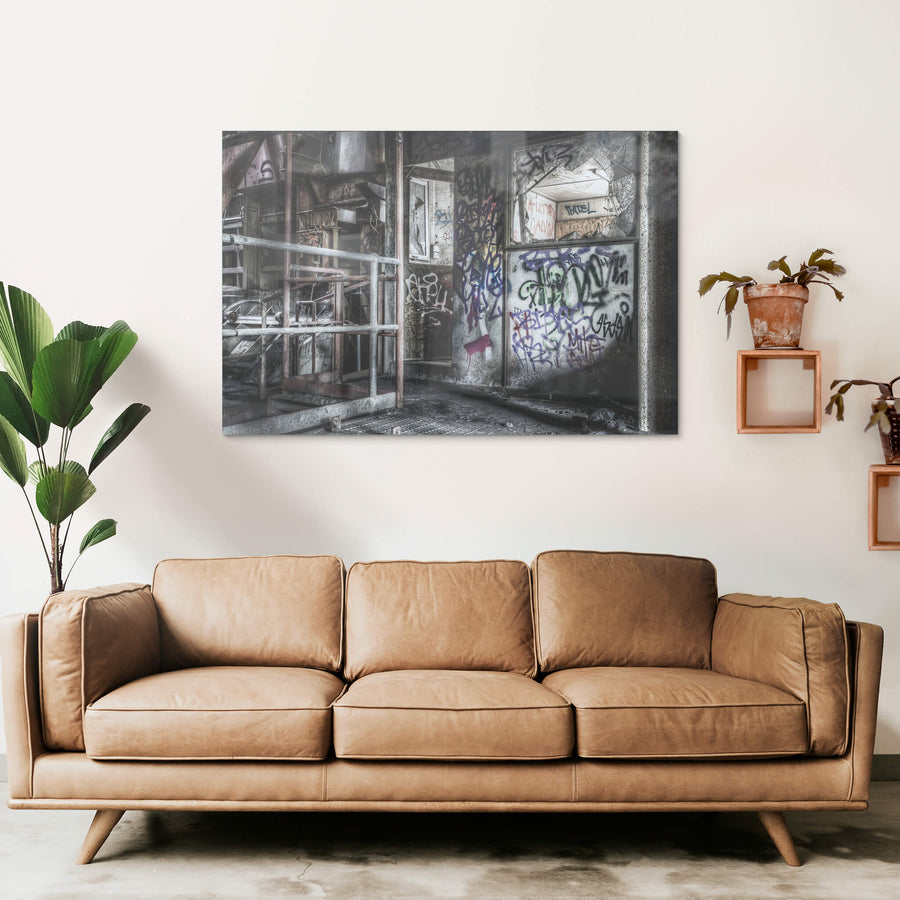
A doorway stands open in a concrete and steel structure. The walls show surface decay and discolouration. Steel door frames remain in place. Natural light enters through the opening. The floor and walls carry the residue of industrial use.

Edition
Open edition

Open edition
Printed to order, no fixed quantity. Each print is hand-signed by the photographer.

Limited edition
A fixed number of prints exist. Once sold, the edition closes permanently. Each print is individually numbered and signed.

$100.00 AUD
Size
Type
Colour
Signed, numbered, with COA. Made to order in 5 to 10 business days (unframed). Shipped in protective packaging with edition certificate, paper-stock reference and a printed care guide.
See certificate sample →

Shipping Free shipping over $250. Ships worldwide, rates calculated at checkout.

Returns Damaged in transit? We replace it. Full policy →

Ships within 10 business days · signed & numbered

In situ
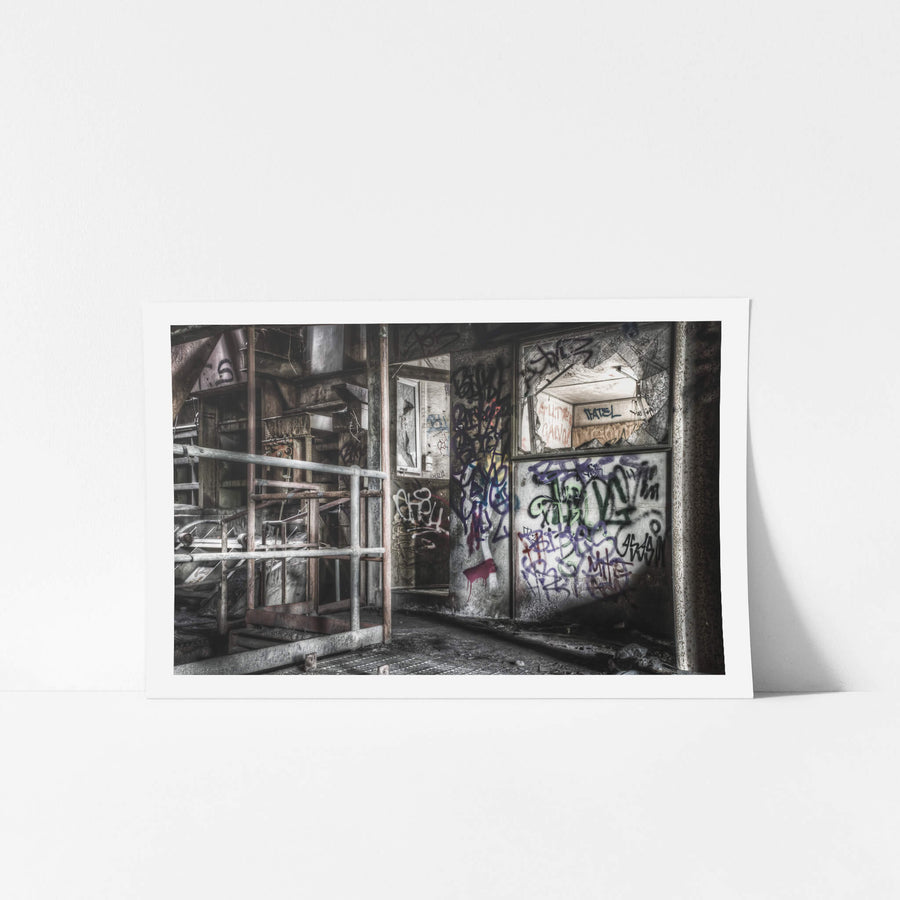
Control Room Entrance at Hornsby Quarry, unframed print displayed in situ on a wall.Control Room Entrance at Hornsby Quarry, white-framed print displayed in situ on a wall.Control Room Entrance at Hornsby Quarry, black-framed print displayed in situ on a wall.Control Room Entrance at Hornsby Quarry, raw timber-framed print displayed in situ on a wall.Control Room Entrance at Hornsby Quarry, glass print displayed in situ on a wall.
01 PROVENANCE

Print datasheet

Title
Control Room Entrance
Series
Graffiti & Urban Decay
Catalogue
GUD-004
Process
Giclée
Captured
7 November 2015
Camera
NIKON D7000
Lens
24.0-70.0 mm f/2.8
Aperture
f/8.0
Shutter
13s s
ISO
100
Focal length
24 mm
Paper
Ilford Galerie Smooth Cotton Rag 310 gsm
Paper size
290 × 200 mm
Location
Hornsby, New South Wales, Australia
Recognised by
Highly Commended in Multimedia at the 2016 National Trust of Australia (NSW) Heritage Awards
02 LOCATION

Hornsby, New South Wales, Australia

Map · Mapbox · OpenStreetMap

03 THE STORY

About this print

The control room entrance at Hornsby Quarry is a plain threshold: a concrete doorway, steel framing, walls marked by years of quarry dust and weather. Open in 2015, it led into what remained of the site's operational infrastructure, part of the crusher plant buildings that the Hornsby Park master plan later identified as heritage features to be retained within the redevelopment. Hornsby Quarry operated from around 1905 until 2002. The site passed through a succession of operators across nearly a century: the Higgins family in the early years, then Hornsby Shire Council from 1912, Hornsby Blue Metal Limited from 1924, Farley and Lewers from 1959, and finally CSR Construction Materials, which ran the quarry through its final decades before ceasing extraction in 2002. The primary product throughout was crushed dolerite, the hard volcanic rock of the Hornsby diatreme, quarried as blue metal for road base and aggregate across northern Sydney. The quarry sits within one of the largest volcanic necks in the Sydney area, a Jurassic diatreme formed 146 to 200 million years ago and later classified by geologists as internationally significant. Quarrying exposed more than 100 metres of cross-section through the diatreme's volcanic neck, a geological record that drew researchers long after the extraction equipment fell silent. CSR Construction Materials notified Hornsby Shire Council on 22 March 2001 that it required Council to acquire the site. Quarrying ceased in 2002. Ownership passed to Council in 2003 after the NSW Land and Environment Court determined the compensation at $26,508,771.28. The void left behind was approximately 120 metres deep at the southern face and 300 metres across. This photograph, made in 2015, records the control room entrance before the site's next transformation: the NorthConnex spoil deliveries of 2017 to 2019 and the subsequent rehabilitation into Hornsby Park. The open doorway and the concrete walls behind it are what remained of a working operation that had supplied the roads of a city for nearly a hundred years.

04 FROM THE FIELD NOTES

The control room entrance at Hornsby Quarry sits within the remnant crusher plant buildings that survived the site's operational years. Hornsby Quarry ran from around 1905 until 2002, when CSR Construction Materials ended extraction of crushed dolerite, the blue metal that had supplied northern Sydney's road construction for the better part of a century. By 2015, the concrete and steel structures stood open to the elements, their working life finished but their fabric intact.

Brett Patman
Graffiti & Urban Decay

The series

Graffiti & Urban Decay

54 photographs

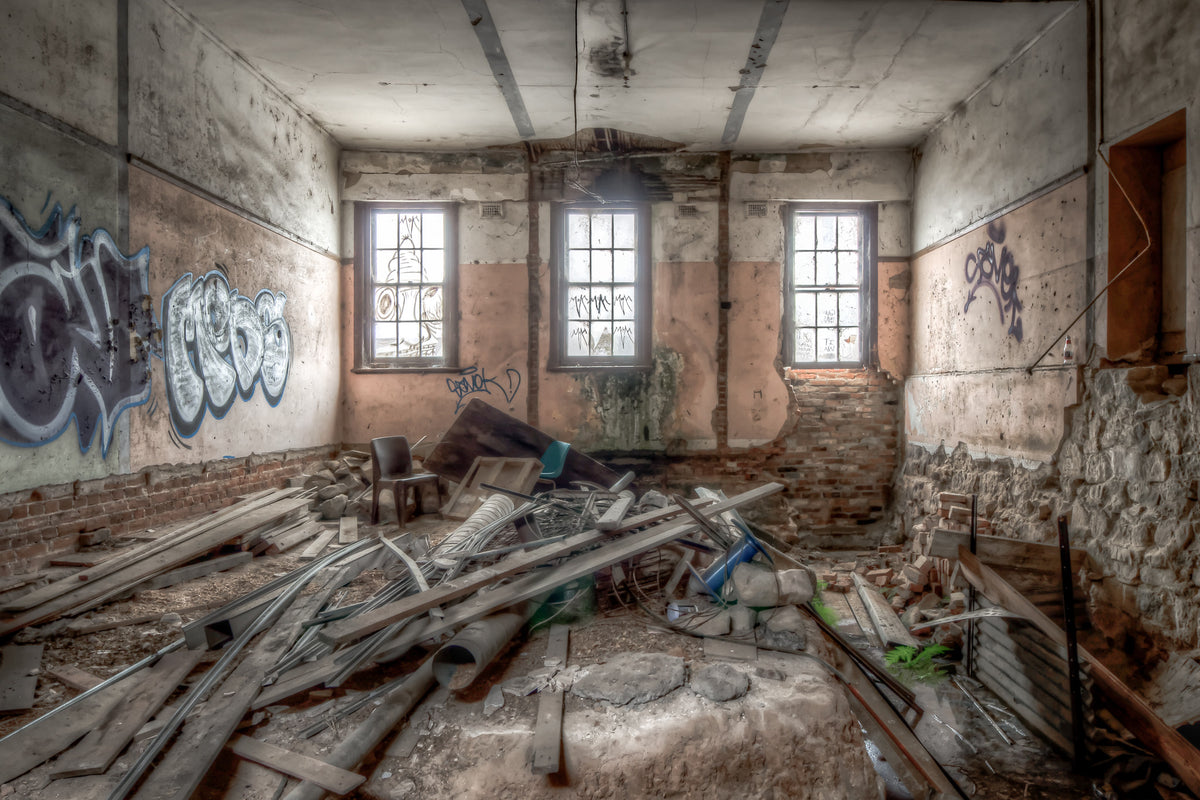
Buildings don't stay empty. Once the owners leave, somebody else arrives. Walls that were blank become a record of who came through and when. Graffiti isn't vandalism on these surfaces , it's the only remaining evidence that anyone cared enough to be here.Urban spaces mid-collapse. The gap between what a building was built for and what it became.

View all in this series →

05 SIZE GUIDE

Print sizes

The anatomy view shows what this finish is as a physical object: paper margin, mat band, frame depth, acrylic profile. The comparison strip shows how each size sits relative to the others at true scale. Click a size or a finish to update both.

Anatomy · true ratio
TypeSizeWidthHeight
08 BY POST · NO SPAM

Read the full story

Articles when they're published. The history behind a place. The day of a shoot. The work between prints. No marketing, no schedule.

You're subscribed.