
Tounge Groove
Provenance
- Camera
- NIKON D7000
- Lens
- 14.0-24.0 mm f/2.8
- Settings
- 21mm · f/8.0 · 0.4s · ISO 100
- Paper
- Ilford Galerie Smooth Cotton Rag 310 gsm
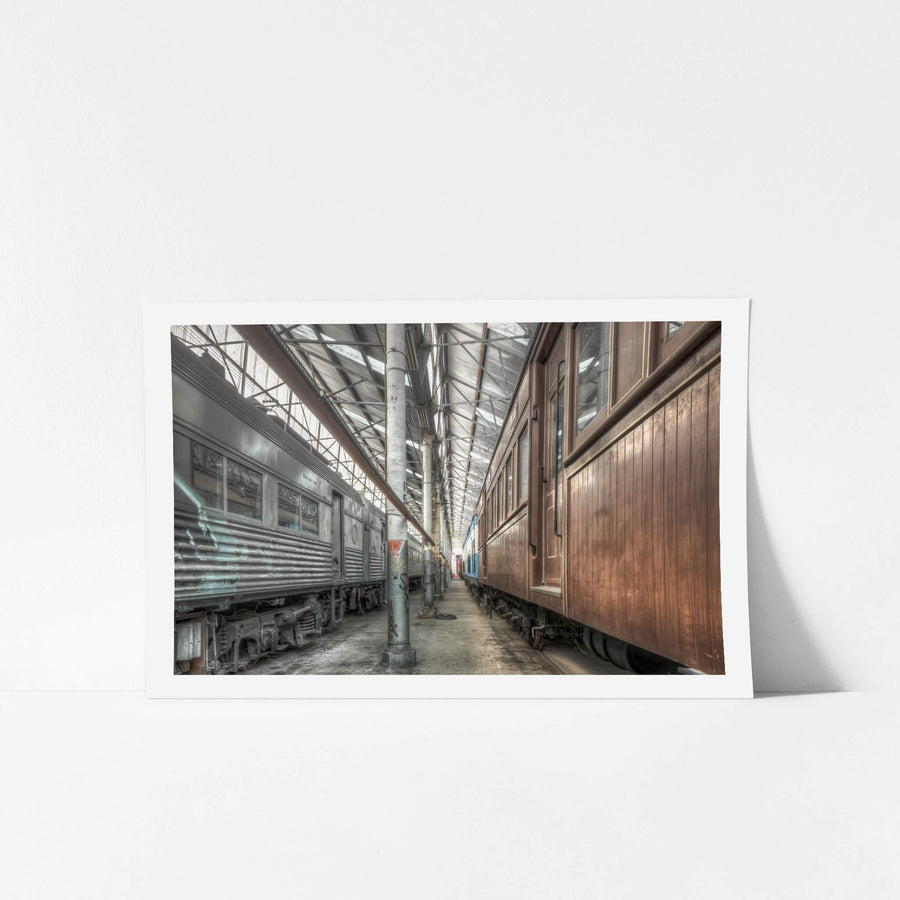
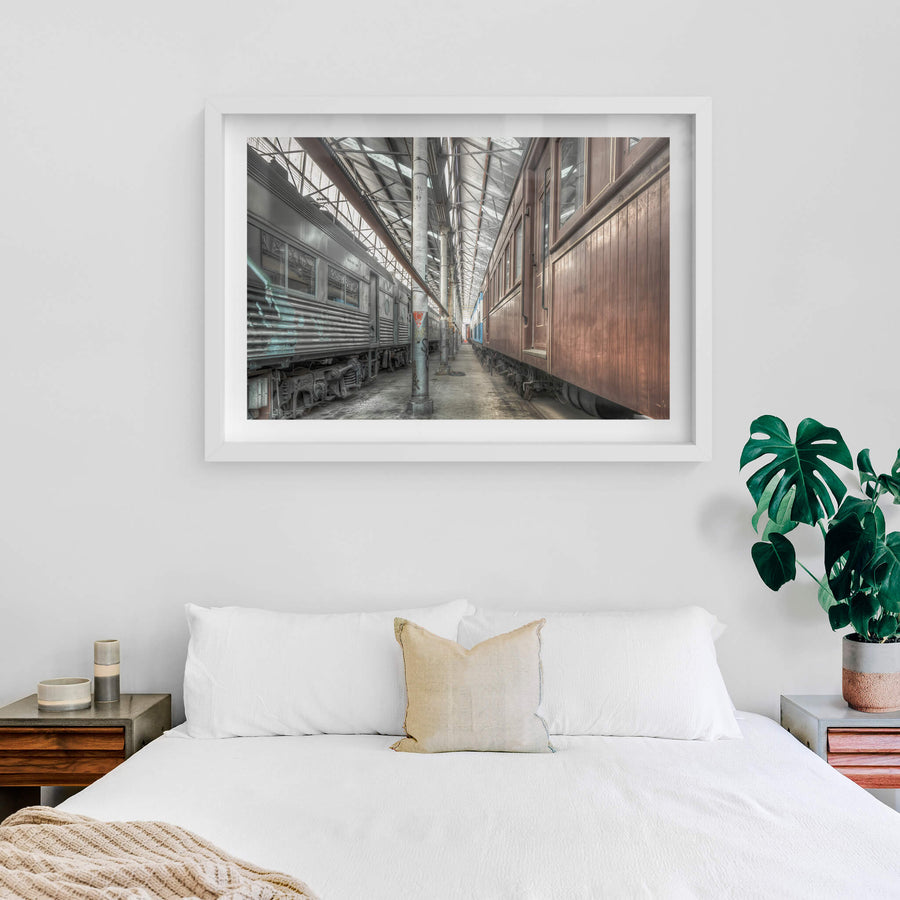
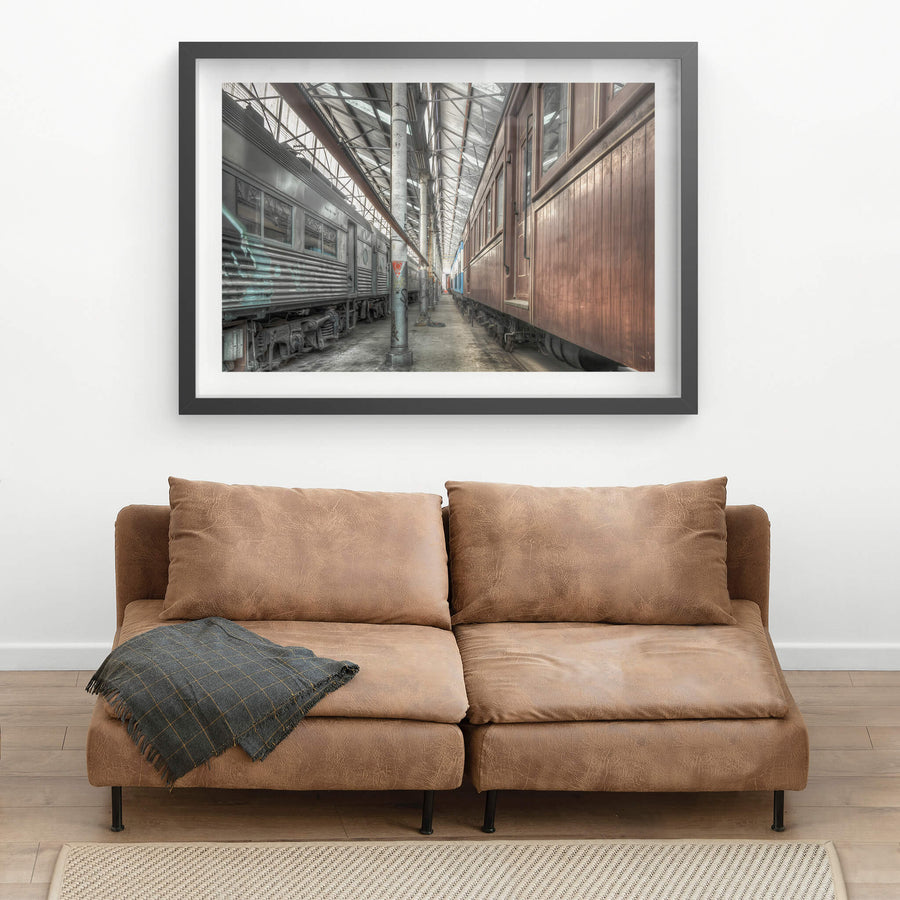
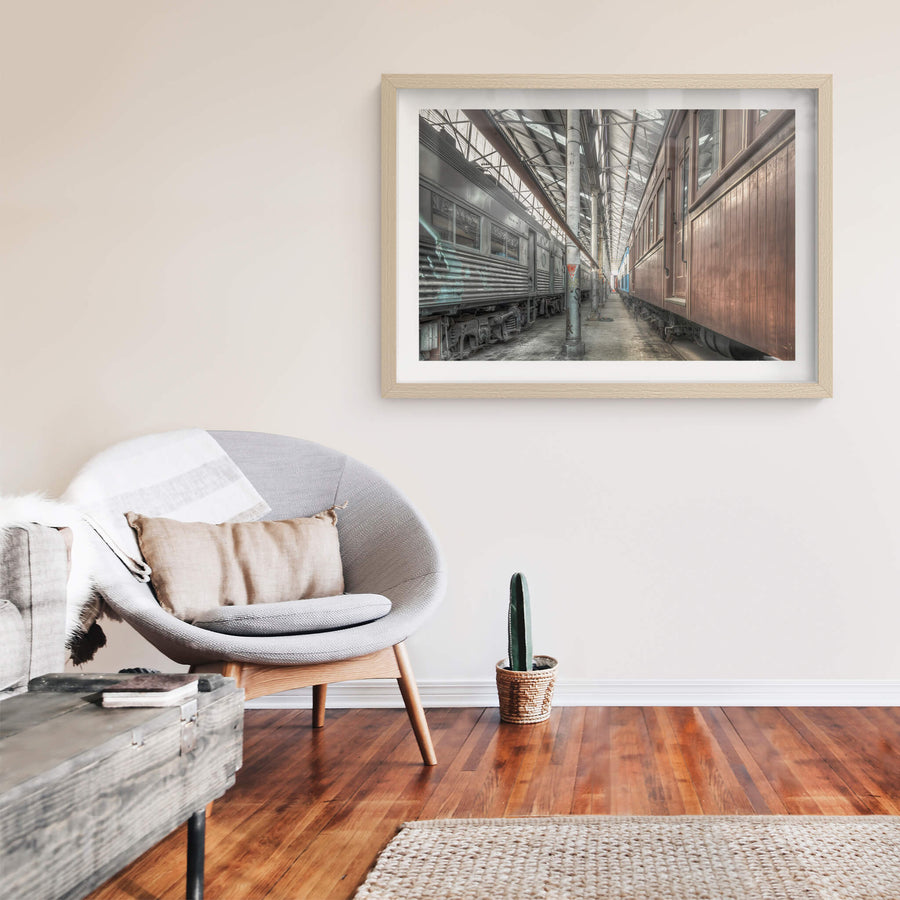
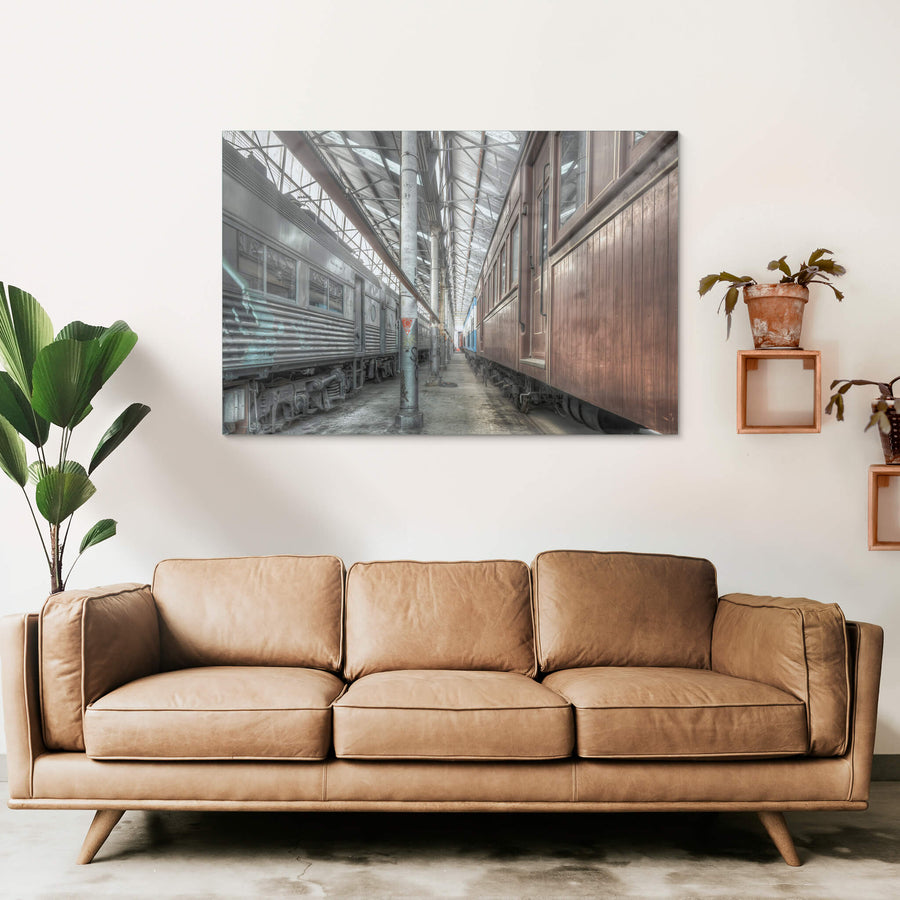
An aisle through the Eveleigh Paint Shop, a wooden carriage on the right and a stainless steel one on the left. Tongue and groove panelling runs along the timber body, the interlocking construction once standard in early railcar design. Cast iron columns line the aisle, their surfaces layered with grime and graffiti, and the sawtooth roof repeats overhead into shadow at the far end.
Open edition
Printed to order, no fixed quantity. Each print is hand-signed by the photographer.
Limited edition
A fixed number of prints exist. Once sold, the edition closes permanently. Each print is individually numbered and signed.
Shipping Free shipping over $250. Ships worldwide, rates calculated at checkout.
Returns Damaged in transit? We replace it. Full policy →
Ships within 10 business days · signed & numbered
In situ
Print datasheet
- Title
- Tounge Groove
- Series
- Eveleigh Paint Shop
- Catalogue
- EPS-022
- Process
- Giclée
- Captured
- 14 March 2016
- Camera
- NIKON D7000
- Lens
- 14.0-24.0 mm f/2.8
- Aperture
- f/8.0
- Shutter
- 0.4s s
- ISO
- 100
- Focal length
- 21 mm
- Paper
- Ilford Galerie Smooth Cotton Rag 310 gsm
- Paper size
- 297 × 210 mm
- Location
- Eveleigh, New South Wales, Australia
- Authenticity
- C2PA verified provenance →
- Recognised by
- Highly Commended in Multimedia at the 2016 National Trust of Australia (NSW) Heritage Awards
Eveleigh, New South Wales, Australia
Map · Mapbox · OpenStreetMap
About this print
Two carriages sit side by side on parallel tracks inside the Eveleigh Paint Shop. To the right, a timber-panelled car with tongue and groove cladding, its varnished surface darkened with age. To the left, a stainless steel suburban carriage, grey and corrugated, tagged with graffiti. Between them, a narrow concrete aisle runs deep into the shed. Cast-iron columns rise in a line down the centre. Overhead, the sawtooth roof lets pale light through angled glass panels.
Brett Patman

The series
Eveleigh Paint Shop
George Cowdery worked on the Britannia Bridge with Robert Stephenson in 1847. John Whitton, Engineer-in-Chief for NSW Railways, brought him to NSW in 1863, where he supervised the colony's first railway tunnels at Picton and Mittagong. The brick main wing of the Paint Shop was completed in 1887, eight rail roads under a sawtooth south-light roof.
Print sizes
The anatomy view shows what this finish is as a physical object: paper margin, mat band, frame depth, acrylic profile. The comparison strip shows how each size sits relative to the others at true scale. Click a size or a finish to update both.
| Type | Size | Width | Height |
|---|


