
Turbine Hall Panorama
Provenance
- Camera
- NIKON D7000
- Settings
- 36mm · f/11.0 · 0.4s · ISO 100
- Paper
- Ilford Galerie Smooth Cotton Rag 310 gsm
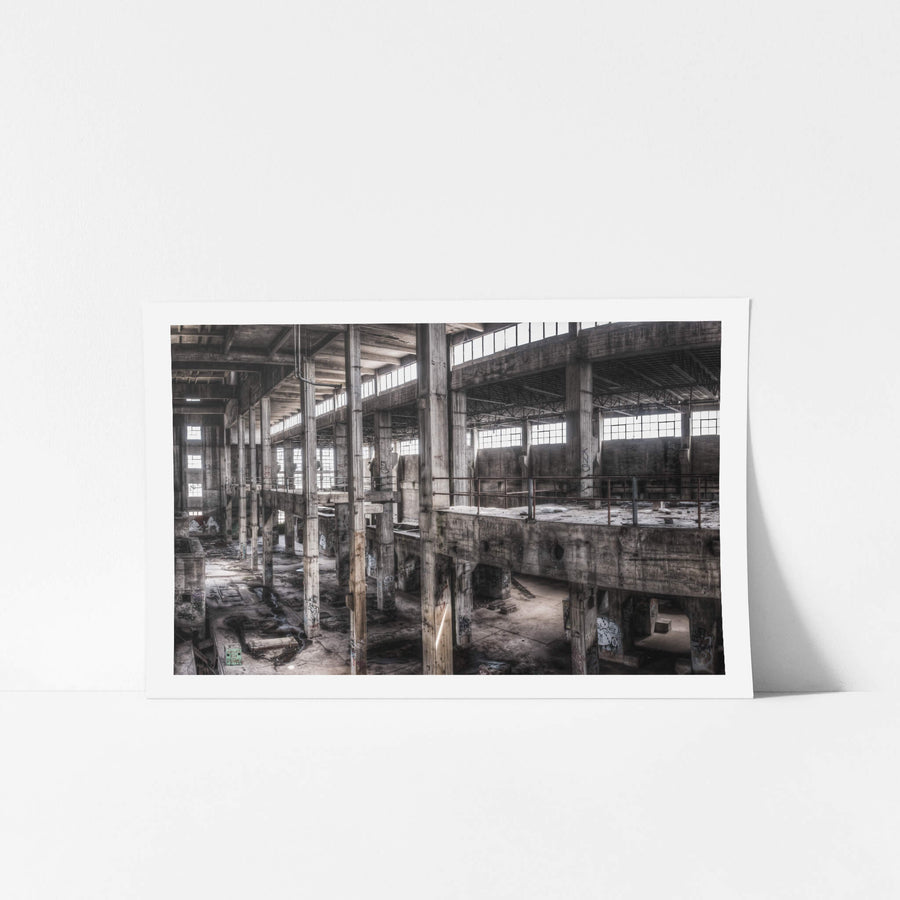
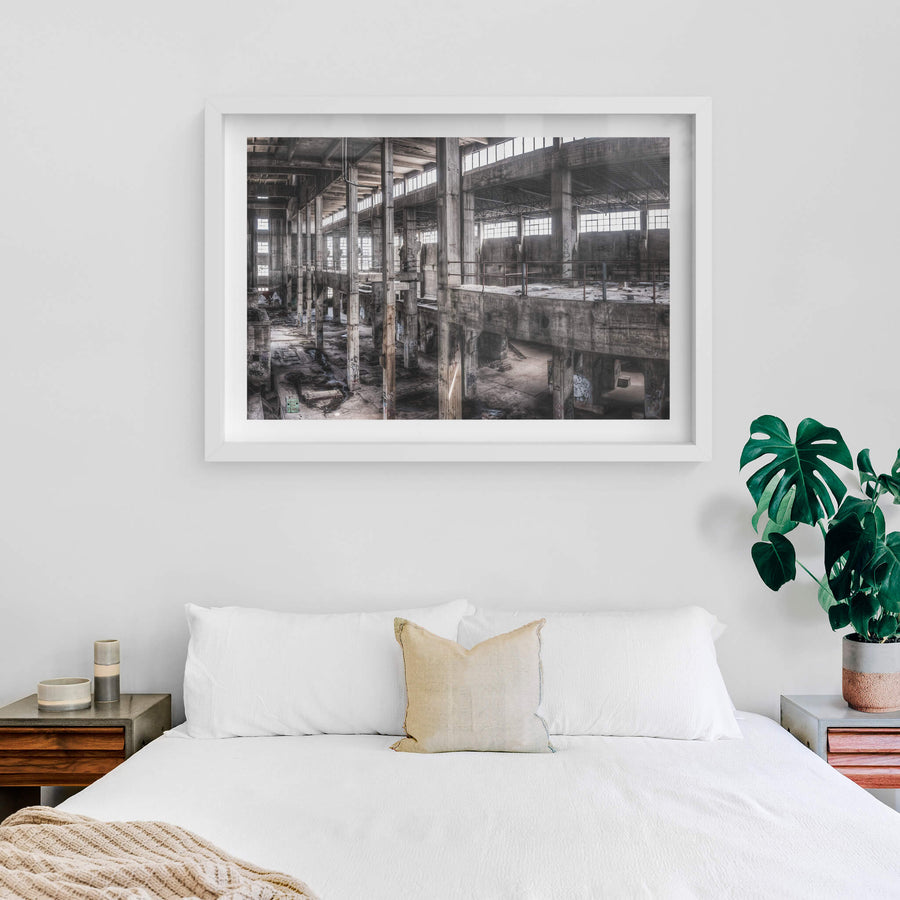
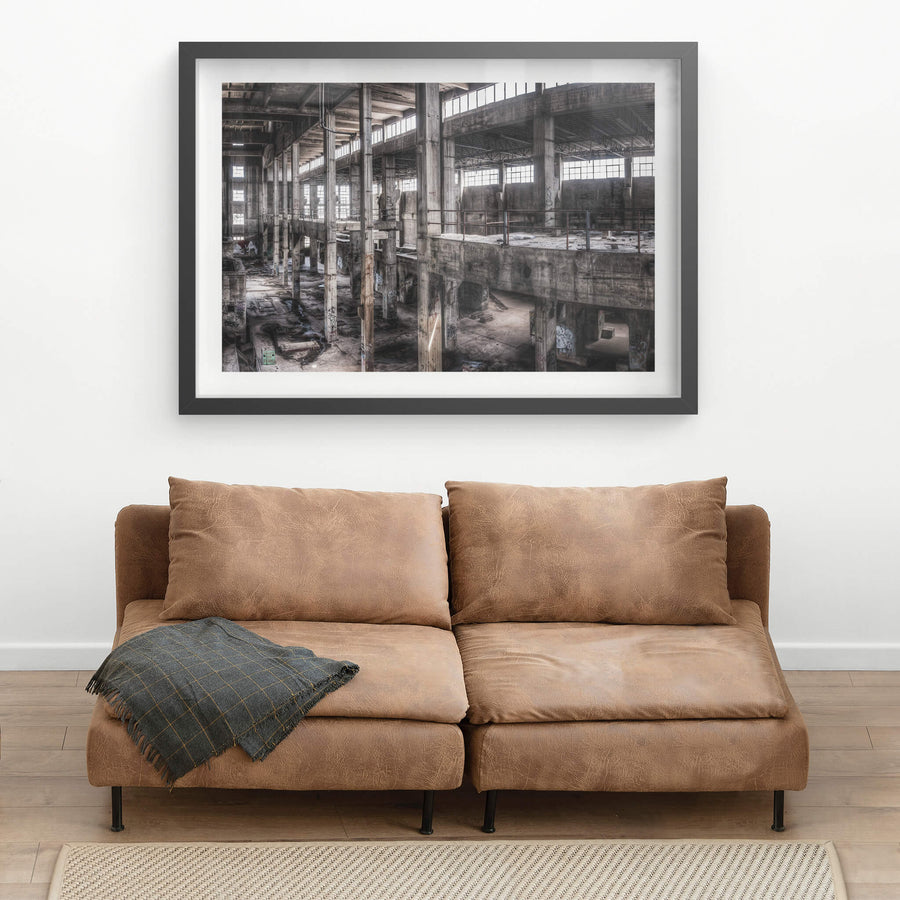
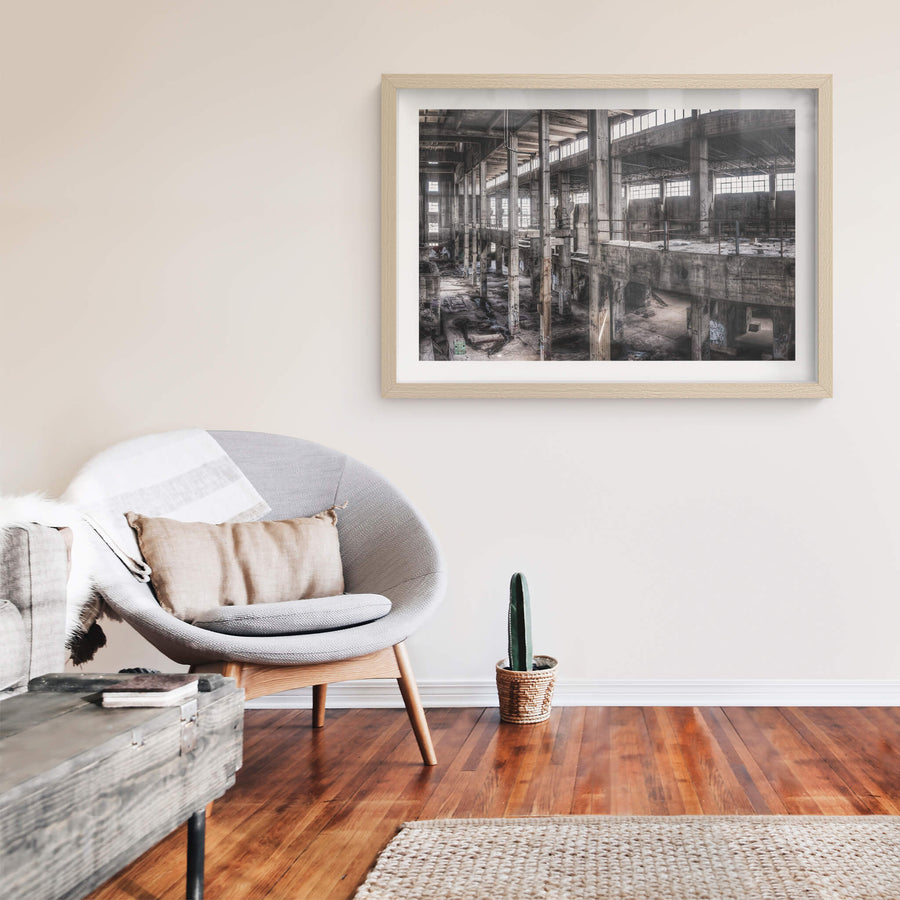
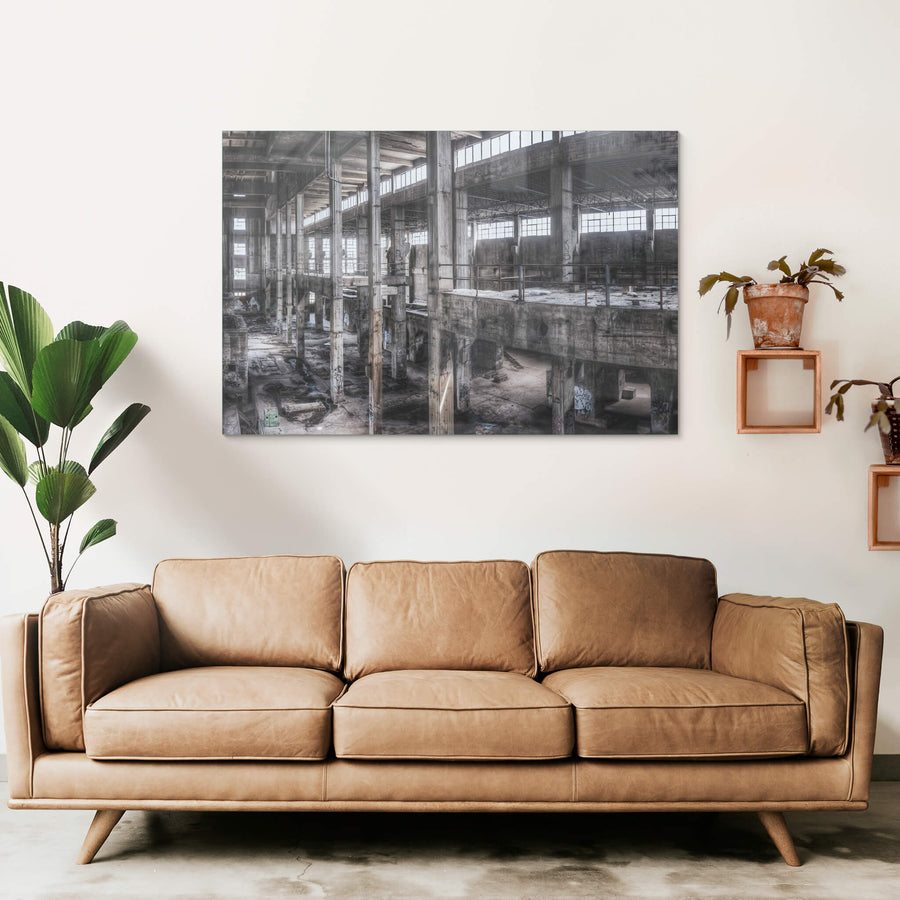
Concrete columns run the length of the turbine hall floor at Geelong B Power Station. Graffiti covers the base of each column. An upper mezzanine level wraps the perimeter. Clerestory windows line the walls above.
Open edition
Printed to order, no fixed quantity. Each print is hand-signed by the photographer.
Limited edition
A fixed number of prints exist. Once sold, the edition closes permanently. Each print is individually numbered and signed.
Shipping Free shipping over $250. Ships worldwide, rates calculated at checkout.
Returns Damaged in transit? We replace it. Full policy →
Ships within 10 business days · signed & numbered
In situ
Print datasheet
- Title
- Turbine Hall Panorama
- Series
- Geelong B Power Station
- Catalogue
- GBP-002
- Process
- Giclée
- Captured
- 8 January 2012
- Camera
- NIKON D7000
- Aperture
- f/11.0
- Shutter
- 0.4s s
- ISO
- 100
- Focal length
- 36 mm
- Paper
- Ilford Galerie Smooth Cotton Rag 310 gsm
- Paper size
- 297 × 210 mm
- Location
- Corio, Victoria, Australia
- Authenticity
- C2PA verified provenance →
- Recognised by
- Highly Commended in Multimedia at the 2016 National Trust of Australia (NSW) Heritage Awards
Corio, Victoria, Australia
Map · Mapbox · OpenStreetMap
About this print
A panorama of the turbine hall.
Brett Patman

The series
Geelong B Power Station
Geelong B Power Station opened on 8 October 1954 in North Geelong, on the edge of Corio Bay. It was a "packaged" station with components imported from the United States, and at 30 megawatts across three 10 MW boiler-generator sets it was the largest power station in Victoria outside the Latrobe Valley. The design was unusual: rather than housing the boilers in a conventional boiler house, all three sat out of doors except for the operating faces, cutting construction costs. The State Electricity Commission of Victoria ran the station for 16 years before the Latrobe Valley brown-coal expansion left it for peak loads only. It closed in 1970. The building still stands. In 2014 it hosted an art project curated by Ian Ballis, and has since been formalised as a legal-graffiti precinct within the Pivot City heritage area.
Print sizes
The anatomy view shows what this finish is as a physical object: paper margin, mat band, frame depth, acrylic profile. The comparison strip shows how each size sits relative to the others at true scale. Click a size or a finish to update both.
| Type | Size | Width | Height |
|---|

