Storeroom

Provenance

Camera
NIKON D850
Lens
14.0-24.0 mm f/2.8
Settings
14mm · f/8.0 · 1s · ISO 100
Paper
Ilford Galerie Smooth Cotton Rag 310 gsm

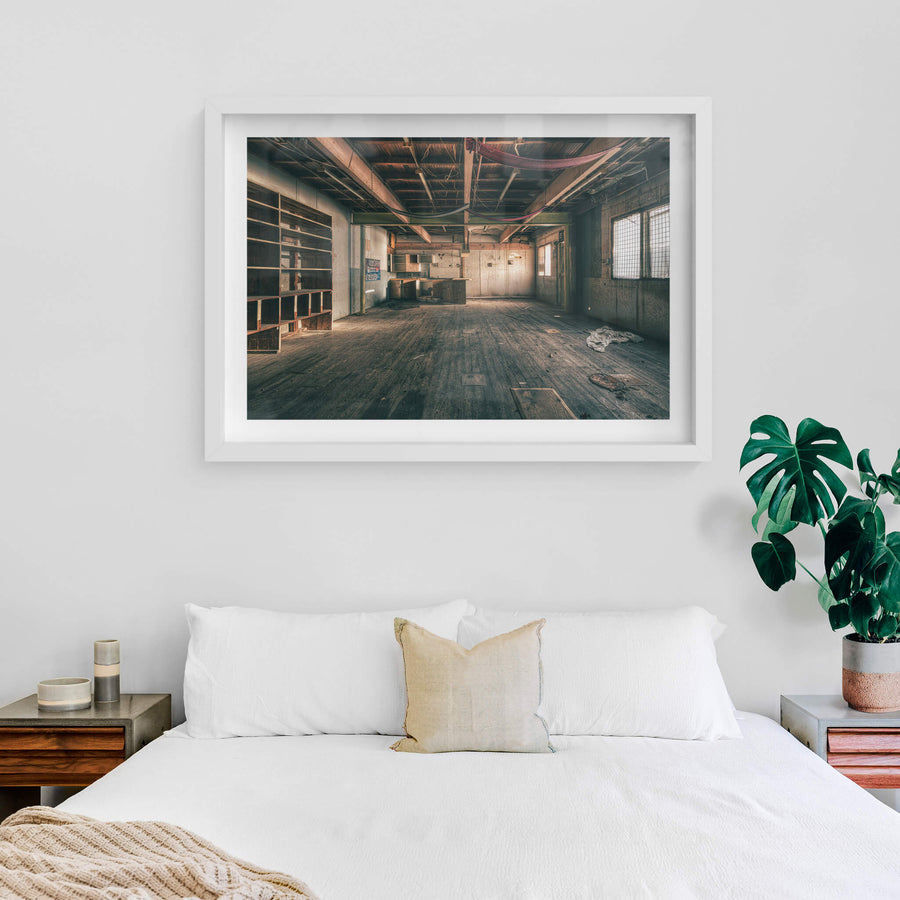
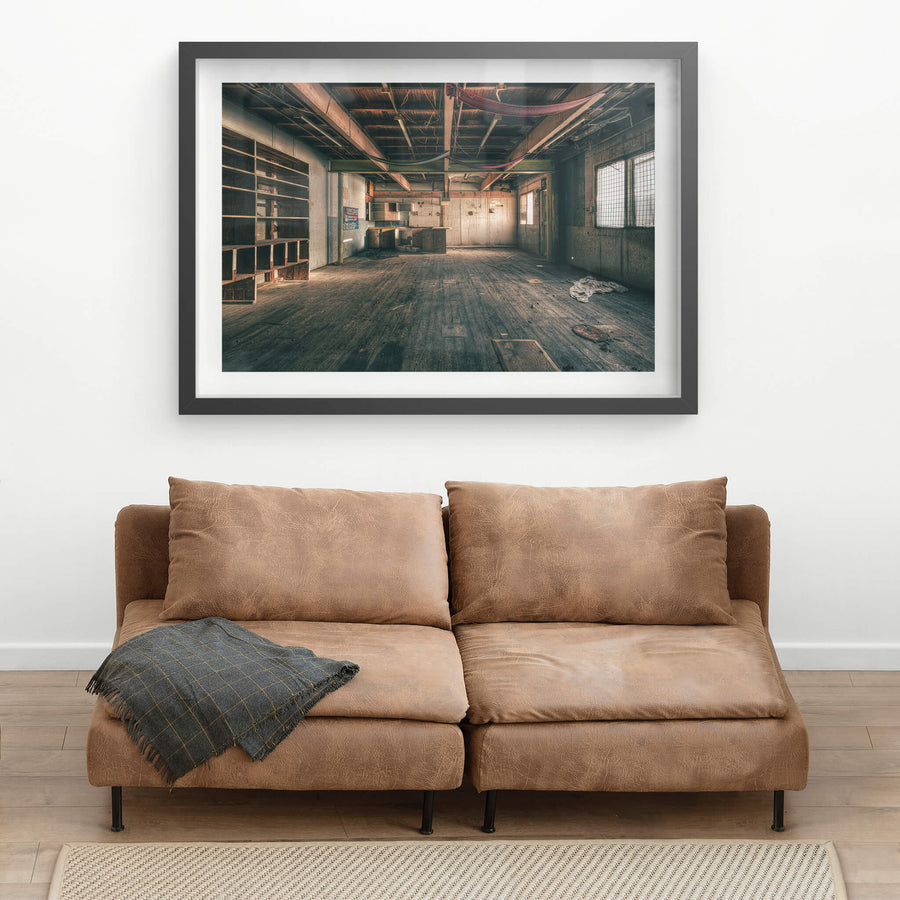
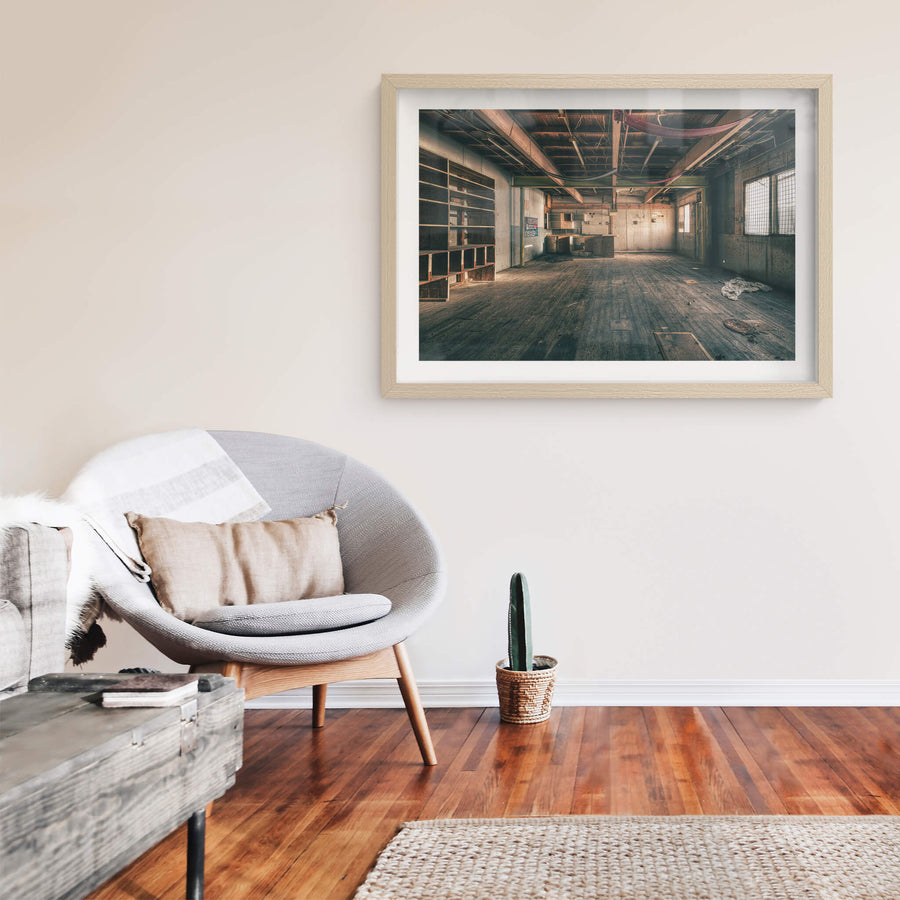
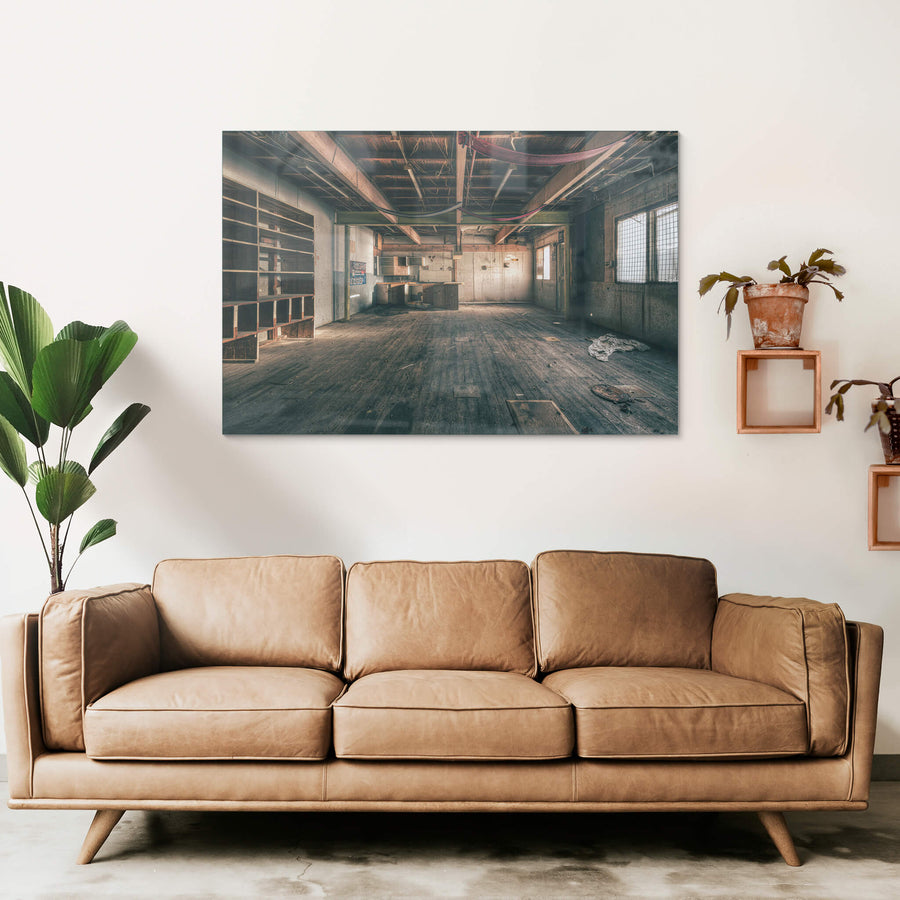
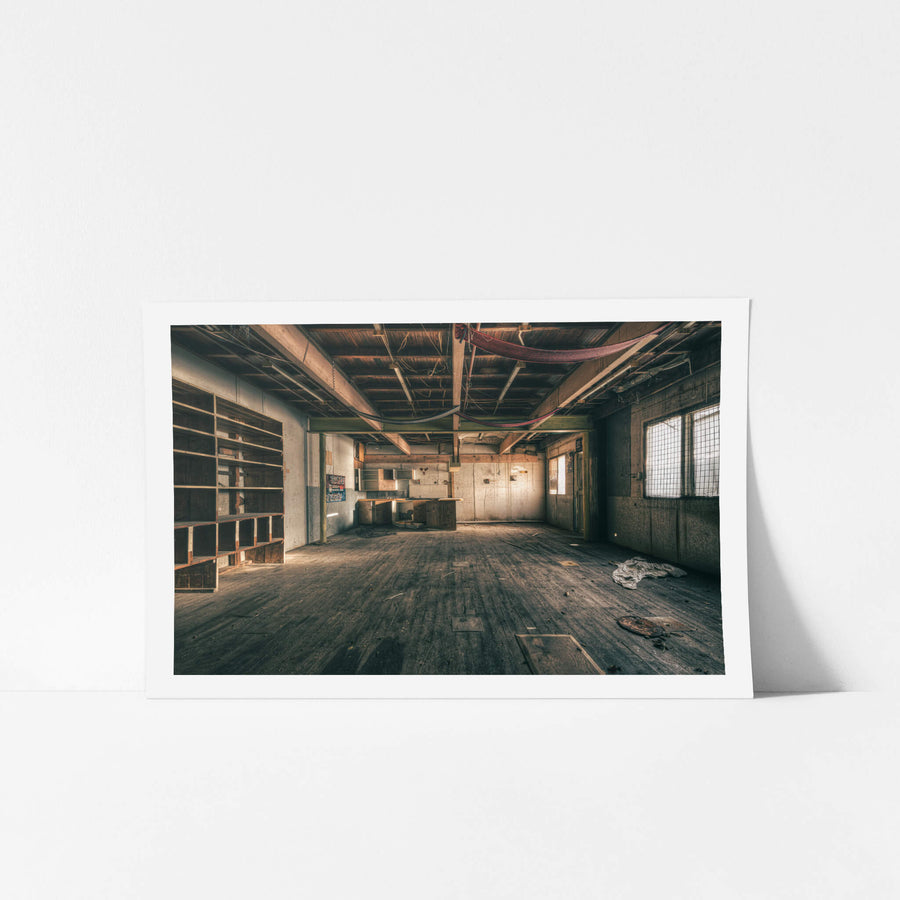
Timber shelving lines the walls of a storeroom interior. Dust coats the surfaces. Tools and spare parts remain on the shelves. Light enters from an unspecified source, catching the settled dust. The space is still and undisturbed.

Edition
Open edition

Open edition
Printed to order, no fixed quantity. Each print is hand-signed by the photographer.

Limited edition
A fixed number of prints exist. Once sold, the edition closes permanently. Each print is individually numbered and signed.

$100.00 AUD
Size
Type
Colour
Signed, numbered, with COA. Made to order in 5 to 10 business days (unframed). Shipped in protective packaging with edition certificate, paper-stock reference and a printed care guide.
See certificate sample →

Shipping Free shipping over $250. Ships worldwide, rates calculated at checkout.

Returns Damaged in transit? We replace it. Full policy →

Ships within 10 business days · signed & numbered

In situ
Storeroom at Halvorsens Boat Yard, unframed print displayed in situ on a wall.Storeroom at Halvorsens Boat Yard, white-framed print displayed in situ on a wall.Storeroom at Halvorsens Boat Yard, black-framed print displayed in situ on a wall.Storeroom at Halvorsens Boat Yard, raw timber-framed print displayed in situ on a wall.Storeroom at Halvorsens Boat Yard, glass print displayed in situ on a wall.
01 PROVENANCE

Print datasheet

Title
Storeroom
Series
Halvorsens Boat Yard
Catalogue
HBY-013
Process
Giclée
Captured
24 June 2018
Camera
NIKON D850
Lens
14.0-24.0 mm f/2.8
Aperture
f/8.0
Shutter
1s s
ISO
100
Focal length
14 mm
Paper
Ilford Galerie Smooth Cotton Rag 310 gsm
Paper size
290 × 200 mm
Location
Putney, New South Wales, Australia
Recognised by
Highly Commended in Multimedia at the 2016 National Trust of Australia (NSW) Heritage Awards
02 LOCATION

Putney, New South Wales, Australia

Map · Mapbox · OpenStreetMap

03 THE STORY

About this print

Inside a storeroom at Halvorsen's Boat Yard in Putney, timber shelves carry the remnants of a working boatyard. Tools and spare parts sit where they were left, coated in dust, undisturbed. The shelving is plain and functional, built to hold stock within reach of workers rather than to impress anyone. A room like this existed to keep everything else moving. Lars Halvorsen Sons Pty Ltd operated the Putney yard from 1939. The company had arrived in Sydney at Christmas 1924, renting a boatshed in Drummoyne for ten shillings a week to build their first Australian commission. By 1937 the sons had incorporated as a company, purchased land near Ryde Bridge on the Parramatta River, and began constructing the Putney complex. The yard was described by the Daily Telegraph in 1949 as "the most modern of its kind in the British Empire." During the Second World War, the yard produced 16 Fairmile motor launches, 43 sixty-foot fast supply vessels, and 147 thirty-eight-foot air-sea rescue boats, with total wartime contracts exceeding £1,000,000. The workforce peaked at approximately 350. Vessels were supplied to the Royal Australian Navy, the Royal Netherlands Navy, the United States Navy, and the RAAF. The facility included engineering workshops, blacksmithing and lumber shops, machine shops, and sheet metal fabrication areas. A storeroom was not incidental to any of that; it was central to it. The yard built 1,299 craft across its Drummoyne, Neutral Bay, and Putney yards between 1925 and 1976. The boatyard closed around 1980. The Commonwealth then acquired the property for use as a Royal Australian Navy repair facility. This photograph, made in 2018, records what the storeroom held onto: tools sorted and shelved by workers who expected to return for them, and never did.

04 FROM THE FIELD NOTES

Inside a storeroom at Halvorsen's Boat Yard in Putney, timber shelves hold tools and spare parts left behind when the yard fell quiet. Lars Halvorsen Sons Pty Ltd built 1,299 craft from 1925 to 1976, including wartime Fairmile motor launches and air-sea rescue boats supplied to the Royal Australian Navy and Allied forces. At its peak the yard employed approximately 350 workers. Rooms like this one kept that operation running; the parts on these shelves were the margin between a vessel making it back and not.

Brett Patman

Halvorsens Boat Yard

The series

Halvorsens Boat Yard

2018 · 17 photographs

Halvorsens Boat Yard ran on the Parramatta River at Ryde from 1939 to 1980, on a five-acre site that had once been part of James Squire's colonial brewery wharf. The yard was Lars Halvorsen Sons' main works, with engineering, blacksmith, lumber, machine, plumbing, and sheet metal shops, plus five slipways for craft up to 90 feet and 100 tons. The Halvorsen family enterprise built 1,299 vessels between 1925 and 1976; over 200 of those went to the Australian, United States, and Dutch forces during the Second World War, including 178 38-foot air-sea rescue boats and 16 112-foot Fairmile motor launches. In 1962 the yard built Gretel, Australia's first America's Cup challenger. Production at Ryde wound down through 1979 and the site was sold to the Royal Australian Navy in 1980.

View all in this series →

05 SIZE GUIDE

Print sizes

The anatomy view shows what this finish is as a physical object: paper margin, mat band, frame depth, acrylic profile. The comparison strip shows how each size sits relative to the others at true scale. Click a size or a finish to update both.

Anatomy · true ratio
TypeSizeWidthHeight
08 BY POST · NO SPAM

Read the full story

Articles when they're published. The history behind a place. The day of a shoot. The work between prints. No marketing, no schedule.

You're subscribed.