
The Blue Room
Provenance
- Camera
- NIKON D850
- Lens
- 14.0-24.0 mm f/2.8
- Settings
- 14mm · f/8.0 · 1/8 · ISO 100
- Paper
- Ilford Galerie Smooth Cotton Rag 310 gsm
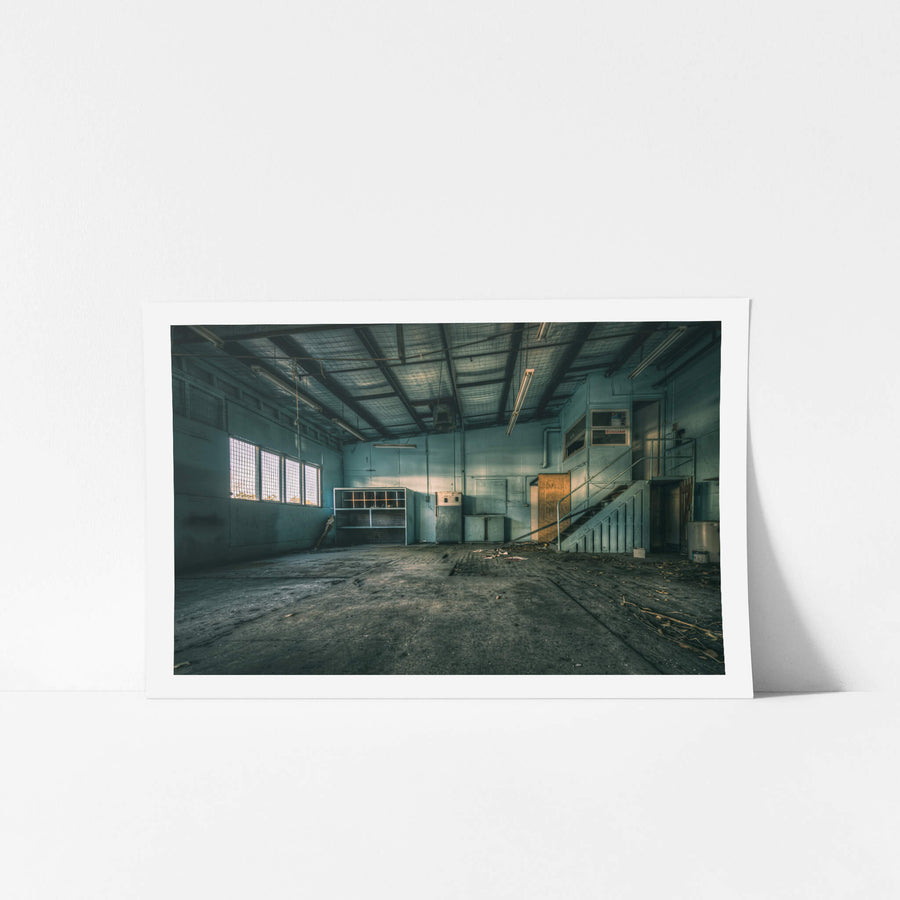
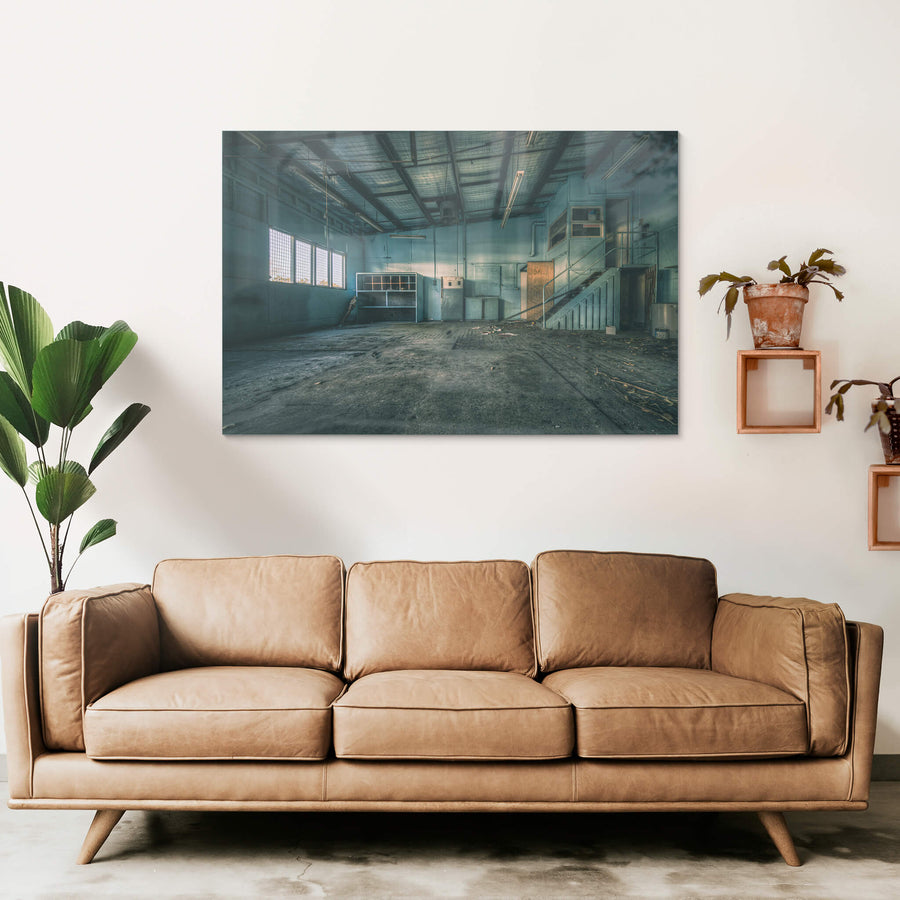
Faded blue-green paint covers the walls of a wide workroom at Halvorsen's Boat Yard, Putney, peeling in broad sections to reveal earlier layers beneath. A timber staircase with metal handrails rises to a mezzanine office, its window still carrying the Ronstan decal. Leaves and paper lie scattered across the concrete floor, and light enters through gridded windows along the left wall in long, even bands.
Open edition
Printed to order, no fixed quantity. Each print is hand-signed by the photographer.
Limited edition
A fixed number of prints exist. Once sold, the edition closes permanently. Each print is individually numbered and signed.
Shipping Free shipping over $250. Ships worldwide, rates calculated at checkout.
Returns Damaged in transit? We replace it. Full policy →
Ships within 10 business days · signed & numbered
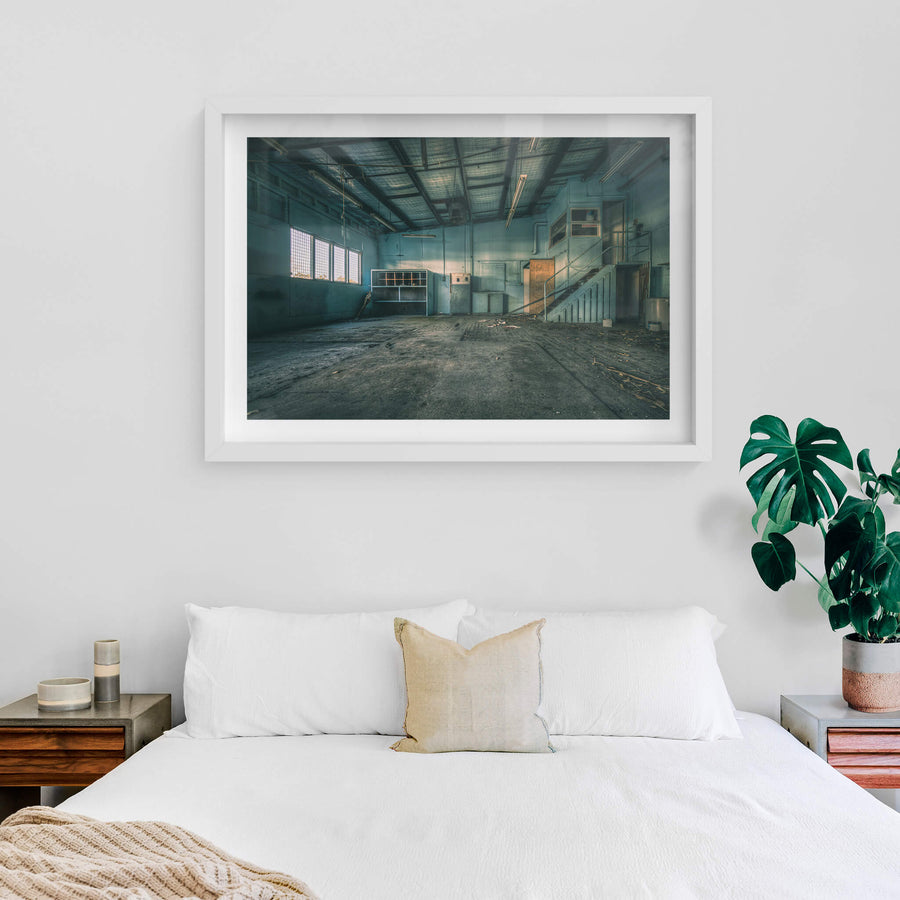
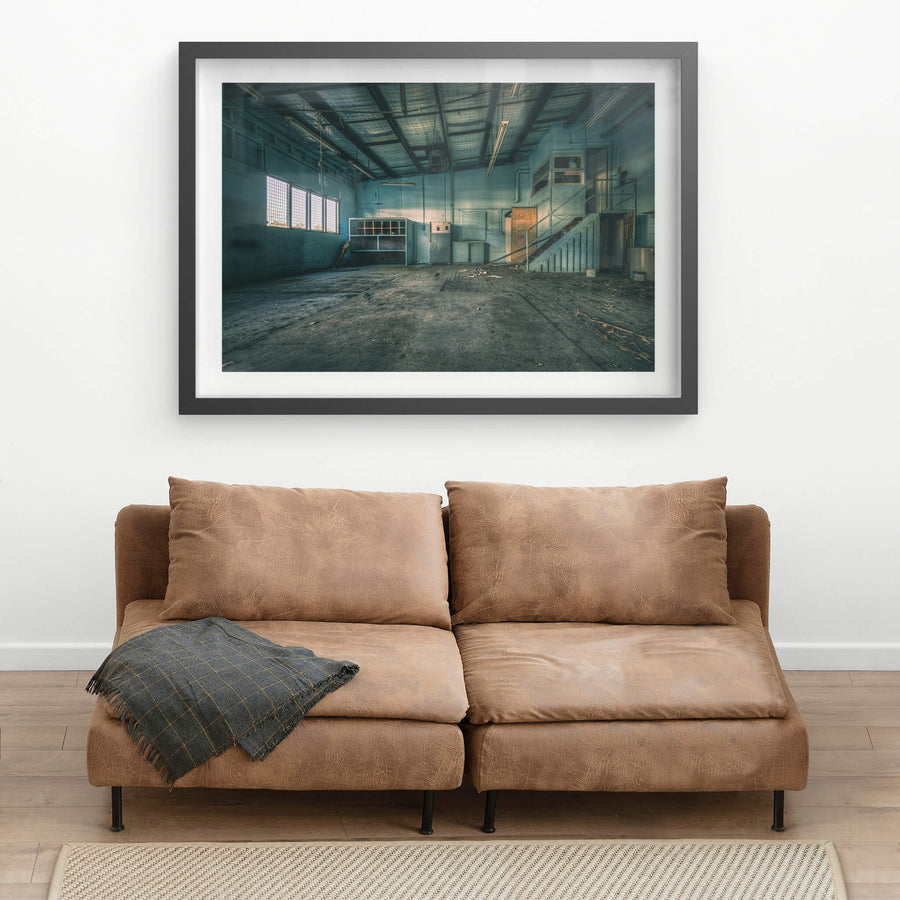
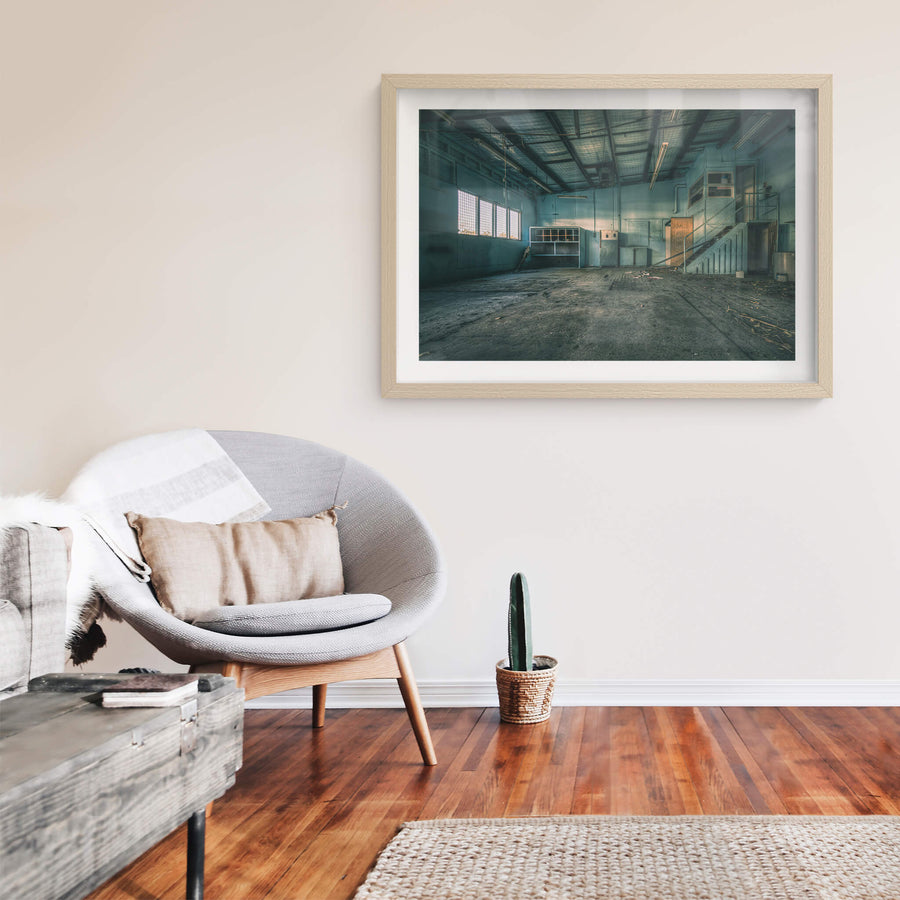
In situ
Print datasheet
- Title
- The Blue Room
- Series
- Halvorsens Boat Yard
- Catalogue
- HBY-014
- Process
- Giclée
- Captured
- 24 June 2018
- Camera
- NIKON D850
- Lens
- 14.0-24.0 mm f/2.8
- Aperture
- f/8.0
- Shutter
- 1/8 s
- ISO
- 100
- Focal length
- 14 mm
- Paper
- Ilford Galerie Smooth Cotton Rag 310 gsm
- Paper size
- 297 × 210 mm
- Location
- Putney, New South Wales, Australia
- Authenticity
- C2PA verified provenance →
- Recognised by
- Highly Commended in Multimedia at the 2016 National Trust of Australia (NSW) Heritage Awards
Putney, New South Wales, Australia
Map · Mapbox · OpenStreetMap
About this print
Faded blue-green paint covers the walls of a wide workroom at Halvorsen's Boat Yard, Putney, peeling in broad sections to reveal earlier layers beneath.
Brett Patman

The series
Halvorsens Boat Yard
Halvorsens Boat Yard ran on the Parramatta River at Ryde from 1939 to 1980, on a five-acre site that had once been part of James Squire's colonial brewery wharf. The yard was Lars Halvorsen Sons' main works, with engineering, blacksmith, lumber, machine, plumbing, and sheet metal shops, plus five slipways for craft up to 90 feet and 100 tons. The Halvorsen family enterprise built 1,299 vessels between 1925 and 1976; over 200 of those went to the Australian, United States, and Dutch forces during the Second World War, including 178 38-foot air-sea rescue boats and 16 112-foot Fairmile motor launches. In 1962 the yard built Gretel, Australia's first America's Cup challenger. Production at Ryde wound down through 1979 and the site was sold to the Royal Australian Navy in 1980.
Print sizes
The anatomy view shows what this finish is as a physical object: paper margin, mat band, frame depth, acrylic profile. The comparison strip shows how each size sits relative to the others at true scale. Click a size or a finish to update both.
| Type | Size | Width | Height |
|---|


