
Rusted Headframe
Provenance
- Camera
- Nikon F100
- Film
- Kodak Portra 400 · 35mm · ISO 400
- Paper
- Ilford Galerie Smooth Cotton Rag 310 gsm
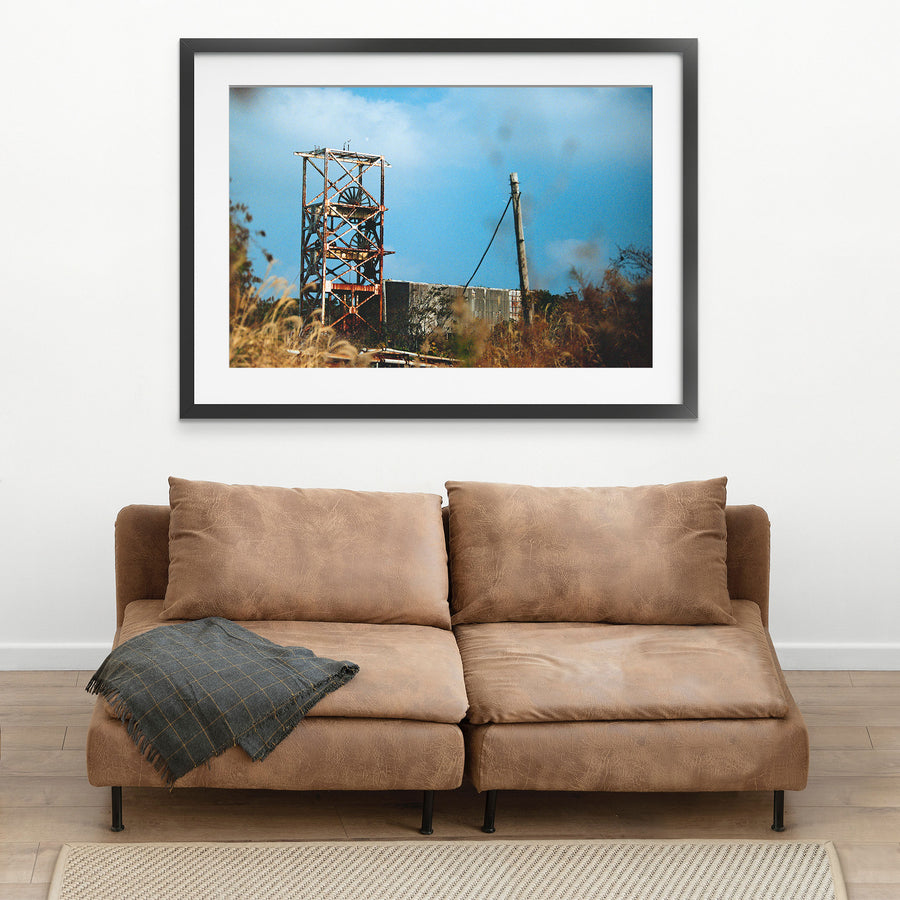
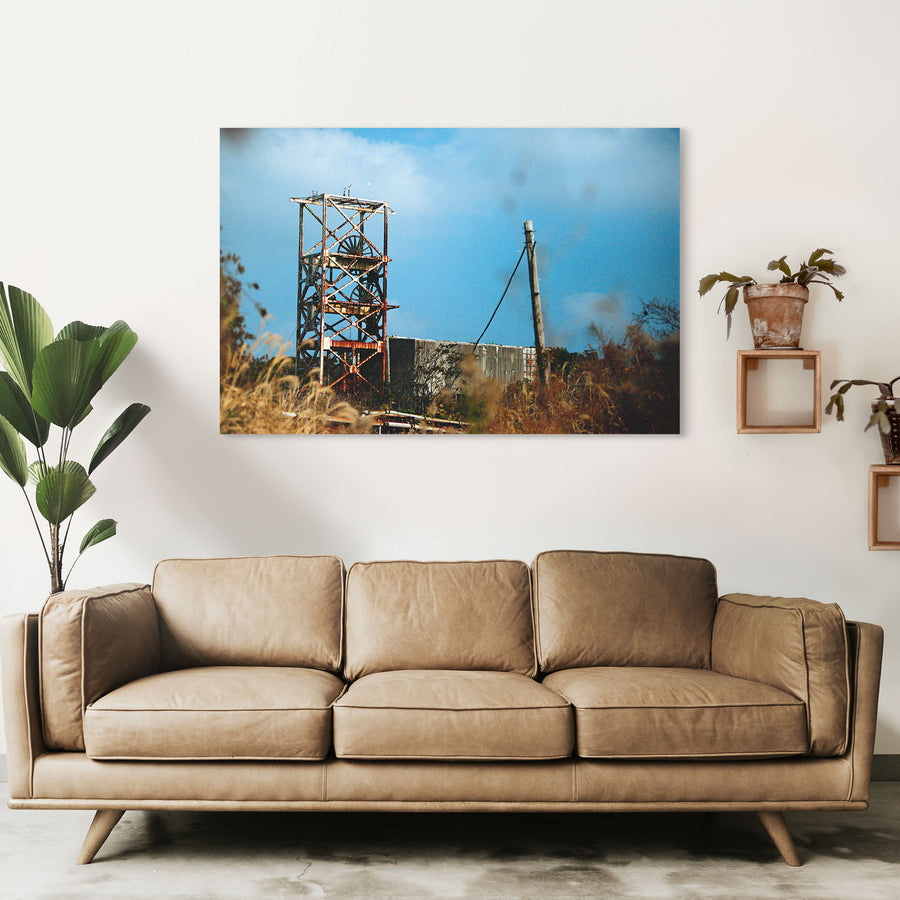
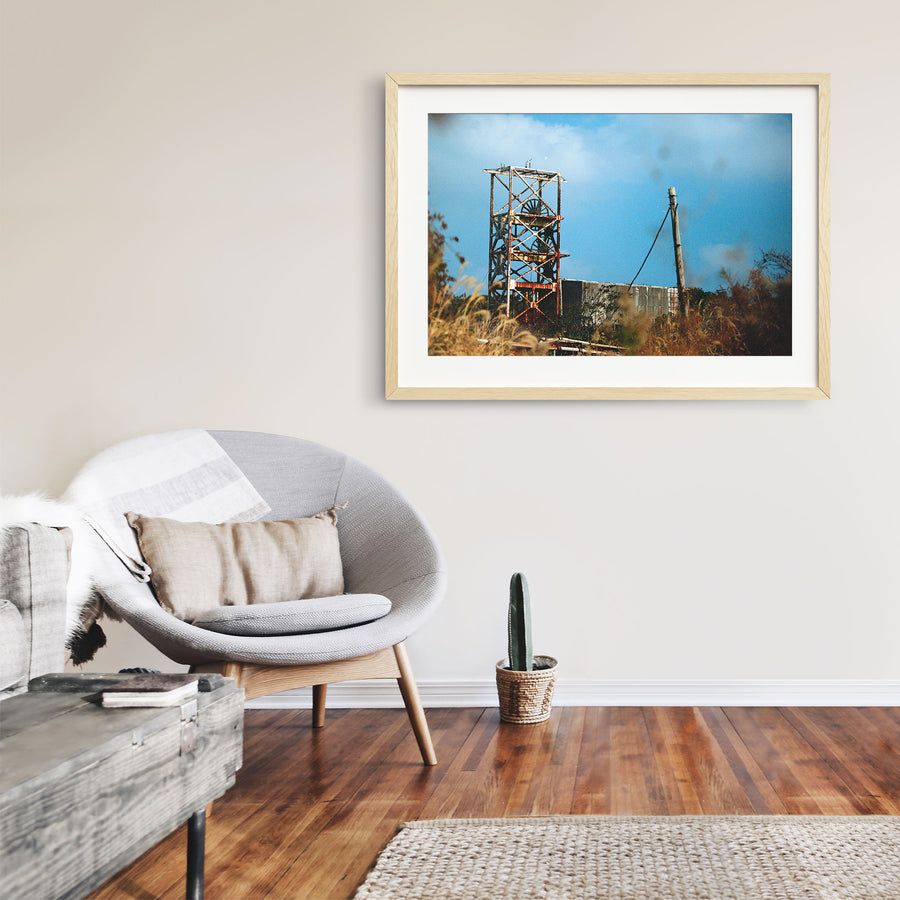
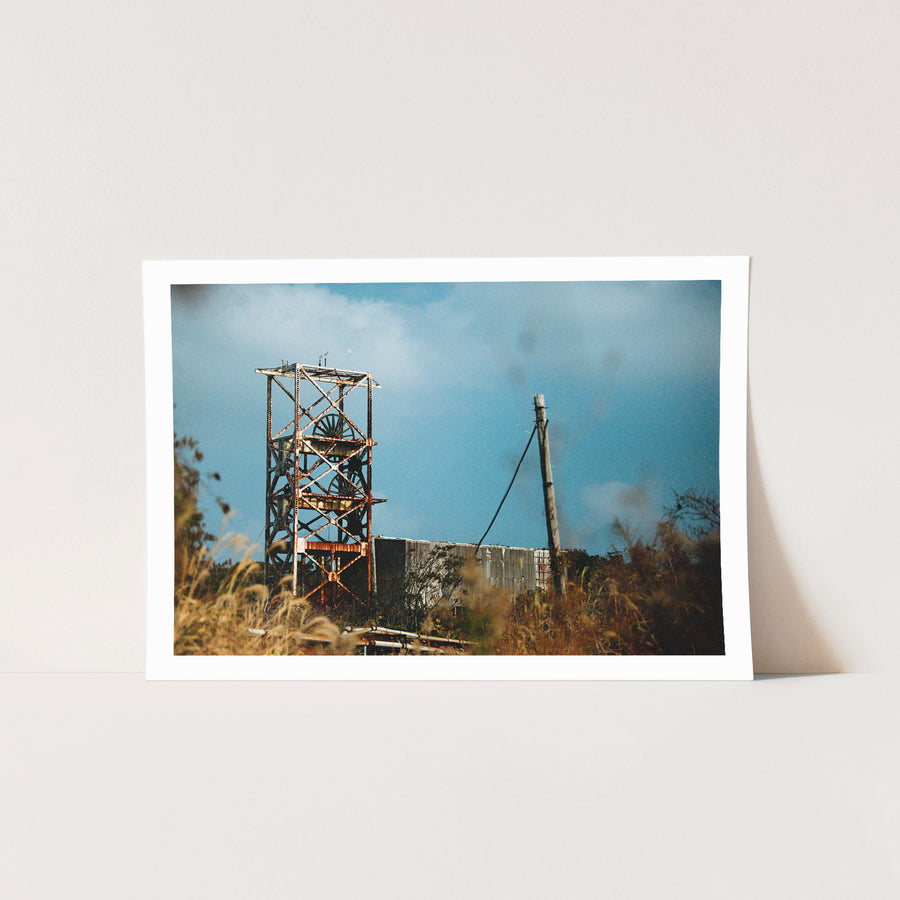
A riveted lattice headframe in deep rust-orange. Two head sheaves inside the tower, spokes showing through the bracing. A landing platform with a rail on the near side. A leaning timber pole with a stay wire beside it. A corrugated shed at the foot. Winter grass and pipelines in the foreground. Blue sky with cloud building.
Open edition
Printed to order, no fixed quantity. Each print is hand-signed by the photographer.
Limited edition
A fixed number of prints exist. Once sold, the edition closes permanently. Each print is individually numbered and signed.
Shipping Free shipping over $250. Ships worldwide, rates calculated at checkout.
Returns Damaged in transit? We replace it. Full policy →
Ships within 10 business days · signed & numbered
In situ
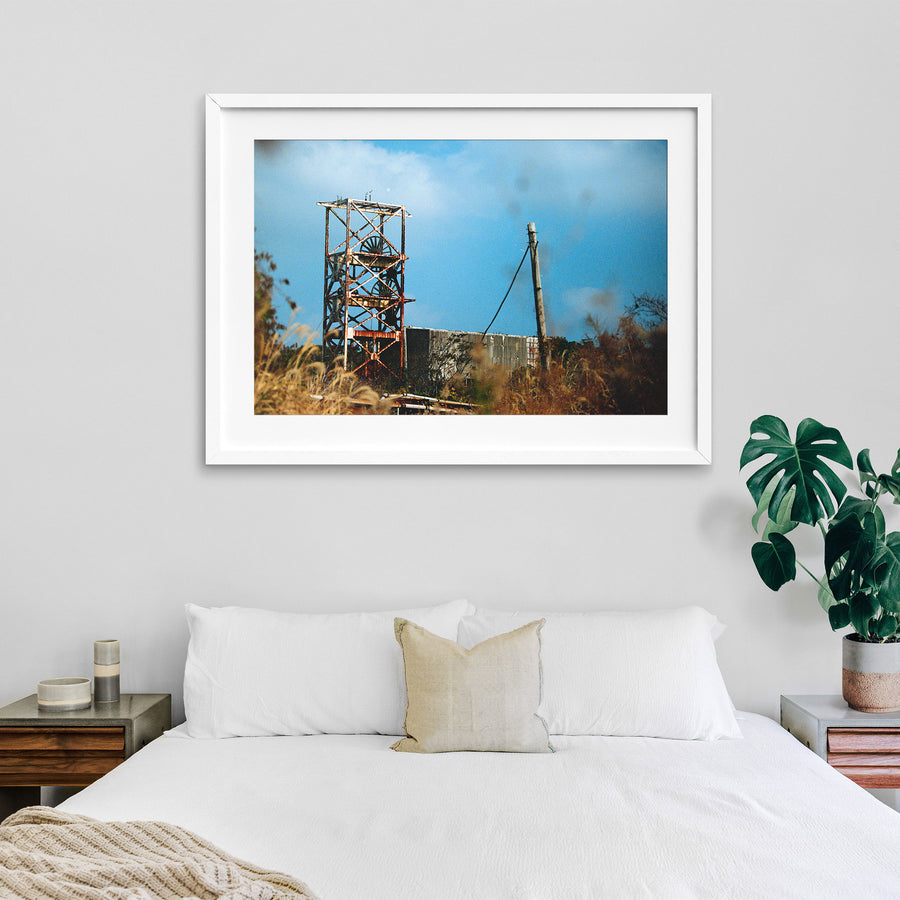
Print datasheet
- Title
- Rusted Headframe
- Series
- Ikeshima
- Catalogue
- IKE-051
- Process
- Giclée
- Captured
- 18 January 2026
- Camera
- Nikon F100
- Film
- Kodak Portra 400
- Format
- 35mm
- Film ISO
- 400
- Paper
- Ilford Galerie Smooth Cotton Rag 310 gsm
- Location
- Ikeshima, Nagasaki, Japan
- Recognised by
- Highly Commended in Multimedia at the 2016 National Trust of Australia (NSW) Heritage Awards
Ikeshima, Nagasaki, Japan
Map · Mapbox · OpenStreetMap
About this print
The No. 1 shaft headframe at Ikeshima Coal Mine, close enough to count the rivets, its riveted lattice gone to a deep rust-orange against a blue sky with cloud building behind it. Both head sheaves are still in the tower, one above the other, the spokes showing through the bracing, and a landing platform with its rail clings to the near side.
Brett Patman

The series
Ikeshima
Ikeshima Coal Mine operated beneath the seabed off Nagasaki from 1959 until 29 November 2001, making it the last new coal mine to open in Japan and the last large-scale underground colliery to close. At its 1970 peak the island held 7,770 residents on a 0.86 km² rock in the Gotō Sea, housed in company-built concrete towers above a mine that reached 650 m below sea level.
Print sizes
The anatomy view shows what this finish is as a physical object: paper margin, mat band, frame depth, acrylic profile. The comparison strip shows how each size sits relative to the others at true scale. Click a size or a finish to update both.
| Type | Size | Width | Height |
|---|


