
Jikai and Headframe
Provenance
- Camera
- Nikon F100
- Film
- Fujifilm Velvia 50 · 35mm · ISO 50
- Paper
- Ilford Galerie Smooth Cotton Rag 310 gsm
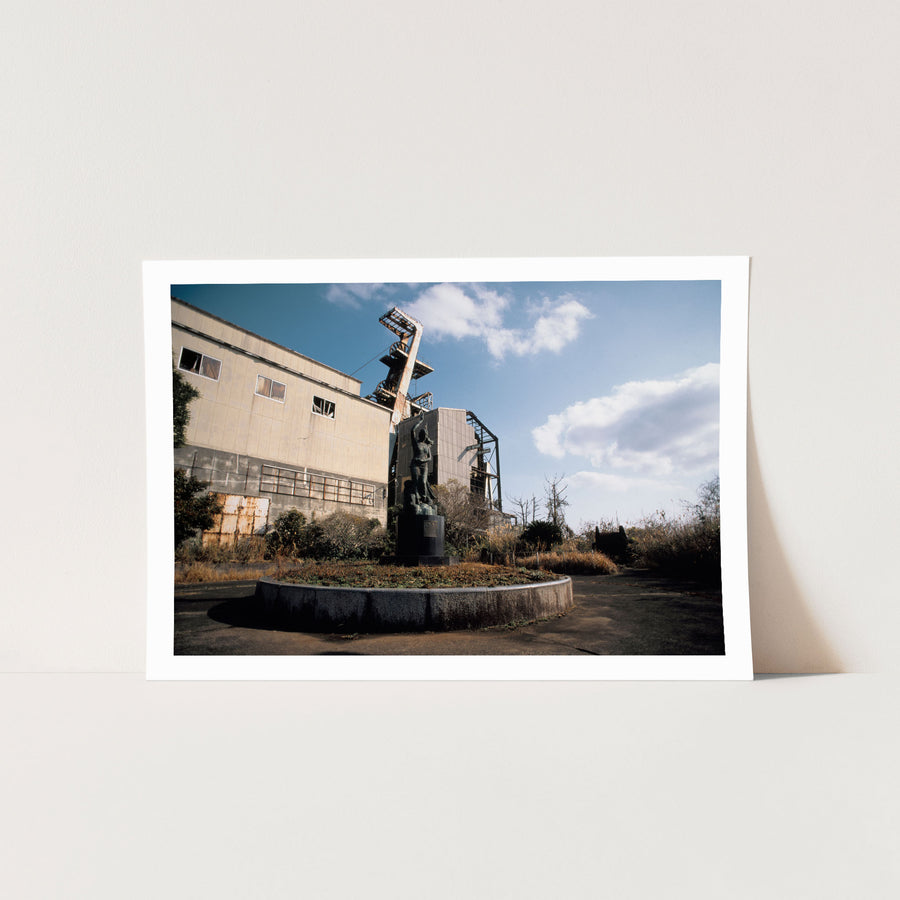
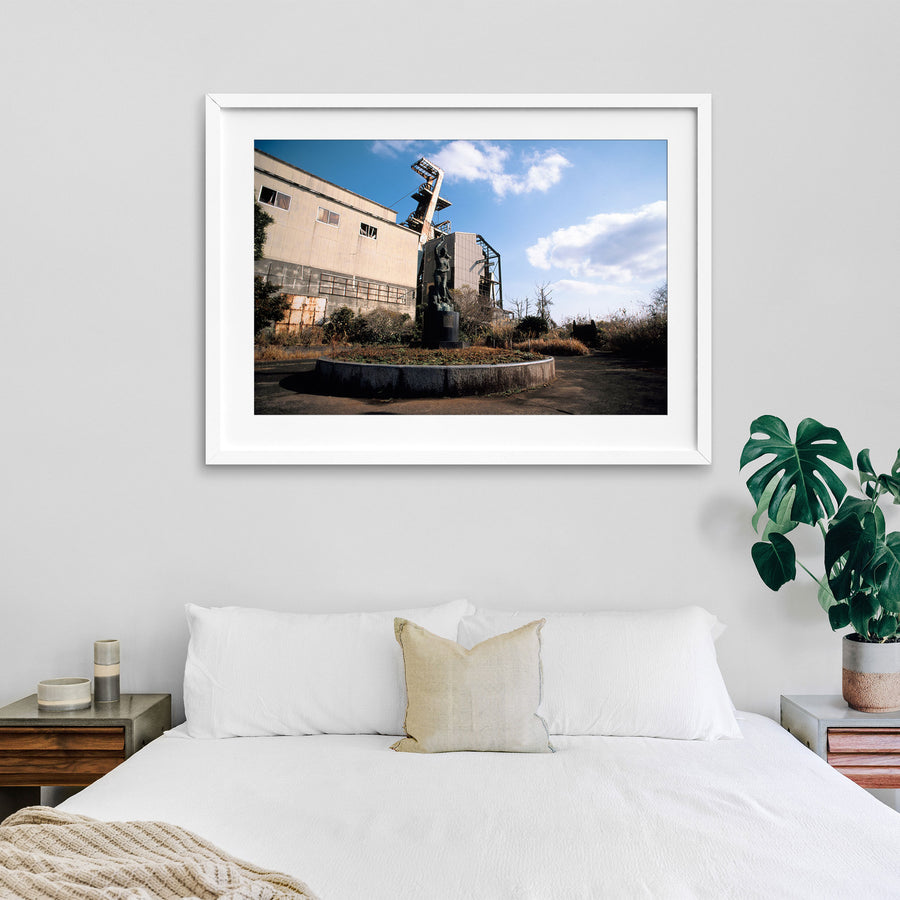
A bronze figure with one arm raised on a circular stone plinth. A planting bed at the base gone to dry grass and scrub. The winder house behind with broken windows and streaked concrete. The headframe with its sheave wheels leaning out over the roof at right. A rusted steel door in the lower wall.
Open edition
Printed to order, no fixed quantity. Each print is hand-signed by the photographer.
Limited edition
A fixed number of prints exist. Once sold, the edition closes permanently. Each print is individually numbered and signed.
Shipping Free shipping over $250. Ships worldwide, rates calculated at checkout.
Returns Damaged in transit? We replace it. Full policy →
Ships within 10 business days · signed & numbered
In situ
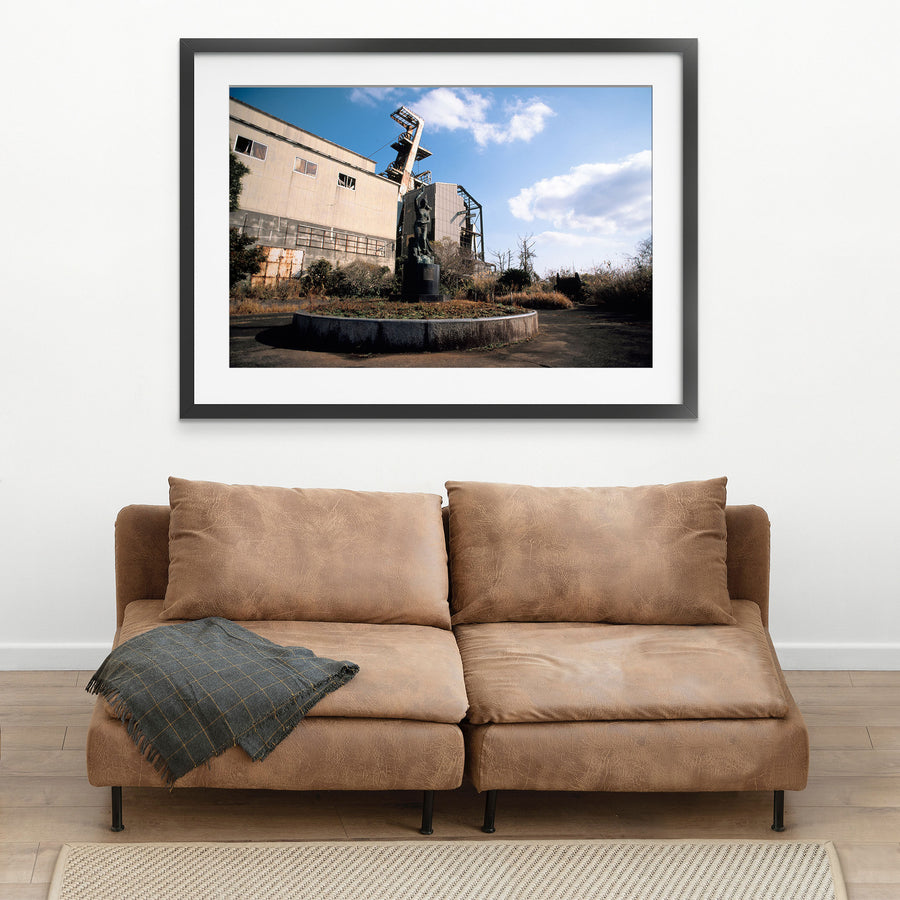
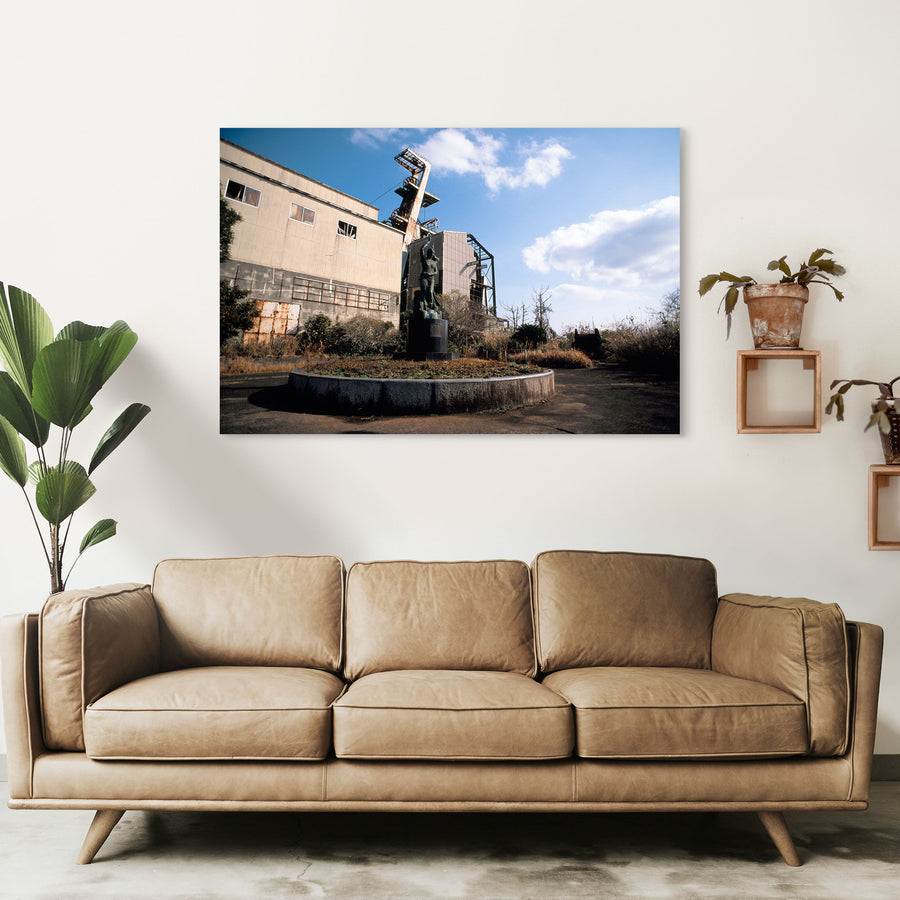
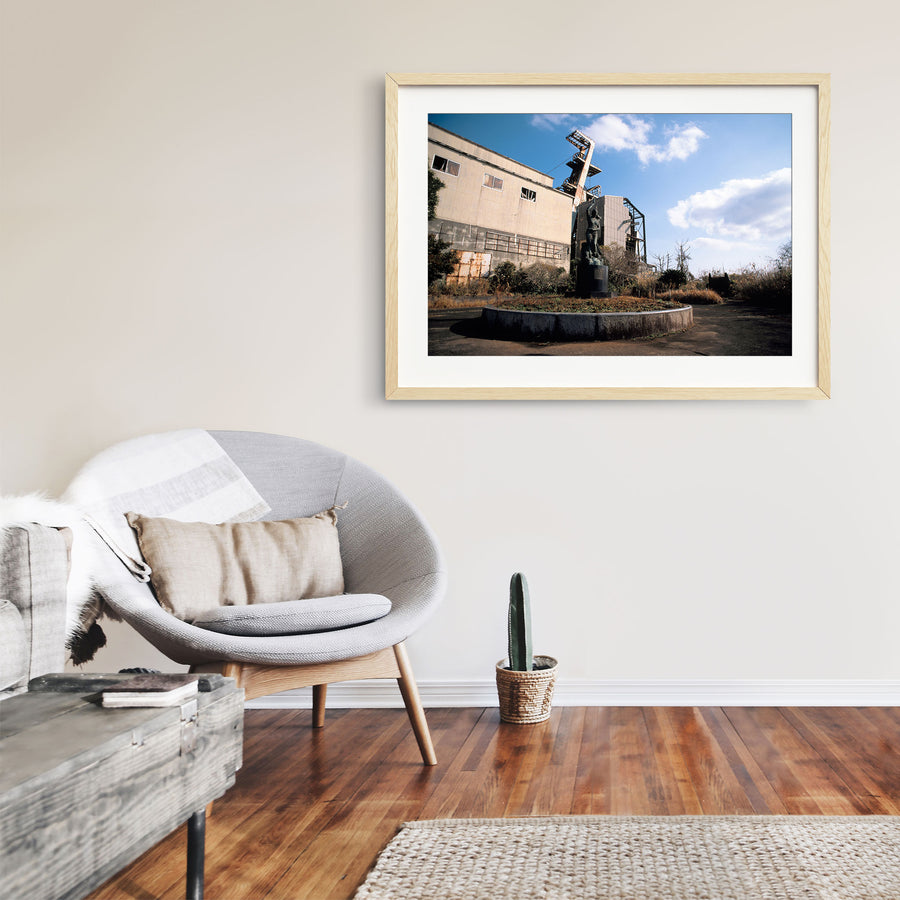
Print datasheet
- Title
- Jikai and Headframe
- Series
- Ikeshima
- Catalogue
- IKE-035
- Process
- Giclée
- Captured
- 17 January 2026
- Camera
- Nikon F100
- Film
- Fujifilm Velvia 50
- Format
- 35mm
- Film ISO
- 50
- Paper
- Ilford Galerie Smooth Cotton Rag 310 gsm
- Location
- Ikeshima, Nagasaki, Japan
- Recognised by
- Highly Commended in Multimedia at the 2016 National Trust of Australia (NSW) Heritage Awards
Ikeshima, Nagasaki, Japan
Map · Mapbox · OpenStreetMap
About this print
The goddess statue Jikai (女神像 慈海) raises one arm from her circular stone plinth in the forecourt of the No. 2 shaft office at Ikeshima Coal Mine. Behind her the winding house rises on the left, its windows broken and its concrete streaked, and the headframe leans out over the roofline at right with its sheave wheels still mounted.
Brett Patman

The series
Ikeshima
Ikeshima Coal Mine operated beneath the seabed off Nagasaki from 1959 until 29 November 2001, making it the last new coal mine to open in Japan and the last large-scale underground colliery to close. At its 1970 peak the island held 7,770 residents on a 0.86 km² rock in the Gotō Sea, housed in company-built concrete towers above a mine that reached 650 m below sea level.
Print sizes
The anatomy view shows what this finish is as a physical object: paper margin, mat band, frame depth, acrylic profile. The comparison strip shows how each size sits relative to the others at true scale. Click a size or a finish to update both.
| Type | Size | Width | Height |
|---|


