Washery and Stack

Provenance

Camera
Nikon F100
Film
Cinestill 800T · 35mm · ISO 800
Paper
Ilford Galerie Smooth Cotton Rag 310 gsm

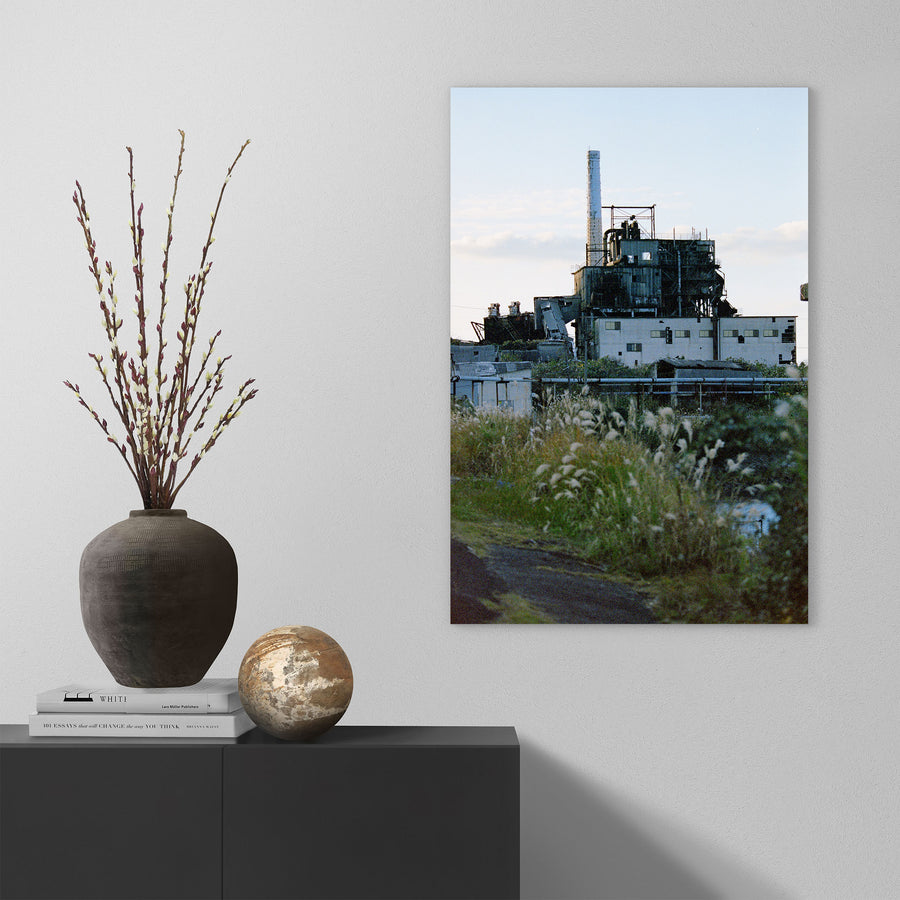
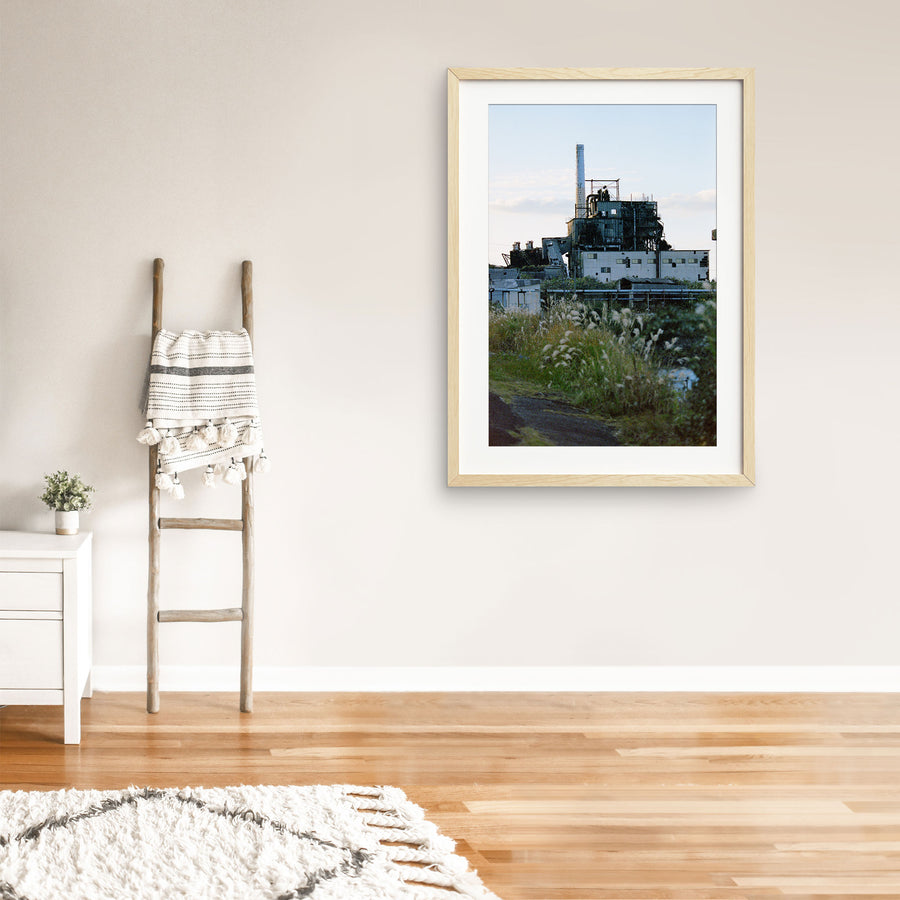
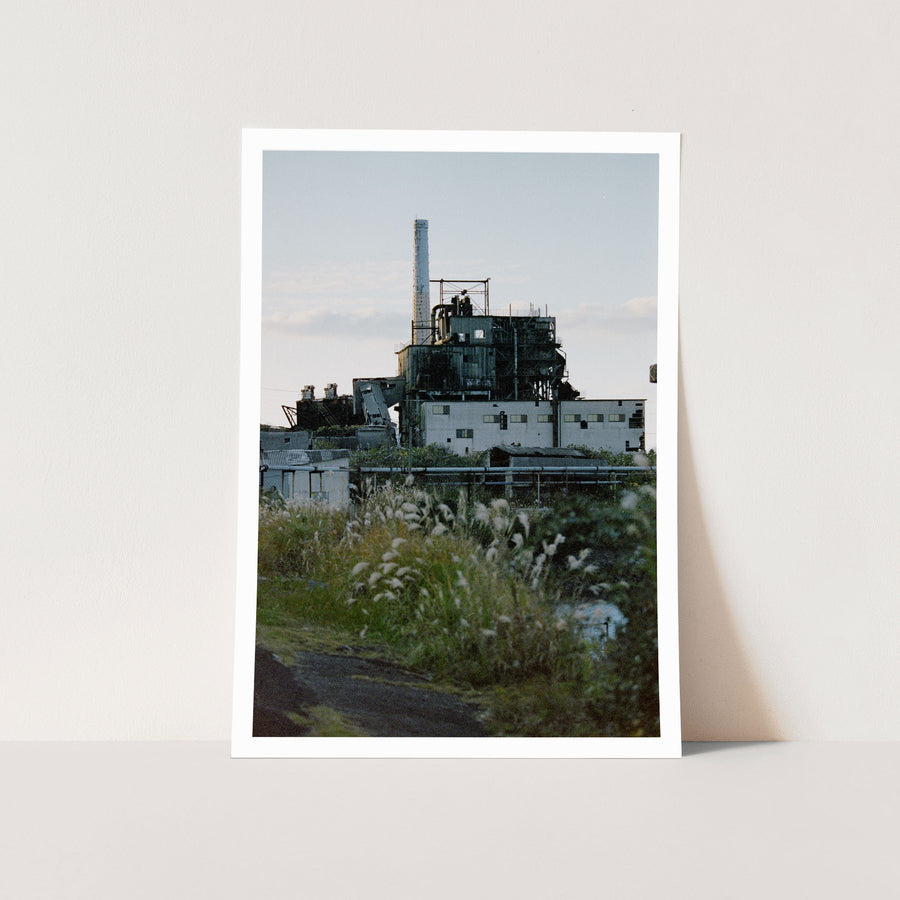
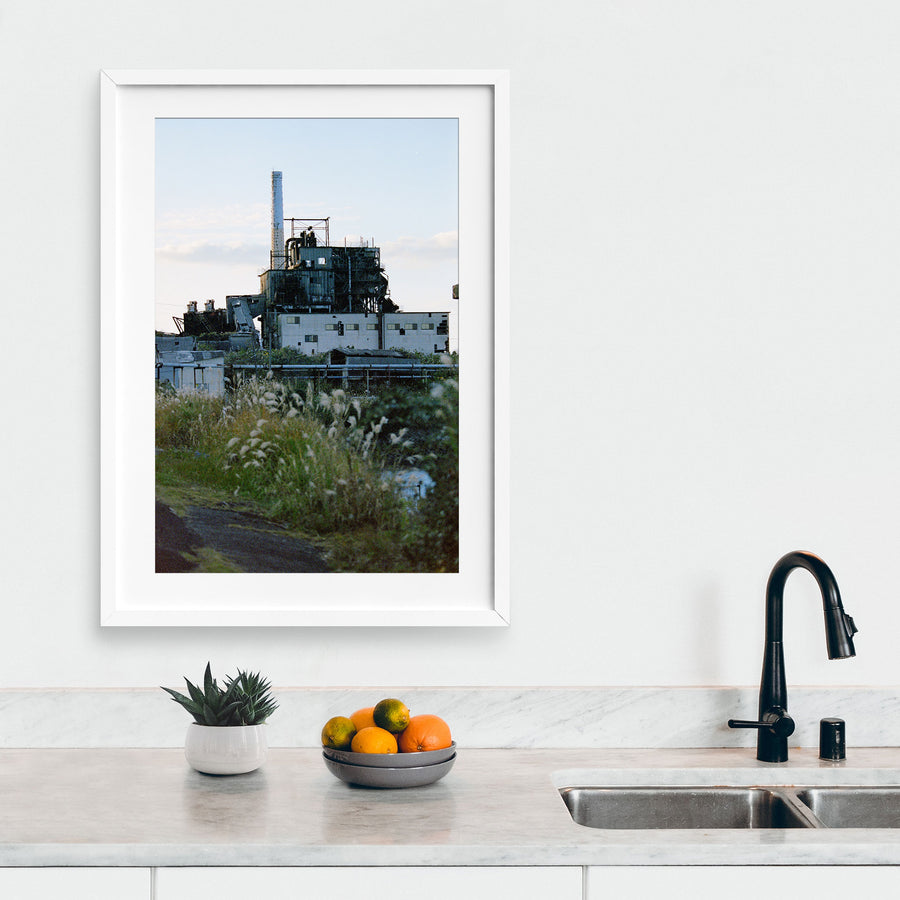
A slender white chimney rises above a reinforced-concrete boiler house, its render worn and discoloured near the top. Dense feathery grasses run up to a dark unpaved path. A section of conveyor structure, collapsed and part-dismantled, connects to the main block. Small rectangular windows with yellowed panes line the lower white wall. Vegetation covers the upper levels of the plant.

Edition
Open edition

Open edition
Printed to order, no fixed quantity. Each print is hand-signed by the photographer.

Limited edition
A fixed number of prints exist. Once sold, the edition closes permanently. Each print is individually numbered and signed.

$100.00 AUD
Size
Type
Colour
Signed, numbered, with COA. Made to order in 5 to 10 business days (unframed). Shipped in protective packaging with edition certificate, paper-stock reference and a printed care guide.
See certificate sample →

Shipping Free shipping over $250. Ships worldwide, rates calculated at checkout.

Returns Damaged in transit? We replace it. Full policy →

Ships within 10 business days · signed & numbered

In situ
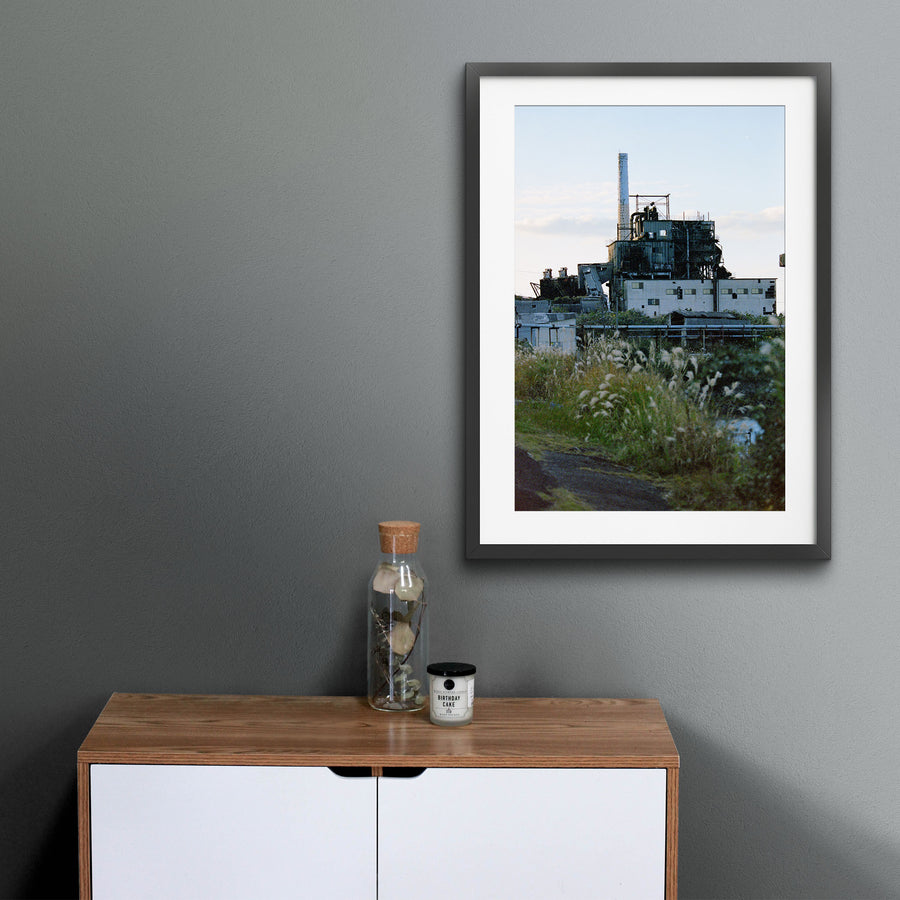
A slender white chimney and reinforced-concrete boiler house at Ikeshima, partly obscured by dense pale grasses, with a collapsed conveyor structure leading into the main block and yellowed window panes visible along the lower wall.A slender white chimney and reinforced-concrete boiler house at Ikeshima, partly obscured by dense pale grasses, with a collapsed conveyor structure leading into the main block and yellowed window panes visible along the lower wall.A slender white chimney and reinforced-concrete boiler house at Ikeshima, partly obscured by dense pale grasses, with a collapsed conveyor structure leading into the main block and yellowed window panes visible along the lower wall.A slender white chimney and reinforced-concrete boiler house at Ikeshima, partly obscured by dense pale grasses, with a collapsed conveyor structure leading into the main block and yellowed window panes visible along the lower wall.A slender white chimney and reinforced-concrete boiler house at Ikeshima, partly obscured by dense pale grasses, with a collapsed conveyor structure leading into the main block and yellowed window panes visible along the lower wall.
01 PROVENANCE

Print datasheet

Title
Washery and Stack
Series
Ikeshima
Catalogue
IKE-019
Process
Giclée
Captured
17 January 2026
Camera
Nikon F100
Film
Cinestill 800T
Format
35mm
Film ISO
800
Paper
Ilford Galerie Smooth Cotton Rag 310 gsm
Location
Nagasaki, Nagasaki, Japan
Recognised by
Highly Commended in Multimedia at the 2016 National Trust of Australia (NSW) Heritage Awards
02 LOCATION

Nagasaki, Nagasaki, Japan

Map · Mapbox · OpenStreetMap

03 THE STORY

About this print

Ikeshima's isolation shaped every decision made about the island. When the first vertical shaft was completed in 1967, the operators at Matsushima Coal Mining understood that a remote island in the Gotō Sea could not be supplied with mains power or fresh water in the ordinary way. The solution was to build both on the island: a coal-fired power station and a seawater-desalination plant, commissioned together to keep the mine and its community running independently of the mainland. The power station's chimney still rises above the boiler house, its white render discoloured and worn toward the top. A dense field of feathery, light-coloured grasses runs up to a dark unpaved path, half-concealing the lower buildings and an overhead run of pipes. A section of conveyor structure, collapsed and part-dismantled, leads back into the main concrete block, where small rectangular windows with yellowed panes line the lower wall. Vegetation has taken hold across the upper levels of the plant, pushing into gaps in the structure that once handled the coal drawn from seams far beneath the seabed. Ikeshima Coal Mine was the last new colliery sunk in Japan, beginning commercial output in 1959 and working on as the last large-scale coal mine in the country until closure on 29 November 2001. At its 1970 peak, the island carried a population of 7,770, housed in reinforced-concrete apartment towers and served by the self-contained infrastructure that the power station was built to anchor. Peak production came in 1985, when more than 1.5 million tonnes of coal were raised from seams reaching about 650 metres below sea level. The mine dismissed around 2,500 employees on the day it closed. What the photograph records is the surface plant as it stands now: the chimney holding its position above the boiler house, the grasses advancing, the conveyors giving way. The underground continued for a time after closure as a training facility and later a tourist attraction, but the surface has been returning to the island at its own pace since 2001.

04 FROM THE FIELD NOTES

The on-island coal-fired power station was commissioned in 1967, part of an unusually self-sufficient utility set-up dictated by Ikeshima's isolation, the island could not be supplied with mains power in the ordinary way. The chimney still stands above the boiler house, its render worn near the top, a collapsed run of conveyor structure trailing back into the main block. Grasses have taken hold across the upper levels of the plant, which last served the mine before its closure on 29 November 2001.

Brett Patman

Ikeshima

The series

Ikeshima

1959 to 2001 · 55 photographs

Ikeshima Coal Mine operated beneath the seabed off Nagasaki from 1959 until 29 November 2001, making it the last new coal mine to open in Japan and the last large-scale underground colliery to close. At its 1970 peak the island held 7,770 residents on a 1.08 km² rock in the Gotō Sea, housed in company-built concrete towers above a mine that reached 650 m below sea level.

View all in this series →

05 SIZE GUIDE

Print sizes

The anatomy view shows what this finish is as a physical object: paper margin, mat band, frame depth, acrylic profile. The comparison strip shows how each size sits relative to the others at true scale. Click a size or a finish to update both.

Anatomy · true ratio
TypeSizeWidthHeight
08 BY POST · NO SPAM

Read the full story

Articles when they're published. The history behind a place. The day of a shoot. The work between prints. No marketing, no schedule.

You're subscribed.