
Spare Beds
Provenance
- Camera
- NIKON D850
- Lens
- 14.0-24.0 mm f/2.8
- Settings
- 14mm · f/8.0 · 1/20 · ISO 100
- Paper
- Ilford Galerie Smooth Cotton Rag 310 gsm
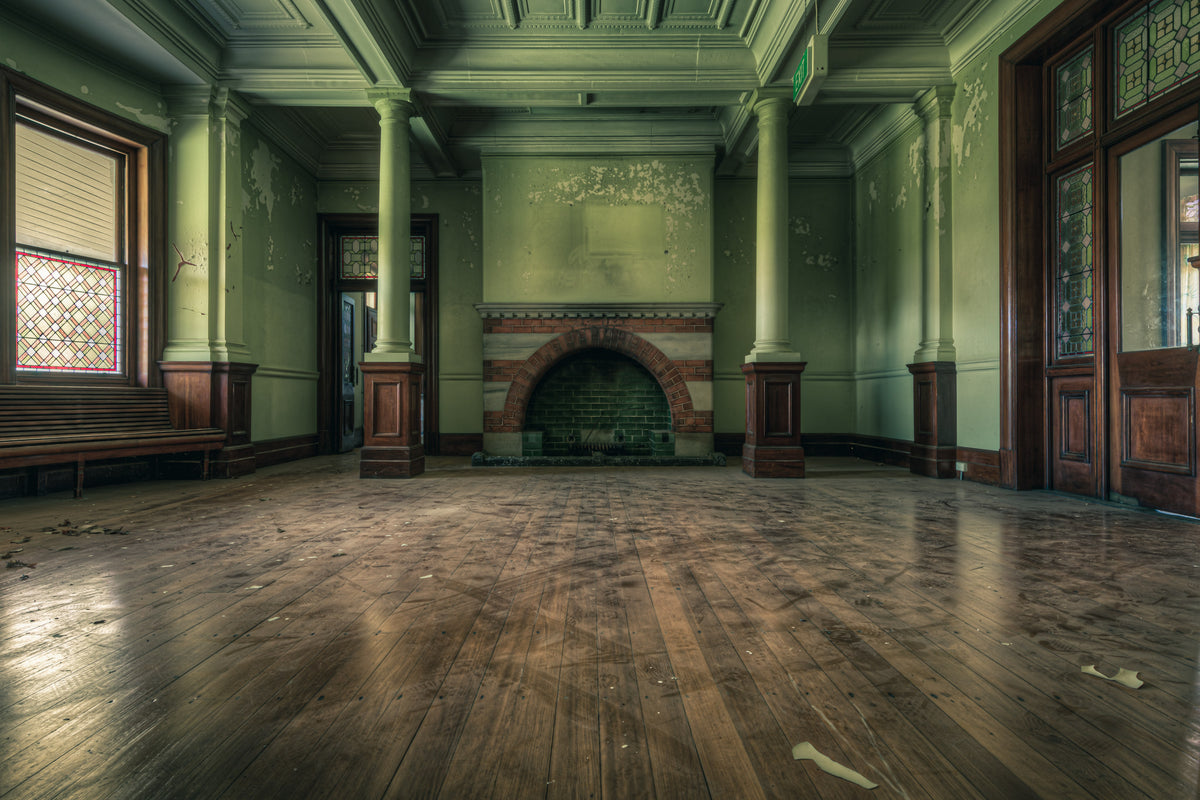
Three dust-covered mattresses lie across the floorboards of a large room at Kenmore, Goulburn NSW, a dark red brick fireplace with a marble mantelpiece anchoring the far wall. Pale yellow paint peels from the walls above the wainscoting, and two ceiling fans hang overhead, their blades stilled. A partly open door on the right wall carries a 'Toilet' sign above the frame.
Open edition
Printed to order, no fixed quantity. Each print is hand-signed by the photographer.
Limited edition
A fixed number of prints exist. Once sold, the edition closes permanently. Each print is individually numbered and signed.
Shipping Free shipping over $250. Ships worldwide, rates calculated at checkout.
Returns Damaged in transit? We replace it. Full policy →
Ships within 10 business days · signed & numbered
In situ

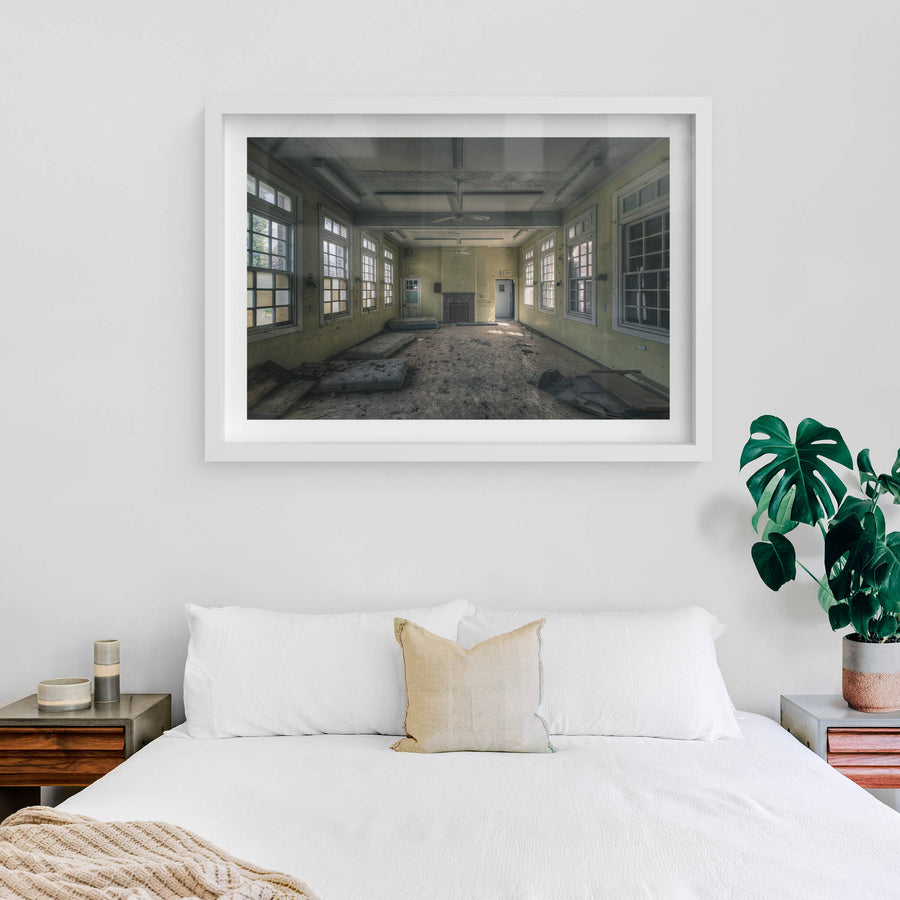
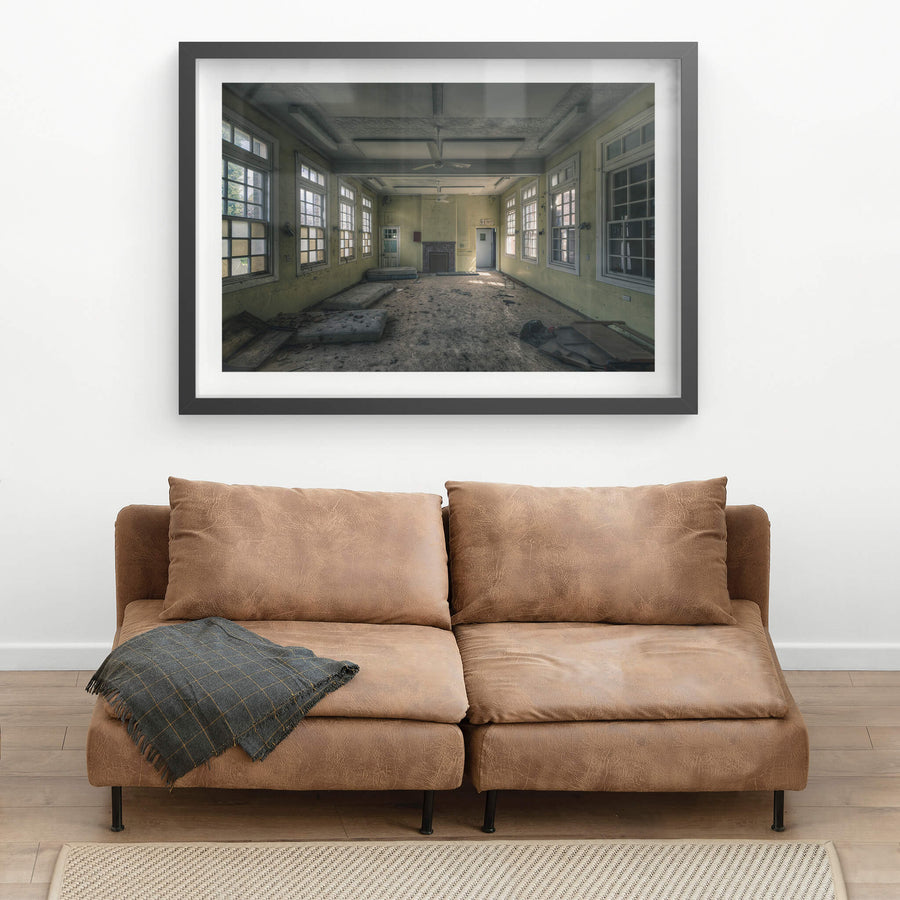
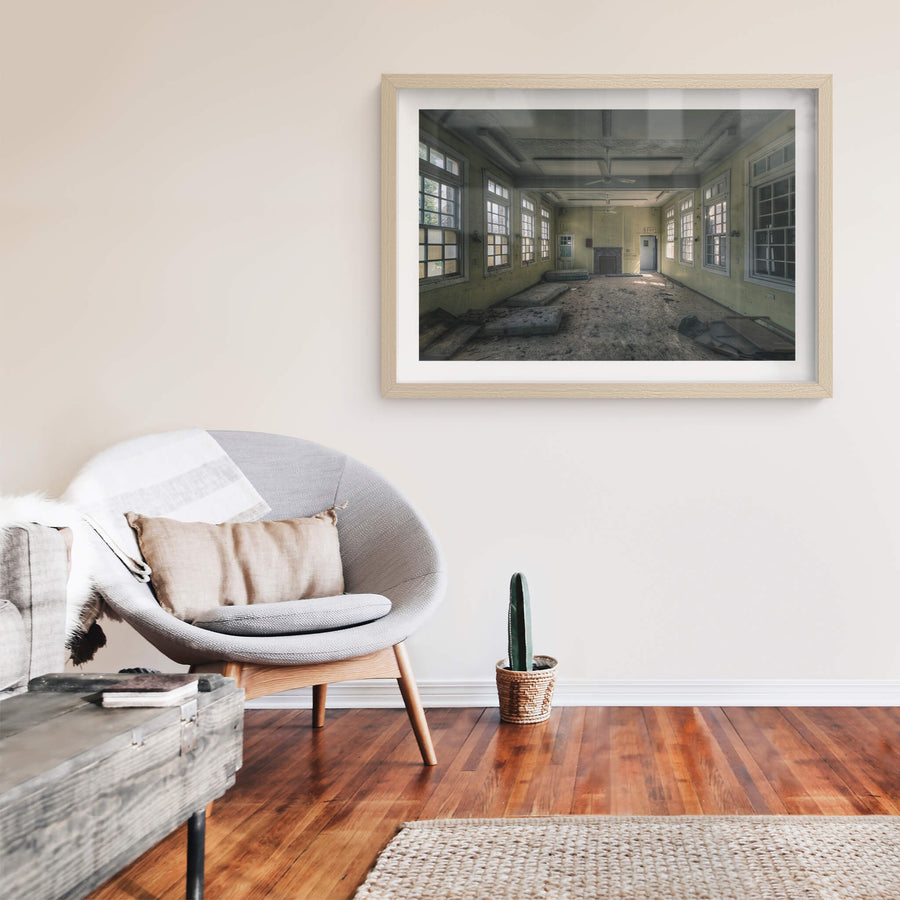
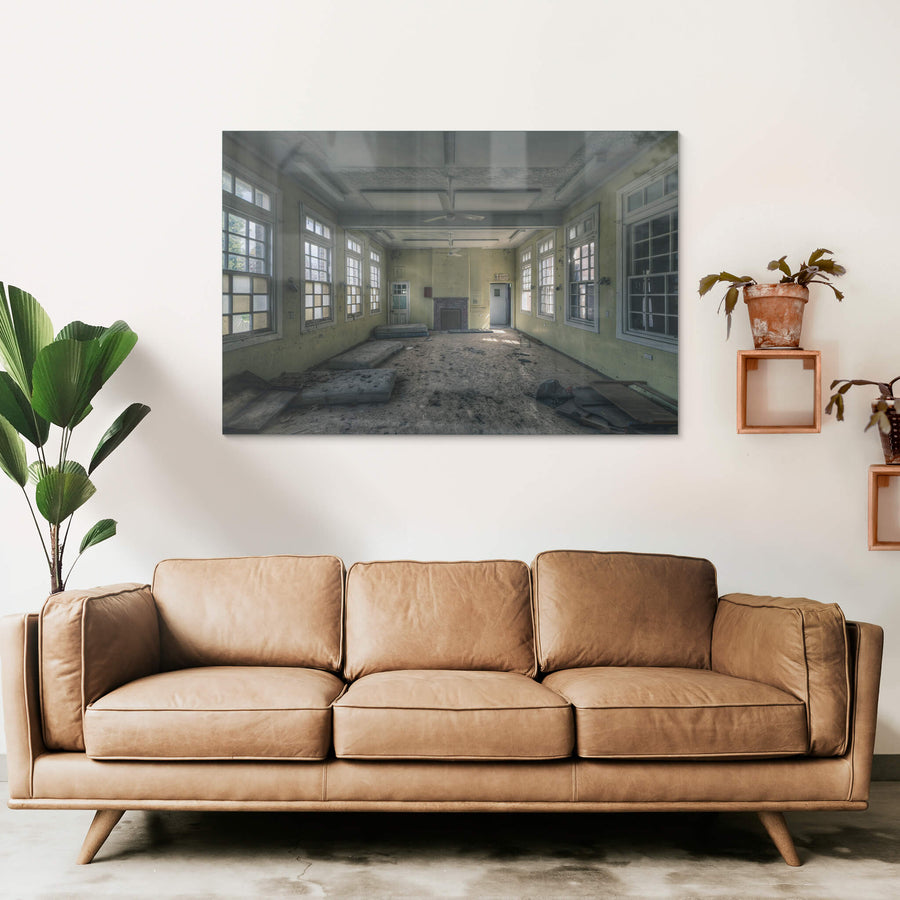
Print datasheet
- Title
- Spare Beds
- Series
- Kenmore Asylum
- Catalogue
- KAS-056
- Process
- Giclée
- Captured
- 1 March 2020
- Camera
- NIKON D850
- Lens
- 14.0-24.0 mm f/2.8
- Aperture
- f/8.0
- Shutter
- 1/20 s
- ISO
- 100
- Focal length
- 14 mm
- Paper
- Ilford Galerie Smooth Cotton Rag 310 gsm
- Paper size
- 297 × 210 mm
- Location
- New South Wales, Australia
- Authenticity
- C2PA verified provenance →
- Recognised by
- Highly Commended in Multimedia at the 2016 National Trust of Australia (NSW) Heritage Awards
New South Wales, Australia
Map · Mapbox · OpenStreetMap
About this print
A large common room with pale yellow walls and white-trimmed windows on three sides. Daylight pours through the glass but lands on nothing clean. Stained mattresses lie flat on the concrete floor. A brick fireplace sits centred on the far wall, flanked by two doors. Ceiling fans hang motionless from exposed beams. Paint blisters near the cornices. Debris, dirt, and flattened cardboard cover the ground.
Brett Patman
The series
Kenmore Asylum
Frederic Norton Manning, NSW Inspector-General of the Insane, acquired 340.5 acres on Taralga Road, Goulburn, for £1,252 in October 1879. Walter Liberty Vernon, the first NSW Government Architect, designed the asylum complex. Kenmore opened in 1895 with capacity for 700 patients across 19 wards.
Print sizes
The anatomy view shows what this finish is as a physical object: paper margin, mat band, frame depth, acrylic profile. The comparison strip shows how each size sits relative to the others at true scale. Click a size or a finish to update both.
| Type | Size | Width | Height |
|---|


