Sewing Machine

Provenance

Camera
NIKON D7000
Lens
AF-S Zoom-Nikkor 24-70mm f/2.8G ED
Settings
99mm · f/8.0 · 1/3 · ISO 100
Paper
Ilford Galerie Smooth Cotton Rag 310 gsm

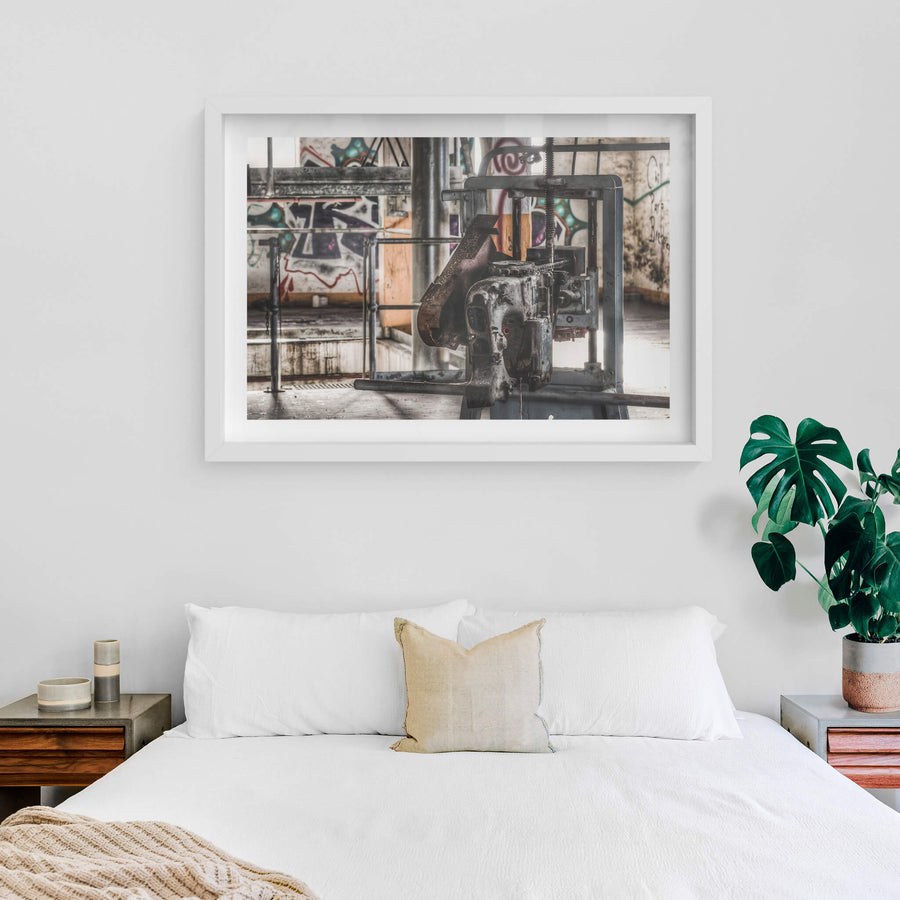
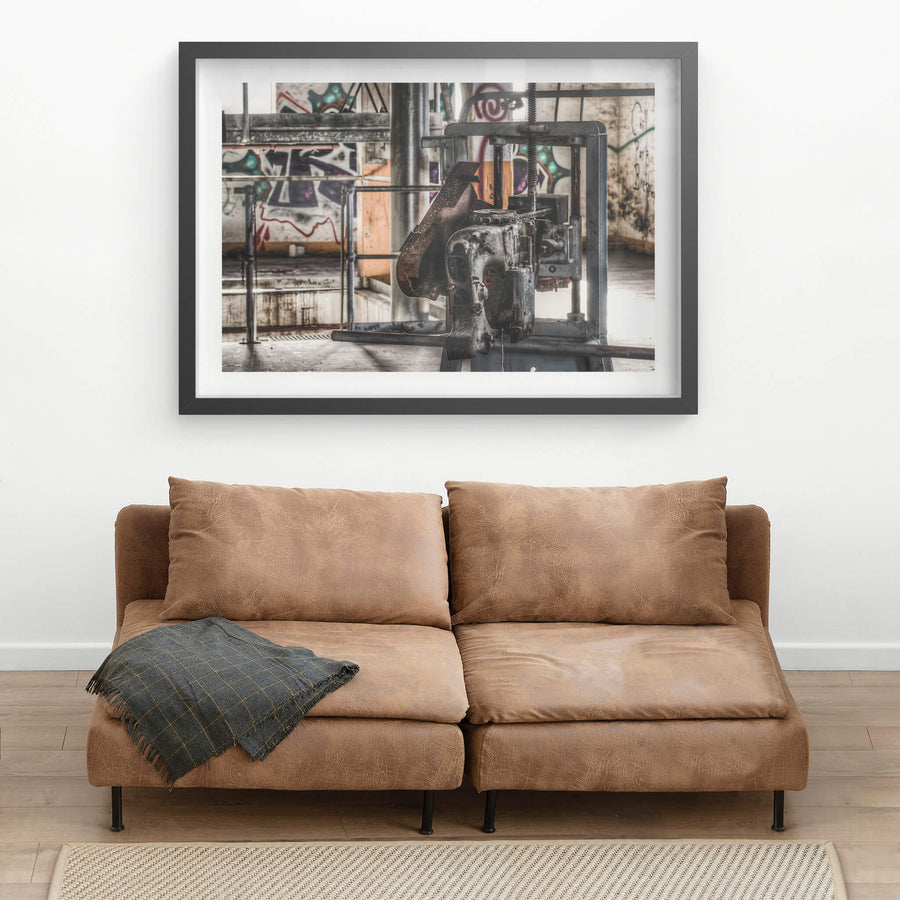
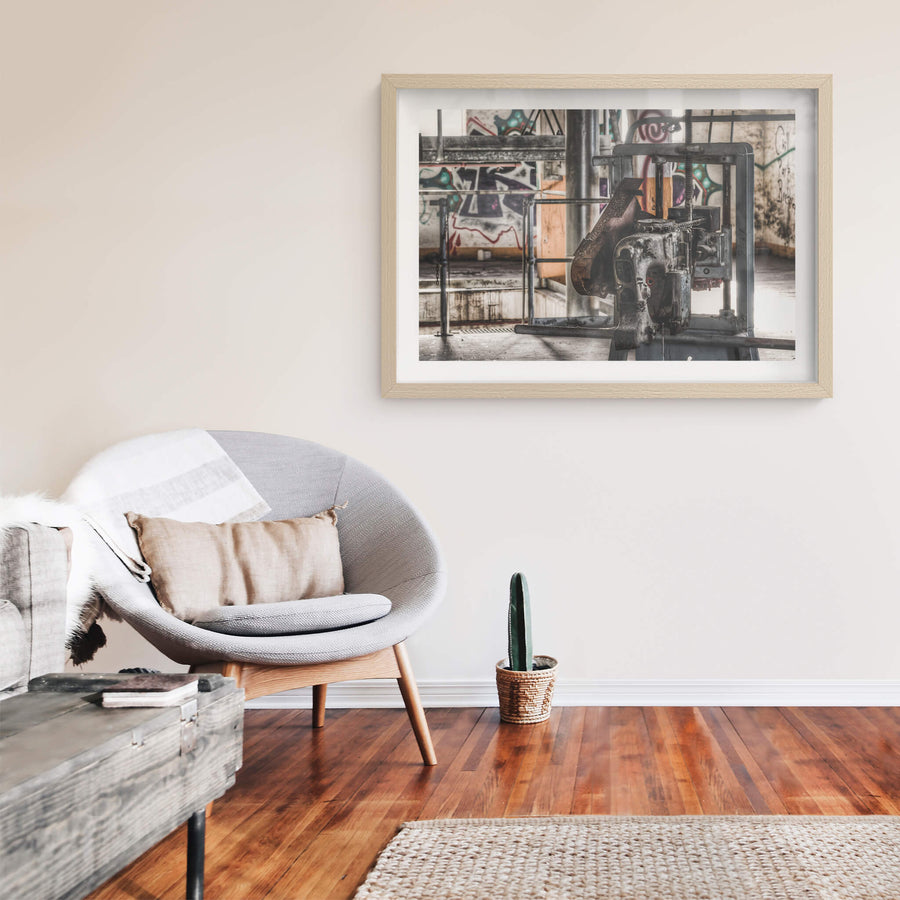
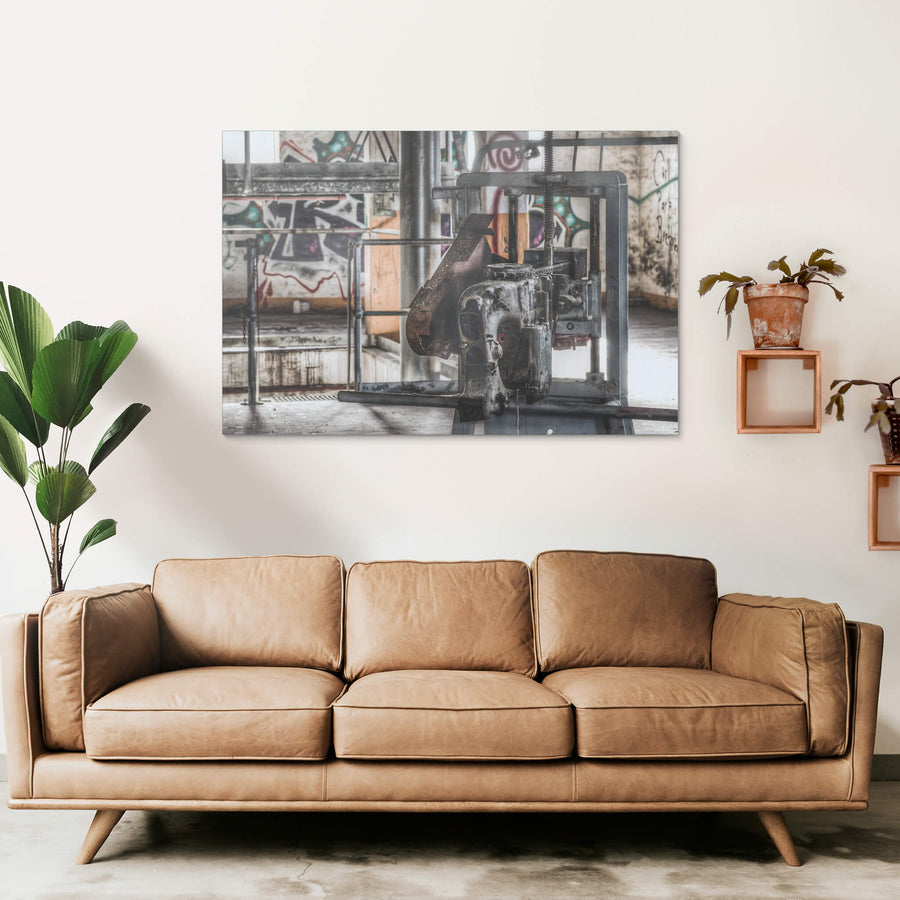
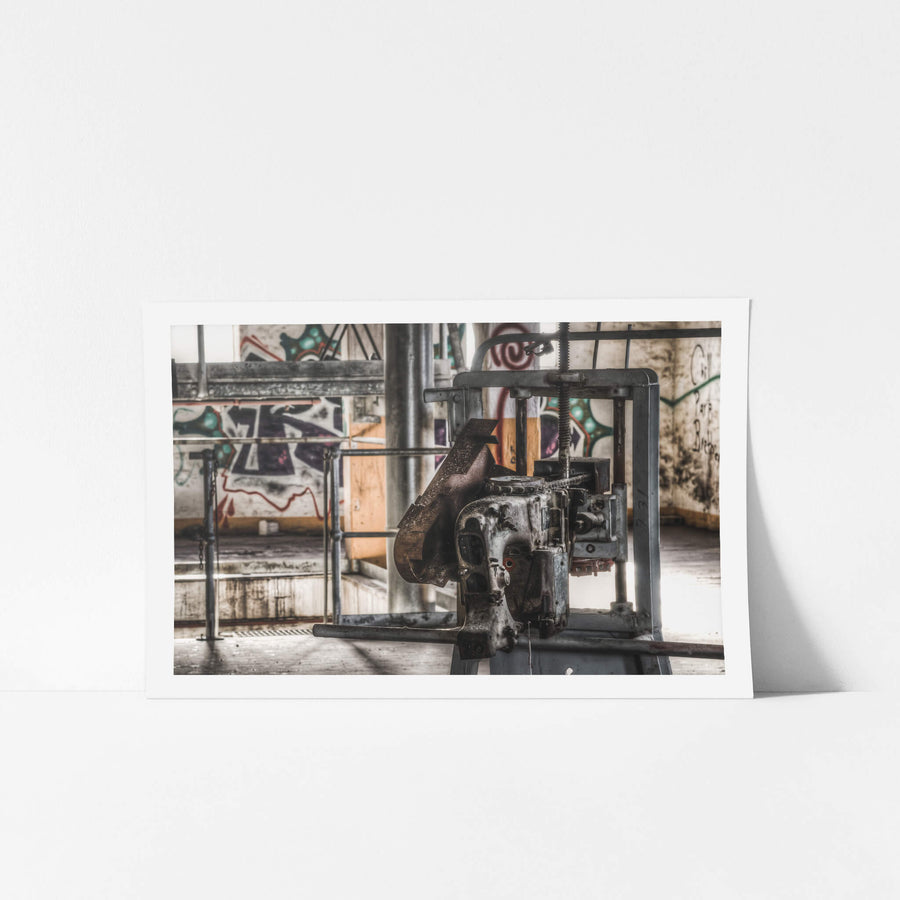
A sewing machine rests on a timber floor inside Mungo Scott Flour Mill. The metal components are heavily rusted. Natural light falls across the machine from an unseen source. No surrounding furniture or fittings are visible. The floor beneath it shows wear and dust.

Edition
Open edition

Open edition
Printed to order, no fixed quantity. Each print is hand-signed by the photographer.

Limited edition
A fixed number of prints exist. Once sold, the edition closes permanently. Each print is individually numbered and signed.

$100.00 AUD
Size
Type
Colour
Signed, numbered, with COA. Made to order in 5 to 10 business days (unframed). Shipped in protective packaging with edition certificate, paper-stock reference and a printed care guide.
See certificate sample →

Shipping Free shipping over $250. Ships worldwide, rates calculated at checkout.

Returns Damaged in transit? We replace it. Full policy →

Ships within 10 business days · signed & numbered

In situ
Sewing Machine at Mungo Scott Flour Mill, unframed print displayed in situ on a wall.Sewing Machine at Mungo Scott Flour Mill, white-framed print displayed in situ on a wall.Sewing Machine at Mungo Scott Flour Mill, black-framed print displayed in situ on a wall.Sewing Machine at Mungo Scott Flour Mill, raw timber-framed print displayed in situ on a wall.Sewing Machine at Mungo Scott Flour Mill, glass print displayed in situ on a wall.
01 PROVENANCE

Print datasheet

Title
Sewing Machine
Series
Mungo Scott Flour Mill
Catalogue
MSF-009
Process
Giclée
Captured
11 May 2014
Camera
NIKON D7000
Lens
AF-S Zoom-Nikkor 24-70mm f/2.8G ED
Aperture
f/8.0
Shutter
1/3 s
ISO
100
Focal length
99 mm
Paper
Ilford Galerie Smooth Cotton Rag 310 gsm
Paper size
290 × 200 mm
Location
Summer Hill, New South Wales, Australia
Recognised by
Highly Commended in Multimedia at the 2016 National Trust of Australia (NSW) Heritage Awards
02 LOCATION

Summer Hill, New South Wales, Australia

Map · Mapbox · OpenStreetMap

03 THE STORY

About this print

Inside the load-bearing brick walls of Mungo Scott Flour Mill, a sewing machine sits rusting on the timber floor. It is a small object in a building built for industrial scale, and that contrast is part of what makes it worth looking at. The mill's five-storey structure, with its timber post-and-beam interior and hipped metal-sheet roof, was designed around the movement of grain, not the kind of fine work a sewing machine implies. How it came to be there is not recorded. That it was left behind is clear enough. Mungo Scott Ltd began construction of the flour mill on Smith Street, Summer Hill, in 1921. The mill started operating in June 1922, the same month Mungo Scott vacated their previous premises on Sussex Street in the city. The site had been chosen specifically for its access to the Rozelle-Darling Harbour Goods Line, the World War I-era freight railway that ran along the eastern boundary. Grain arrived by rail, was raised to the top floor, and fed by gravity down through rollers and sifters, floor by floor, until it became flour, bagged and ready for dispatch. The mill survived a serious fire on 13 January 1927, when sparks from a passing train ignited stored flour, destroying a flour store and part of the mill along with approximately 10,000 bags of flour. It was rebuilt and continued operating. Concrete grain silos were added in the 1950s, and steel bulk storage silos followed in 1963. By the 2000s, Mungo Scott Flour Mill was the sole remaining customer on the Rozelle Goods Line. The final goods train delivered to the site on 1 December 2008. Milling operations ceased in 2009. This photograph was made in 2014, five years after the mill closed. The sewing machine, rust claiming its metal parts, sits on the floor of a building that has since been heritage-listed under the Ashfield LEP since 1985 and later redeveloped into a mixed-use precinct. At the time of photography, it remained as found.

04 FROM THE FIELD NOTES

Inside Mungo Scott Flour Mill at Summer Hill, a rusted sewing machine sits on the timber floor, left behind when milling operations ceased in 2009. The mill ran from June 1922, supplying flour to Sydney's bakeries for nearly ninety years from its load-bearing brick building on Smith Street. The sewing machine, small and out of place among the industrial scale of the structure, is one of the quieter objects that remained after the last goods train left the site on 1 December 2008.

Brett Patman

Mungo Scott Flour Mill

The series

Mungo Scott Flour Mill

2015 · 13 photographs

Mungo Scott Flour Mill went up at Summer Hill around 1921 and began operating in June 1922, replacing the company's earlier mill on Sussex Street in the city. The site sat on the goods rail line between Wardell Road and Darling Harbour. A fire in 1927, attributed to sparks from passing trains igniting stored flour, did serious damage. Goodman Fielder later put up the concrete silos that mark the site from a distance. Allied Mills ran the operation until 2009. The 2.5-hectare site was vacant for almost a decade before EG Funds Management and Daiwa House Australia turned it into the Flour Mill mixed-use precinct, designed by Hassell, 360 apartments and townhouses across 11 buildings, with the heritage mill structures and silos retained at the centre.

View all in this series →

05 SIZE GUIDE

Print sizes

The anatomy view shows what this finish is as a physical object: paper margin, mat band, frame depth, acrylic profile. The comparison strip shows how each size sits relative to the others at true scale. Click a size or a finish to update both.

Anatomy · true ratio
TypeSizeWidthHeight
08 BY POST · NO SPAM

Read the full story

Articles when they're published. The history behind a place. The day of a shoot. The work between prints. No marketing, no schedule.

You're subscribed.