Welding Bay

Provenance

Camera
NIKON D7000
Lens
AF-S Zoom-Nikkor 24-70mm f/2.8G ED
Settings
36mm · f/4.0 · 0.6s · ISO 250
Paper
Ilford Galerie Smooth Cotton Rag 310 gsm

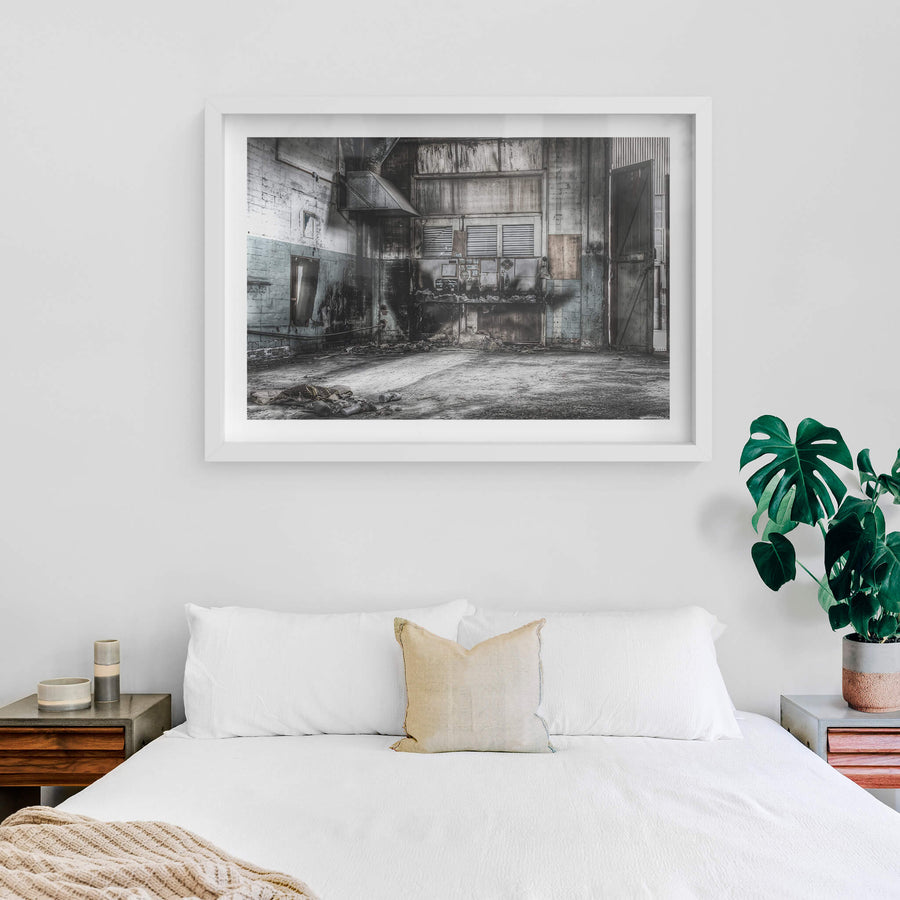
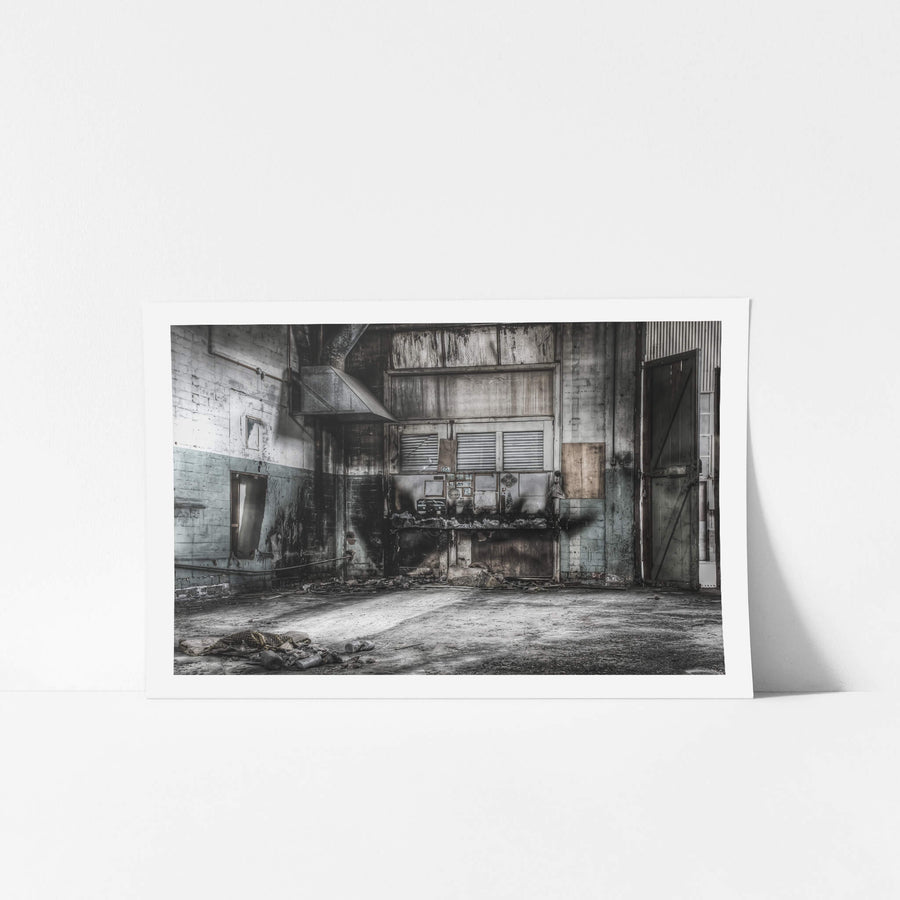
A welding bay inside the abandoned factory, photographed in 2011. Hand tools and equipment lie scattered across work surfaces. Metal fixtures and fittings carry a uniform coat of rust. A fine layer of dust covers the benches and floor. No figures present.

Edition
Open edition

Open edition
Printed to order, no fixed quantity. Each print is hand-signed by the photographer.

Limited edition
A fixed number of prints exist. Once sold, the edition closes permanently. Each print is individually numbered and signed.

$100.00 AUD
Size
Type
Colour
Signed, numbered, with COA. Made to order in 5 to 10 business days (unframed). Shipped in protective packaging with edition certificate, paper-stock reference and a printed care guide.
See certificate sample →

Shipping Free shipping over $250. Ships worldwide, rates calculated at checkout.

Returns Damaged in transit? We replace it. Full policy →

Ships within 10 business days · signed & numbered

In situ
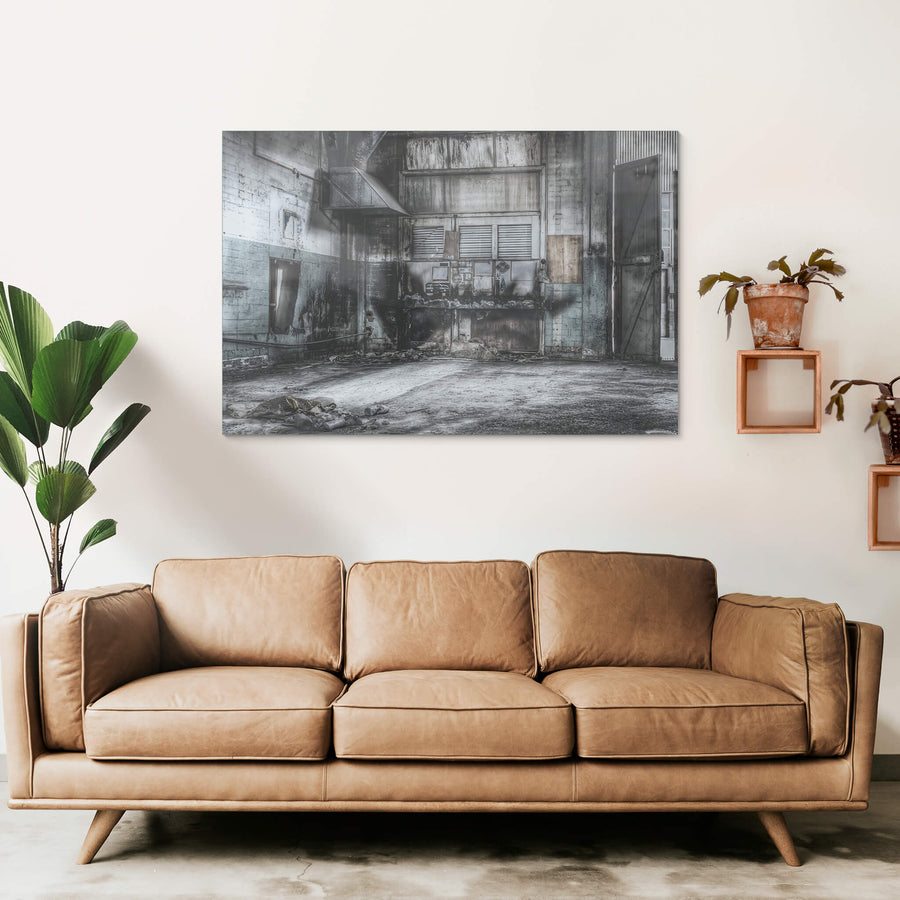
Welding Bay at O-I Glass, unframed print displayed in situ on a wall.Welding Bay at O-I Glass, white-framed print displayed in situ on a wall.Welding Bay at O-I Glass, black-framed print displayed in situ on a wall.Welding Bay at O-I Glass, raw timber-framed print displayed in situ on a wall.Welding Bay at O-I Glass, glass print displayed in situ on a wall.
01 PROVENANCE

Print datasheet

Title
Welding Bay
Series
O-I Glass
Catalogue
OIG-015
Process
Giclée
Captured
18 December 2011
Camera
NIKON D7000
Lens
AF-S Zoom-Nikkor 24-70mm f/2.8G ED
Aperture
f/4.0
Shutter
0.6s s
ISO
250
Focal length
36 mm
Paper
Ilford Galerie Smooth Cotton Rag 310 gsm
Paper size
290 × 200 mm
Location
Thomastown, Victoria, Australia
Recognised by
Highly Commended in Multimedia at the 2016 National Trust of Australia (NSW) Heritage Awards
02 LOCATION

Thomastown, Victoria, Australia

Map · Mapbox · OpenStreetMap

03 THE STORY

About this print

The welding bay inside the former Melbourne Glass Bottle Works at Spotswood holds the particular stillness of a workshop that was not emptied so much as abandoned. Tools lie where they were set down. Rust has taken the metal surfaces. Dust has settled evenly over everything, the kind of accumulation that takes years rather than months. The factory that surrounded this bay had been manufacturing glass on the Spotswood site since 1890, when the Melbourne Glass Bottle Works Company purchased 12 acres on the Yarra and built its first plant there. By 1908 the works was producing 27 million bottles a year. The company became Australian Glass Manufacturers in 1915, Australian Consolidated Industries in 1939, and passed through BTR plc to Owens-Illinois, known as O-I, when that company completed its acquisition of BTR Packaging in April 1998. The maintenance workforce that would have used a bay like this one numbered 139 by the mid-1990s. In November 1996, BTR-Nylex threatened to close the Spotswood site entirely, demanding new work practices as a condition of a planned A$43 million upgrade. Fifty-nine maintenance workers were locked out. The dispute ran for 19 weeks. Managing Director Philip Aiken described it publicly as being about the long-term survival of the site. Glass manufacturing wound down through the late 1990s, and the factory closed in January 2012. The buildings were demolished shortly after. Only the basalt wall along Douglas Parade, 115 metres long and 6 metres high, survived. Workers called it "The Great Wall of Spotswood." The welding bay and everything inside it is gone. The 2011 photograph is what remains of it.

04 FROM THE FIELD NOTES

The welding bay at the former Melbourne Glass Bottle Works at Spotswood was part of the maintenance infrastructure that kept over a century of glass production running. By the mid-1990s, 139 maintenance workers were employed at the site. When BTR-Nylex threatened closure in November 1996 and locked out 59 of those workers for 19 weeks, the dispute centred on whether the Spotswood site had a future at all. The tools left on the benches here suggest the answer came quickly. Glass manufacturing wound down through the late 1990s, and the factory closed in January 2012.

Brett Patman

O-I Glass

The series

O-I Glass

2011 · 15 photographs

Alfred Felton and Frederick Grimwade founded the Melbourne Glass Bottle Works in 1872 at Graham Street, Emerald Hill, to supply their wholesale drug business. In 1890 the company purchased 12 acres on the Yarra at Spotswood and built the new manufacturing plant that would carry on glass production for over a hundred years, through Australian Glass Manufacturers, Australian Consolidated Industries, BTR and Owens-Illinois. The site was demolished by 2012, with only the 115-metre basalt wall on Douglas Parade, known to the workers as the Great Wall of Spotswood, left standing.

View all in this series →

05 SIZE GUIDE

Print sizes

The anatomy view shows what this finish is as a physical object: paper margin, mat band, frame depth, acrylic profile. The comparison strip shows how each size sits relative to the others at true scale. Click a size or a finish to update both.

Anatomy · true ratio
TypeSizeWidthHeight
08 BY POST · NO SPAM

Read the full story

Articles when they're published. The history behind a place. The day of a shoot. The work between prints. No marketing, no schedule.

You're subscribed.