
Entertainment Room
Provenance
- Camera
- NIKON D7000
- Lens
- 24.0-70.0 mm f/2.8
- Settings
- 24mm · f/8.0 · 2.5s · ISO 100
- Paper
- Ilford Galerie Smooth Cotton Rag 310 gsm
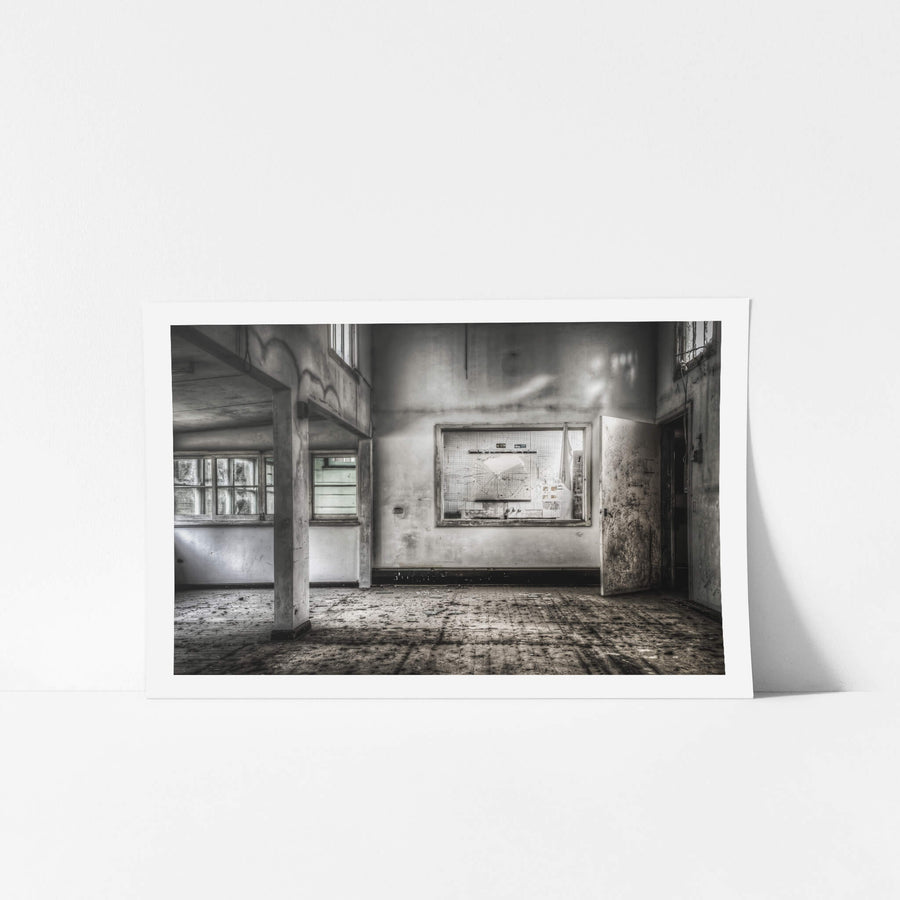
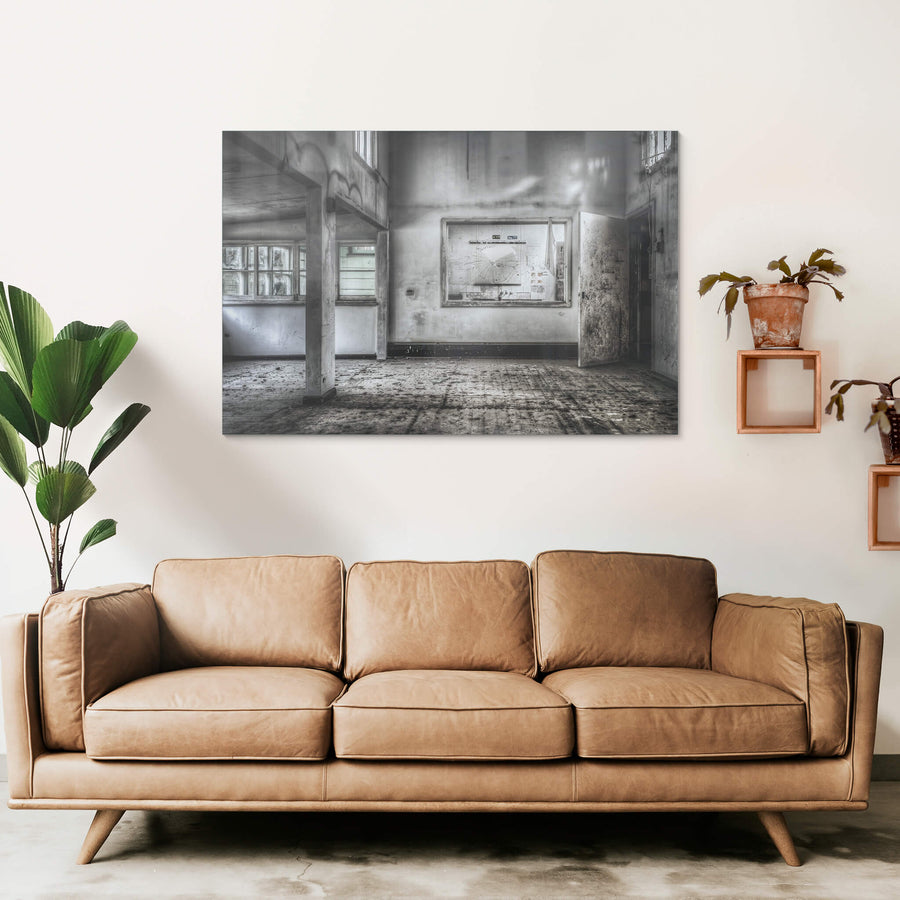
A room at the Queen Victoria Sanitorium, Wentworth Falls, which looks to have been a recreation room for the residents, though the use is not confirmed. The sanitorium opened on Kings Tableland in 1903 and served as a hospital for the aged and chronically ill from 1958 until it closed in May 1999.
Open edition
Printed to order, no fixed quantity. Each print is hand-signed by the photographer.
Limited edition
A fixed number of prints exist. Once sold, the edition closes permanently. Each print is individually numbered and signed.
Shipping Free shipping over $250. Ships worldwide, rates calculated at checkout.
Returns Damaged in transit? We replace it. Full policy →
Ships within 10 business days · signed & numbered
In situ
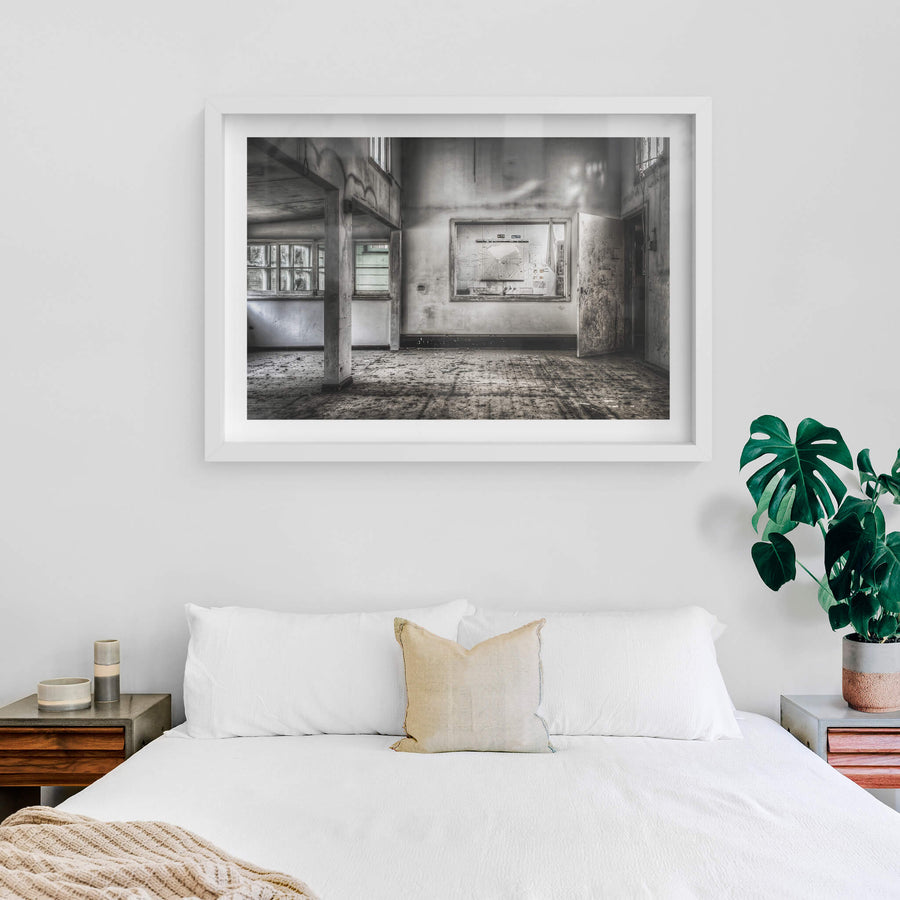
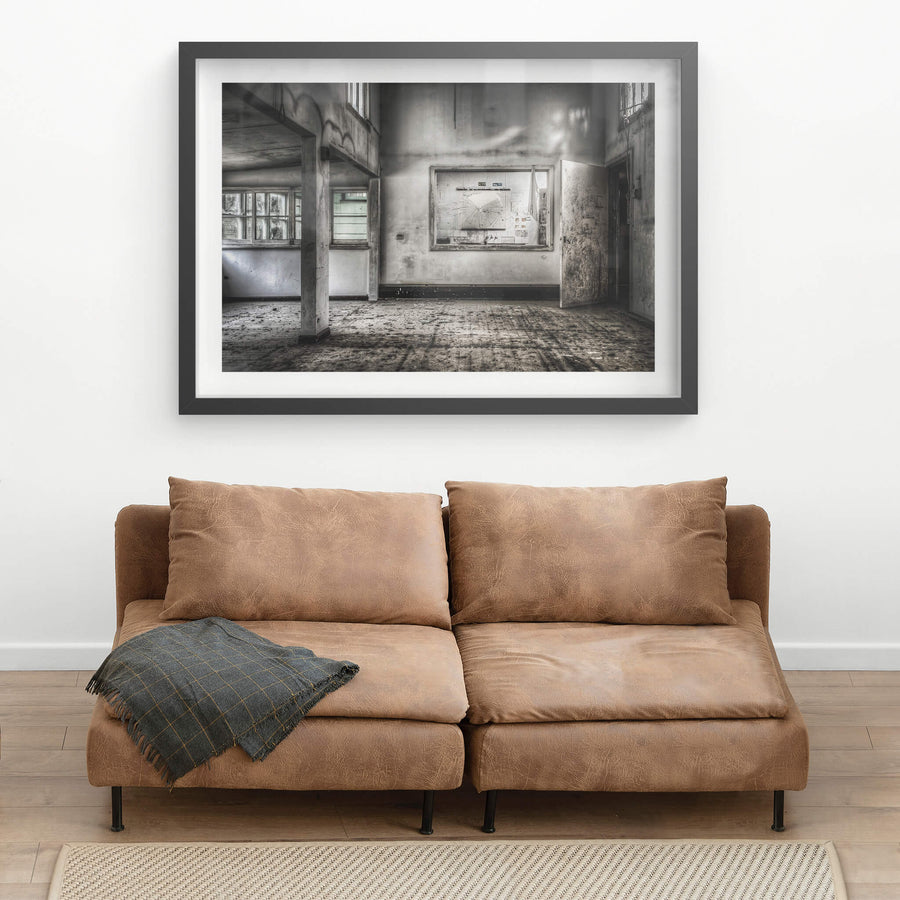
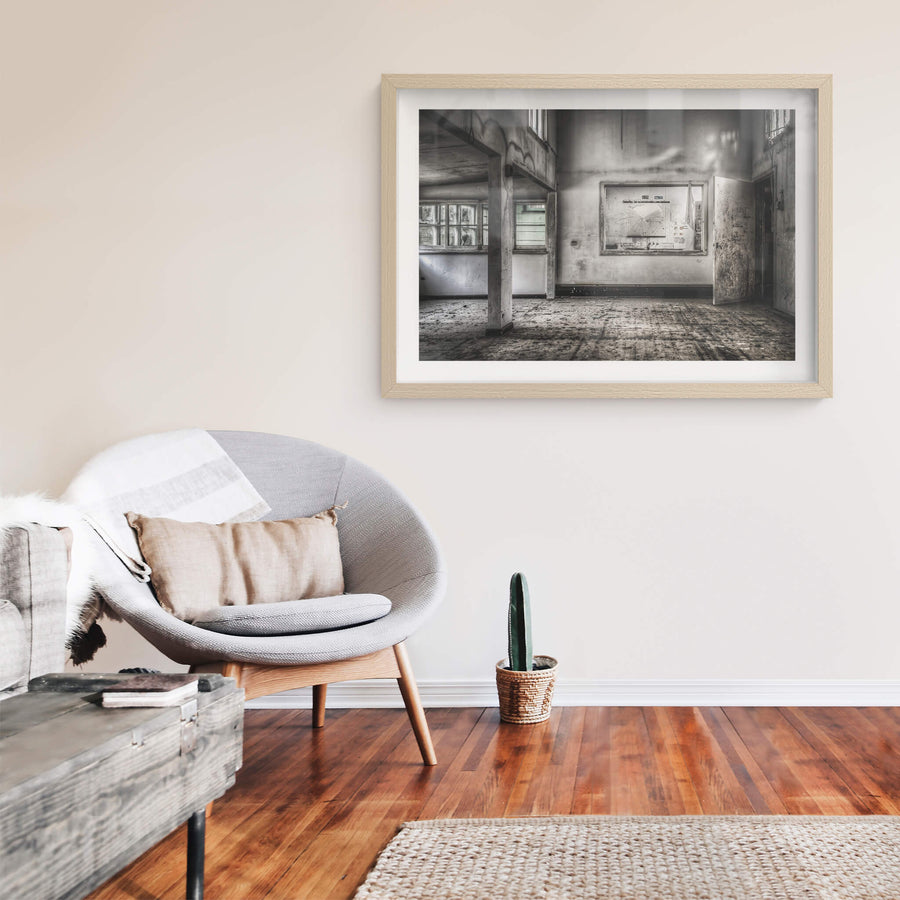
Print datasheet
- Title
- Entertainment Room
- Series
- Queen Victoria Sanitorium
- Catalogue
- QVS-005
- Process
- Giclée
- Captured
- 20 September 2015
- Camera
- NIKON D7000
- Lens
- 24.0-70.0 mm f/2.8
- Aperture
- f/8.0
- Shutter
- 2.5s s
- ISO
- 100
- Focal length
- 24 mm
- Paper
- Ilford Galerie Smooth Cotton Rag 310 gsm
- Paper size
- 297 × 210 mm
- Location
- Wentworth Falls, New South Wales, Australia
- Authenticity
- C2PA verified provenance →
- Recognised by
- Highly Commended in Multimedia at the 2016 National Trust of Australia (NSW) Heritage Awards
Wentworth Falls, New South Wales, Australia
Map · Mapbox · OpenStreetMap
About this print
The entertainment room of the Queen Victoria Sanitorium in Wentworth Falls sits silent, dust heavy on every surface, light coming through broken windows onto a stage that once hosted concerts and Anzac Day services. Opened in 1903 as a tuberculosis sanatorium on Kings Tableland, the site operated for 96 years before closing in May 1999. The Philip Sydney Jones Hall (1921), designed by architect George Sydney Jones, gave patients a place to gather away from the open-air chalets where most of their days were spent. It closed with the rest of the complex and has been disused since.
Brett Patman

The series
Queen Victoria Sanitorium
Queen Victoria Sanitorium opened on 18 February 1903 at Wentworth Falls in the Blue Mountains as a tuberculosis sanatorium for men. The original house was built for Sydney businessman Kelso King, who sold the property to the Queen Victoria Diamond Jubilee Homes for Consumptives Fund after the death of his wife Irene in 1900. The full complex was designed and built between 1902 and 1921. The sanatorium ran for 55 years before becoming a hospital for the aged and chronically ill in 1958 and finally a nursing home, which closed in May 1999. The site is on the local heritage register (item Wf025) but is not on the NSW State Heritage Register. Most of the complex is now in ruin.
Print sizes
The anatomy view shows what this finish is as a physical object: paper margin, mat band, frame depth, acrylic profile. The comparison strip shows how each size sits relative to the others at true scale. Click a size or a finish to update both.
| Type | Size | Width | Height |
|---|


