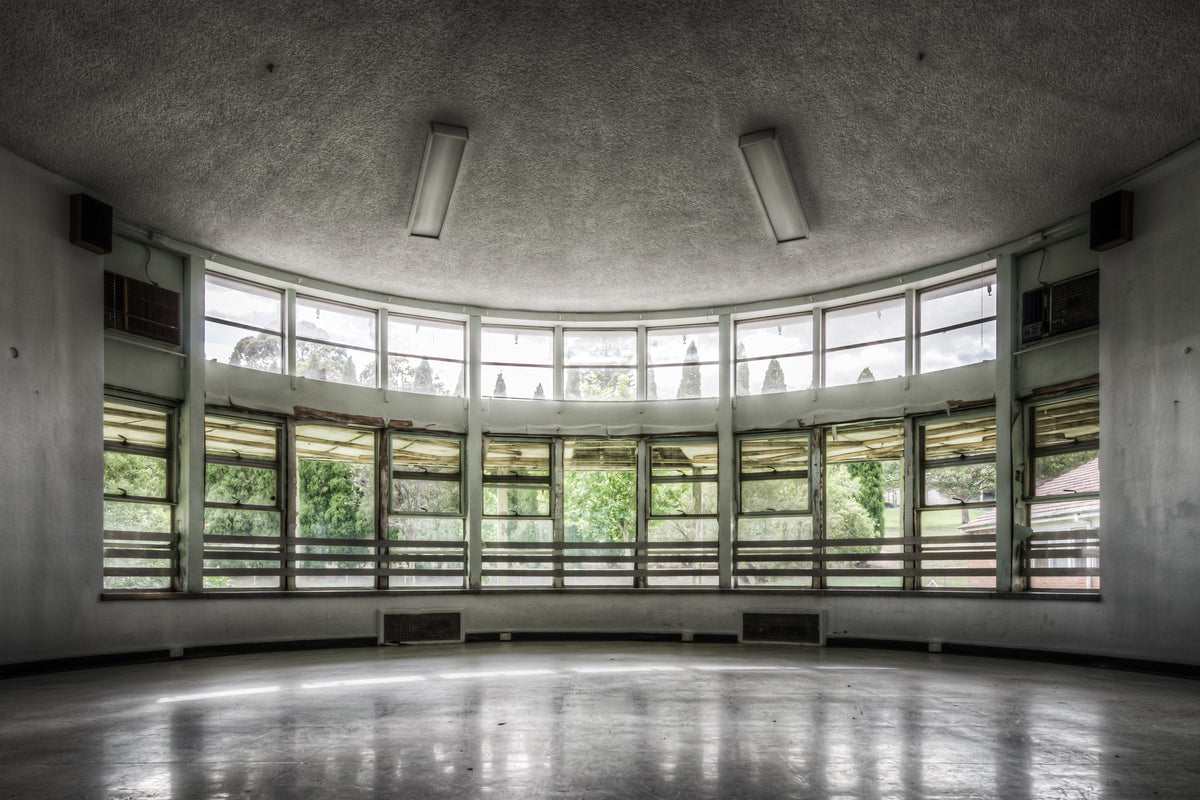
The land at Callan Park has been used for the treatment of mental illness since 1878, when the site was proclaimed an asylum separate from Gladesville. In 1878 the western edge of Sydney was open estate land, and the suburb that surrounds Callan Park today did not exist. The permanent ward buildings came later. Colonial Architect James Barnet, working with Inspector General of the Insane Frederic Norton Manning, set out the Victorian sandstone pavilions on grounds that sloped down to Iron Cove. Ground was broken in 1880 and the first ward opened in 1884.
The idea behind the site was consistent with asylum design of the period: that space and greenery and productive work were part of the treatment. Patients came here from the city and from regional NSW. Some stayed for years. The campus grew around them. New wards were added in different architectural periods, different buildings for different categories of patient, the whole ensemble accumulating over a century as the population grew and the theories of treatment changed.
Deinstitutionalisation began in the 1980s. The wards closed progressively as the patient population was moved to community care settings. Buildings that had been in continuous use since the nineteenth century were locked and left. Some sections were repurposed. Sydney College of the Arts occupied the Kirkbride Complex from 1996 until it consolidated at the University of Sydney's Camperdown campus in 2020. Much of the rest of the fabric remained as it had been.
What makes Callan Park different from industrial sites is the intimacy of the spaces. These were rooms designed for daily life: sleeping, eating, bathing, the slow passage of days in an institution. The scale is human. The evidence of occupation is different from a factory or a power station: institutional furniture, ward records, the specific quality of light in spaces designed to house people who were not free to leave.
I photographed the site across several visits in 2015. There is a particular quality to October light in the grounds. The old sandstone, the established gardens, the way the Iron Cove foreshore sits below the heritage precinct. I have not found that light anywhere else.


