Yubari is a former coal mining city in Hokkaidō. At its 1960 peak the population was around 116,000. By the time we visited in 2016 it was around 9,000. In March 2007 Yubari became the first city in modern Japan to file for fiscal rehabilitation, bankruptcy in all but name. It's still the only one.
We also ended up in the Hokkaidō Shimbun during the trip.
My Japanese is rusty beginner at best, so I can't tell you what the article says.

The Hokkaidō Shimbun is a Japanese daily, published mainly in Hokkaidō. First published in Sapporo in 1887.
The day before we arrived in Sapporo, I had no idea what we were actually going to do to build content. The plan was: hire a car from Nippon Rent-a-Car at Sapporo Station, drive to Yubari, and see what we found over four days.

We could have just stayed at Yubari's Mount Racey Ski Resort instead of doing the drive, but it was out of our budget, and that wasn't really the experience we were after either.
Yubari ran on coal from the 1880s to 1990. Around thirty mines operated at mid-century, mostly under two companies: Hokkaidō Tankō Kisen, known as Hokutan, and Mitsubishi Mining. Several major disasters punctuated those decades. The 1914 explosion at the Wakanabe No.2 Mine killed 423 men, still one of the deadliest mining disasters in Japan's history. The 1981 methane outburst at Hokutan's New Yubari Mine killed 93. The Minami-Ōyūbari Mine, the last to close, went down in 1990, ending a century of coal in Yubari.
While on our way to Hokkaido, I learned about the Shimizusawa Project. A group of historians, advocates and volunteers working on the historical preservation of Yubari. The project formed around 2011, originally to stop the demolition of the Hokutan Shimizusawa Power Plant (built 1926 to supply electricity to the Shimizusawa mine).
Yoko, our Air BnB host and translator, gave the Shimizusawa Project a call and helped us arrange to meet Sato San in front of Shimizusawa Station the next day.
As it turned out, Sato San can speak much better English than I can speak Japanese.
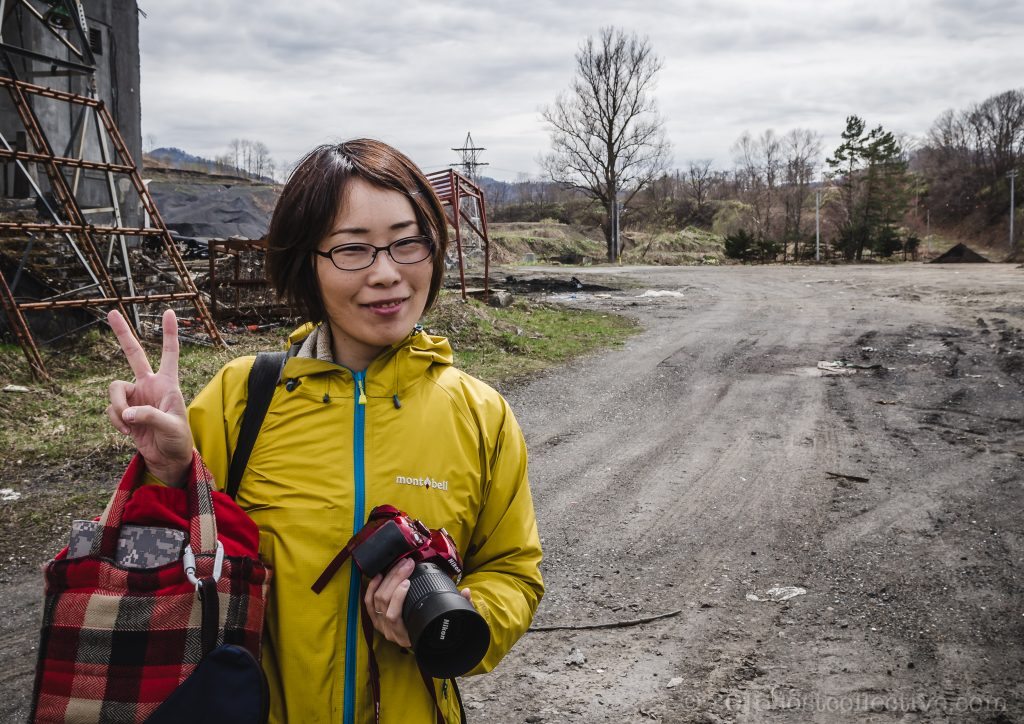
After a short introduction we all jumped into the same car, and Sato San showed us the sights: the old mining infrastructure, the abandoned hamlets, and then through the Shimizusawa Thermal Power Plant, which until a few years before our visit had been scheduled for demolition.
The Shimizusawa Project's intervention saved it. The plant is partially demolished but the main structure stands, and the project runs guided tours and art installations through it now.

You can find out more about Shimizusawa Project on Facebook, Instagram and Twitter.
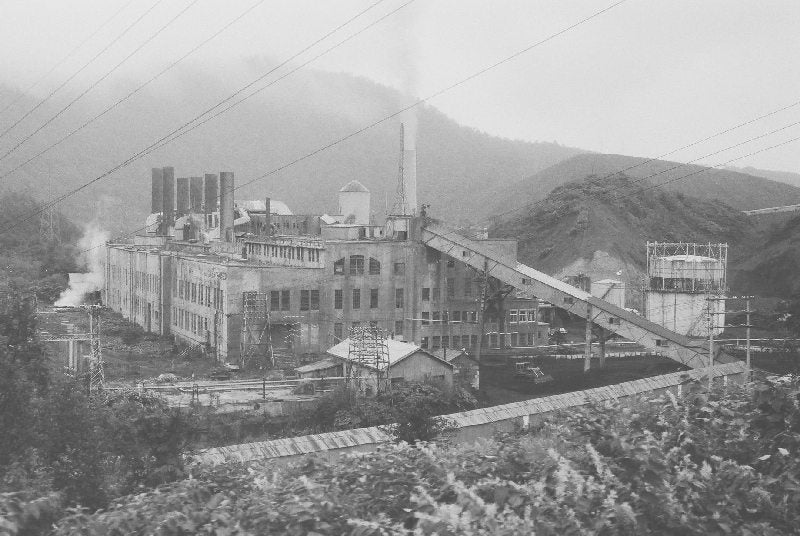
The photograph below, courtesy of the Yubari City archives, shows the Shimizusawa Power Plant still active in 1955, viewed from the south-east.
Sato San asked if we'd like to come again the next day for a tour around the Shimizusawa slag piles. How could we refuse?
These slag piles were built up over decades from the combustion byproduct of the power plant. Mountains of it. So much that they have their own walking tracks.

One of the things I enjoyed most about this trip was the chance to see Japanese countryside beyond the cities. Until then I'd only seen it from a Shinkansen cruising through at around 300 km/h.
The state of decay is unmistakable. Villages with most buildings empty, boarded up, or collapsed. Some looked to have been that way for decades. Yubari's old mining communities are mostly ghost towns now: Shimizusawa, Minami-Ōyūbari, Numanosawa, Kashinai. Some buildings have been demolished. Others stand empty. Entire suburbs were closed off after 2007 to reduce maintenance costs, utilities cut, residents relocated.
Here's Sally below in an abandoned school in Yubari.

The school was originally Asahi Elementary, built 1975. It closed in 1983 as the mines closed and the families moved away. The city tried to repurpose it in 1983 as a tourist attraction called Family School Fureai. That closed too in 2006.
I'd always pictured Japan as a vibrant, techy society, but the further out from the cities you get, the more you see the contrast.
Small villages dotted everywhere, where the elderly generations are the only ones who remain. In some cases, you could be forgiven for thinking no one is there at all.

More from the Japan trip is on the way. The Yubari print collection is here.


