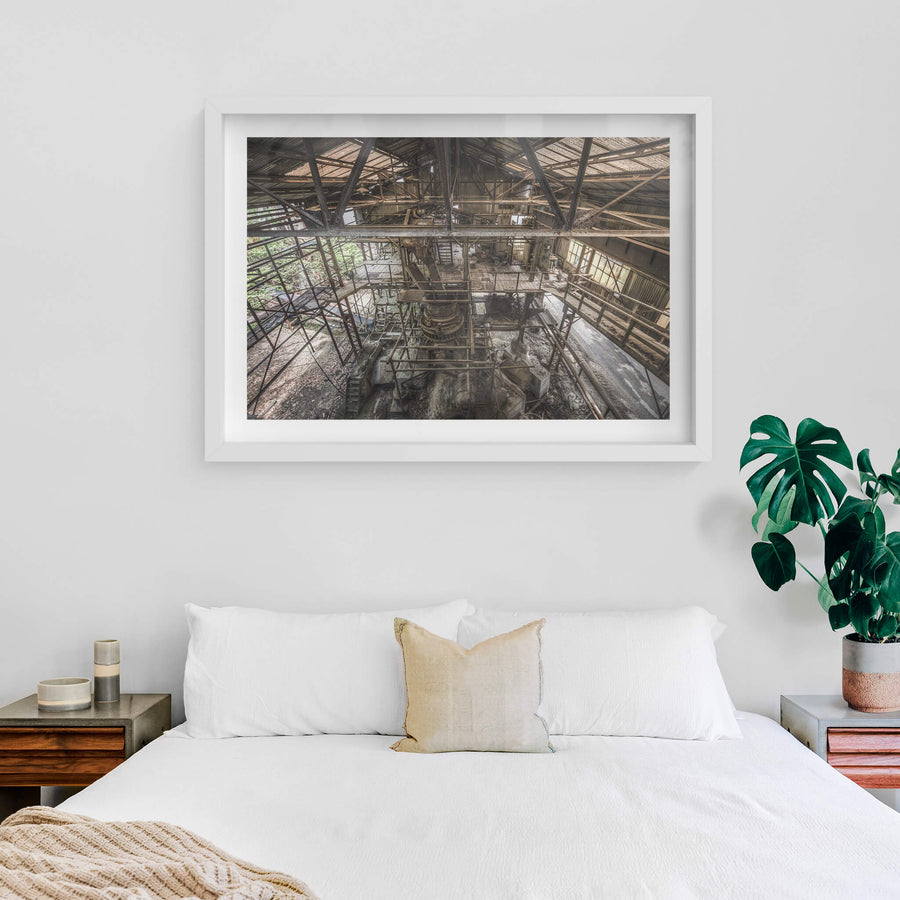
Crusher

Provenance

Camera
NIKON D810
Lens
14.0-24.0 mm f/2.8
Settings
14mm · f/9.0 · 1/4 · ISO 100
Paper
Ilford Galerie Smooth Cotton Rag 310 gsm

The cone crusher took the first pass at incoming ore, breaking it to a manageable size before the ball mills. Steel gantries cross overhead; corrugated iron sheeting spans the multi-level floor. This was the entry point to the concentration sequence.

Edition
Open edition

Open edition
Printed to order, no fixed quantity. Each print is hand-signed by the photographer.

Limited edition
A fixed number of prints exist. Once sold, the edition closes permanently. Each print is individually numbered and signed.

$100.00 AUD
Size
Type
Colour
Signed, numbered, with COA. Made to order in 10 to 20 business days (framed). Shipped in protective packaging with edition certificate, paper-stock reference and a printed care guide.
See certificate sample →

Shipping Free shipping over $250. Ships worldwide, rates calculated at checkout.

Returns Damaged in transit? We replace it. Full policy →

Ships within 10 business days · signed & numbered

In situ
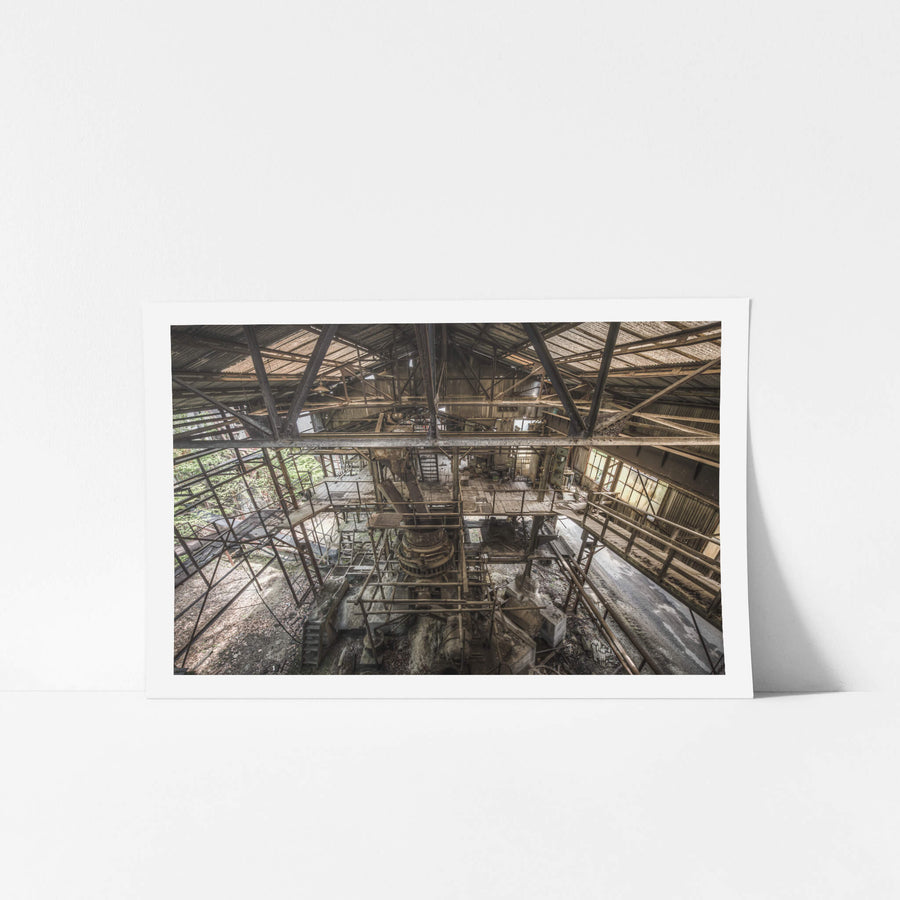
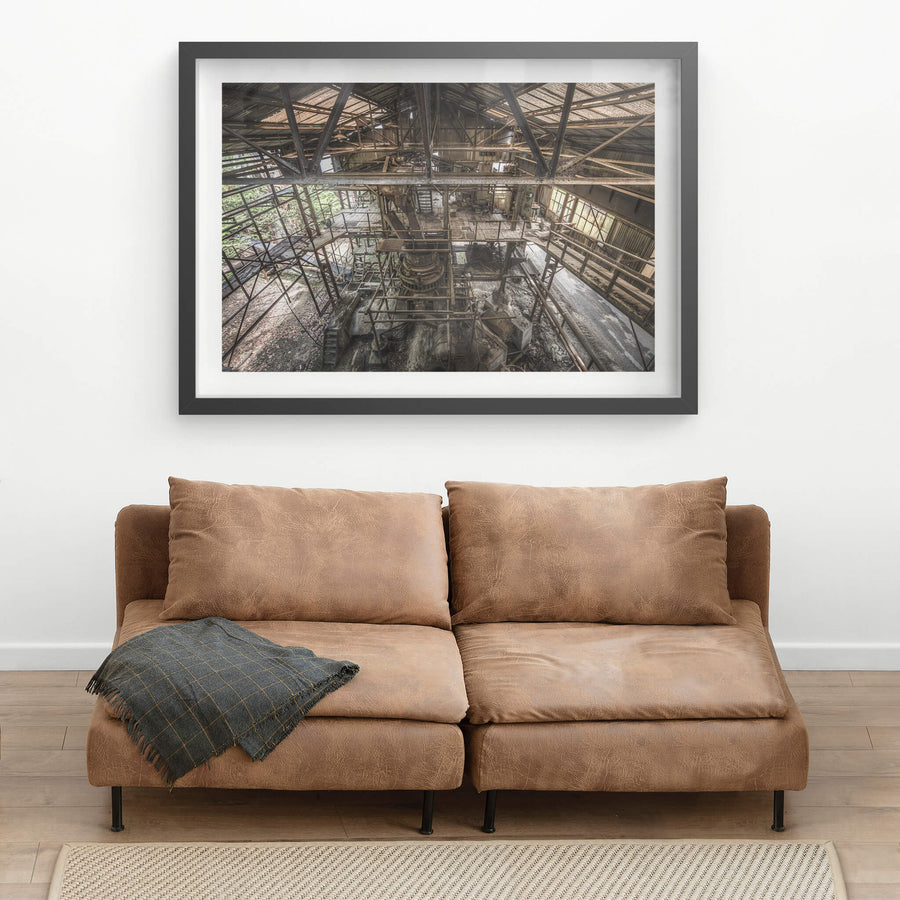
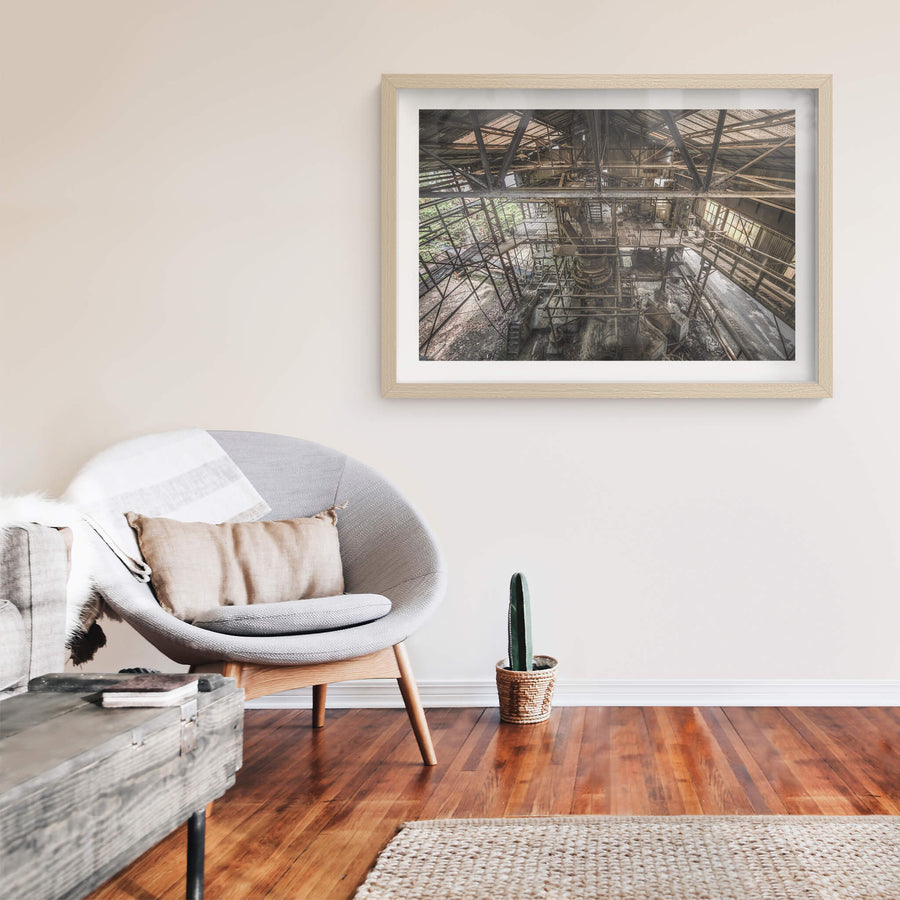
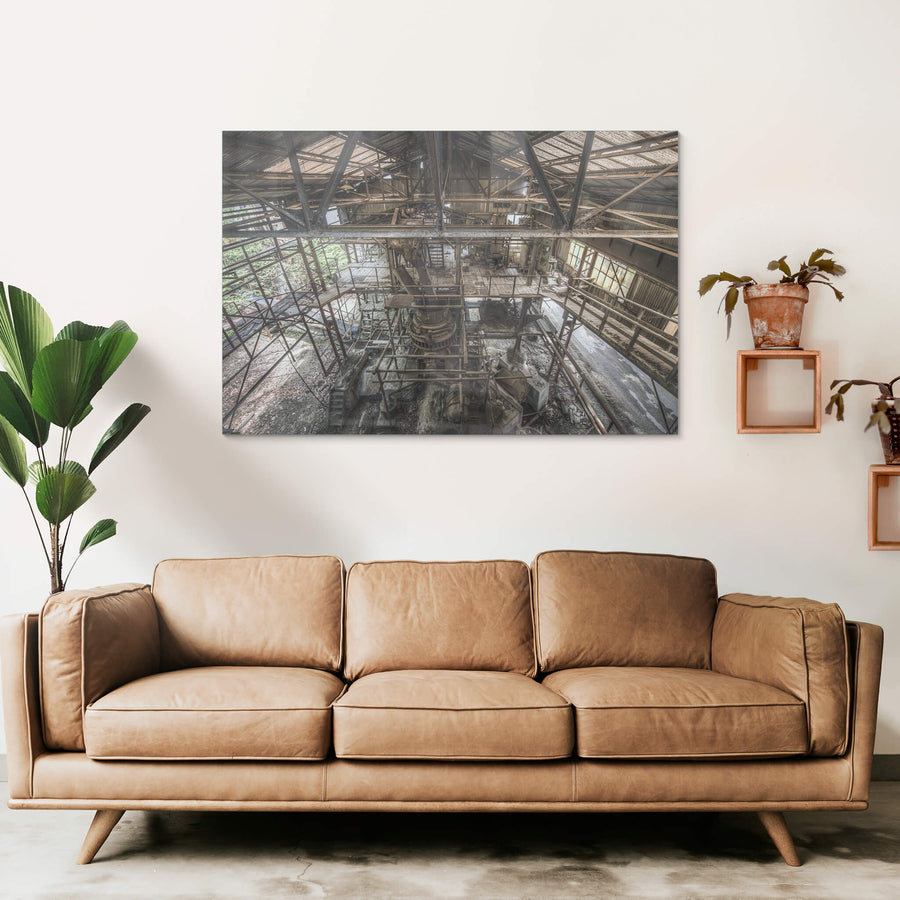
Crusher at Ashio Copper Mine, a cone crusher sits at the centre of the frame, bolted to a concrete plinth two storeys.Crusher at Ashio Copper Mine, a cone crusher sits at the centre of the frame, bolted to a concrete plinth two storeys.Crusher at Ashio Copper Mine, a cone crusher sits at the centre of the frame, bolted to a concrete plinth two storeys.Crusher at Ashio Copper Mine, a cone crusher sits at the centre of the frame, bolted to a concrete plinth two storeys.Crusher at Ashio Copper Mine, a cone crusher sits at the centre of the frame, bolted to a concrete plinth two storeys.
01 PROVENANCE

Print datasheet

Title
Crusher
Series
Ashio Copper Mine
Catalogue
ACM-008
Process
Giclée
Captured
7 May 2016
Camera
NIKON D810
Lens
14.0-24.0 mm f/2.8
Aperture
f/9.0
Shutter
1/4 s
ISO
100
Focal length
14 mm
Paper
Ilford Galerie Smooth Cotton Rag 310 gsm
Paper size
290 × 200 mm
Location
Ashio, Tochigi, Japan
Recognised by
Highly Commended in Multimedia at the 2016 National Trust of Australia (NSW) Heritage Awards
02 LOCATION

Ashio, Tochigi, Japan

Map · Mapbox · OpenStreetMap

03 THE STORY

About this print

A heavy industrial crusher at Ashio Copper Mine sits on one of the upper levels of the processing plant, the steel frame anchored to a deep concrete pad, the working jaws of the crusher visible at the top opening. The frame is a riveted-steel cage around the working mechanism, with the drive motor and flywheel mounted on a separate platform alongside. The jaws are the standard alternating crushing surfaces of an industrial jaw crusher, the steel hard-faced and worn at the centre. A receiving chute drops ore into the open jaws from above. Below the crusher, a discharge chute carries the crushed product on to the conveyor that fed the milling area downstream.

The crusher is the first major processing stage in a mineral plant. Ore arrives from the mine in chunks too big for the mills and goes through the crusher to reduce it to a size the milling circuit can handle. At Ashio the crusher ran continuously through the working shifts under the Furukawa modernisation that began in 1877. The Excavation Department closed in 1973. The crusher stopped at the same time and has not run since. The wear-faces on the jaws are the last set of liners that were fitted before closure; the receiving chute holds the last batch of ore that did not make it into the jaws.

04 FROM THE FIELD NOTES

A cone crusher sits at the centre of the frame, bolted to a concrete plinth two storeys below the gantry level. Steel walkways, ladders and handrails surround it on every side, layered tight like scaffolding. Corrugated iron roofing spans overhead, punctured where sheets have rusted through. Green vegetation presses in through the open western wall. Timber floorboards on the upper level are grey and soft with rot. Dust and fine mineral residue coat every surface.

Brett Patman

Ashio Copper Mine

The series

Ashio Copper Mine

2016 · 24 photographs

Furukawa Ichibei acquired the Ashio mine in 1877 with financial backing from Shibusawa Eiichi. By 1922 the operation had consolidated its three separate ore-processing plants into one. The Tsudō Ore-Dressing Plant, on the Watarase River, was held up at home and abroad as a model facility for metal mines.

View all in this series →

05 SIZE GUIDE

Print sizes

The anatomy view shows what this finish is as a physical object: paper margin, mat band, frame depth, acrylic profile. The comparison strip shows how each size sits relative to the others at true scale. Click a size or a finish to update both.

Anatomy · true ratio
TypeSizeWidthHeight
08 BY POST · NO SPAM

Read the full story

Articles when they're published. The history behind a place. The day of a shoot. The work between prints. No marketing, no schedule.

You're subscribed.