
Raw Material Chutes
Provenance
- Camera
- NIKON D810
- Lens
- 14.0-24.0 mm f/2.8
- Settings
- 14mm · f/9.0 · 0.4s · ISO 100
- Paper
- Ilford Galerie Smooth Cotton Rag 310 gsm
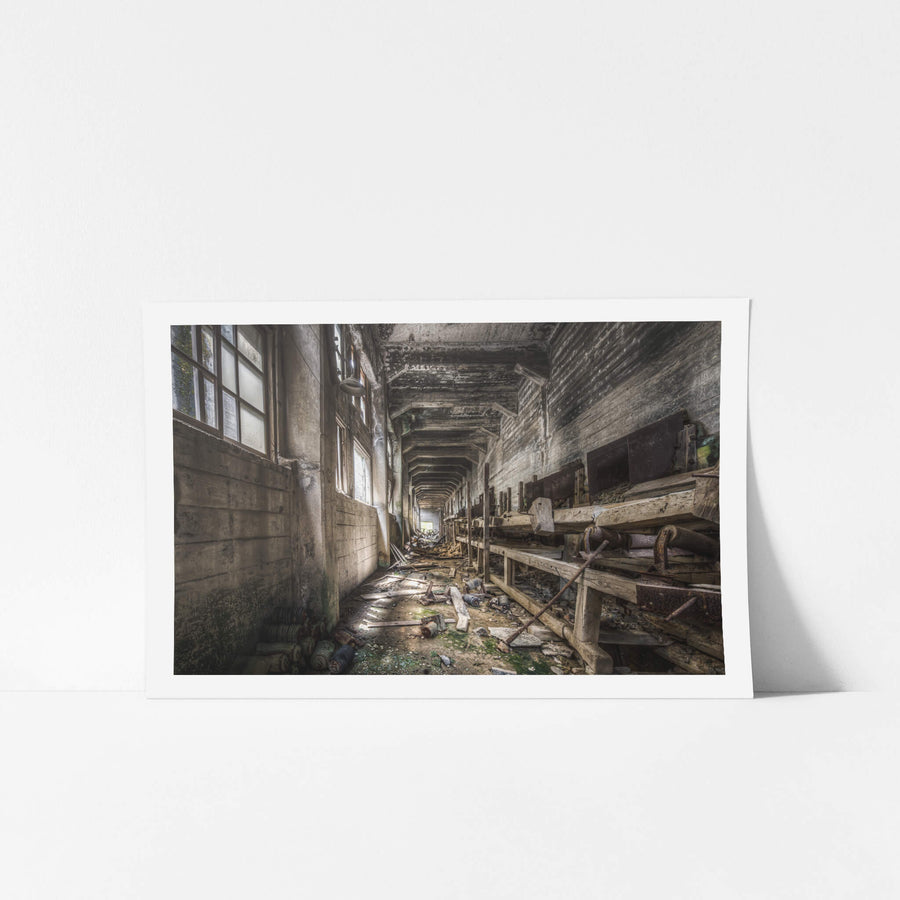
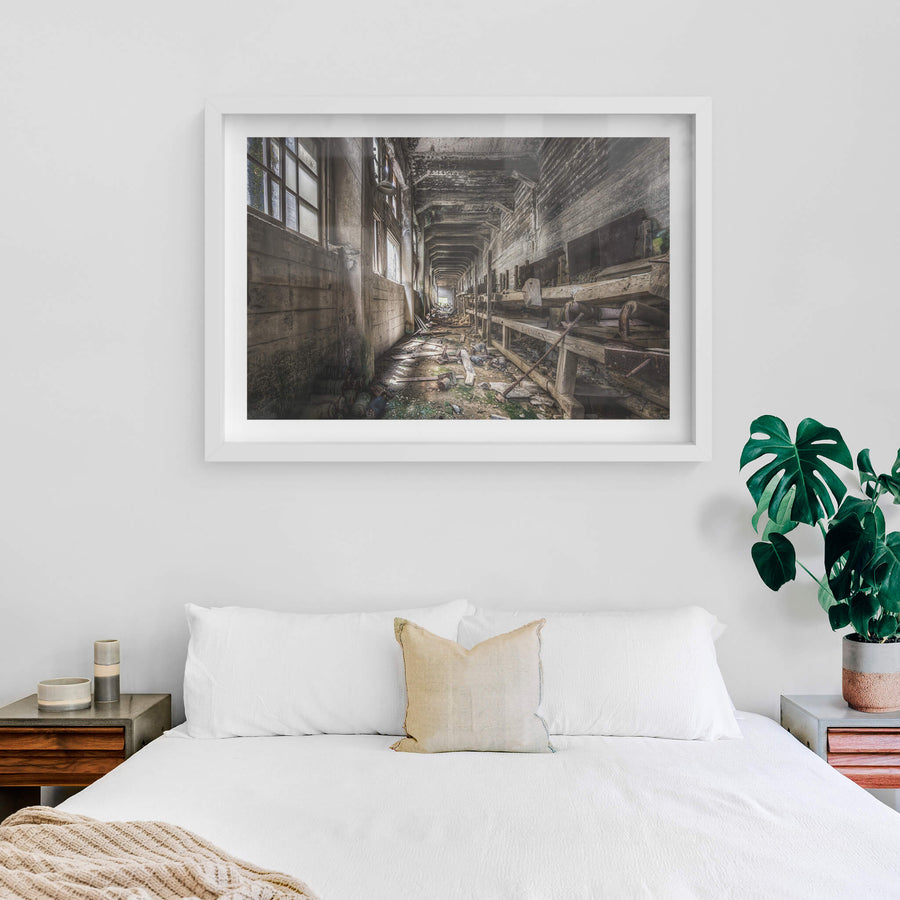
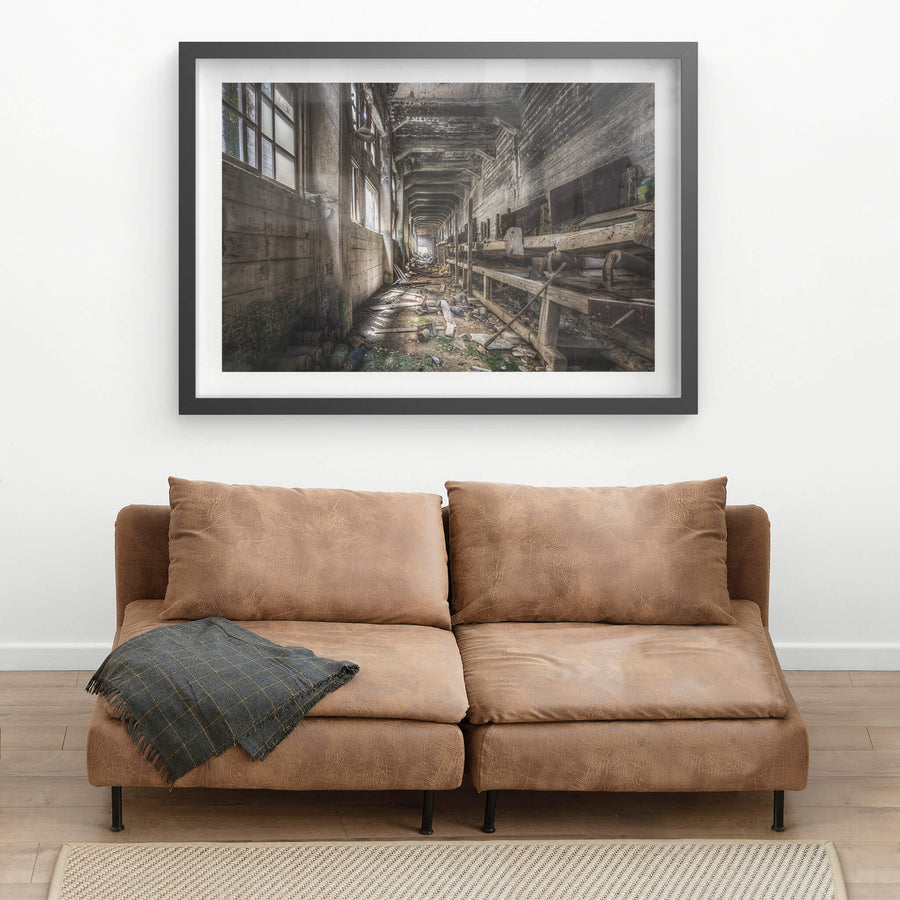
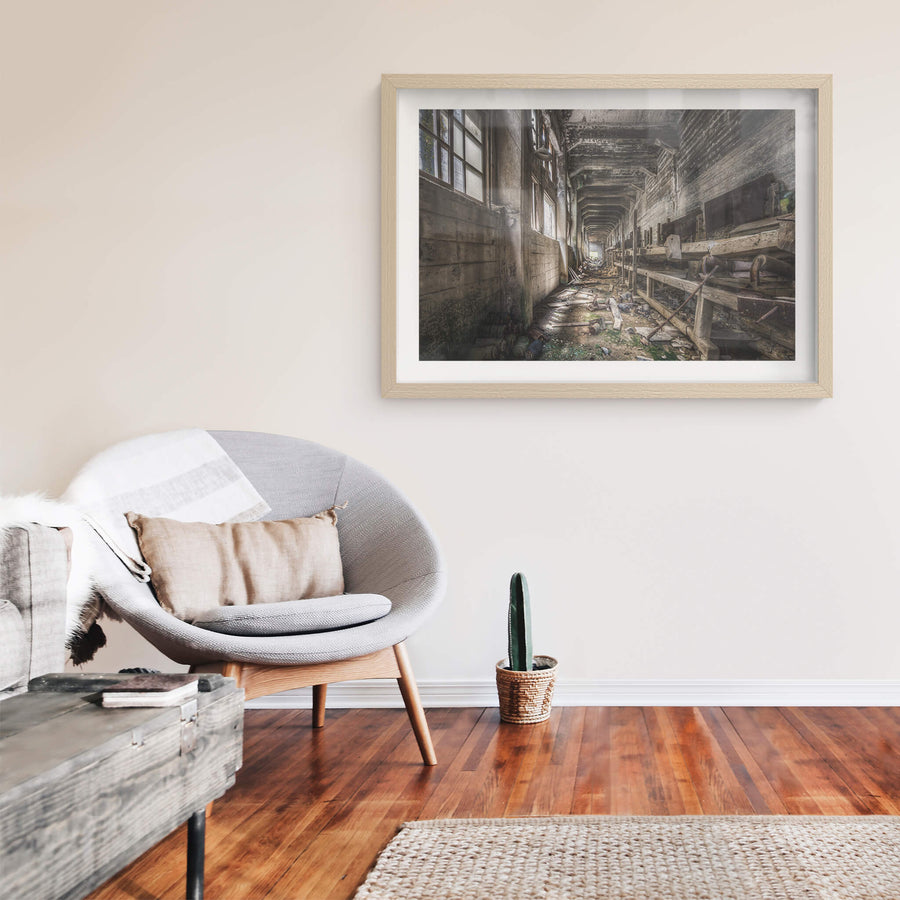
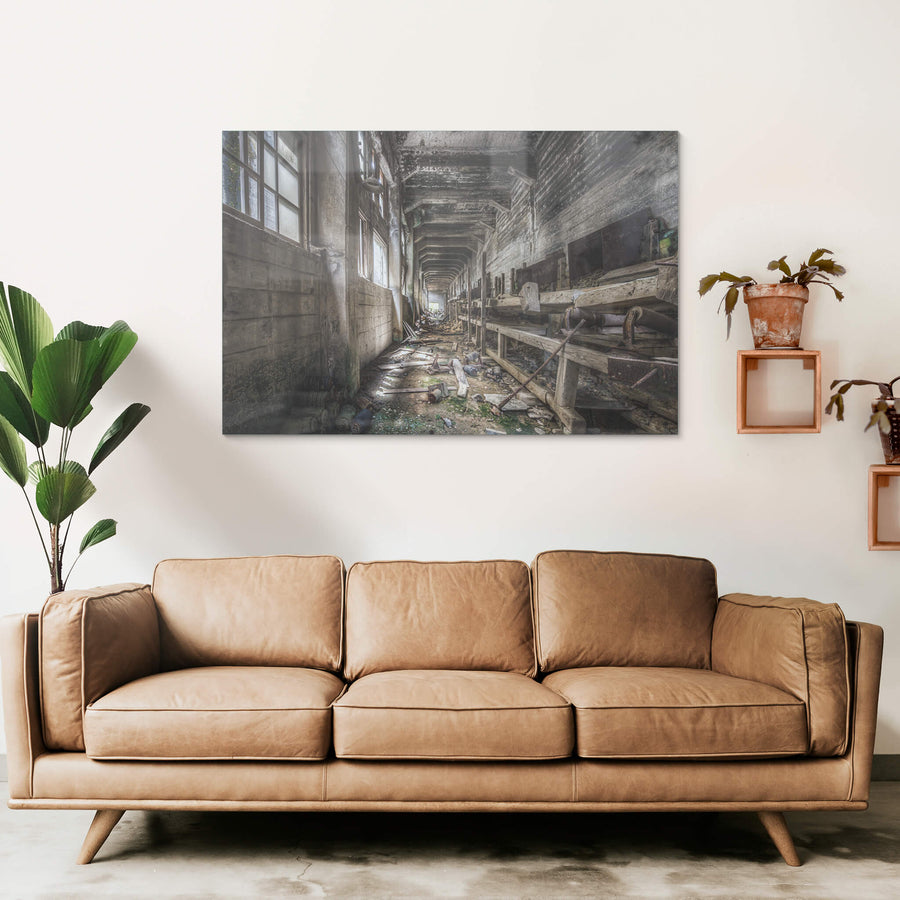
A long, narrow corridor running beneath a partially collapsed roof, its floor buried under dirt and debris. Rusted pipes, timber beams and steel frames line both walls, what remains of the machinery that received raw material fed down from the hoppers above. Moss spreads across the brickwork where daylight comes through gaps in the structure.
Open edition
Printed to order, no fixed quantity. Each print is hand-signed by the photographer.
Limited edition
A fixed number of prints exist. Once sold, the edition closes permanently. Each print is individually numbered and signed.
Shipping Free shipping over $250. Ships worldwide, rates calculated at checkout.
Returns Damaged in transit? We replace it. Full policy →
Ships within 10 business days · signed & numbered
In situ
Print datasheet
- Title
- Raw Material Chutes
- Series
- Ashio Copper Mine
- Catalogue
- ACM-018
- Process
- Giclée
- Captured
- 7 May 2016
- Camera
- NIKON D810
- Lens
- 14.0-24.0 mm f/2.8
- Aperture
- f/9.0
- Shutter
- 0.4s s
- ISO
- 100
- Focal length
- 14 mm
- Paper
- Ilford Galerie Smooth Cotton Rag 310 gsm
- Paper size
- 297 × 210 mm
- Location
- Ashio, Tochigi, Japan
- Authenticity
- C2PA verified provenance →
- Recognised by
- Highly Commended in Multimedia at the 2016 National Trust of Australia (NSW) Heritage Awards
Ashio, Tochigi, Japan
Map · Mapbox · OpenStreetMap
About this print
A long concrete corridor stretches deep into the building, narrowing to a faint rectangle of green light at the far end. Timber workbenches and heavy iron rollers line the right side. Rust has thickened on every metal surface. Moss creeps across the floor between broken planks, ceramic insulators, and scattered machine parts. Milky light enters through gridded windows on the left wall. The ceiling is stained black with decades of mineral dust and moisture.
Brett Patman

The series
Ashio Copper Mine
Furukawa Ichibei acquired the Ashio mine in 1877 with financial backing from Shibusawa Eiichi. By 1922 the operation had consolidated its three separate ore-processing plants into one. The Tsudō Ore-Dressing Plant, on the Watarase River, was held up at home and abroad as a model facility for metal mines.
Print sizes
The anatomy view shows what this finish is as a physical object: paper margin, mat band, frame depth, acrylic profile. The comparison strip shows how each size sits relative to the others at true scale. Click a size or a finish to update both.
| Type | Size | Width | Height |
|---|


