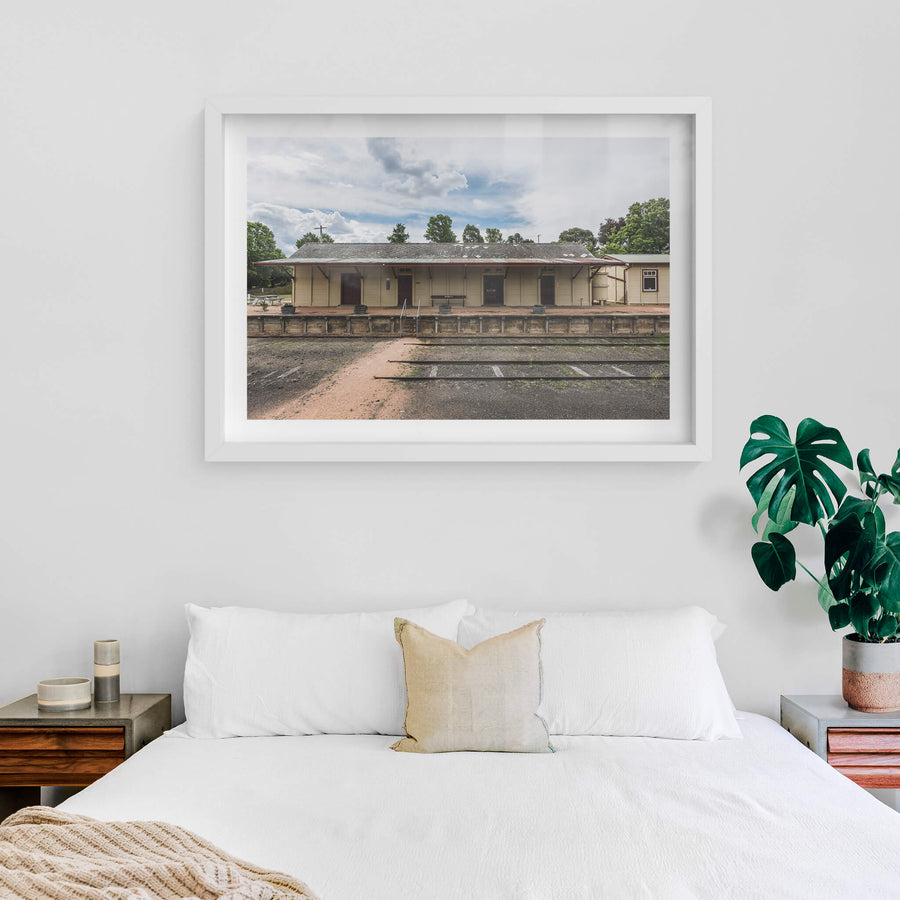
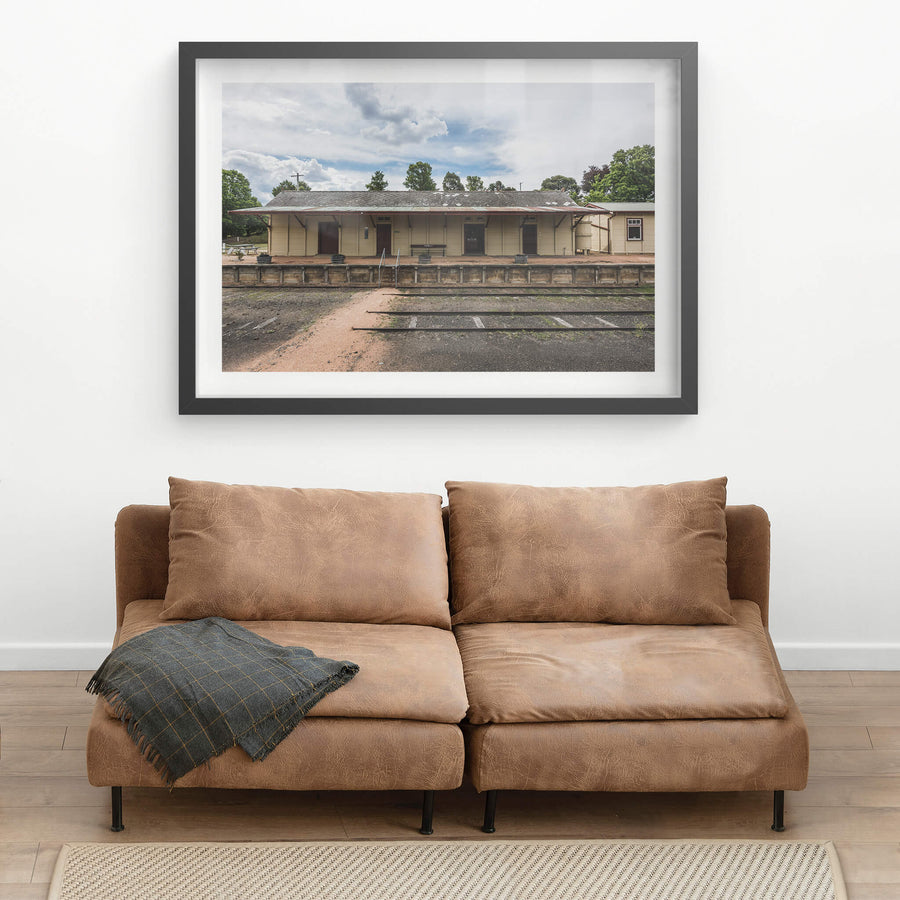
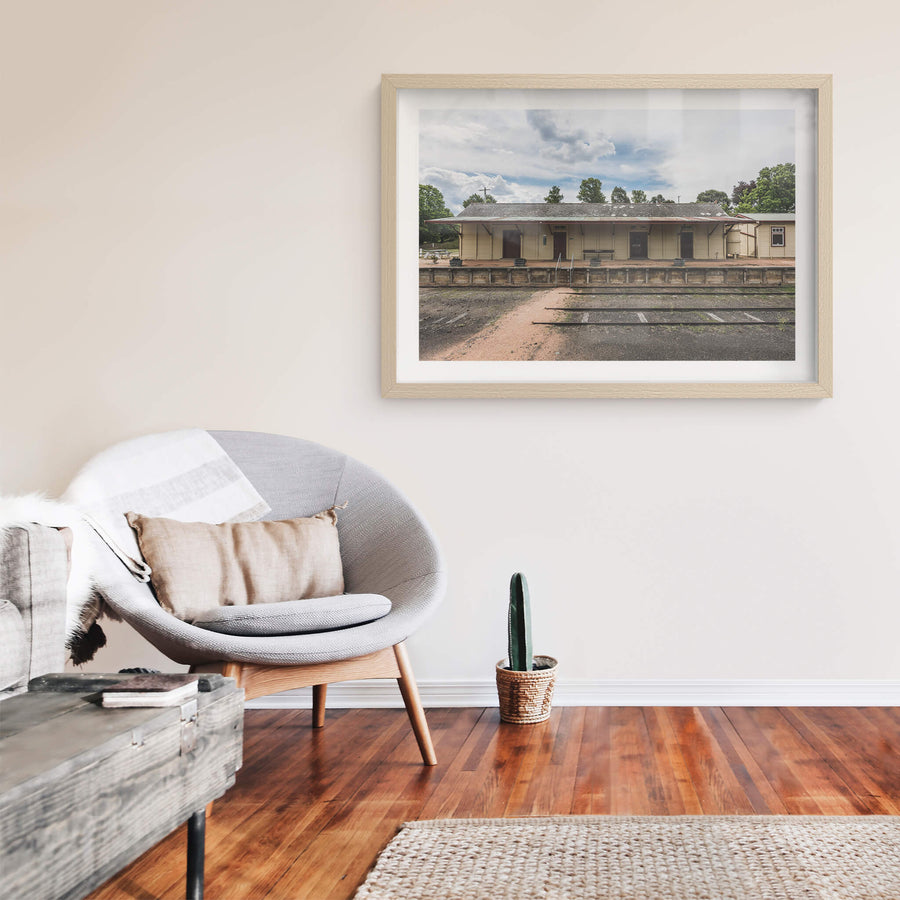
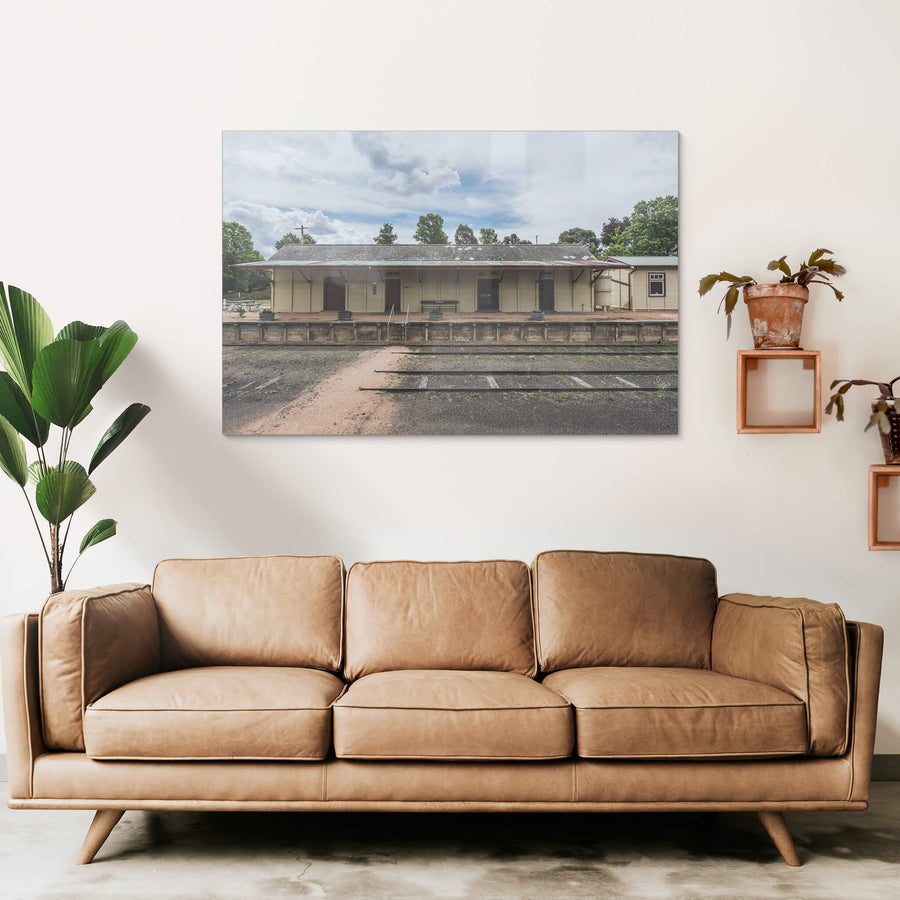
Station Platform

Provenance

Camera
NIKON D810
Lens
14.0-24.0 mm f/2.8
Settings
19mm · f/8.0 · 1/800 · ISO 100
Paper
Ilford Galerie Smooth Cotton Rag 310 gsm

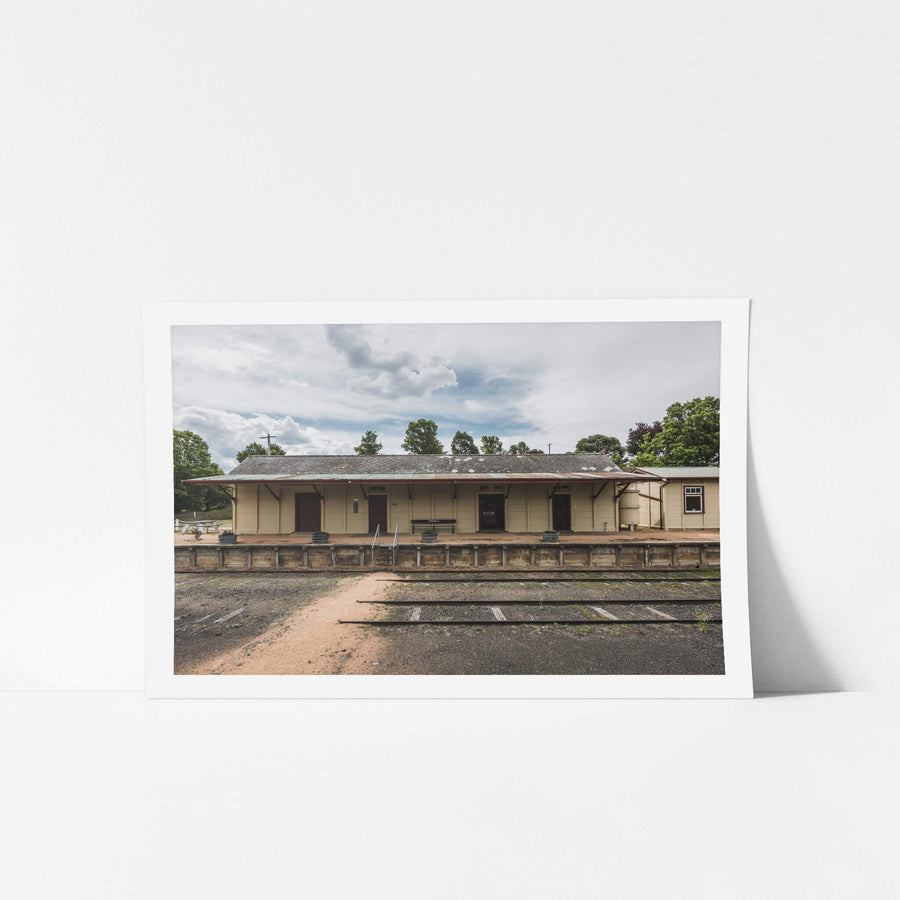
A concrete platform stretches across the frame, one of the original timber station seats positioned along it. The Type 11 pre-cast concrete station building stands behind, its panel joint lines visible. The platform face is concrete with a crushed gravel base. Natural light falls across the platform surface.

Edition
Open edition

Open edition
Printed to order, no fixed quantity. Each print is hand-signed by the photographer.

Limited edition
A fixed number of prints exist. Once sold, the edition closes permanently. Each print is individually numbered and signed.

$100.00 AUD
Size
Type
Colour
Signed, numbered, with COA. Made to order in 5 to 10 business days (unframed). Shipped in protective packaging with edition certificate, paper-stock reference and a printed care guide.
See certificate sample →

Shipping Free shipping over $250. Ships worldwide, rates calculated at checkout.

Returns Damaged in transit? We replace it. Full policy →

Ships within 10 business days · signed & numbered

In situ
Station Platform at Bombala Station, unframed print displayed in situ on a wall.Station Platform at Bombala Station, white-framed print displayed in situ on a wall.Station Platform at Bombala Station, black-framed print displayed in situ on a wall.Station Platform at Bombala Station, raw timber-framed print displayed in situ on a wall.Station Platform at Bombala Station, glass print displayed in situ on a wall.
01 PROVENANCE

Print datasheet

Title
Station Platform
Series
Bombala Station
Catalogue
BST-018
Process
Giclée
Captured
26 December 2016
Camera
NIKON D810
Lens
14.0-24.0 mm f/2.8
Aperture
f/8.0
Shutter
1/800 s
ISO
100
Focal length
19 mm
Paper
Ilford Galerie Smooth Cotton Rag 310 gsm
Paper size
290 × 200 mm
Location
Bombala, New South Wales, Australia
Recognised by
Highly Commended in Multimedia at the 2016 National Trust of Australia (NSW) Heritage Awards
02 LOCATION

Bombala, New South Wales, Australia

Map · Mapbox · OpenStreetMap

03 THE STORY

About this print

The platform at Bombala Railway Station runs 88 metres along the up side, concrete-faced with a crushed gravel base. One of the original station seats sits on it now, returned after a period at a council depot. It is a small detail that says something about how people here have held onto the place. The station building behind the platform is a Type 11 pre-cast concrete structure, built in 1921 to a standard design used by NSW Government Railways across regional New South Wales between 1919 and 1932. Roughly 140 of these drop-panel concrete buildings were constructed across the state during that period. The NSW State Heritage Register describes Bombala Railway Station as one of the best pre-cast concrete structures to survive in the state. Its significance is not in being original or unique; it is in being intact when so many of its counterparts are gone. The station opened for passenger services on 21 November 1921, the terminus of a branch line that had been pushing south from Joppa Junction since 1884. Construction of the Bombala extension was approved in 1915 but suspended during the First World War for lack of funds, leaving the line to sit unfinished for years before it finally reached this point. By the time it arrived, the era of railway expansion in New South Wales was effectively over. Bombala Railway Station is one of the last rural branch line termini to open in the state. The station closed on 26 March 1986. The last visit was 3 CPH railmotors. The branch line itself closed in May 1989 after the Numeralla River bridge at Chakola was declared unsafe. The precinct was listed on the NSW State Heritage Register on 2 April 1999. What the 2016 photograph records is a platform that has largely held its form: the concrete face, the crushed gravel base, the panel lines of the Type 11 building behind it, and a seat that made its way back after decades away. The yard around it remains essentially intact against its original 1920s layout, maintained by volunteers through the Friends of Bombala Railway. It is the end of the line in every sense, preserved by the effort of people who saw value in keeping it that way.

04 FROM THE FIELD NOTES

The platform at Bombala Railway Station is 88 metres of concrete at the end of a line that took 37 years to reach it. The station building is a Type 11 pre-cast concrete structure, a standardised NSWGR design built in 1921 and rated by the NSW State Heritage Register as one of the best of its kind to survive in the state. One of the original platform seats has been returned here after a period at a council depot. The station closed on 26 March 1986; the building and its platform remain largely intact.

Brett Patman

Bombala Station

The series

Bombala Station

2016 · 23 photographs

Bombala railway station is the terminus of the Goulburn-Bombala branch line, sitting at the southern end of the Monaro in NSW, near the Victorian border. The Nimmitabel to Bombala section opened on 21 November 1921, and every building in the yard dates from that year: the pre-cast concrete station building, signal box, goods shed, footbridge, turntable, gantry crane, cattle yard, and barracks. The last passenger service ran in August 1974. The last goods train rolled out on 26 March 1986. Listed on the NSW State Heritage Register (item 5011934, 2 April 1999), the station is described as one of the most intact country terminus sites from the 1920s railway expansion, with the station building rated as one of the best surviving pre-cast concrete structures in NSW. The Friends of Bombala Railway maintain the precinct as a heritage museum.

View all in this series →

05 SIZE GUIDE

Print sizes

The anatomy view shows what this finish is as a physical object: paper margin, mat band, frame depth, acrylic profile. The comparison strip shows how each size sits relative to the others at true scale. Click a size or a finish to update both.

Anatomy · true ratio
TypeSizeWidthHeight
08 BY POST · NO SPAM

Read the full story

Articles when they're published. The history behind a place. The day of a shoot. The work between prints. No marketing, no schedule.

You're subscribed.