
Control Desk
Provenance
- Camera
- NIKON D7000
- Lens
- 24.0-70.0 mm f/2.8
- Settings
- 24mm · f/8.0 · 8s · ISO 100
- Paper
- Ilford Galerie Smooth Cotton Rag 310 gsm
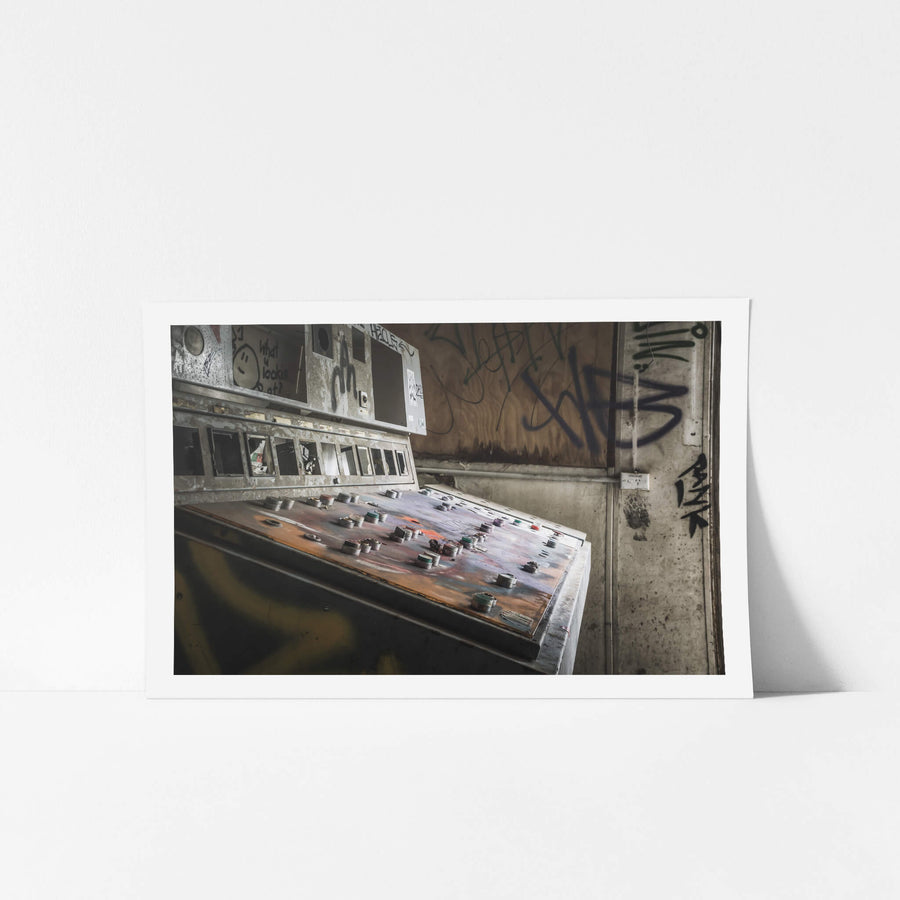
A smiley face is drawn in black marker on the panel of this defunct control console in the processing plant at Hornsby Quarry, with "What u lookin at?" scrawled beneath it, the most pointed of several layers of spray paint covering the surface. Buttons are missing across the panel, wiring sits exposed, and a power outlet remains fixed to the wall on the right. Purple, green and camouflage-pattern yellow markings compete with stencilled tags lower on the panel's base.
Open edition
Printed to order, no fixed quantity. Each print is hand-signed by the photographer.
Limited edition
A fixed number of prints exist. Once sold, the edition closes permanently. Each print is individually numbered and signed.
Shipping Free shipping over $250. Ships worldwide, rates calculated at checkout.
Returns Damaged in transit? We replace it. Full policy →
Ships within 10 business days · signed & numbered
In situ

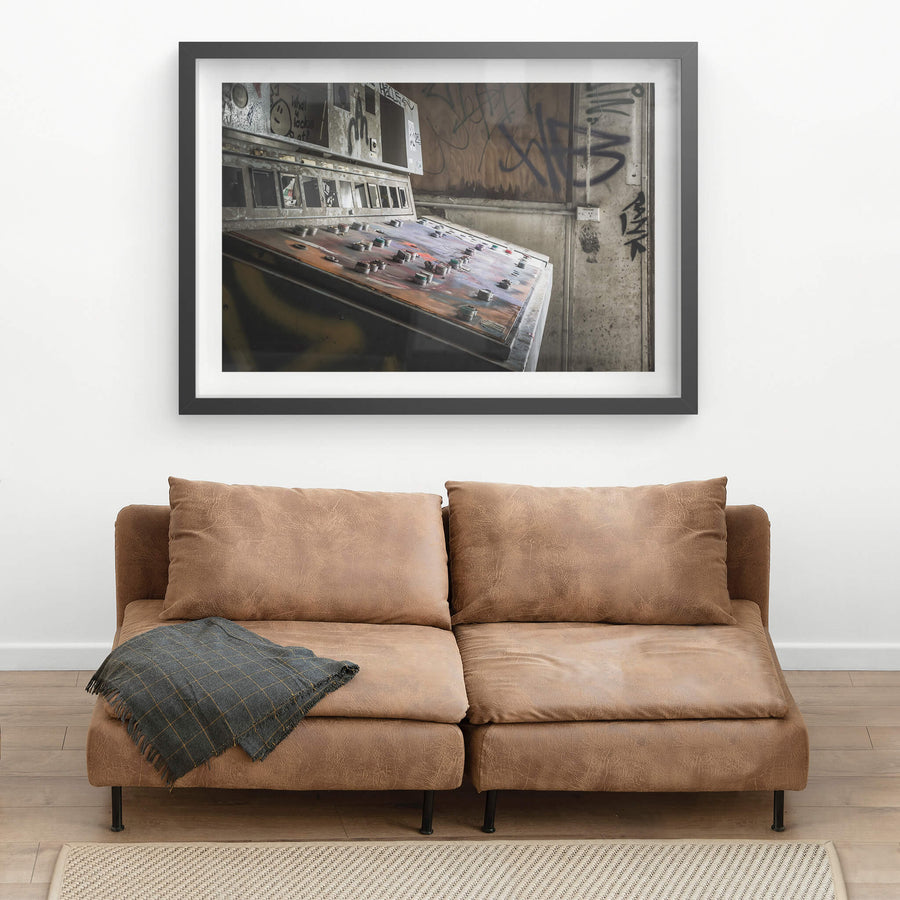
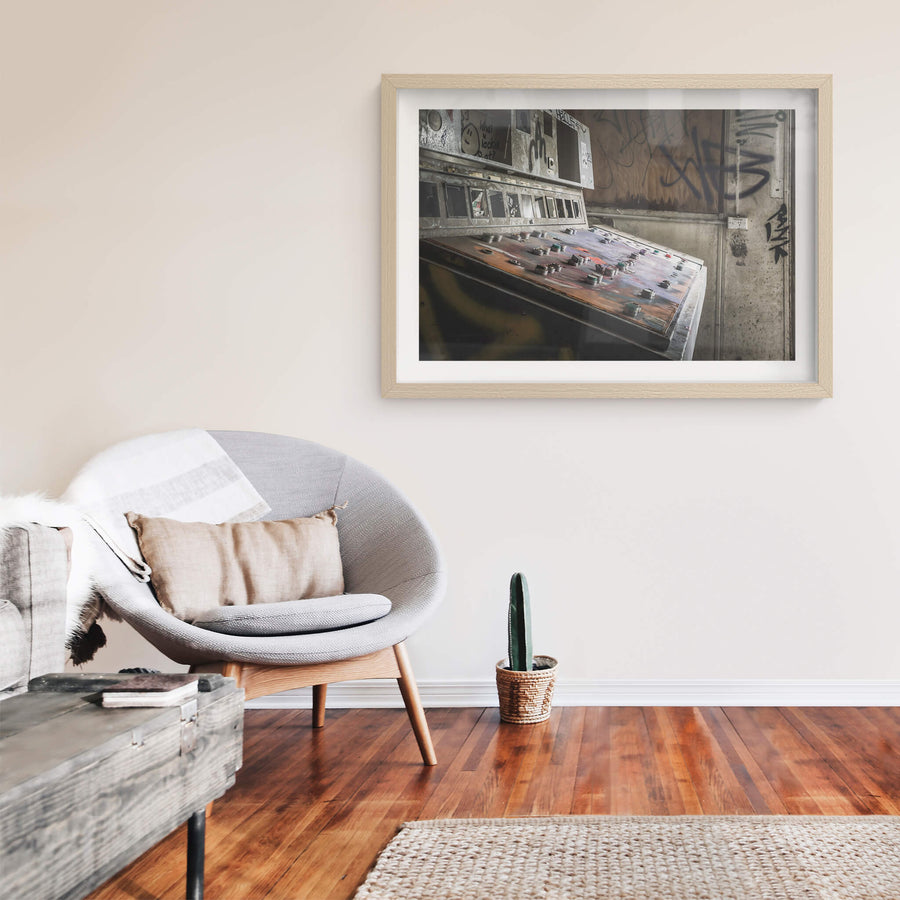
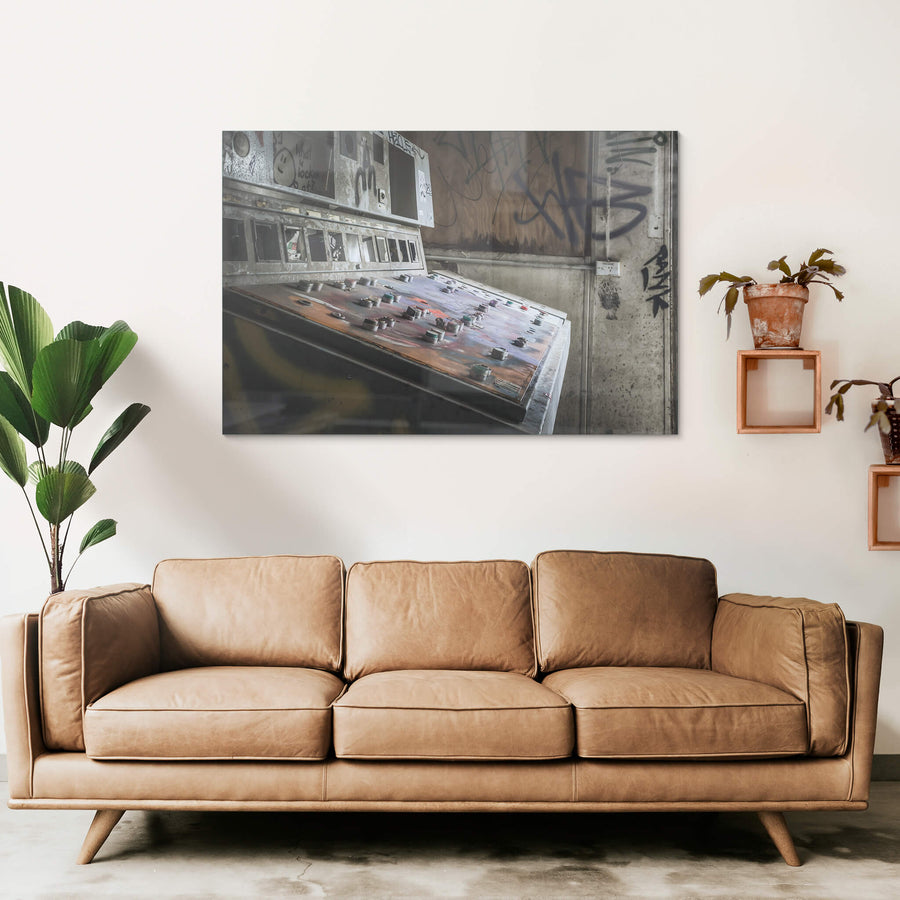
Print datasheet
- Title
- Control Desk
- Series
- Graffiti & Urban Decay
- Catalogue
- GUD-003
- Process
- Giclée
- Captured
- 7 November 2015
- Camera
- NIKON D7000
- Lens
- 24.0-70.0 mm f/2.8
- Aperture
- f/8.0
- Shutter
- 8s s
- ISO
- 100
- Focal length
- 24 mm
- Paper
- Ilford Galerie Smooth Cotton Rag 310 gsm
- Paper size
- 297 × 210 mm
- Location
- Hornsby, New South Wales, Australia
- Authenticity
- C2PA verified provenance →
- Recognised by
- Highly Commended in Multimedia at the 2016 National Trust of Australia (NSW) Heritage Awards
Hornsby, New South Wales, Australia
Map · Mapbox · OpenStreetMap
About this print
Inside Hornsby Quarry, a control desk sits where workers once monitored operations that extracted crushed dolerite for road base across northern Sydney. Rotary dials and switches still cover the angled panel, though the surface is now layered in spray paint and the concrete walls behind it are covered in graffiti. The quarry ran from around 1905 to 2002 under a succession of operators, including Farley and Lewers from 1959 and CSR Construction Materials from 1981. This frame was made in 2015, over a decade after the last extraction.
Brett Patman
The series
Graffiti & Urban Decay
Buildings don't stay empty. Once the owners leave, somebody else arrives. Walls that were blank become a record of who came through and when. Graffiti isn't vandalism on these surfaces , it's the only remaining evidence that anyone cared enough to be here.Urban spaces mid-collapse. The gap between what a building was built for and what it became.
Print sizes
The anatomy view shows what this finish is as a physical object: paper margin, mat band, frame depth, acrylic profile. The comparison strip shows how each size sits relative to the others at true scale. Click a size or a finish to update both.
| Type | Size | Width | Height |
|---|


