
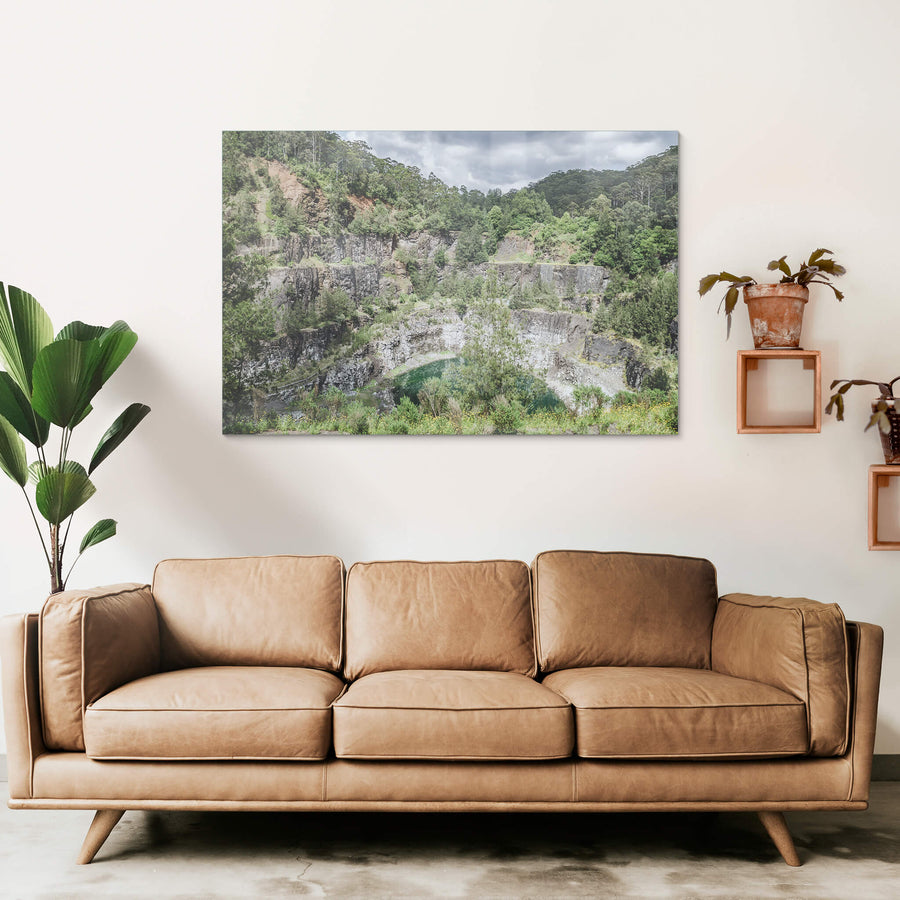
Quarry Void
Provenance
- Camera
- NIKON D7000
- Lens
- 24.0-70.0 mm f/2.8
- Settings
- 36mm · f/2.8 · 1/1000 · ISO 100
- Paper
- Ilford Galerie Smooth Cotton Rag 310 gsm
Photographed in 2015, turquoise-green water pools at the base of the Hornsby Quarry void, held within steep terraced walls and rimmed by dense bush falling almost to the waterline. Overcast light flattens the shadows and throws the colour of the water into relief against the grey-banded rock. The void was filled with tunnel spoil between 2017 and 2019.
Open edition
Printed to order, no fixed quantity. Each print is hand-signed by the photographer.
Limited edition
A fixed number of prints exist. Once sold, the edition closes permanently. Each print is individually numbered and signed.
Shipping Free shipping over $250. Ships worldwide, rates calculated at checkout.
Returns Damaged in transit? We replace it. Full policy →
Ships within 10 business days · signed & numbered
In situ
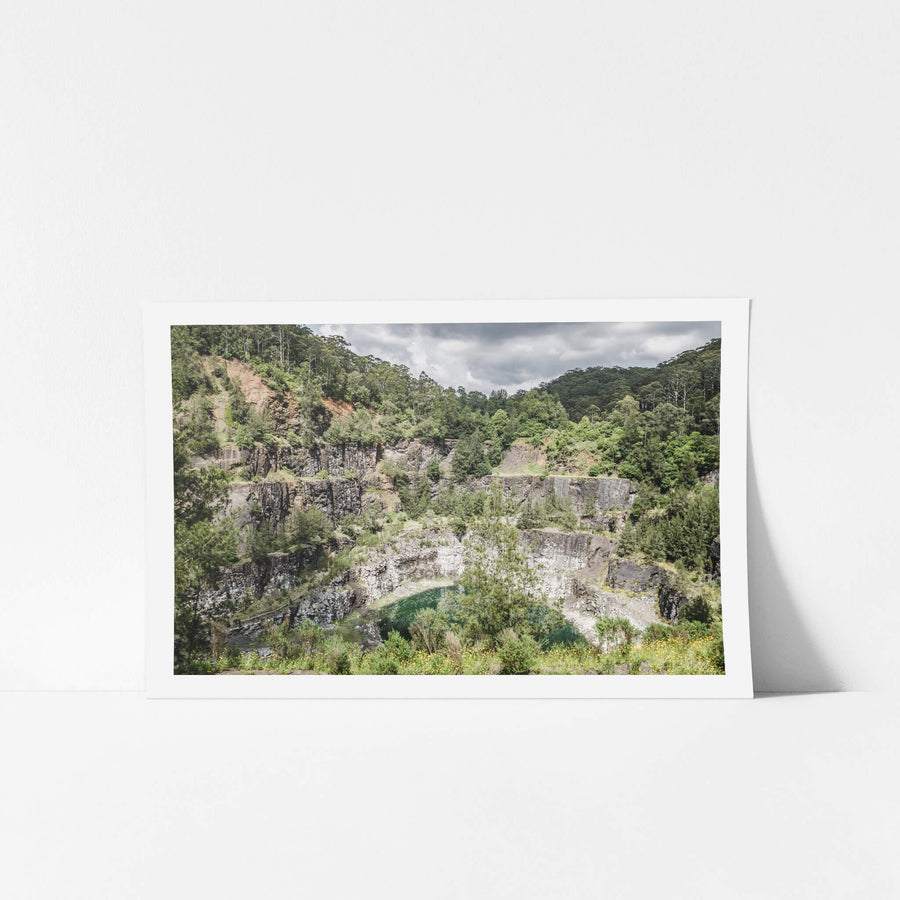
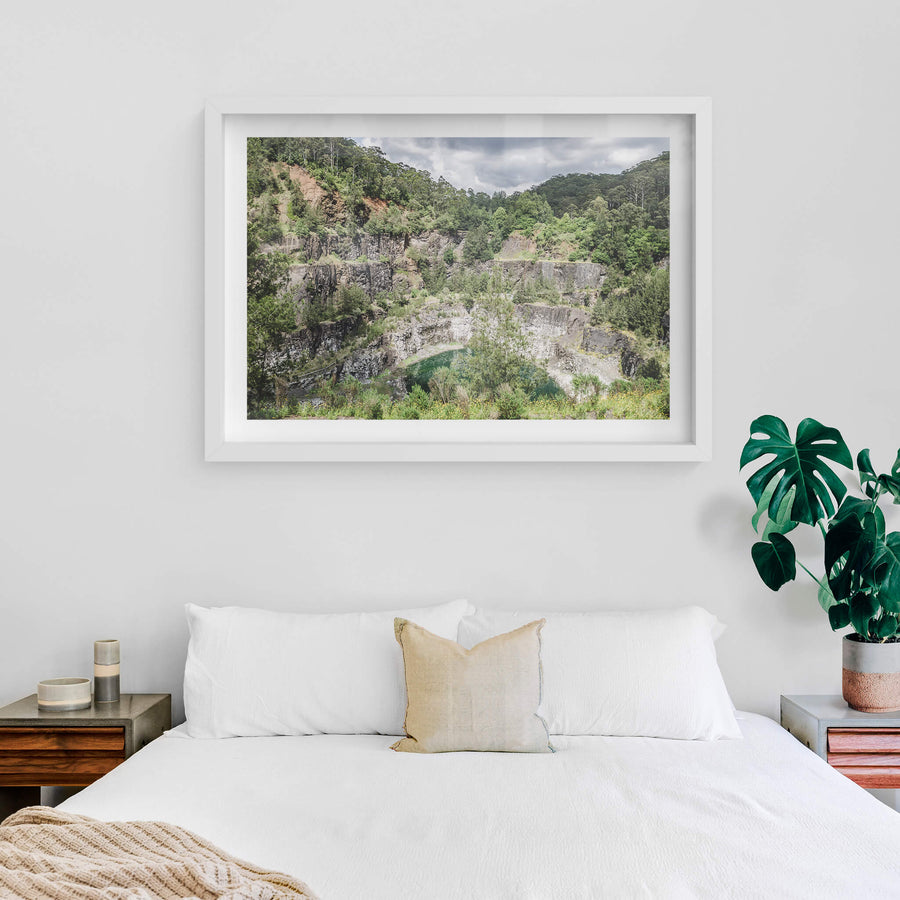
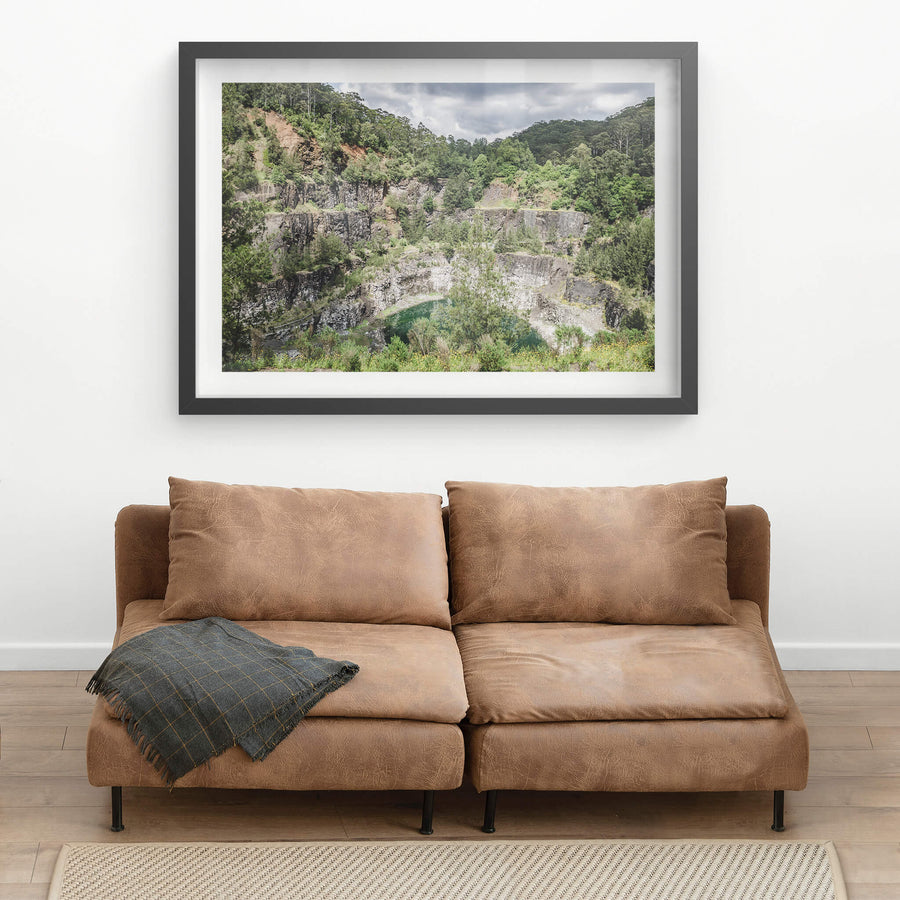
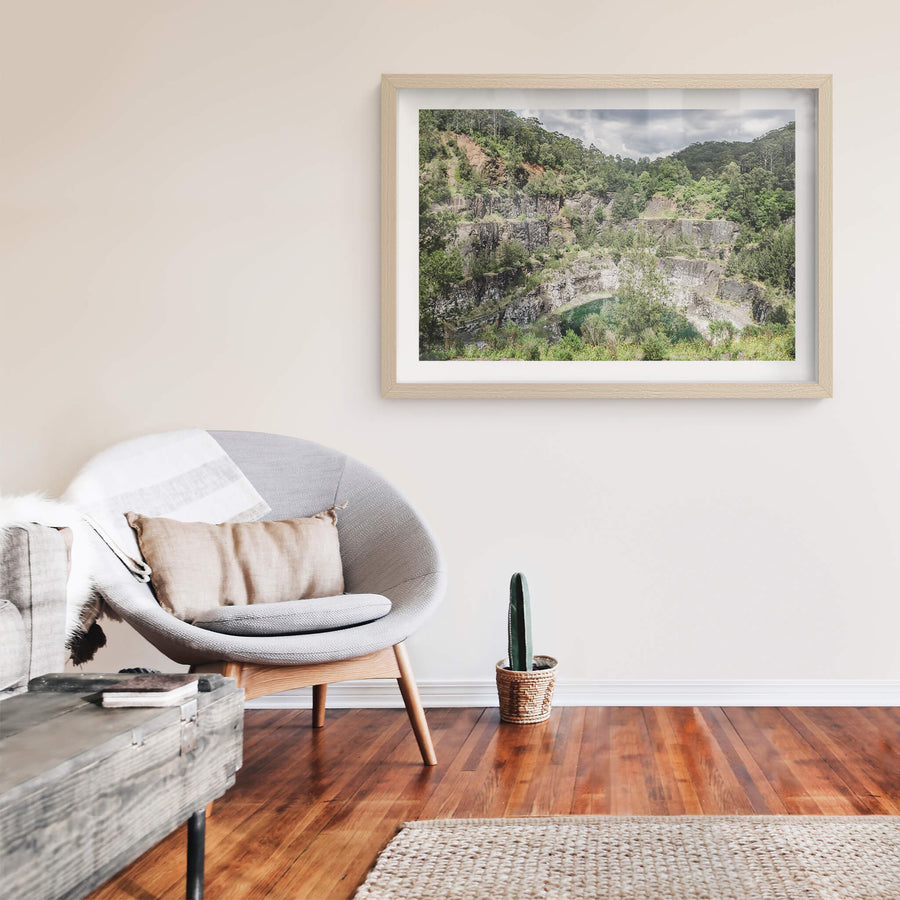
Print datasheet
- Title
- Quarry Void
- Series
- Hornsby Quarry
- Catalogue
- HQU-009
- Process
- Giclée
- Captured
- 7 November 2015
- Camera
- NIKON D7000
- Lens
- 24.0-70.0 mm f/2.8
- Aperture
- f/2.8
- Shutter
- 1/1000 s
- ISO
- 100
- Focal length
- 36 mm
- Paper
- Ilford Galerie Smooth Cotton Rag 310 gsm
- Paper size
- 297 × 210 mm
- Location
- Hornsby, New South Wales, Australia
- Authenticity
- C2PA verified provenance →
- Recognised by
- Highly Commended in Multimedia at the 2016 National Trust of Australia (NSW) Heritage Awards
Hornsby, New South Wales, Australia
Map · Mapbox · OpenStreetMap
About this print
The void at Hornsby Quarry reaches up to 120 metres deep at the southern face, cut through a Jurassic volcanic neck that geologists now rank as the largest diatreme in the Sydney area. Quarrying began around 1905, extracting crushed dolerite for road construction across northern Sydney. By 2002, operations had ceased. What remains is a vertical cross-section through rock formed 146 to 200 million years ago, now holding still water at its floor and open sky above.
Brett Patman

The series
Hornsby Quarry
Hornsby Quarry was a bluestone quarry in Old Man's Valley, Hornsby, that ran under private operators from the early 1900s until 2002. Decommissioned in 2003, it was acquired by Hornsby Shire Council later that year for $26 million following a determination by the NSW Land and Environment Court. What the quarrying exposed is geologically extraordinary: more than 100 metres of cross-section through a Jurassic diatreme volcanic neck, a world-class array of volcanic features described in 2022 as a geoheritage treasure. The Higgins family cemetery, with burials between 1875 and 1925, sits within the site and is separately heritage-listed. Rehabilitation works were approved on 4 November 2020 and the site is being transformed into Hornsby Park, with the quarry void retained as a geological feature.
Print sizes
The anatomy view shows what this finish is as a physical object: paper margin, mat band, frame depth, acrylic profile. The comparison strip shows how each size sits relative to the others at true scale. Click a size or a finish to update both.
| Type | Size | Width | Height |
|---|


