
Water Vessel
Provenance
- Camera
- NIKON D7000
- Lens
- 14.0-24.0 mm f/2.8
- Settings
- 21mm · f/8.0 · 1/30 · ISO 100
- Paper
- Ilford Galerie Smooth Cotton Rag 310 gsm
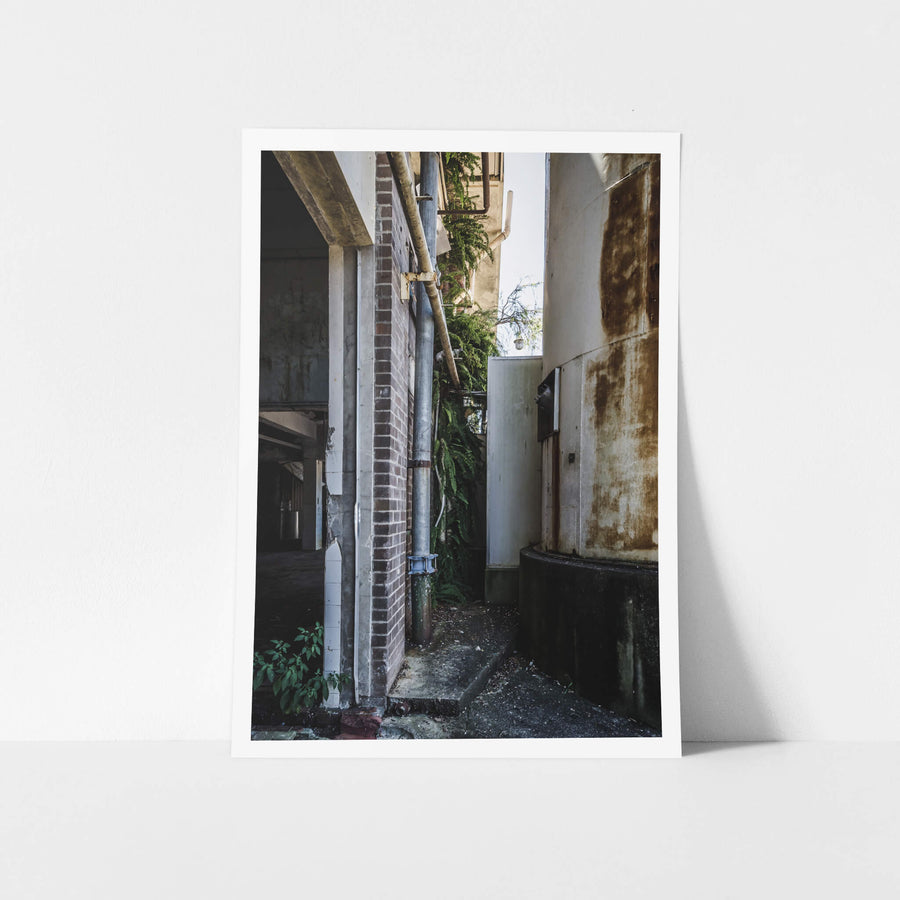
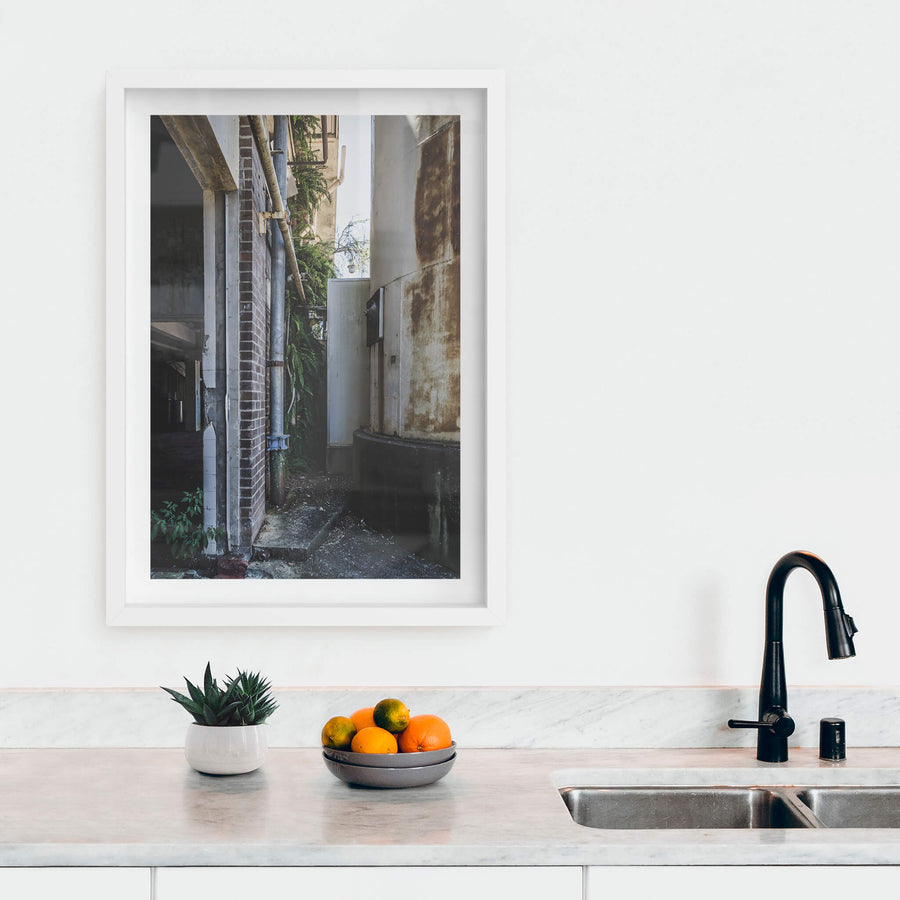
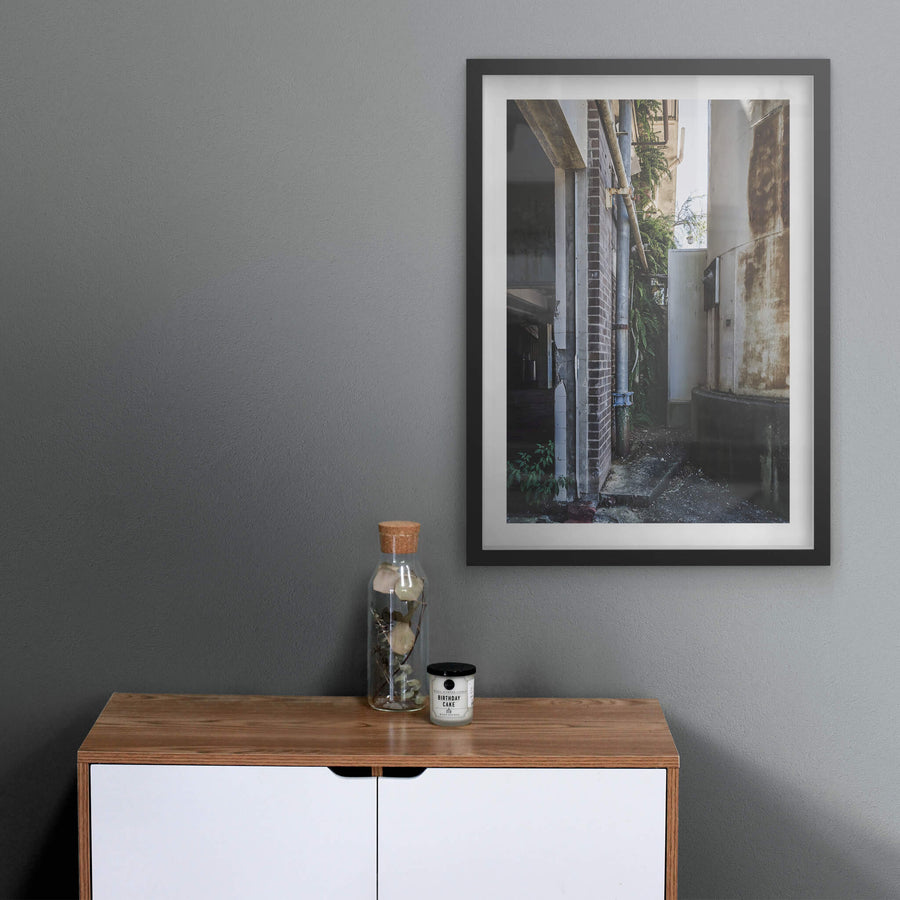
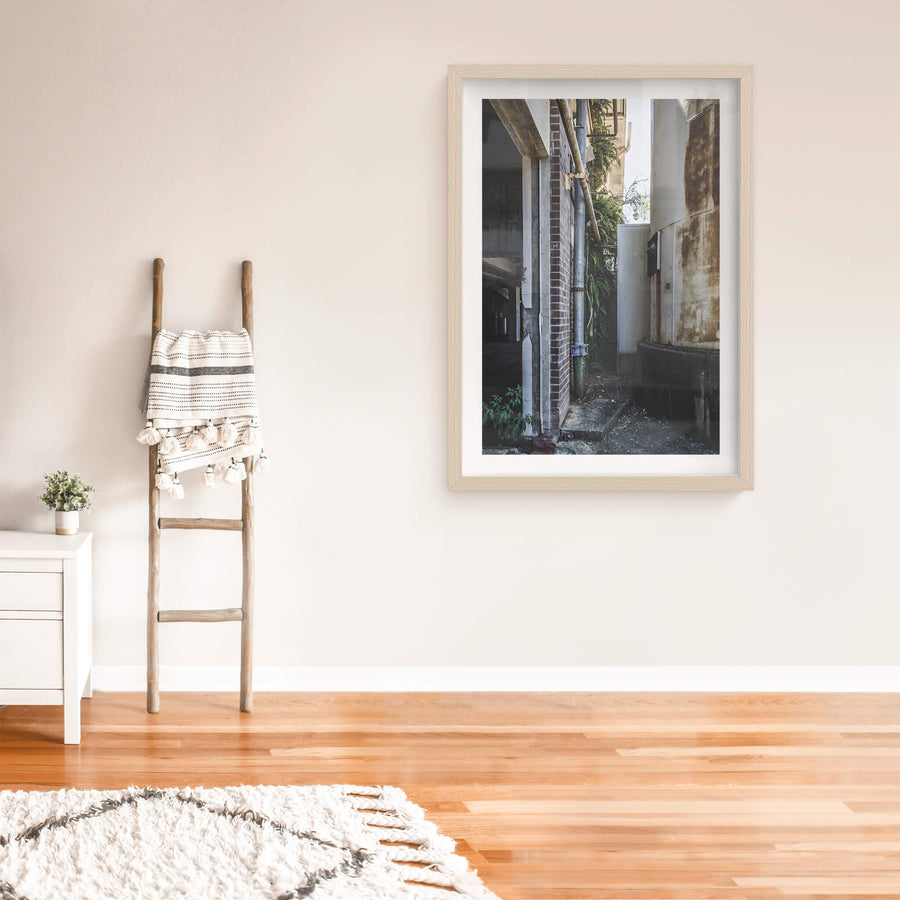
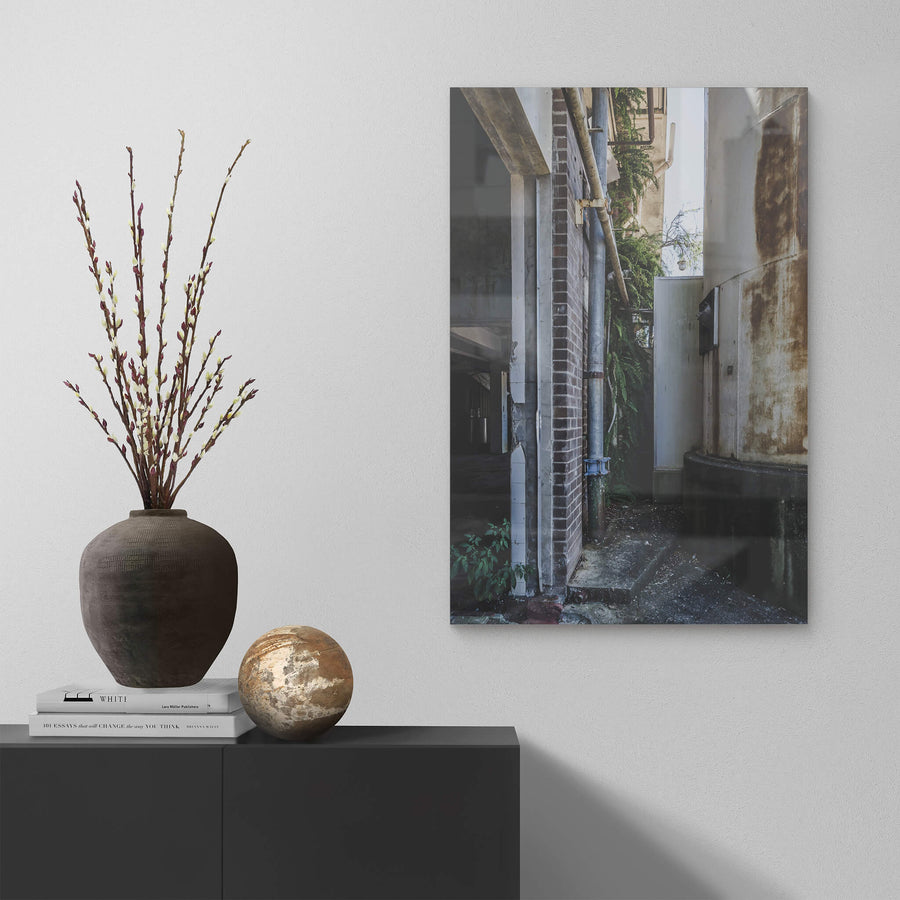
A large cylindrical tank at the former Peters Creameries factory at Chatham, its curved surface heavily streaked with rust, seen from the narrow gap alongside it. Ferns cascade down the brick wall and between the vertical pipes, and bright sky shows through the opening overhead. White ceramic tiles survive in a strip along the concrete column at left, a small green plant rooted at its base, and a blue pipe coupling anchors the nearest run at ground level.
Open edition
Printed to order, no fixed quantity. Each print is hand-signed by the photographer.
Limited edition
A fixed number of prints exist. Once sold, the edition closes permanently. Each print is individually numbered and signed.
Shipping Free shipping over $250. Ships worldwide, rates calculated at checkout.
Returns Damaged in transit? We replace it. Full policy →
Ships within 10 business days · signed & numbered
In situ
Print datasheet
- Title
- Water Vessel
- Series
- Peters Ice Cream Factory
- Catalogue
- PIC-030
- Process
- Giclée
- Captured
- 14 February 2016
- Camera
- NIKON D7000
- Lens
- 14.0-24.0 mm f/2.8
- Aperture
- f/8.0
- Shutter
- 1/30 s
- ISO
- 100
- Focal length
- 21 mm
- Paper
- Ilford Galerie Smooth Cotton Rag 310 gsm
- Paper size
- 297 × 210 mm
- Location
- Taree, New South Wales, Australia
- Authenticity
- C2PA verified provenance →
- Recognised by
- Highly Commended in Multimedia at the 2016 National Trust of Australia (NSW) Heritage Awards
Taree, New South Wales, Australia
Map · Mapbox · OpenStreetMap
About this print
The water vessel inside the Peters Creameries Pty Ltd factory at Chatham sits corroded and idle, its metal skin mapped with rust and peeling paint. The plant ran on steam, and water was central to everything: a pump house on the bank of the Manning River supplied 25,000 gallons per hour for condensing operations alone. The factory opened in November 1939, built at a cost of approximately £60,000, and operated until the late 1990s when corporate rationalisation under successive owners shifted production elsewhere.
Brett Patman

The series
Peters Ice Cream Factory
Peters Ice Cream Factory opened on 4 November 1939 on the bank of the Manning River at Chatham, a suburb of Taree. The opening drew approximately 5,000 people. Peters Creameries built the plant for around £60,000, with a steam-driven capacity of 1,000 gallons of milk per hour and a boiler house running four Babcock and Wilcox boilers. Cream was delivered by boat from farms along the Manning River for four decades, a trade that ran until around the 1970s. The factory made ice cream, butter, milk powder, oil, and yoghurt, and was the main employer in the Manning Valley until it closed in the late 1990s. The building still stands at Chatham, deteriorating. Listed in 1990 on the local heritage register (Greater Taree, now MidCoast Council).
Print sizes
The anatomy view shows what this finish is as a physical object: paper margin, mat band, frame depth, acrylic profile. The comparison strip shows how each size sits relative to the others at true scale. Click a size or a finish to update both.
| Type | Size | Width | Height |
|---|


