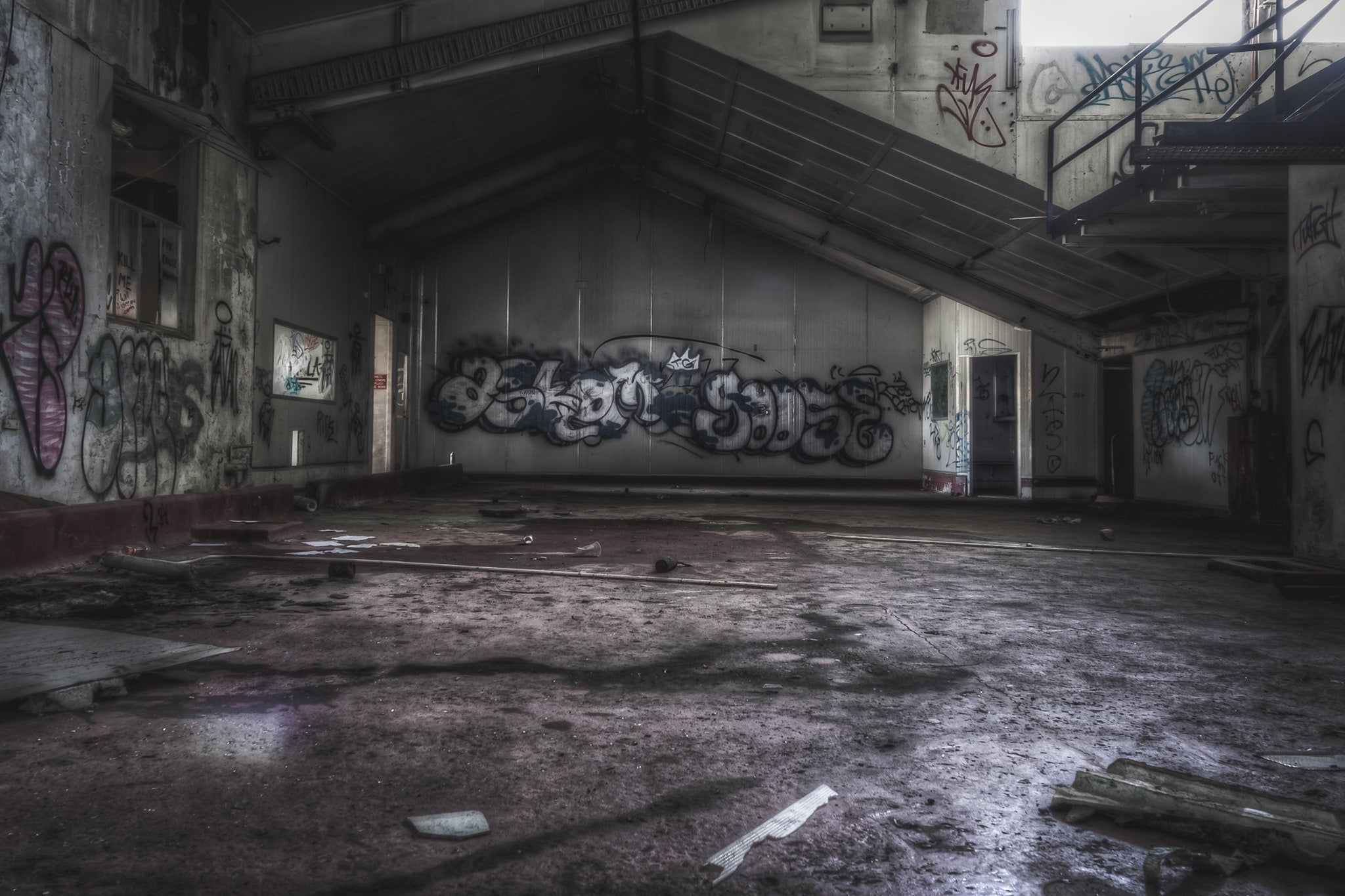
Yoghurt Culture Vats at Peters Ice Cream Factory, a high-ceilinged industrial hall opens at ground level, its pitched steel roof beams crossing overhead in near-darkness.

01 Peters Ice Cream FactoryTaree2016

ISO 1001/6f/8.014mm

Series · 32 prints

Peters Ice Cream Factory

Photographed 2016
Frames 32
Camera NIKON D7000
Location New South Wales, Australia
Status Abandoned; vandalised and largely empty
Opened 1939
Specs Steam-driven dairy plant · 1,000 gallons of milk per hour · Four Babcock and Wilcox boilers
01 ABOUT THIS SERIES

Series story

Map · Mapbox · OpenStreetMap

Peters Ice Cream Factory opened on 4 November 1939 on the bank of the Manning River at Chatham, a suburb of Taree. The opening drew approximately 5,000 people. Peters Creameries built the plant for around £60,000, with a steam-driven capacity of 1,000 gallons of milk per hour and a boiler house running four Babcock and Wilcox boilers. Cream was delivered by boat from farms along the Manning River for four decades, a trade that ran until around the 1970s. The factory made ice cream, butter, milk powder, oil, and yoghurt, and was the main employer in the Manning Valley until it closed in the late 1990s. The building still stands at Chatham, deteriorating. Listed in 1990 on the local heritage register (Greater Taree, now MidCoast Council).
03 PRINTS

Prints in this series

Hand-signed and numbered, printed from the original RAW file. Open editions in the two smallest sizes; limited editions of 100, 50 and 25 in the three larger, never reissued once they sell through.

04 ABOUT THE PRINTS

How they’re made

Made to order by Brett in Sydney, from the original RAW file. Each print is hand-signed and numbered before it ships.

Paper

Ilford Galerie cotton rag, 310 gsm. Acrylic on metallic gloss, 260 gsm.

Editions

Open in XS and S. Limited in M (100), L (50), XL (25). From $100.

Print tiers →

Lead time

Unframed: 5 to 10 business days. Framed and acrylic: 10 to 20.

05 FIELD NOTE

From the field

Read all field notes
08 BY POST · NO SPAM

Read the full story

Articles when they're published. The history behind a place. The day of a shoot. The work between prints. No marketing, no schedule.

You're subscribed.