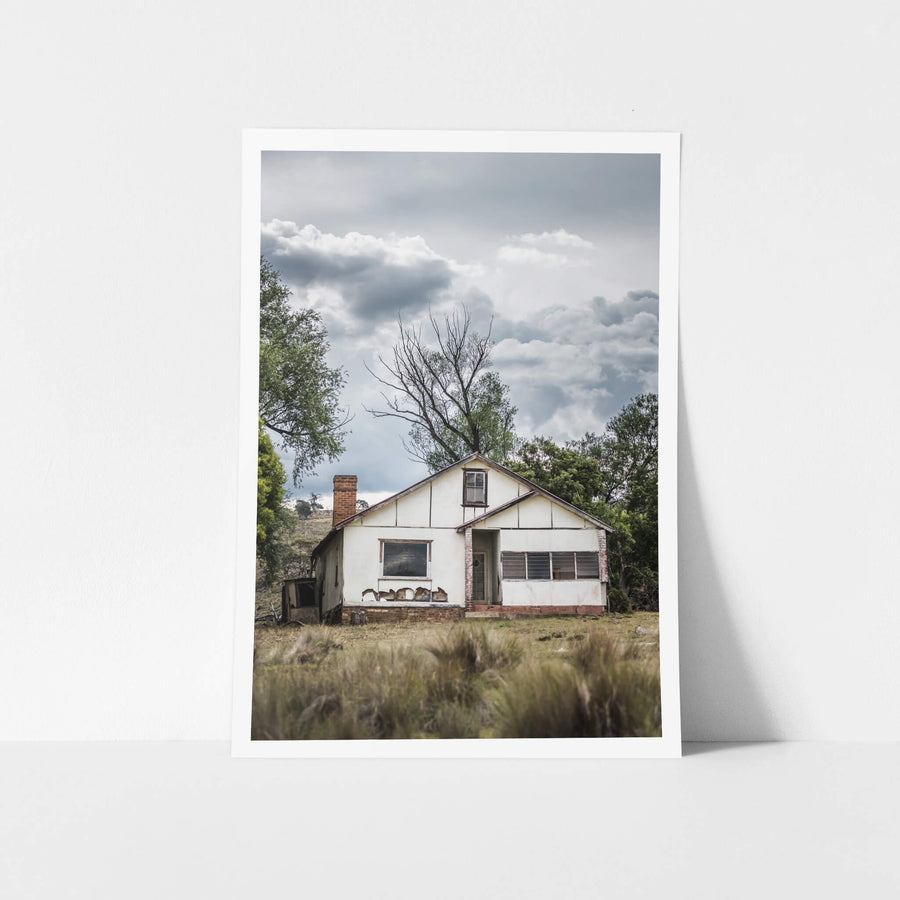
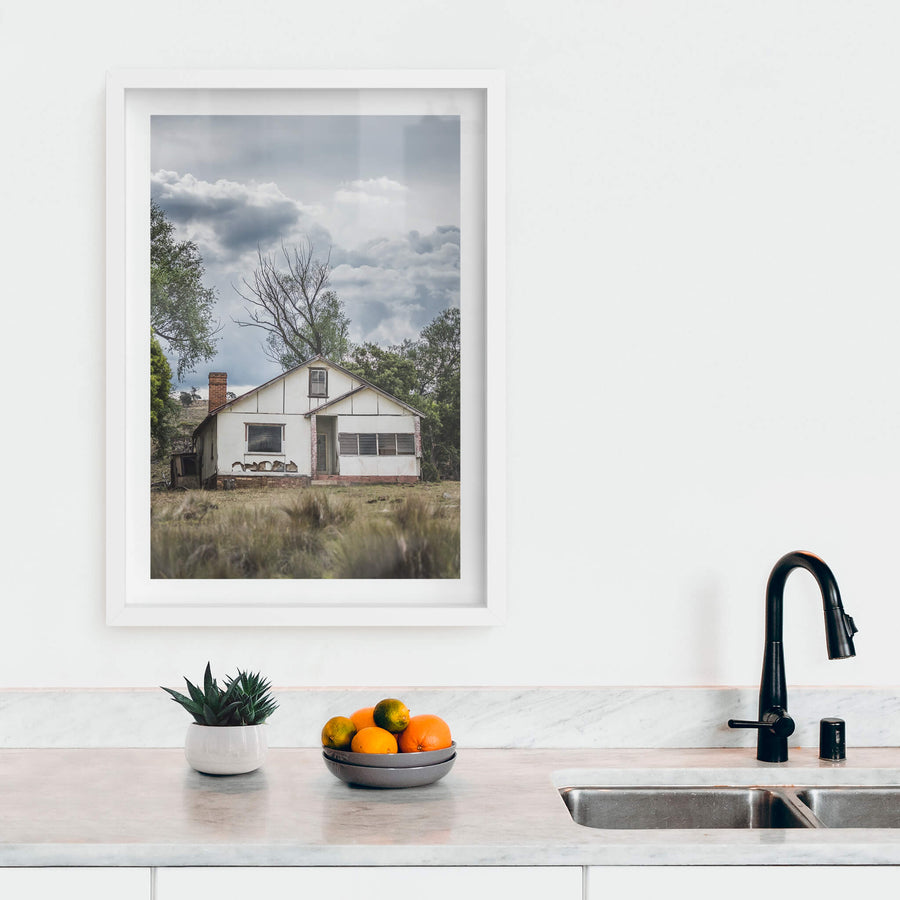
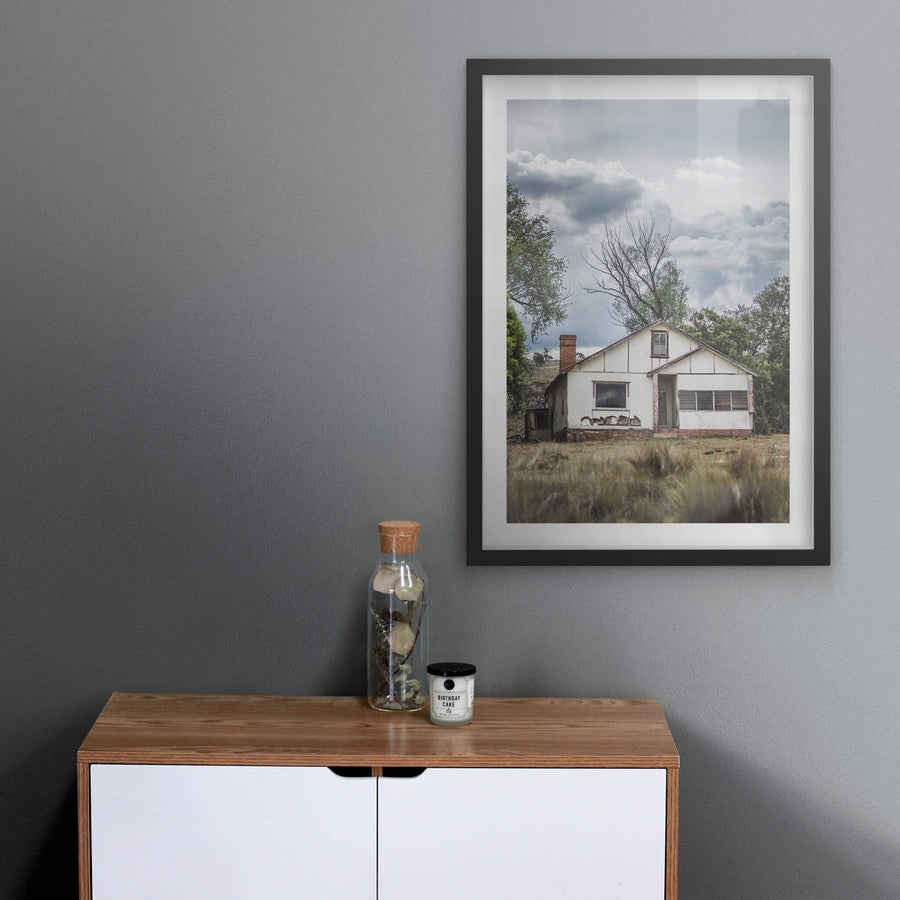
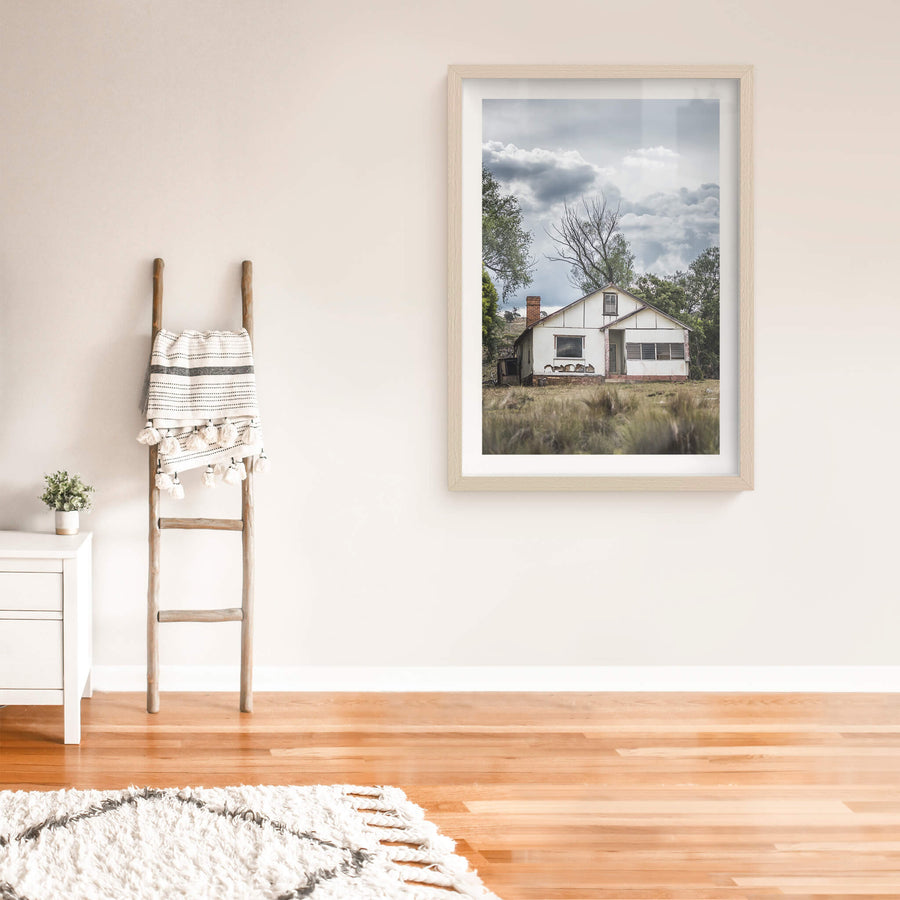
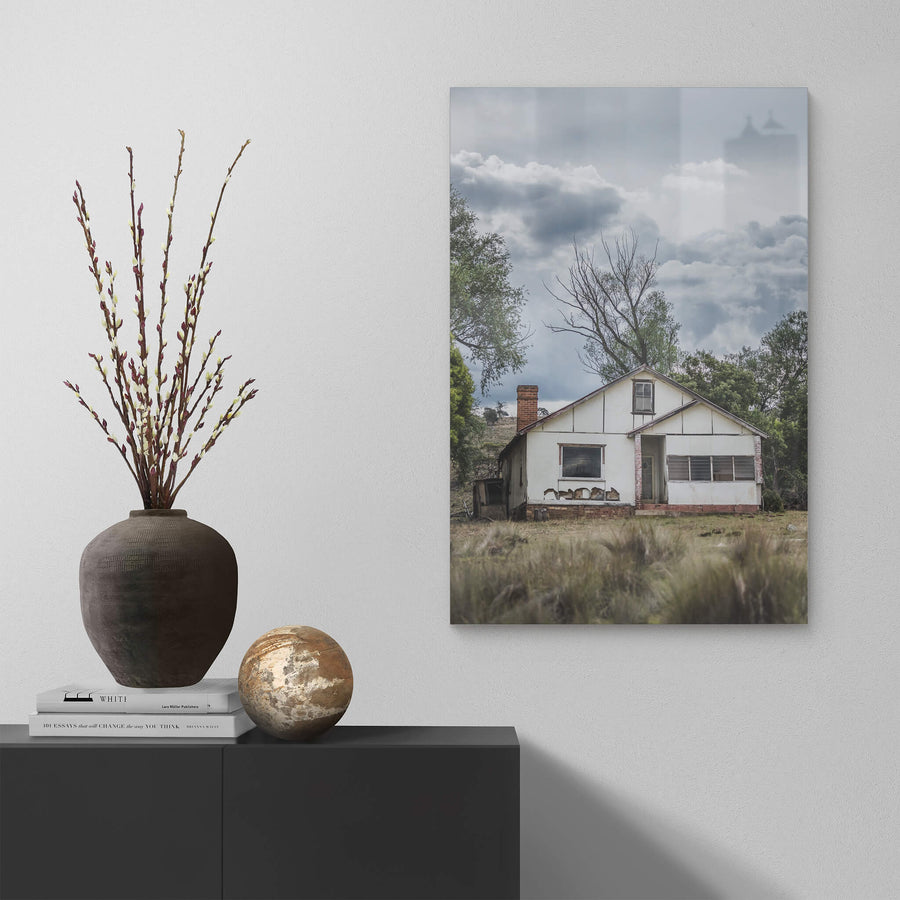
A derelict fibro farmhouse under a heavy, overcast sky, the windowpanes broken or absent. Peeling paint and corrugated iron roofing carry the wear of years on the open tableland. Bare trees stand on either side of the structure. Grey light falls evenly across the facade, with no shadows cast.
Edition
Open edition
Open edition Printed to order, no fixed quantity. Each print is hand-signed by the photographer.
Limited edition A fixed number of prints exist. Once sold, the edition closes permanently. Each print is individually numbered and signed.
$100.00 AUD
Size
Type
Colour
✓
Signed, numbered, with COA. Made to order in 5 to 10 business days (unframed). Shipped in protective packaging with edition certificate, paper-stock reference and a printed care guide.
The farmhouse in this photograph is fibro, with peeling paint and corrugated iron roofing carrying the wear of years on the open tableland. Bare trees stand on either side of it, and the windowpanes are broken or absent. The Robertson Land Acts of 1861 opened the Monaro and surrounding districts to free selectors, offering up to 320 acres of Crown land at £1 per acre with a deposit of five shillings per acre and the balance due within three years, plus a residency requirement. Families came and built accordingly. A basic slab hut could go up in two to three weeks using a maul, wedge, broadaxe, and draw-blade. The walls that still stand here are the direct product of that calculation. The buildings in A Place to Call Home document the full arc of rural settlement across the Snowy Monaro region and the Hunter Valley: squatter huts from the 1830s and 1850s, selector cottages from the 1860s onward, and pastoral infrastructure built during the wool boom of the 1870s and 1880s. The 1890s drought and rabbit plague cut sheep numbers across New South Wales by half. Lower wool prices compounded the damage. The Snowy Mountains Hydro-electric Scheme, constructed between 1949 and 1974, inundated thousands of hectares of farmland and displaced pastoral communities at Jindabyne and Adaminaby. The Wool Reserve Price Scheme collapsed in 1991, crashing prices to approximately $3 per kilogram. Each of these events left more structures standing empty. This farmhouse, photographed in 2016, shows what that sequence of reversals looks like at ground level. Grey light falls evenly across the facade, casting no shadows. The sheeting has been working through its colour range for decades, the paint lifting in patches. The sky above carries the particular weight of the Monaro in a grey season. No single catastrophe ended the life inside this building. The land simply stopped making the arithmetic work, and the family moved on, and the structure stayed.
04·FROM THE FIELD NOTES
A derelict fibro farmhouse under a heavy, overcast sky, the windowpanes broken or absent.
Brett Patman
The series
A Place to Call Home
2015–2020 · 60
photographs
A series of rural homesteads from the Snowy Monaro region of southern New South Wales, with a few from the Hunter Valley. Most were family homes left behind when a generation moved to town; others when the land could no longer be worked. The buildings are smaller than the industrial sites that anchor most of Lost Collective and tend to be older. Most are timber-framed.
The anatomy view shows what this finish is as a physical object: paper margin, mat band, frame depth, acrylic profile. The comparison strip shows how each size sits relative to the others at true scale. Click a size or a finish to update both.