
Timber Weatherboards
Provenance
- Camera
- NIKON D810
- Lens
- 80.0-400.0 mm f/4.5-5.6
- Settings
- 155mm · f/7.1 · 1/800 · ISO 100
- Paper
- Ilford Galerie Smooth Cotton Rag 310 gsm
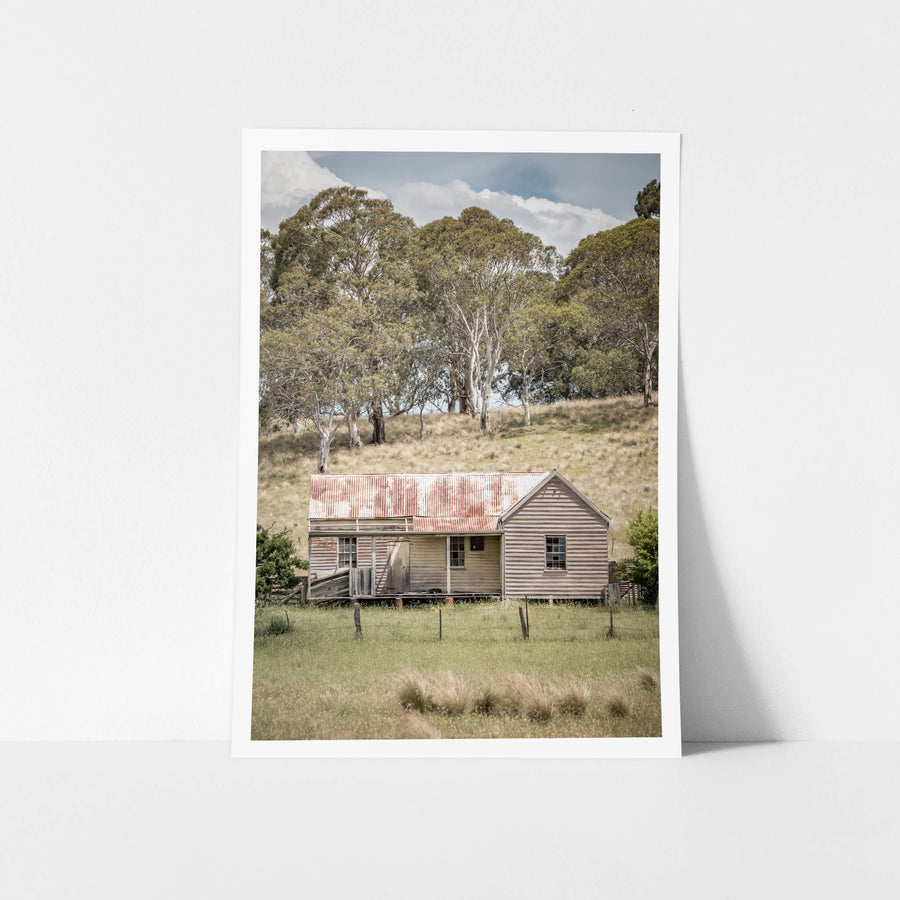
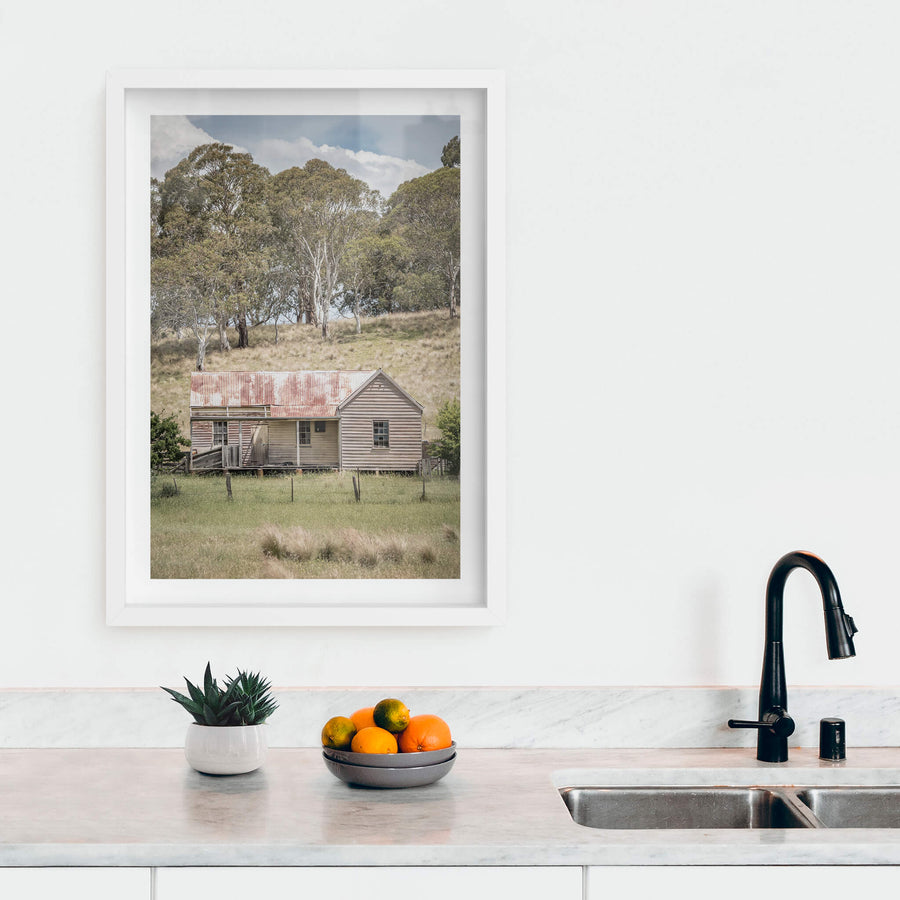
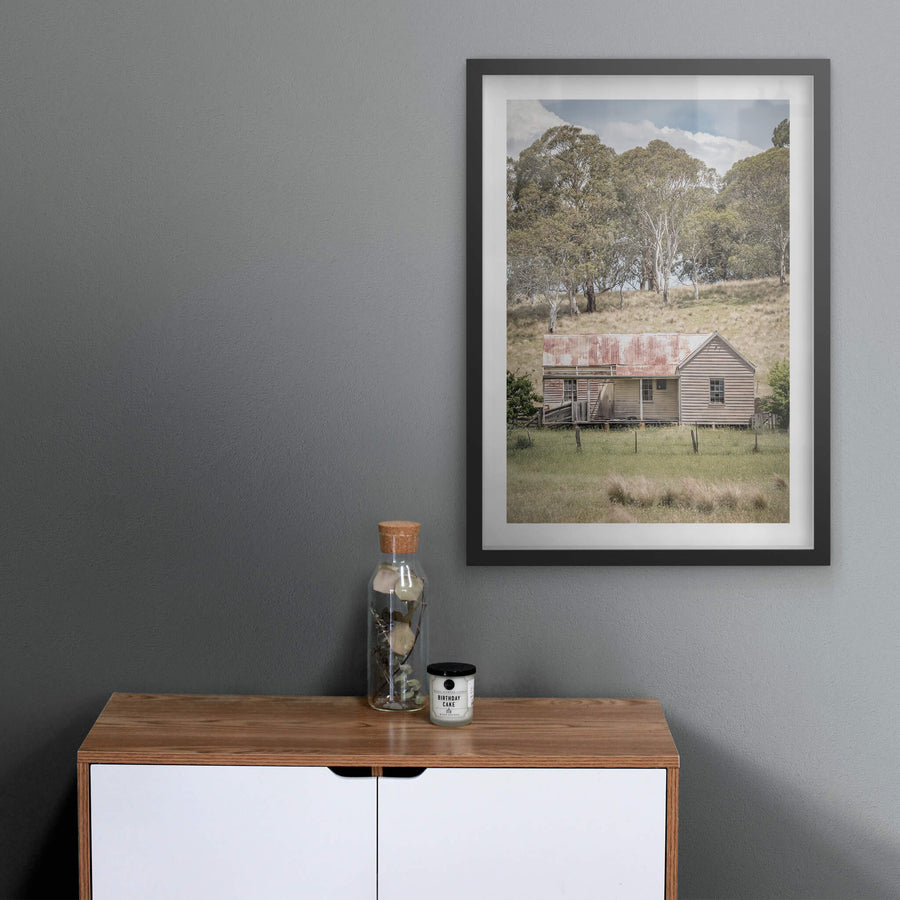
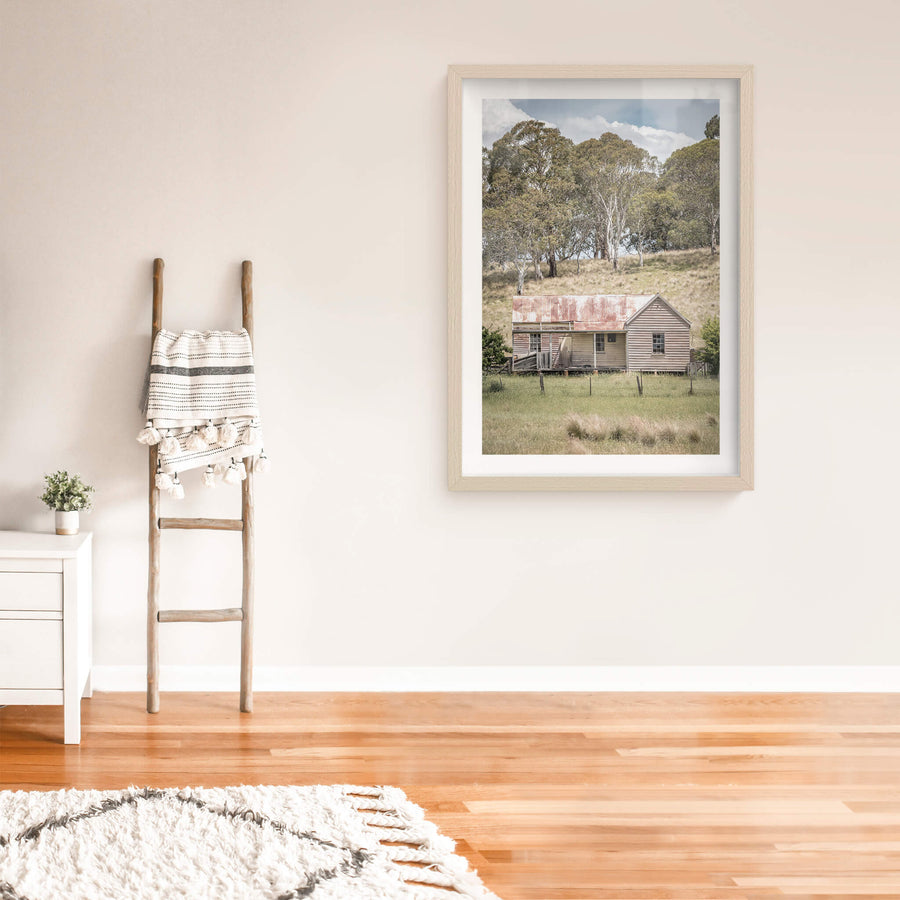
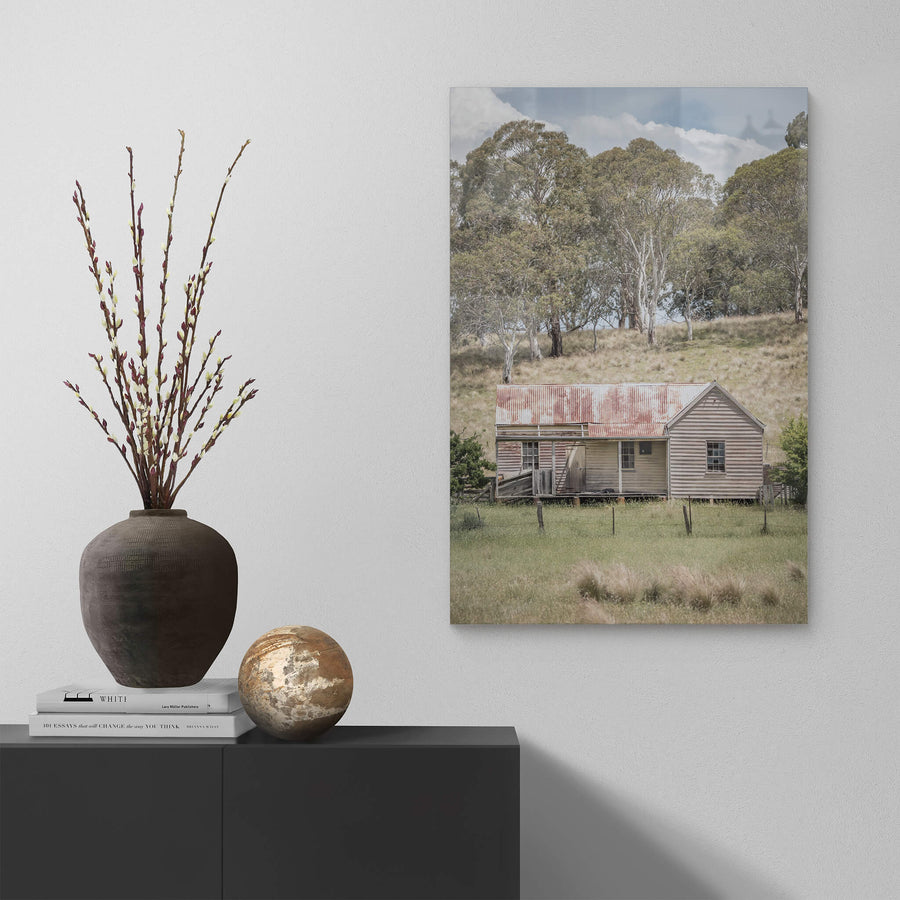
A timber cottage near Cathcart stands on open Snowy Monaro grassland, its corrugated iron roof rusted to a deep orange beneath a clouded sky. Weatherboard walls, a front verandah and twelve-pane windows mark a modest construction. Eucalyptus-lined hills rise behind the structure, placing it within the pastoral landscape it was built to serve.
Open edition
Printed to order, no fixed quantity. Each print is hand-signed by the photographer.
Limited edition
A fixed number of prints exist. Once sold, the edition closes permanently. Each print is individually numbered and signed.
Shipping Free shipping over $250. Ships worldwide, rates calculated at checkout.
Returns Damaged in transit? We replace it. Full policy →
Ships within 10 business days · signed & numbered
In situ
Print datasheet
- Title
- Timber Weatherboards
- Series
- A Place to Call Home
- Catalogue
- PCH-012
- Process
- Giclée
- Captured
- 26 December 2016
- Camera
- NIKON D810
- Lens
- 80.0-400.0 mm f/4.5-5.6
- Aperture
- f/7.1
- Shutter
- 1/800 s
- ISO
- 100
- Focal length
- 155 mm
- Paper
- Ilford Galerie Smooth Cotton Rag 310 gsm
- Paper size
- 297 × 210 mm
- Location
- Rural New South Wales and ACT, Australia
- Authenticity
- C2PA verified provenance →
- Recognised by
- Highly Commended in Multimedia at the 2016 National Trust of Australia (NSW) Heritage Awards
Rural New South Wales and ACT, Australia
Map · Mapbox · OpenStreetMap
About this print
The weatherboards on this cottage have shed their paint in layers, grey over grey, each coat a different decade's effort to hold the timber against the weather. Sunlight catches the surface now the way it probably never did when the place was kept up, every crack and lifted board made legible. Timber weatherboard construction came later to the Monaro than the slab huts it replaced, marking a modest step toward permanence for the selector families who built on the smaller blocks made available after 1861. This structure, photographed in 2016 across rural New South Wales, records what remains when that permanence runs out.
Brett Patman
The series
A Place to Call Home
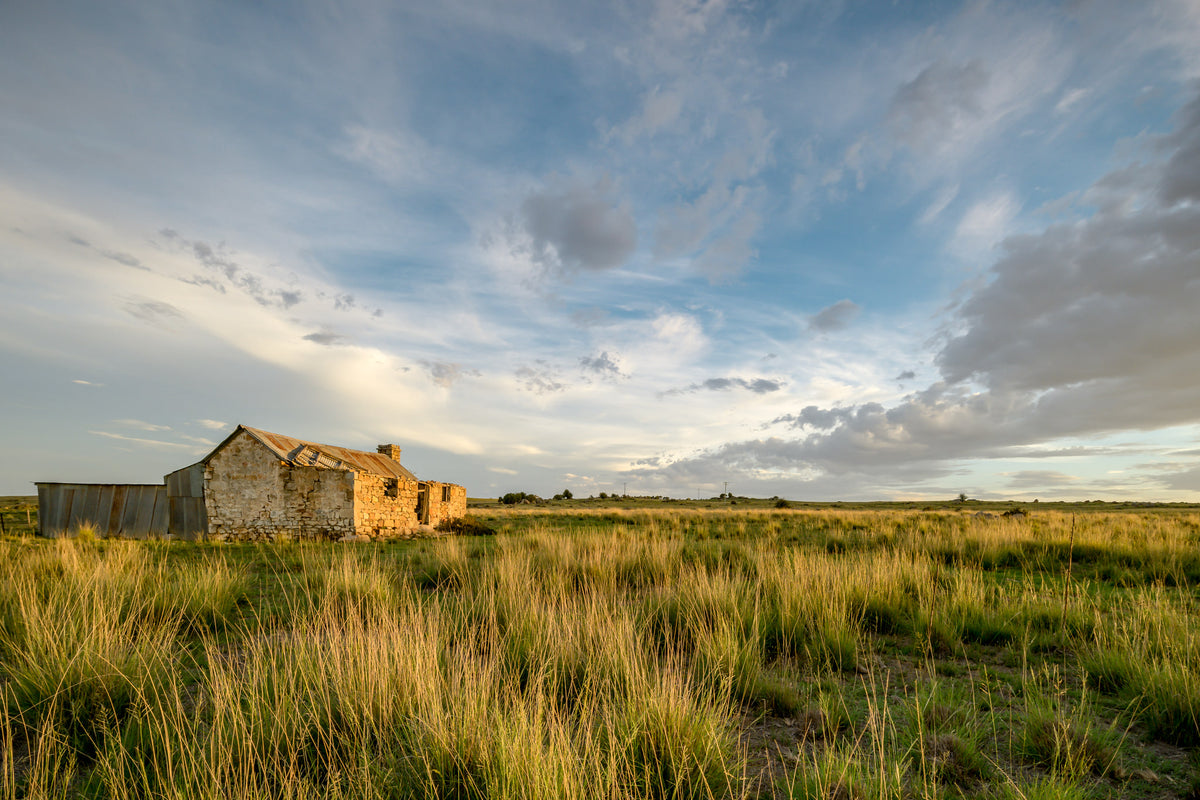
A series of rural homesteads from the Snowy Monaro region of southern New South Wales, with a few from the Hunter Valley. Most were family homes left behind when a generation moved to town; others when the land could no longer be worked. The buildings are smaller than the industrial sites that anchor most of Lost Collective and tend to be older. Most are timber-framed.
Print sizes
The anatomy view shows what this finish is as a physical object: paper margin, mat band, frame depth, acrylic profile. The comparison strip shows how each size sits relative to the others at true scale. Click a size or a finish to update both.
| Type | Size | Width | Height |
|---|


