Home On the Range

Provenance

Camera
NIKON D850
Lens
24.0-70.0 mm f/2.8
Settings
70mm · f/8.0 · 1/160 · ISO 100
Paper
Ilford Galerie Smooth Cotton Rag 310 gsm

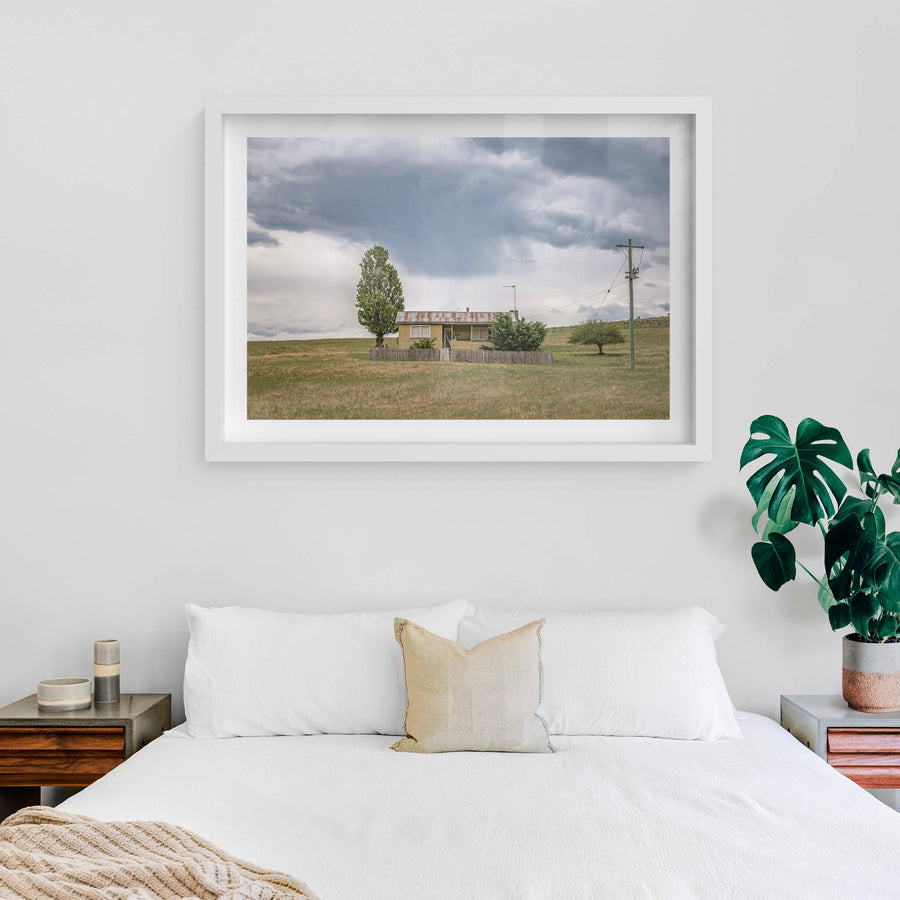
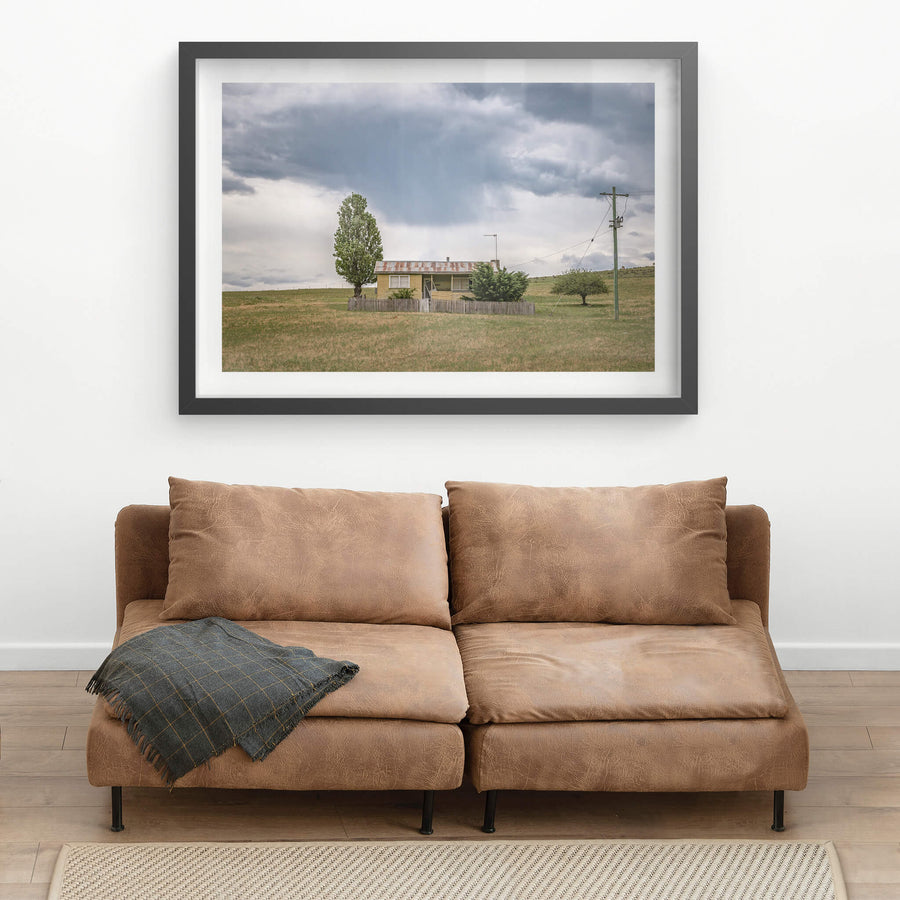
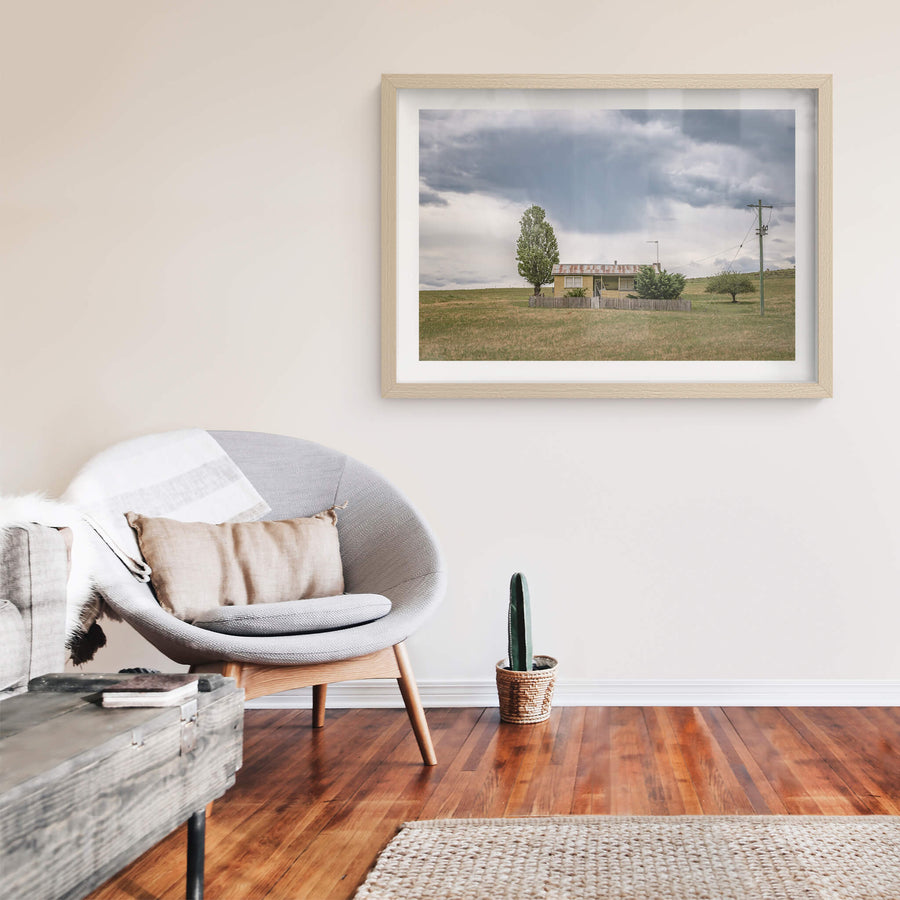
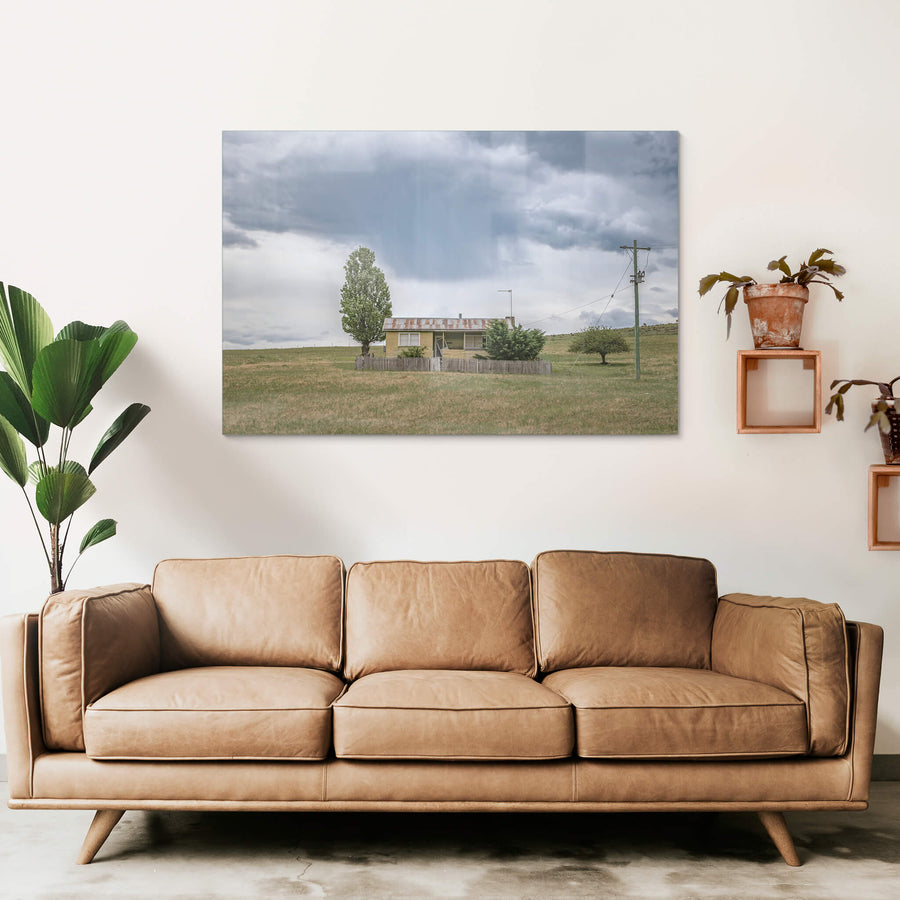
A weatherboard cottage with a rusted corrugated iron roof sits on flat, open grazing land. A timber picket fence runs along the front. A single poplar stands to the left of the building. A power line runs from the cottage to a pole at the paddock's edge. A heavy storm front fills the sky above.

Edition
Open edition

Open edition
Printed to order, no fixed quantity. Each print is hand-signed by the photographer.

Limited edition
A fixed number of prints exist. Once sold, the edition closes permanently. Each print is individually numbered and signed.

$100.00 AUD
Size
Type
Colour
Signed, numbered, with COA. Made to order in 5 to 10 business days (unframed). Shipped in protective packaging with edition certificate, paper-stock reference and a printed care guide.
See certificate sample →

Shipping Free shipping over $250. Ships worldwide, rates calculated at checkout.

Returns Damaged in transit? We replace it. Full policy →

Ships within 10 business days · signed & numbered

In situ
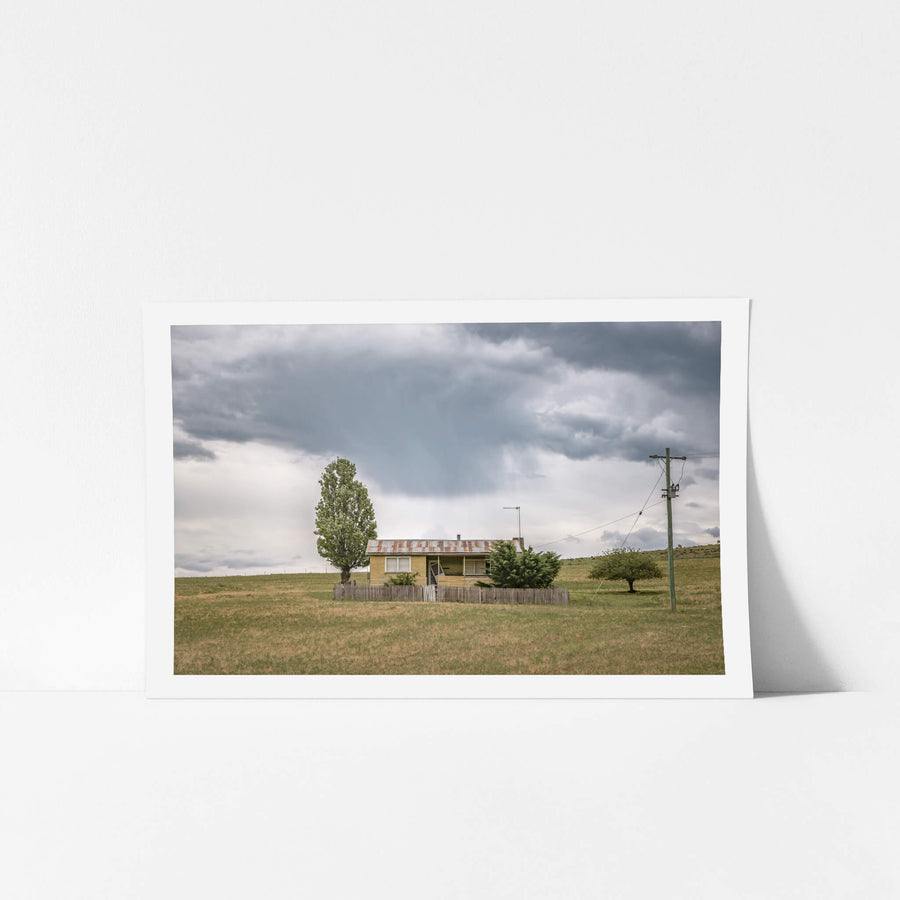
Home On the Range at A Place to Call Home, a long-vacant, lone farm cottage sits in a field beneath a distant rain cloud.Home On the Range at A Place to Call Home, a long-vacant, lone farm cottage sits in a field beneath a distant rain cloud.Home On the Range at A Place to Call Home, a long-vacant, lone farm cottage sits in a field beneath a distant rain cloud.Home On the Range at A Place to Call Home, a long-vacant, lone farm cottage sits in a field beneath a distant rain cloud.Home On the Range at A Place to Call Home, a long-vacant, lone farm cottage sits in a field beneath a distant rain cloud.
01 PROVENANCE

Print datasheet

Title
Home On the Range
Series
A Place to Call Home
Catalogue
PCH-048
Process
Giclée
Captured
30 December 2018
Camera
NIKON D850
Lens
24.0-70.0 mm f/2.8
Aperture
f/8.0
Shutter
1/160 s
ISO
100
Focal length
70 mm
Paper
Ilford Galerie Smooth Cotton Rag 310 gsm
Paper size
290 × 200 mm
Location
Rural New South Wales and ACT, Australia
Recognised by
Highly Commended in Multimedia at the 2016 National Trust of Australia (NSW) Heritage Awards
03 THE STORY

About this print

A weatherboard cottage sits low on open grazing land, its rusted corrugated iron roof meeting a sky thick with storm cloud. A timber picket fence runs along the front. A single poplar stands to the left, planted at some point to mark the boundary or break the wind. A power line runs from the building out to a pole at the paddock's edge, a detail that locates the place somewhere in the mid-to-late twentieth century, when the electricity grid finally reached properties like this one across rural New South Wales. The cottage represents the selector's typology that spread across the region from the 1860s onward. The Robertson Land Acts of 1861 opened Crown land to smallholders, allowing free selection of up to 320 acres at a pound per acre, with a deposit of five shillings per acre and a residency requirement. Tens of thousands of selectors took up that offer across New South Wales in the following decades, erecting modest timber dwellings on blocks that were often marginal from the start. Weatherboard construction, common in later-period selector cottages, replaced the earlier split-slab walls of the squatting era and signalled a small step up in resources and intention. The grazing land around the cottage tells its own story. Three waves of decline reshaped the pastoral economy of rural New South Wales: drought and rabbit plague in the 1890s halved sheep numbers across the state; the Snowy Mountains Hydro-electric Scheme, constructed between 1949 and 1974, directly displaced pastoral communities and inundated thousands of hectares of farmland; and the 1991 collapse of the Wool Reserve Price Scheme, which sent prices crashing to approximately three dollars per kilogram, made marginal properties unviable for good. Cottages like this one were left standing when the families moved on. The photograph was made in 2018 as part of A Place to Call Home, a series documenting abandoned rural structures across the Snowy Monaro region and the Hunter Valley. The storm front building overhead gives the frame an urgency the building itself no longer has.

04 FROM THE FIELD NOTES

A weatherboard cottage, rusted iron roof and timber picket fence intact, sits low on open grazing land beneath a building storm. A single poplar marks the left boundary; a power line runs out to a pole at the paddock's edge, the last visible thread connecting the place to the wider world. Cottages of this kind spread across rural New South Wales from the 1860s onward, as the Robertson Land Acts allowed selectors to take up smallholdings on Crown land. Most were built fast, improved incrementally, and eventually left when the land could no longer sustain a family.

Brett Patman
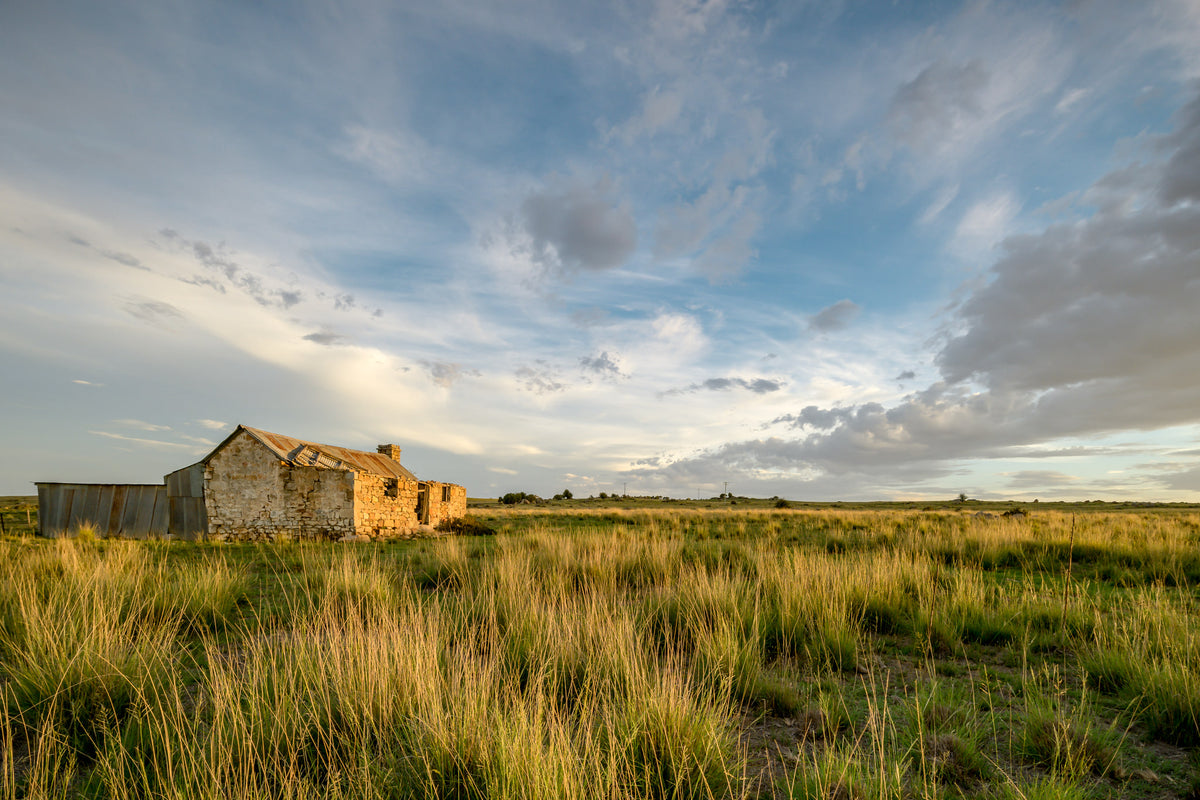
A Place to Call Home

The series

A Place to Call Home

2015–2020 · 60 photographs

A series of rural homesteads from the Snowy Monaro region of southern New South Wales, with a few from the Hunter Valley. Most were family homes left behind when a generation moved to town; others when the land could no longer be worked. The buildings are smaller than the industrial sites that anchor most of Lost Collective and tend to be older. Most are timber-framed.

View all in this series →

05 SIZE GUIDE

Print sizes

The anatomy view shows what this finish is as a physical object: paper margin, mat band, frame depth, acrylic profile. The comparison strip shows how each size sits relative to the others at true scale. Click a size or a finish to update both.

Anatomy · true ratio
TypeSizeWidthHeight
08 BY POST · NO SPAM

Read the full story

Articles when they're published. The history behind a place. The day of a shoot. The work between prints. No marketing, no schedule.

You're subscribed.