Brown Mountain Backdrop

Provenance

Camera
NIKON Z 7
Lens
250.0-560.0 mm f/5.6
Settings
560mm · f/5.6 · 1/640 · ISO 500
Paper
Ilford Galerie Smooth Cotton Rag 310 gsm

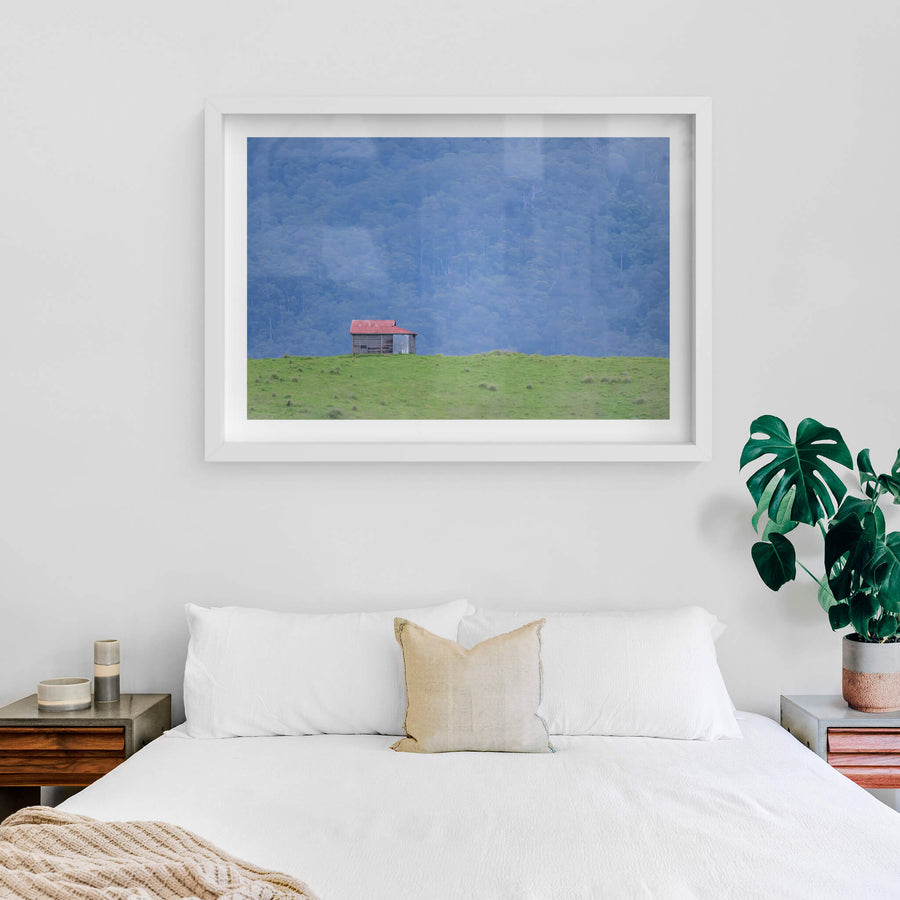
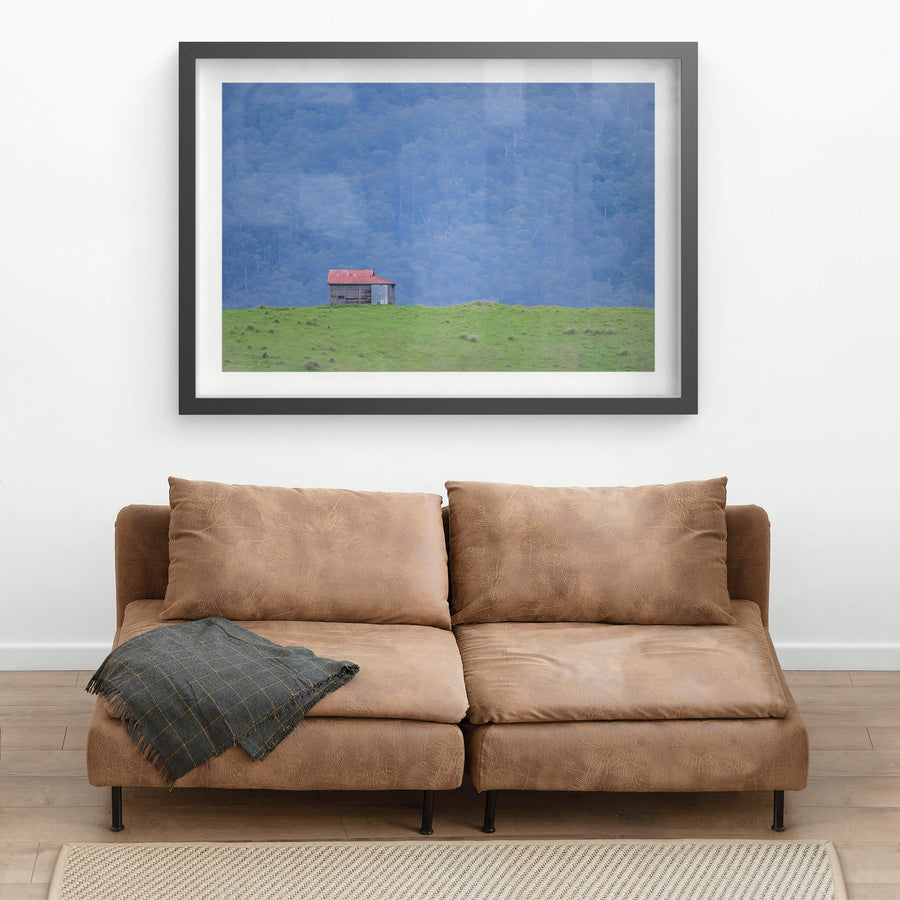
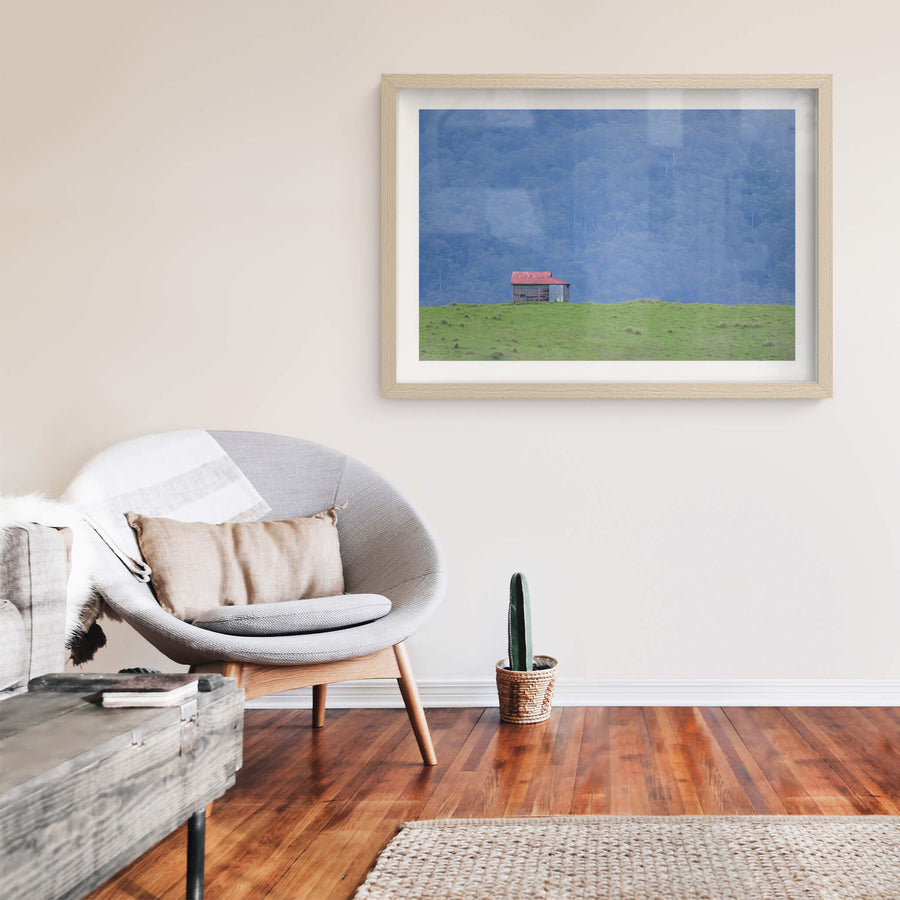
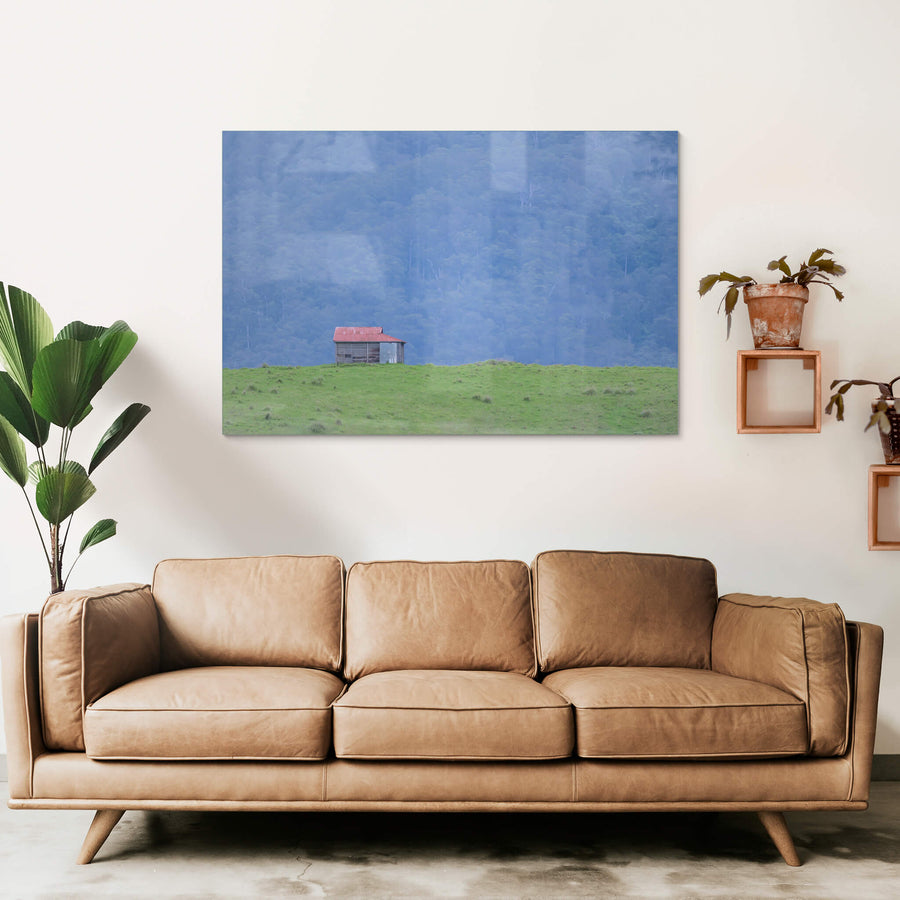
A single-room timber and corrugated iron dairy hut on a green ridge. Corrugated iron walls show deep rust and peeling paint. The walls lean slightly on their stumps. Brown Mountain fills the background as a dense eucalypt canopy, blue-grey in haze.

Edition
Open edition

Open edition
Printed to order, no fixed quantity. Each print is hand-signed by the photographer.

Limited edition
A fixed number of prints exist. Once sold, the edition closes permanently. Each print is individually numbered and signed.

$100.00 AUD
Size
Type
Colour
Signed, numbered, with COA. Made to order in 10 to 20 business days (framed). Shipped in protective packaging with edition certificate, paper-stock reference and a printed care guide.
See certificate sample →

Shipping Free shipping over $250. Ships worldwide, rates calculated at checkout.

Returns Damaged in transit? We replace it. Full policy →

Ships within 10 business days · signed & numbered

In situ
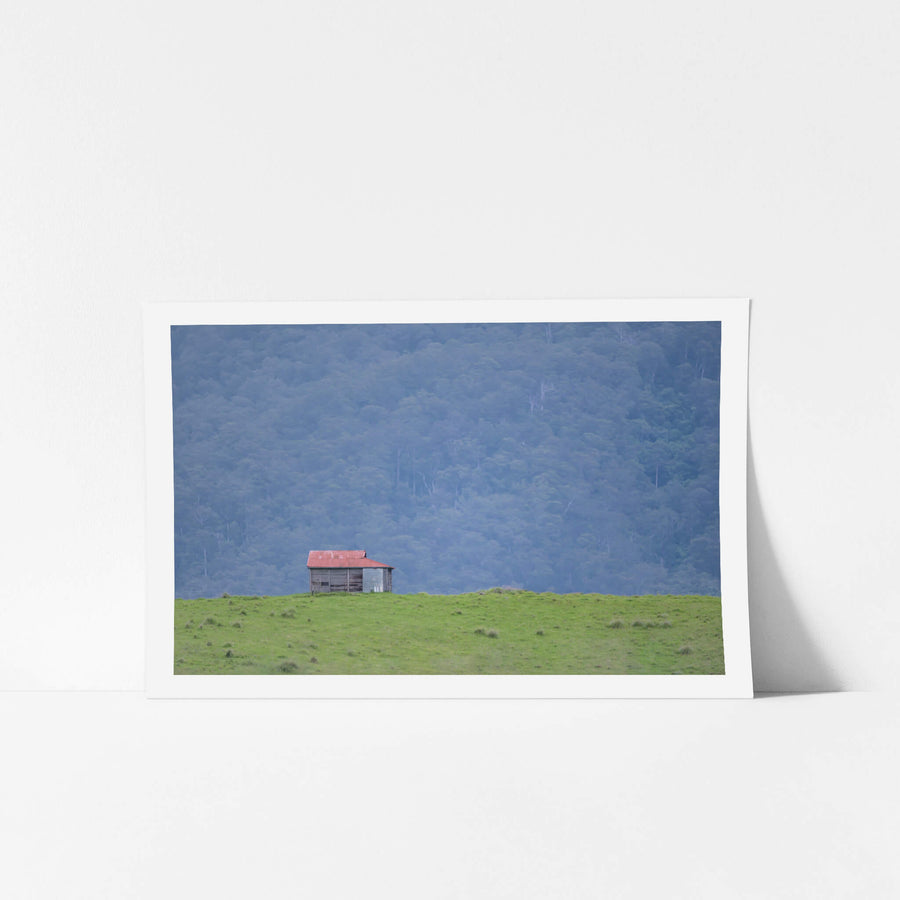
Brown Mountain Backdrop at The Dairy, a single timber and corrugated iron hut sits on a green ridge, small against.Brown Mountain Backdrop at The Dairy, a single timber and corrugated iron hut sits on a green ridge, small against.Brown Mountain Backdrop at The Dairy, a single timber and corrugated iron hut sits on a green ridge, small against.Brown Mountain Backdrop at The Dairy, a single timber and corrugated iron hut sits on a green ridge, small against.Brown Mountain Backdrop at The Dairy, a single timber and corrugated iron hut sits on a green ridge, small against.
01 PROVENANCE

Print datasheet

Title
Brown Mountain Backdrop
Series
A Place to Call Home
Catalogue
PCH-001
Process
Giclée
Captured
30 December 2018
Camera
NIKON Z 7
Lens
250.0-560.0 mm f/5.6
Aperture
f/5.6
Shutter
1/640 s
ISO
500
Focal length
560 mm
Paper
Ilford Galerie Smooth Cotton Rag 310 gsm
Paper size
290 × 200 mm
Location
Various, Australia
Recognised by
Highly Commended in Multimedia at the 2016 National Trust of Australia (NSW) Heritage Awards
03 THE STORY

About this print

On a green ridge near Brown Mountain in the Bega Valley, a single timber and corrugated iron dairy building sits against the mountain's eucalypt wall. The roof has rusted to a patchy red-brown, with paint lifting where decades of coastal weather have worked at the iron. The weatherboard walls lean slightly as the frame settles unevenly on its stumps. Brown Mountain rises behind as a solid mass of forest, blue-grey in the atmospheric haze, with the white trunks of dead gums visible among the canopy. The paddock around the building remains cleared and grazed; the land is still in agricultural use, but the dairy building is not. Buildings like this were the working infrastructure of one of NSW's most significant dairy districts. The Bega Valley supplied almost half of the state's total cheese production by 1900, and that output depended on hundreds of small farm-scale structures where individual farmers separated cream before sending it to the cooperative factories. The centrifugal cream separator, first used at nearby Kameruka Estate in 1886, made on-farm processing practical. Every dairy farm in the district needed a building to house the separator and store cream cans before collection. The cooperative factory at South Wolumla, one of the first cooperative dairy factories in the state, was erected in 1887. By around 1920, 49 cheese factories and 8 butter factories were operating in the corridor between Tilba and Wolumla. Farm dairy buildings like this one sat at the start of that supply chain. The transition to bulk milk collection with refrigerated farm vats in 1966 made the cream room obsolete. There was no longer any need to separate cream on-site, and no further use for the building that had housed the separator. Brown Mountain Backdrop was photographed in 2018.

04 FROM THE FIELD NOTES

A weathered timber and corrugated iron dairy building sits on a ridge near Brown Mountain in the Bega Valley, the mountain rising as a wall of eucalypt forest behind it. Buildings like this were the farm-scale infrastructure of one of NSW's most productive dairy districts. The Bega Valley supplied almost half of the state's total cheese production by 1900. On-farm dairy rooms became standard after the centrifugal cream separator arrived in the 1880s, and were made redundant when bulk milk collection with refrigerated vats replaced on-site cream separation in 1966. Photographed in 2018.

Brett Patman

A Place to Call Home

The series

A Place to Call Home

2015–2020 · 60 photographs

A series of rural homesteads from the Snowy Monaro region of southern New South Wales, with a few from the Hunter Valley. Most were family homes left behind when a generation moved to town; others when the land could no longer be worked. The buildings are smaller than the industrial sites that anchor most of Lost Collective and tend to be older. Most are timber-framed.

View all in this series →

05 SIZE GUIDE

Print sizes

The anatomy view shows what this finish is as a physical object: paper margin, mat band, frame depth, acrylic profile. The comparison strip shows how each size sits relative to the others at true scale. Click a size or a finish to update both.

Anatomy · true ratio
TypeSizeWidthHeight
08 BY POST · NO SPAM

Read the full story

Articles when they're published. The history behind a place. The day of a shoot. The work between prints. No marketing, no schedule.

You're subscribed.