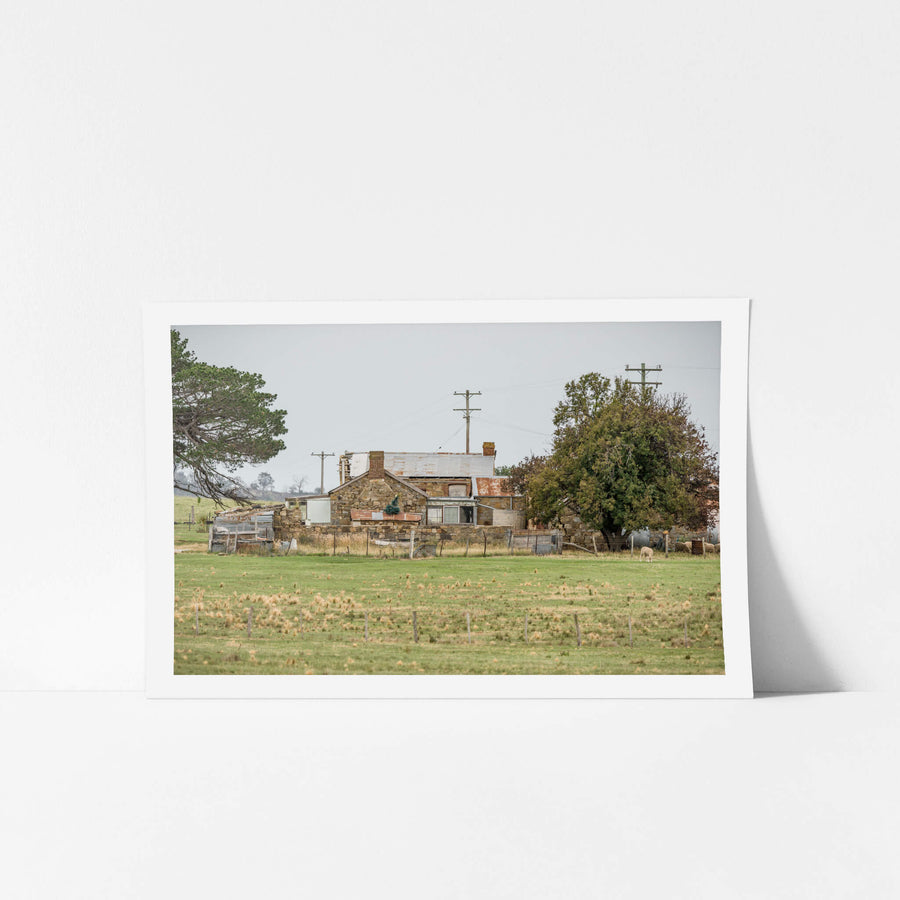
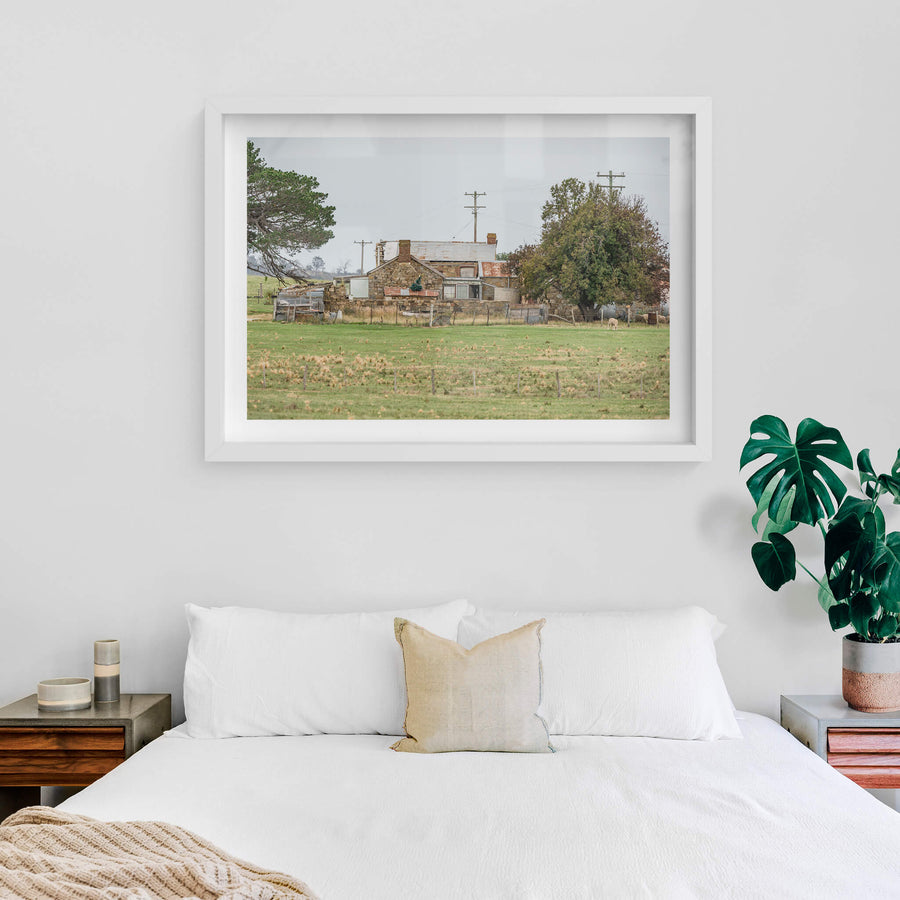
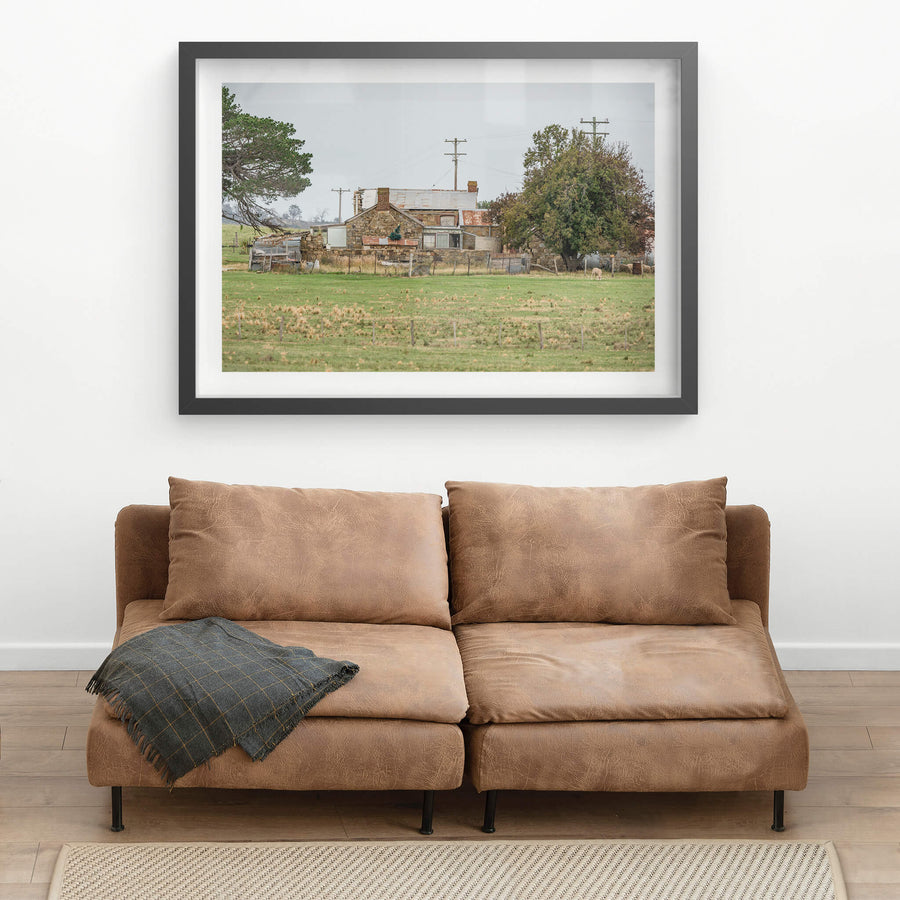
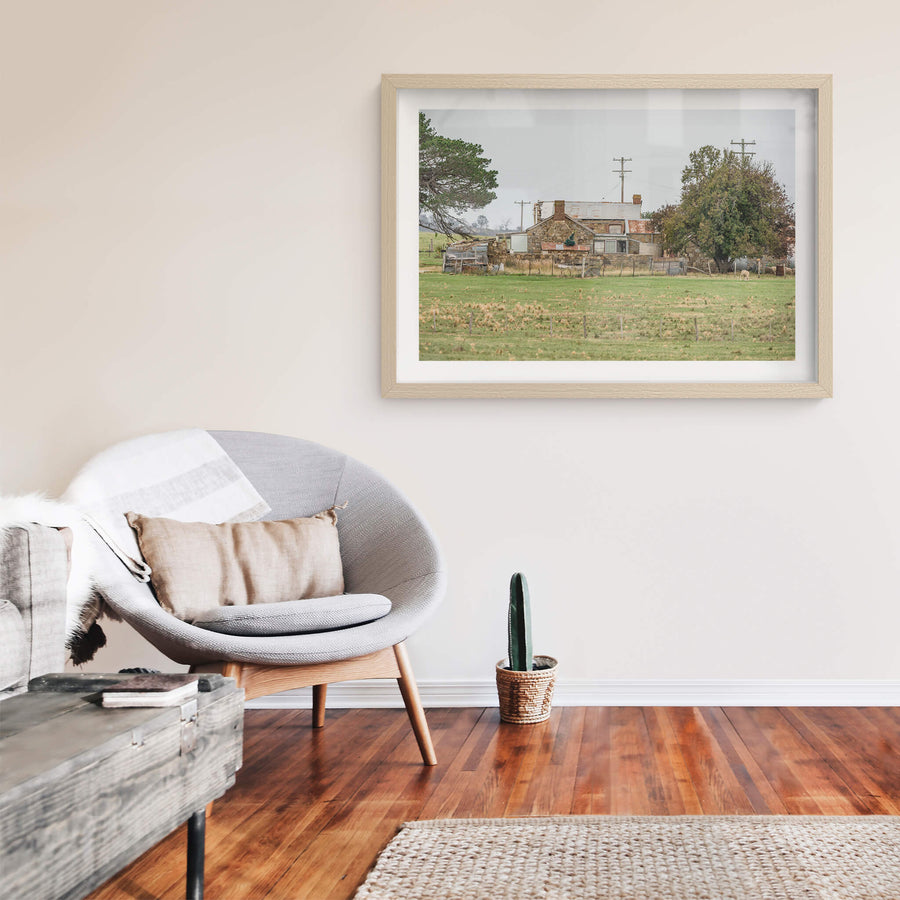
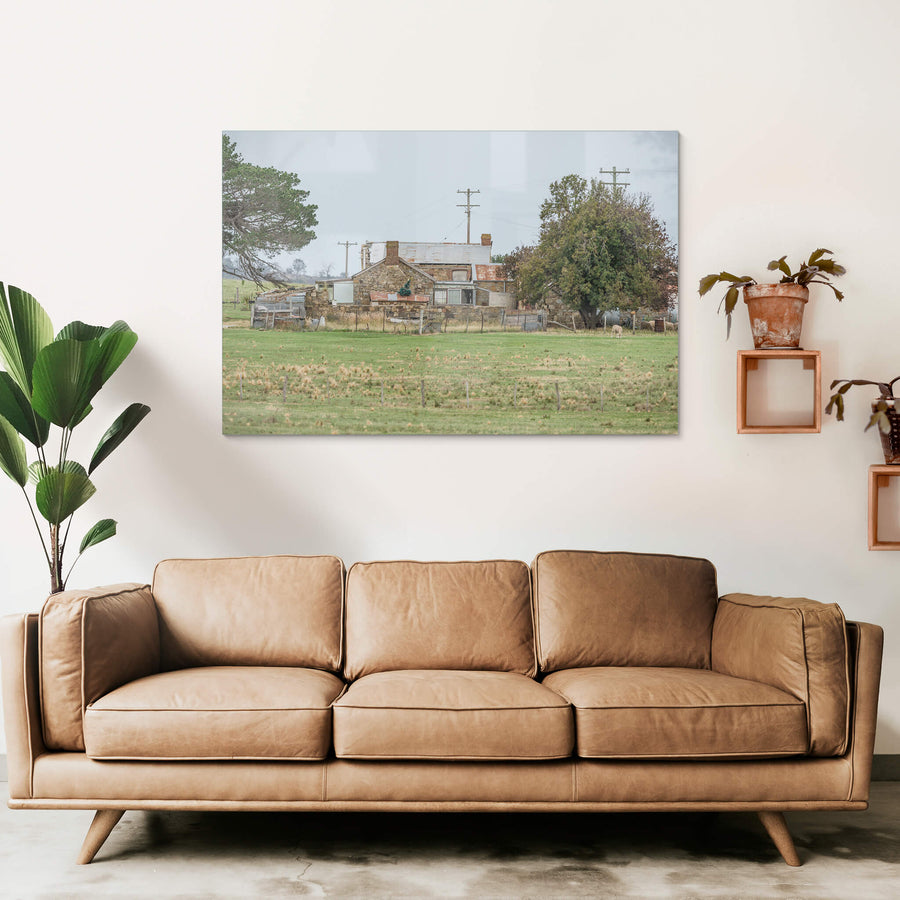
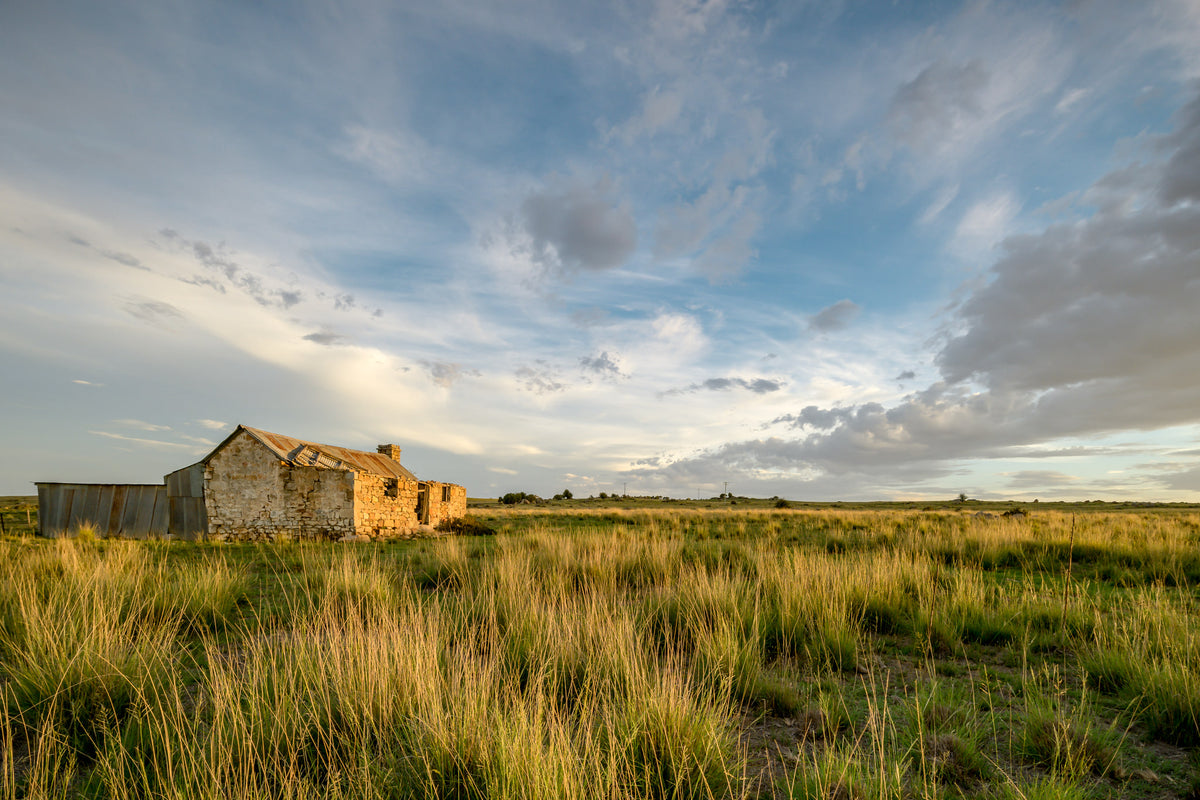
A small stone and corrugated iron structure, walls leaning, paint largely gone. Corrugated iron roof showing advanced rust across its full span. A rusted outbuilding and water tank stand to one side, and a row of pine trees breaks the flat horizon. Overhead powerlines cross the frame.
Edition
Open edition
Open edition Printed to order, no fixed quantity. Each print is hand-signed by the photographer.
Limited edition A fixed number of prints exist. Once sold, the edition closes permanently. Each print is individually numbered and signed.
$100.00 AUD
Size
Type
Colour
✓
Signed, numbered, with COA. Made to order in 5 to 10 business days (unframed). Shipped in protective packaging with edition certificate, paper-stock reference and a printed care guide.
A small stone and corrugated iron structure stands in open country in the Snowy Monaro region of rural New South Wales, its walls leaning gently under years of weather, the paint largely gone. The corrugated iron roof shows advanced rust across its full span. A rusted outbuilding and water tank stand to one side, a row of pine trees breaks the flat horizon, and overhead powerlines cross the frame. Nothing about the structure announces itself. The NSW State Heritage Inventory records Numbla Vale as a listed locality, placing it within a region that carries one of the densest concentrations of nineteenth-century rural heritage in New South Wales. The Cooma-Monaro Local Environmental Plan 2013 lists 230 heritage items across the district. Most of the structures in the A Place to Call Home series sit outside formal protection entirely, on private pastoral land where no heritage listing applies and where collapse is the only likely outcome. Cottages of this type were the physical result of the Robertson Land Acts of 1861, which opened Crown land to free selection at one pound per acre. Selectors could take up to 320 acres, pay a deposit of five shillings per acre, and settle the balance over three years, with a residence requirement attached. In practice, the land was hard and the economics harder. The 1890s brought drought, rabbit plague, and a collapse in wool prices that halved sheep numbers across New South Wales. The Snowy Mountains Hydro-electric Scheme, constructed between 1949 and 1974, inundated thousands of hectares of Monaro farmland. The 1991 collapse of the Wool Reserve Price Scheme took prices to around three dollars per kilogram. Each wave left more buildings empty. Timber walls elsewhere in the district were typically split from local eucalyptus, maul and wedge driven along the grain, the slabs dropped between grooved posts or set vertically against wall plates. A competent settler could put up a basic hut in two to three weeks. Roofing moved from bark to wooden shingles to galvanised iron as circumstances allowed; by the time iron appeared, it was usually there to stay. Photographed in 2018 as part of the A Place to Call Home series, which documents 59 subjects across the Snowy Monaro and Hunter Valley regions. This is what remains.
04·FROM THE FIELD NOTES
A small stone and corrugated iron structure, walls leaning, paint largely gone. Corrugated iron roof showing advanced rust across its full span.
Brett Patman
The series
A Place to Call Home
2015–2020 · 60
photographs
A series of rural homesteads from the Snowy Monaro region of southern New South Wales, with a few from the Hunter Valley. Most were family homes left behind when a generation moved to town; others when the land could no longer be worked. The buildings are smaller than the industrial sites that anchor most of Lost Collective and tend to be older. Most are timber-framed.
The anatomy view shows what this finish is as a physical object: paper margin, mat band, frame depth, acrylic profile. The comparison strip shows how each size sits relative to the others at true scale. Click a size or a finish to update both.