Overgrowth

Provenance

Camera
NIKON D810
Lens
24.0-70.0 mm f/2.8
Settings
34mm · f/5.6 · 1/125 · ISO 100
Paper
Ilford Galerie Smooth Cotton Rag 310 gsm

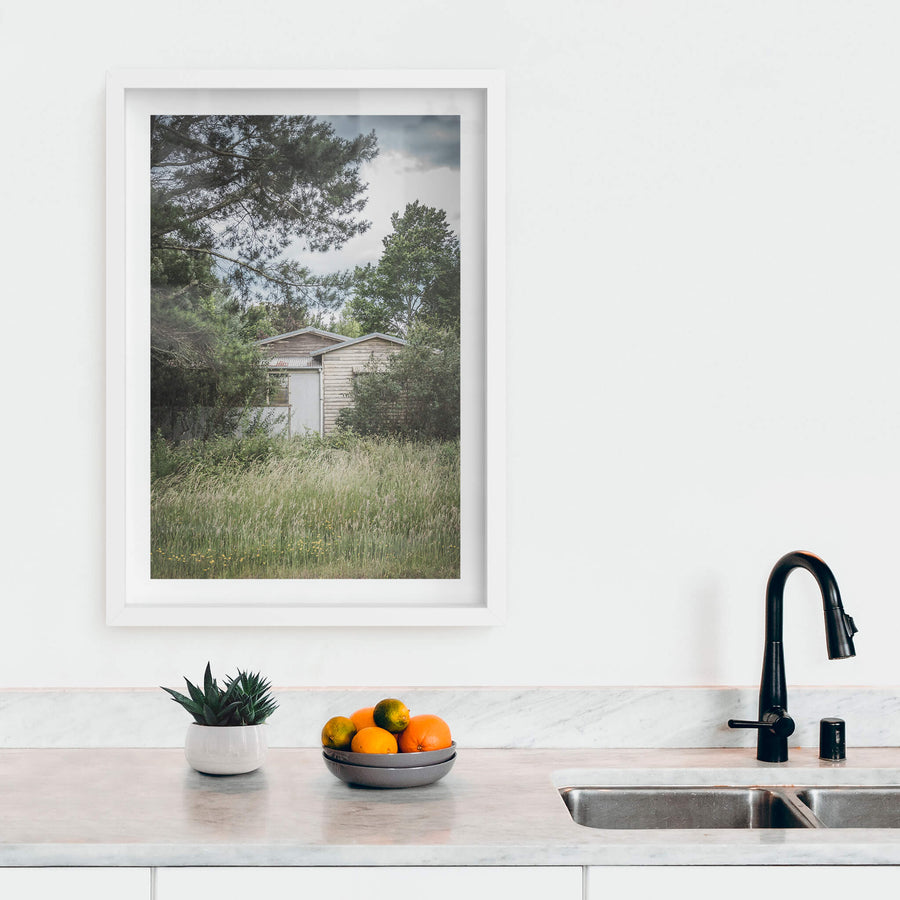
Dense green vines cover the exterior walls of a small abandoned dwelling, obscuring the underlying structure. Foliage pushes through openings and along the roofline. The building's form remains visible beneath the growth. No furnishings or fittings are visible from the exterior. Surrounding vegetation presses close on all sides.

Edition
Open edition

Open edition
Printed to order, no fixed quantity. Each print is hand-signed by the photographer.

Limited edition
A fixed number of prints exist. Once sold, the edition closes permanently. Each print is individually numbered and signed.

$100.00 AUD
Size
Type
Colour
Signed, numbered, with COA. Made to order in 5 to 10 business days (unframed). Shipped in protective packaging with edition certificate, paper-stock reference and a printed care guide.
See certificate sample →

Shipping Free shipping over $250. Ships worldwide, rates calculated at checkout.

Returns Damaged in transit? We replace it. Full policy →

Ships within 10 business days · signed & numbered

In situ
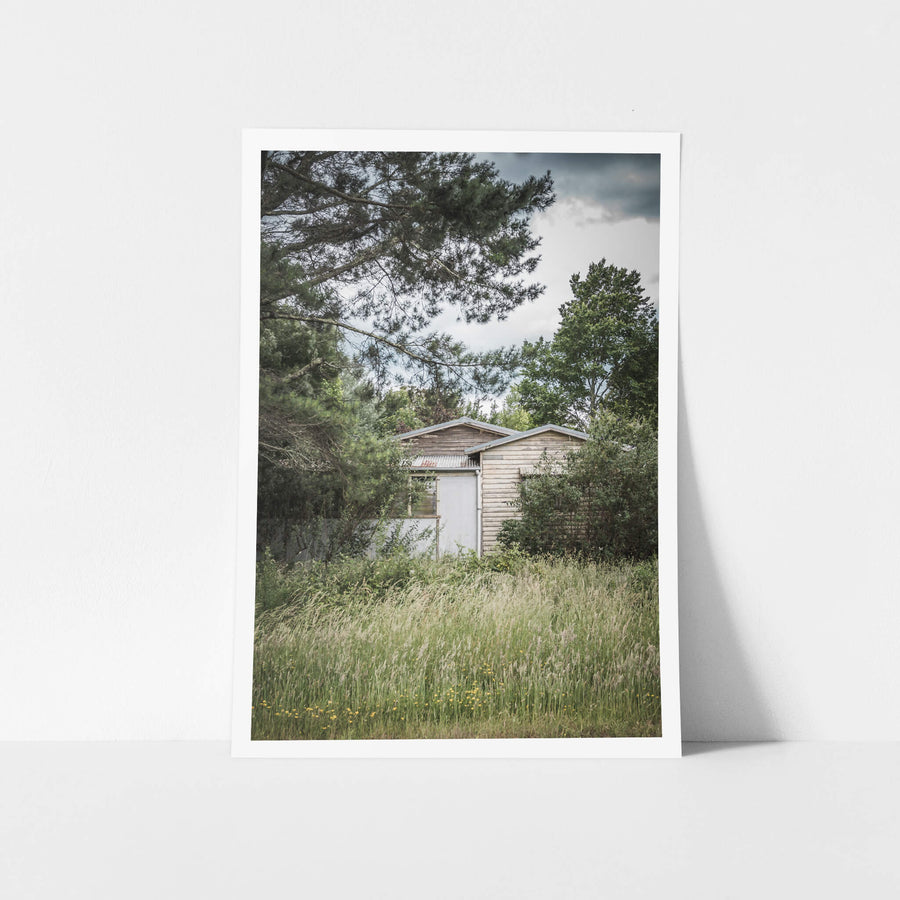
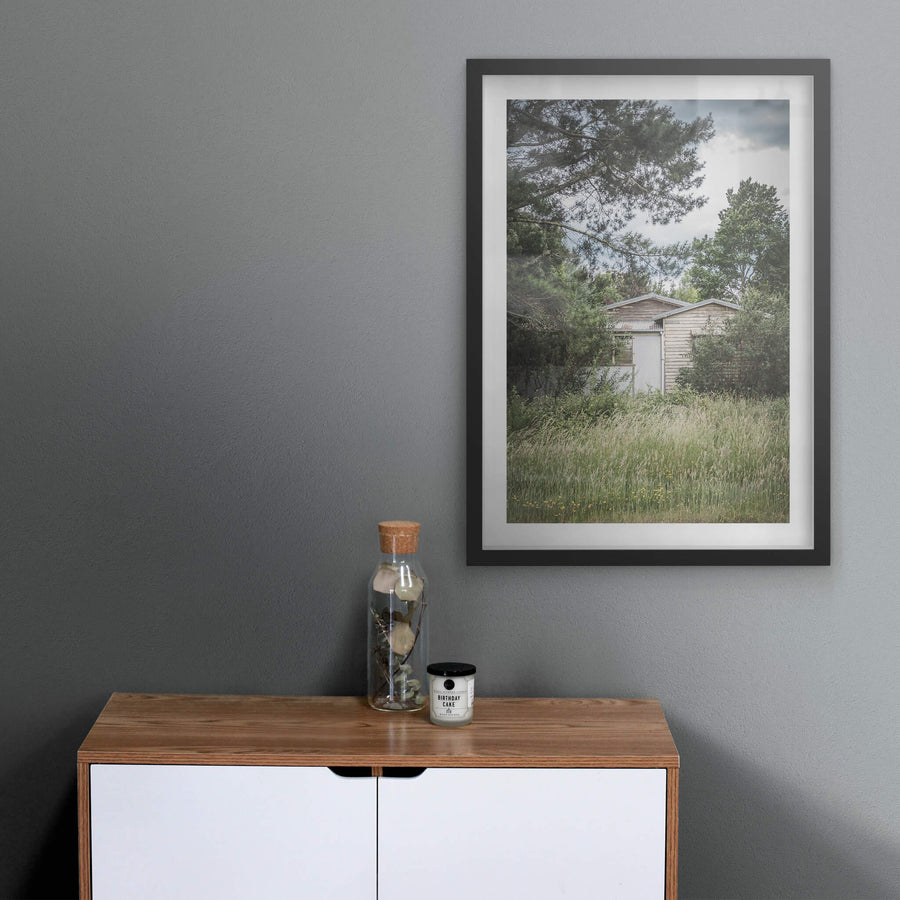
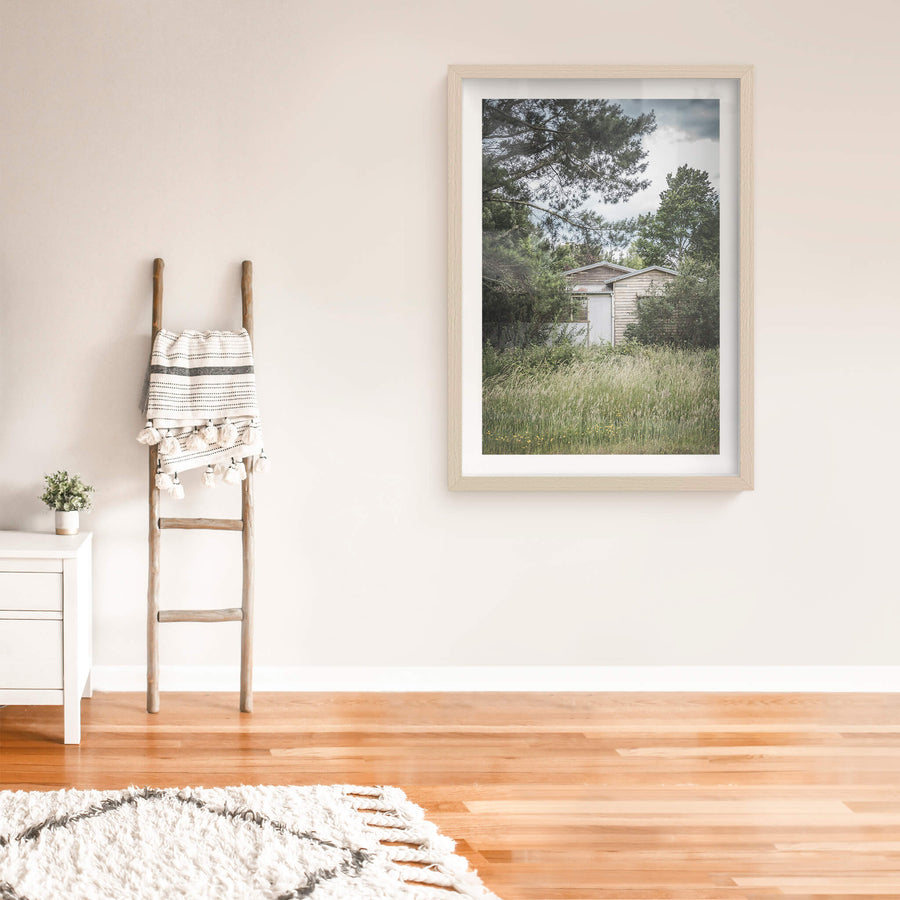
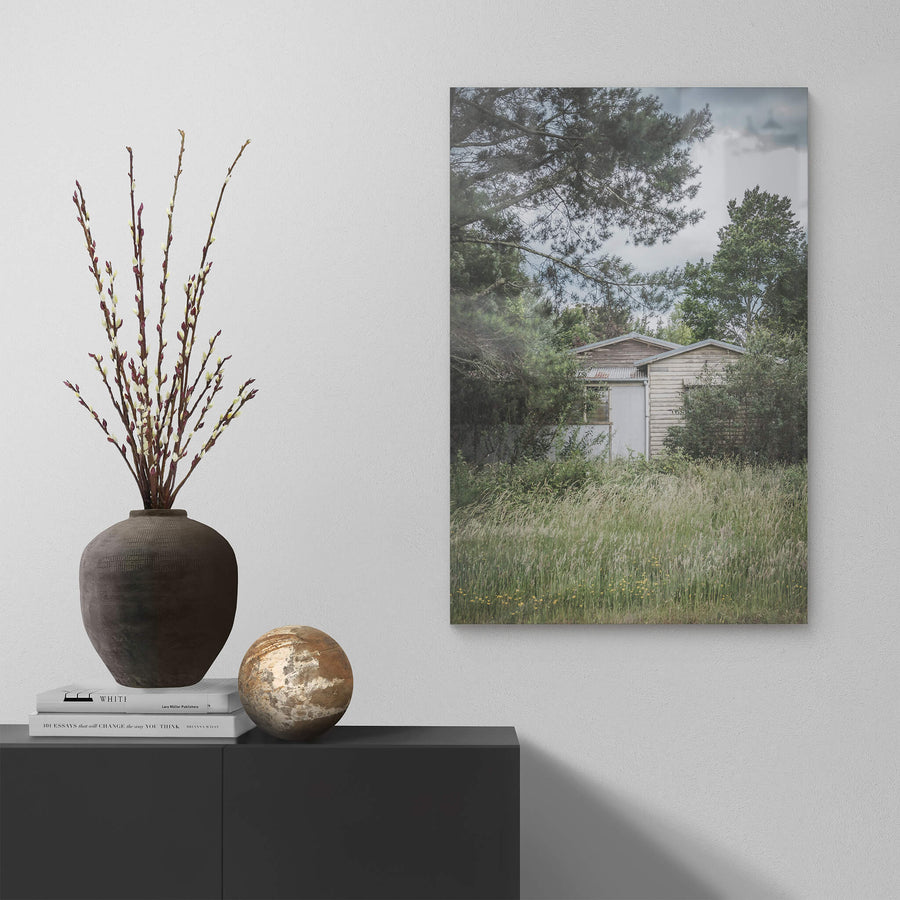
Overgrowth at A Place to Call Home, unframed print displayed in situ on a wall.Overgrowth at A Place to Call Home, white-framed print displayed in situ on a wall.Overgrowth at A Place to Call Home, black-framed print displayed in situ on a wall.Overgrowth at A Place to Call Home, raw timber-framed print displayed in situ on a wall.Overgrowth at A Place to Call Home, glass print displayed in situ on a wall.
01 PROVENANCE

Print datasheet

Title
Overgrowth
Series
A Place to Call Home
Catalogue
PCH-010
Process
Giclée
Captured
26 December 2016
Camera
NIKON D810
Lens
24.0-70.0 mm f/2.8
Aperture
f/5.6
Shutter
1/125 s
ISO
100
Focal length
34 mm
Paper
Ilford Galerie Smooth Cotton Rag 310 gsm
Paper size
290 × 200 mm
Location
Rural New South Wales and ACT, Australia
Recognised by
Highly Commended in Multimedia at the 2016 National Trust of Australia (NSW) Heritage Awards
03 THE STORY

About this print

The walls are still there, underneath. Timber or stone, the underlying structure holds its form, but only just. Vines have worked their way into every gap, across every surface, until the boundary between the building and the bush around it has become difficult to find. From the outside, the dwelling reads as a green mound more than a house. Its shape is still legible, but only because you know what you are looking for. Rural New South Wales produced thousands of buildings like this one across the nineteenth and early twentieth centuries. Smallholder graziers, selectors, drovers, and station hands built homes on blocks ranging from a few dozen acres to several hundred, using whatever materials the land and the district offered. Slab timber was the common choice: split along the grain with a maul and wedge, set vertically or dropped horizontally between grooved posts, and roofed first with bark and later with galvanised iron. These were not permanent structures in any grand sense. They were built quickly, improved incrementally, and left when the economics of the land gave out. The economics gave out in waves. The 1890s brought drought, rabbit plague, and a wool price collapse that halved sheep numbers across NSW. The Snowy Mountains Hydro-electric Scheme, constructed between 1949 and 1974, inundated thousands of hectares of farmland and pushed pastoral families off country they had worked for generations. The 1991 collapse of the Wool Reserve Price Scheme, which sent prices crashing to approximately $3 per kilogram, closed out the marginal operations that had somehow survived everything before it. What the photograph records is the end state of that long decline. The building is not ruined in any dramatic sense. It has simply been left long enough for the surrounding vegetation to make its claim. The vines do not distinguish between a dwelling and a fence post. They grow toward light and hold on. The silence that has settled here is not emptiness so much as the absence of the one thing that kept the bush at a distance: regular human presence. Photographed in 2016 as part of Brett Patman's A Place to Call Home series, which documents abandoned rural dwellings across the Snowy Monaro region of southern New South Wales and the Hunter Valley.

04 FROM THE FIELD NOTES

Somewhere in Rural New South Wales, a dwelling has been slowly absorbed back into the landscape. The walls that once kept weather out now hold a weight of vines and foliage, each growing season adding another layer over timber or stone that was already ageing when the last occupant left. The building still holds its shape, just, but the distinction between structure and bush is narrowing. This is what progressive abandonment looks like from the outside: not sudden collapse, but a quiet, incremental erasure.

Brett Patman
A Place to Call Home

The series

A Place to Call Home

2015–2020 · 60 photographs

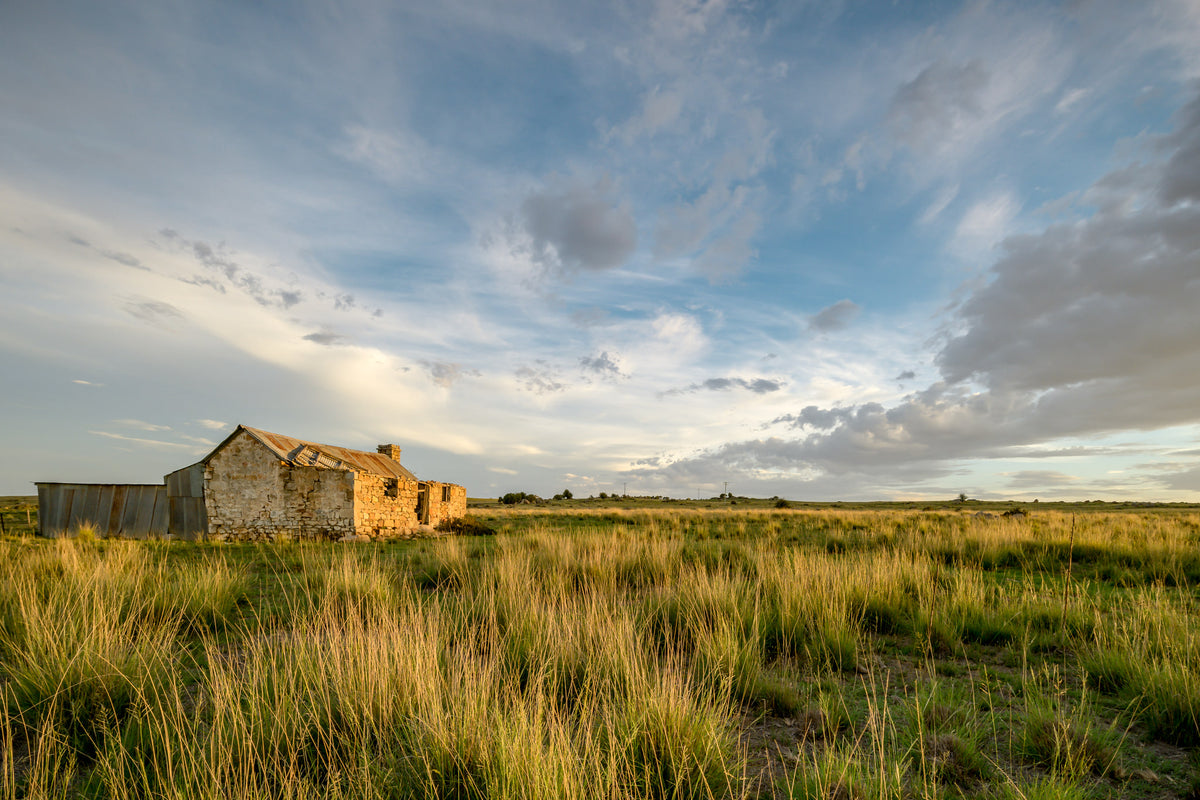
A series of rural homesteads from the Snowy Monaro region of southern New South Wales, with a few from the Hunter Valley. Most were family homes left behind when a generation moved to town; others when the land could no longer be worked. The buildings are smaller than the industrial sites that anchor most of Lost Collective and tend to be older. Most are timber-framed.

View all in this series →

05 SIZE GUIDE

Print sizes

The anatomy view shows what this finish is as a physical object: paper margin, mat band, frame depth, acrylic profile. The comparison strip shows how each size sits relative to the others at true scale. Click a size or a finish to update both.

Anatomy · true ratio
TypeSizeWidthHeight
08 BY POST · NO SPAM

Read the full story

Articles when they're published. The history behind a place. The day of a shoot. The work between prints. No marketing, no schedule.

You're subscribed.