Rusted Roof

Provenance

Camera
NIKON Z 7
Lens
180.0-400.0 mm f/4.0
Settings
400mm · f/5.0 · 1/500 · ISO 100
Paper
Ilford Galerie Smooth Cotton Rag 310 gsm

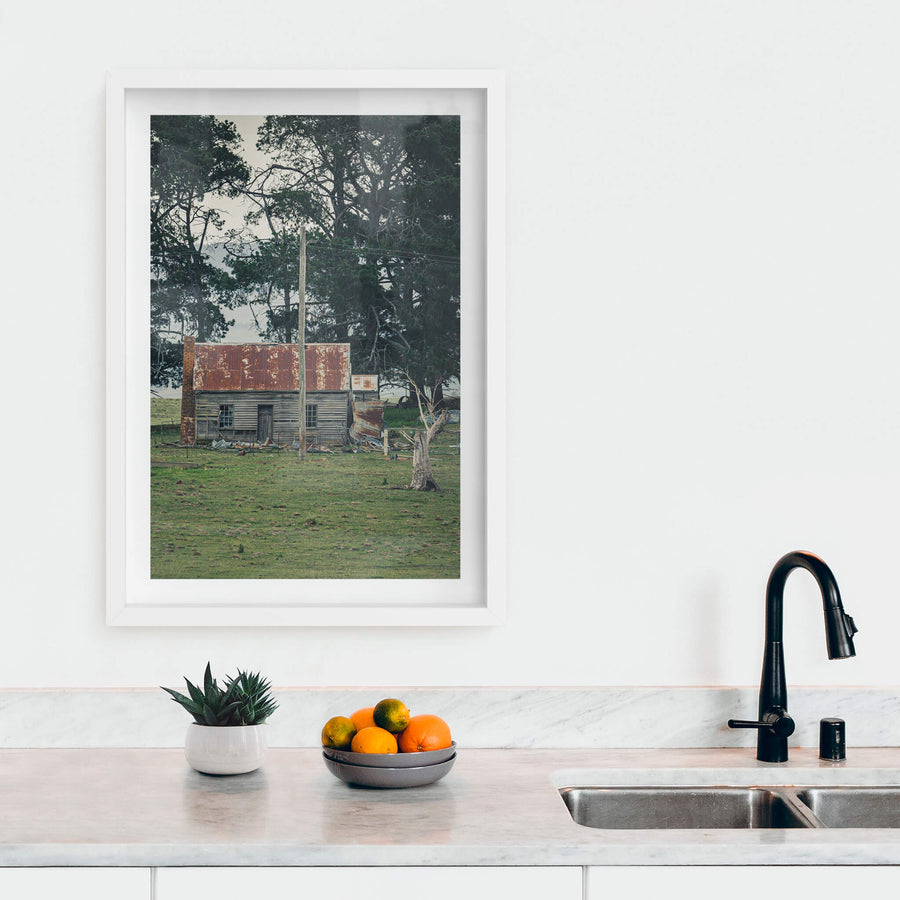
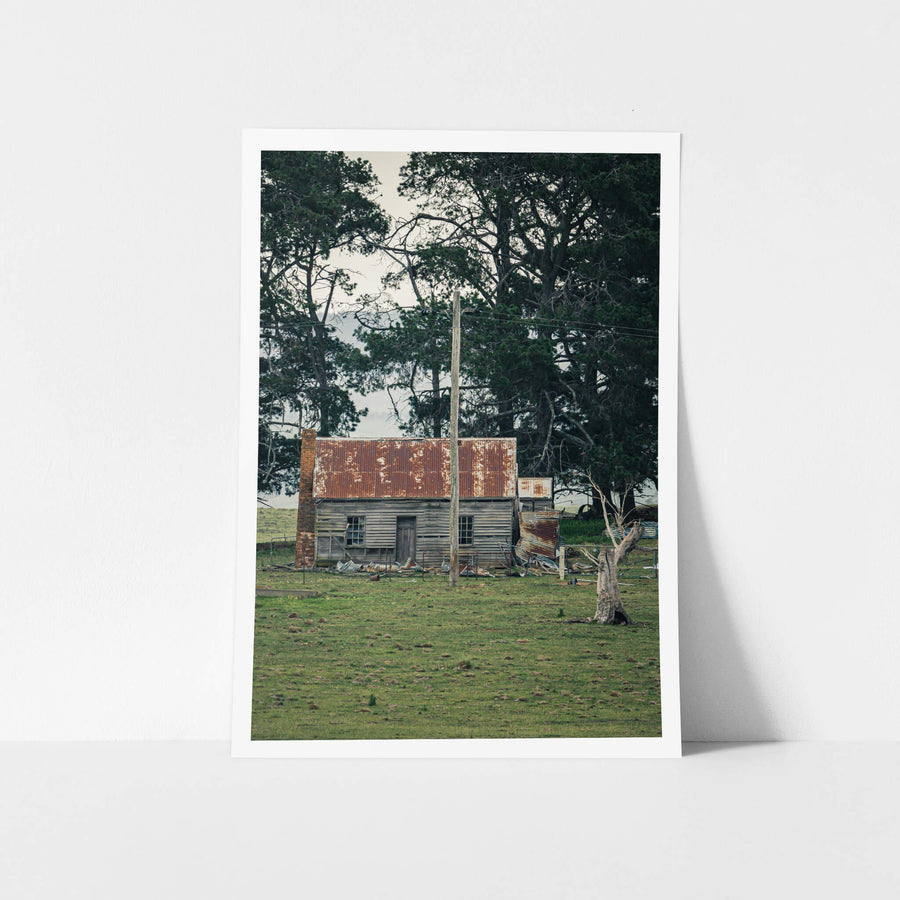
A weatherboard farmhouse in open pasture. The corrugated iron roof is consumed by rust, deep red-brown across every sheet. Loose sheets of iron lie scattered on the ground below. A brick chimney stands on the left gable end. Old-growth trees press in close behind the rear wall. The surrounding pasture is open and flat.

Edition
Open edition

Open edition
Printed to order, no fixed quantity. Each print is hand-signed by the photographer.

Limited edition
A fixed number of prints exist. Once sold, the edition closes permanently. Each print is individually numbered and signed.

$100.00 AUD
Size
Type
Colour
Signed, numbered, with COA. Made to order in 5 to 10 business days (unframed). Shipped in protective packaging with edition certificate, paper-stock reference and a printed care guide.
See certificate sample →

Shipping Free shipping over $250. Ships worldwide, rates calculated at checkout.

Returns Damaged in transit? We replace it. Full policy →

Ships within 10 business days · signed & numbered

In situ
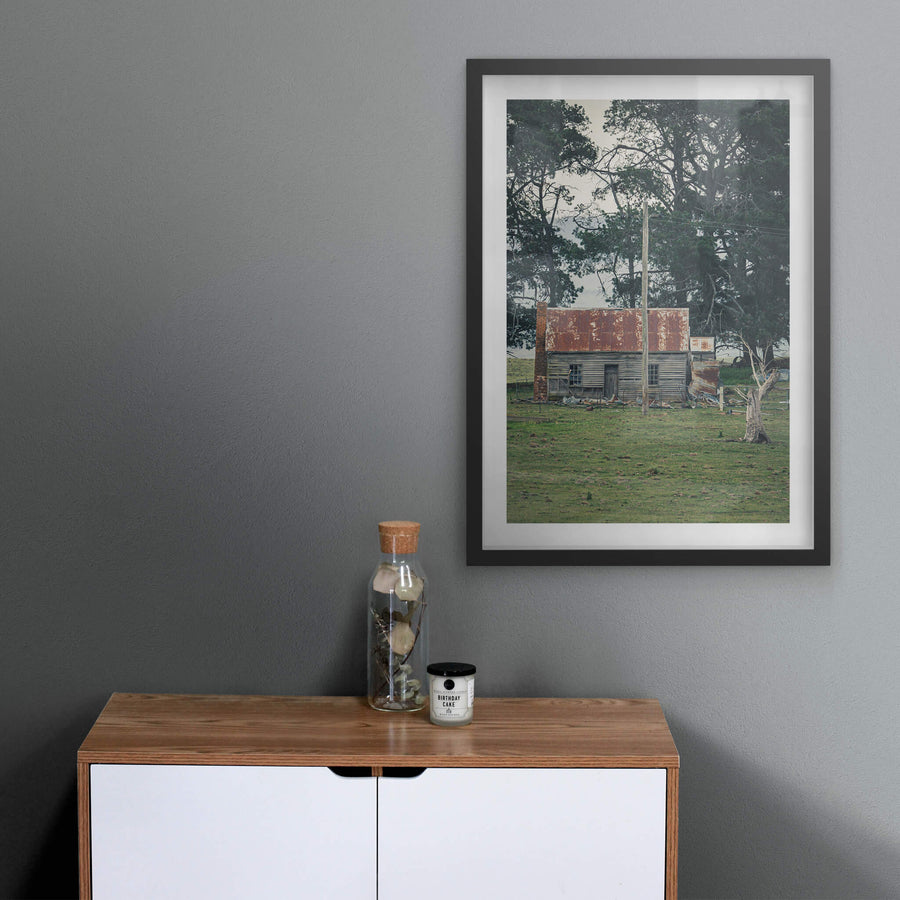
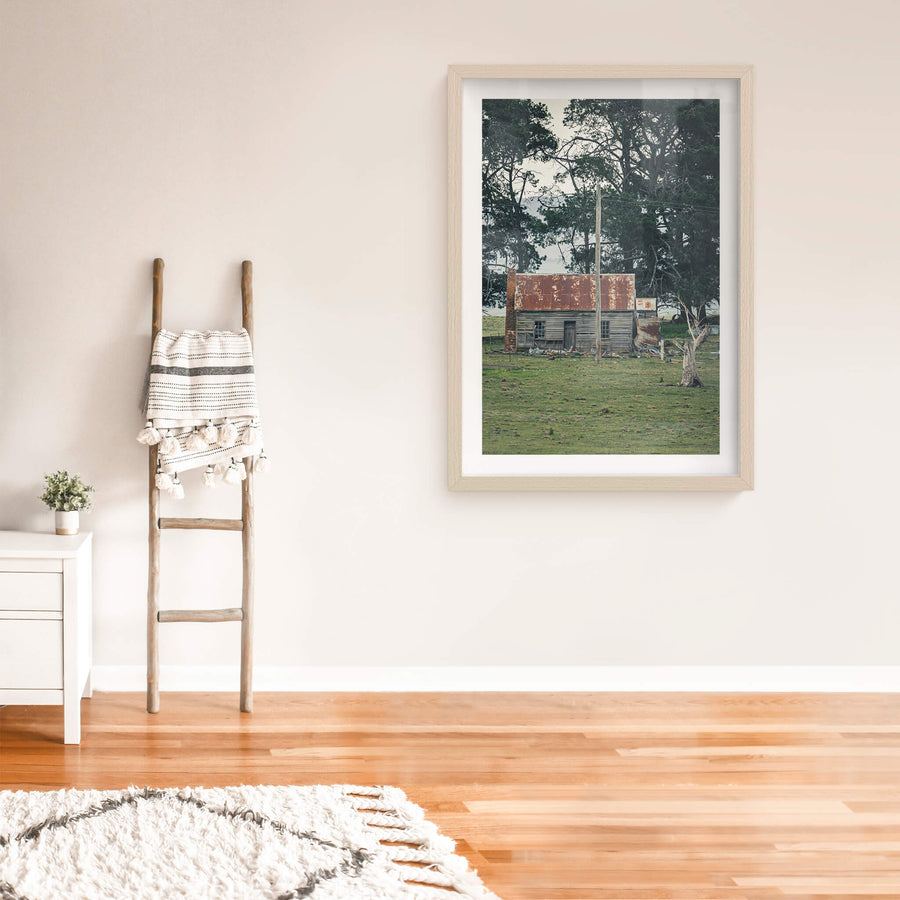
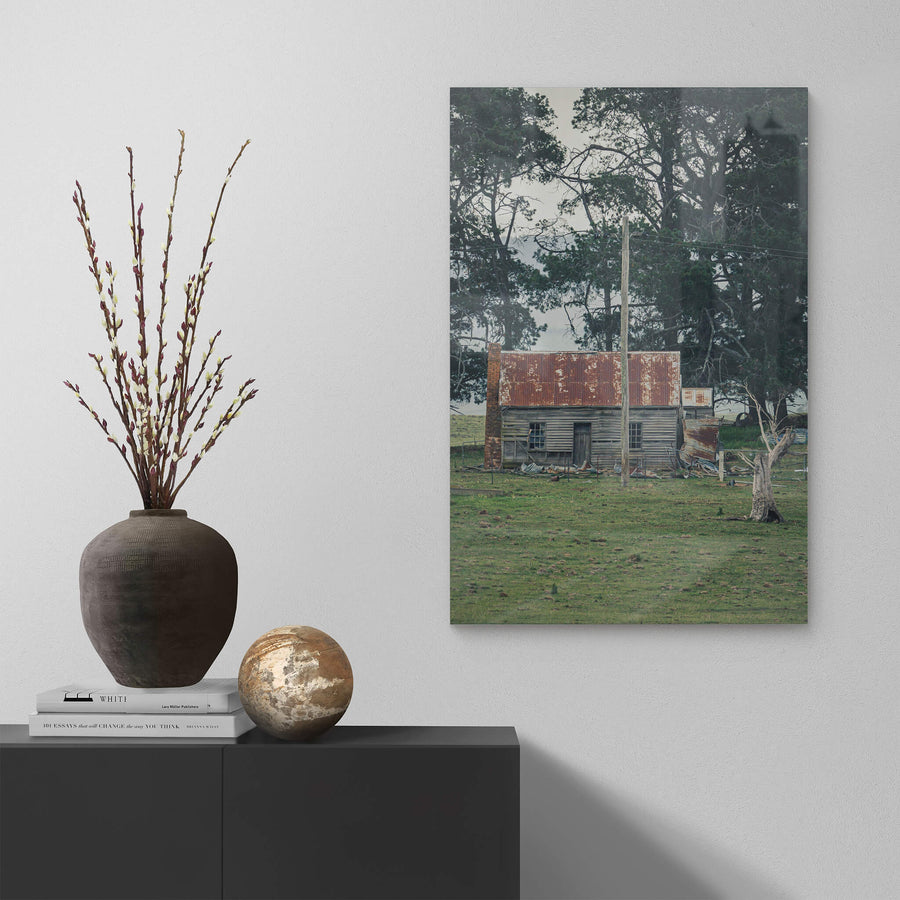
Rusted Roof at A Place to Call Home, unframed print displayed in situ on a wall.Rusted Roof at A Place to Call Home, white-framed print displayed in situ on a wall.Rusted Roof at A Place to Call Home, black-framed print displayed in situ on a wall.Rusted Roof at A Place to Call Home, raw timber-framed print displayed in situ on a wall.Rusted Roof at A Place to Call Home, glass print displayed in situ on a wall.
01 PROVENANCE

Print datasheet

Title
Rusted Roof
Series
A Place to Call Home
Catalogue
PCH-044
Process
Giclée
Captured
29 December 2018
Camera
NIKON Z 7
Lens
180.0-400.0 mm f/4.0
Aperture
f/5.0
Shutter
1/500 s
ISO
100
Focal length
400 mm
Paper
Ilford Galerie Smooth Cotton Rag 310 gsm
Paper size
290 × 200 mm
Location
Rural New South Wales and ACT, Australia
Recognised by
Highly Commended in Multimedia at the 2016 National Trust of Australia (NSW) Heritage Awards
03 THE STORY

About this print

A weatherboard farmhouse stands in open pasture, its corrugated iron roof consumed by rust. The iron has gone deep red-brown across every surface, and sheets have pulled free from the rafters and lie scattered across the ground below the eaves. A brick chimney rises at the left gable end, still standing. Behind the rear wall, old-growth trees press in close, their canopy overhanging the collapsed roofline. The surrounding pasture is open and flat, the kind of country that defines the rural districts of New South Wales. Timber weatherboards and a brick chimney are the material indicators of a later-period selector's cottage, the building type that spread across the Monaro and its surrounding districts after the Robertson Land Acts of 1861 opened Crown land to smallholders at one pound per acre. The acts allowed free selection of up to 320 acres, requiring three years' residence and improvements to the land. The buildings that followed were modest by design: a single-storey dwelling, a chimney at one end, weatherboards over a timber frame, a corrugated iron roof replacing the bark sheets and wooden shingles of the earlier squatter period. The rural districts of New South Wales endured three successive waves of decline across the twentieth century. Drought and rabbit plague in the 1890s halved sheep numbers across the state and began the slow withdrawal of pastoral families from marginal country. The Snowy Mountains Hydro-electric Scheme, constructed between 1949 and 1974, inundated thousands of hectares of farmland and directly displaced pastoral communities around Jindabyne and Adaminaby. The 1991 collapse of the Wool Reserve Price Scheme, with prices crashing to approximately three dollars per kilogram, was the final economic blow to many smallholdings on the margins. What remains in 2018 is a farmhouse standing without a roof, its chimney intact, its walls still holding their line. The iron has returned to rust. The trees behind have grown to fill the skyline. The ground holds the sheets that could no longer hold the weather. This photograph is part of the A Place to Call Home series, documenting vernacular rural structures across New South Wales photographed by Brett Patman between 2016 and 2019.

04 FROM THE FIELD NOTES

A weatherboard farmhouse sits in open pasture in rural New South Wales, its corrugated iron roof rusted to deep red-brown, sheets of iron shed across the ground below. A brick chimney stands at the left gable, and old-growth trees press in from behind. Timber weatherboards and a standing chimney are markers of a later selector's cottage, the kind built across the Monaro after the Robertson Land Acts of 1861 opened Crown land to smallholders. Three waves of decline, drought and rabbits in the 1890s, Snowy Scheme displacement in the 1960s, wool price collapse in 1991, left buildings like this one standing empty across the region. Photographed in 2018.

Brett Patman
A Place to Call Home

The series

A Place to Call Home

2015–2020 · 60 photographs

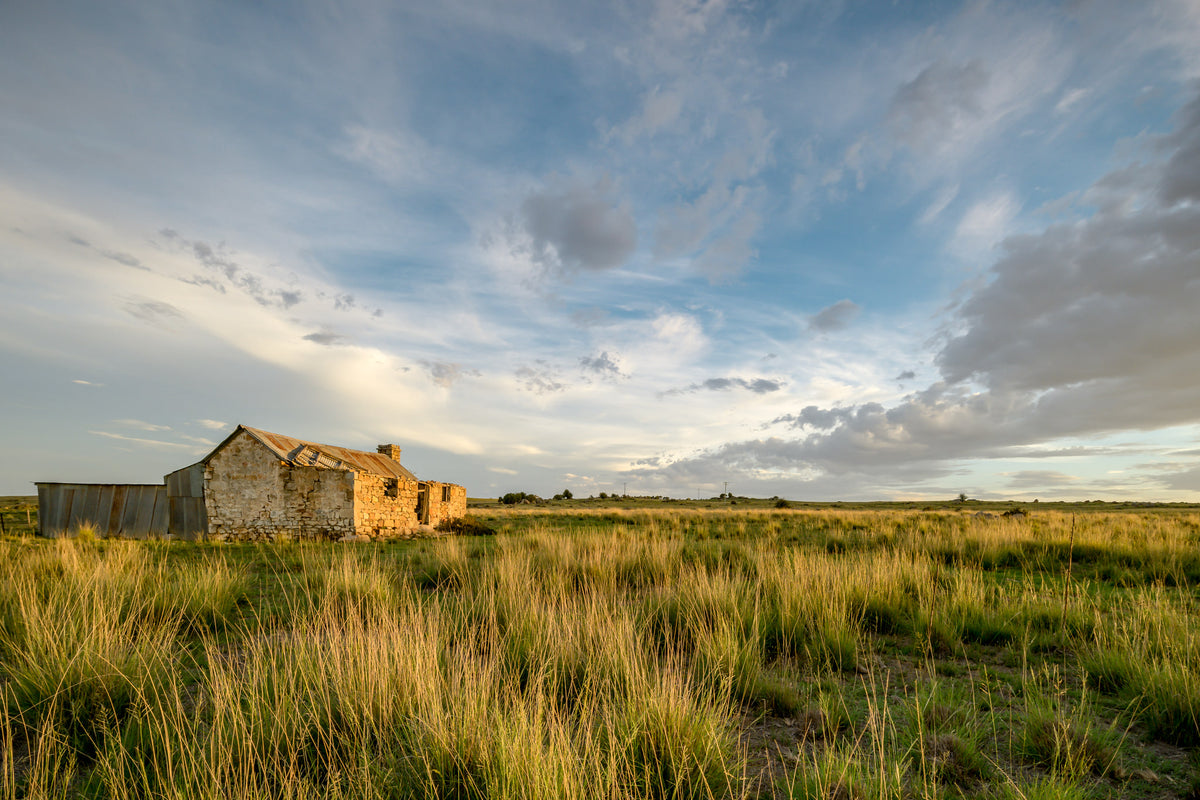
A series of rural homesteads from the Snowy Monaro region of southern New South Wales, with a few from the Hunter Valley. Most were family homes left behind when a generation moved to town; others when the land could no longer be worked. The buildings are smaller than the industrial sites that anchor most of Lost Collective and tend to be older. Most are timber-framed.

View all in this series →

05 SIZE GUIDE

Print sizes

The anatomy view shows what this finish is as a physical object: paper margin, mat band, frame depth, acrylic profile. The comparison strip shows how each size sits relative to the others at true scale. Click a size or a finish to update both.

Anatomy · true ratio
TypeSizeWidthHeight
08 BY POST · NO SPAM

Read the full story

Articles when they're published. The history behind a place. The day of a shoot. The work between prints. No marketing, no schedule.

You're subscribed.