Wolumla Sunset

Provenance

Camera
NIKON Z 7
Lens
180.0-400.0 mm f/4.0
Settings
240mm · f/8.0 · 1/500 · ISO 100
Paper
Ilford Galerie Smooth Cotton Rag 310 gsm

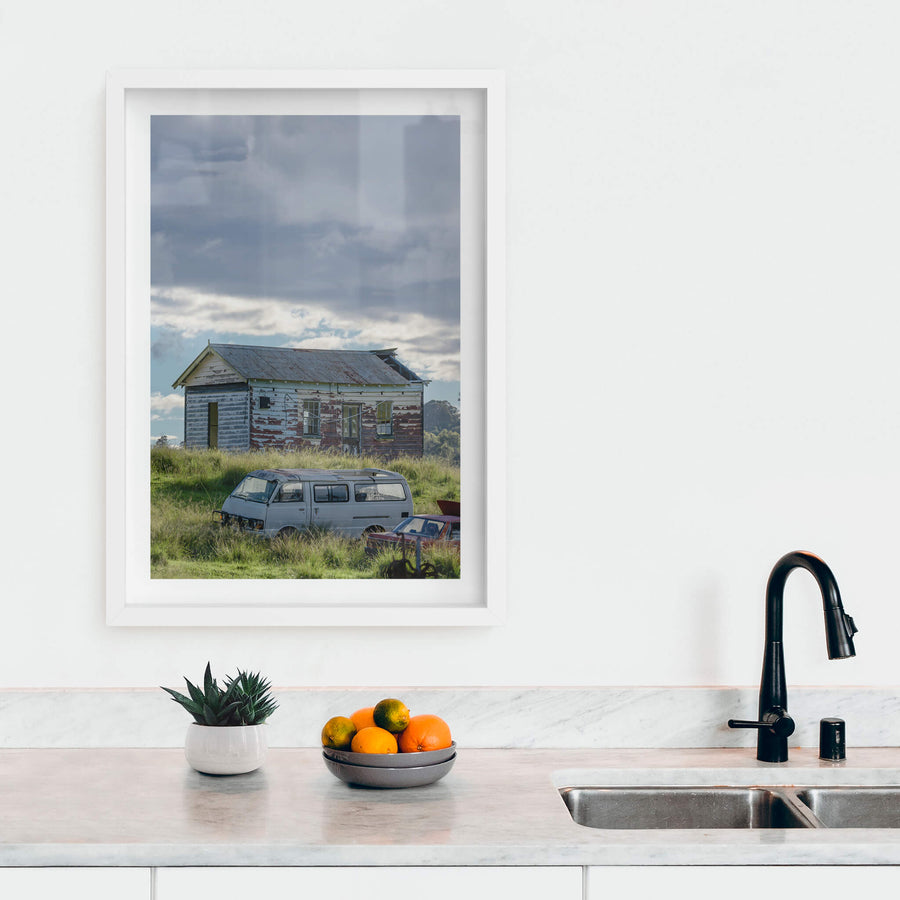
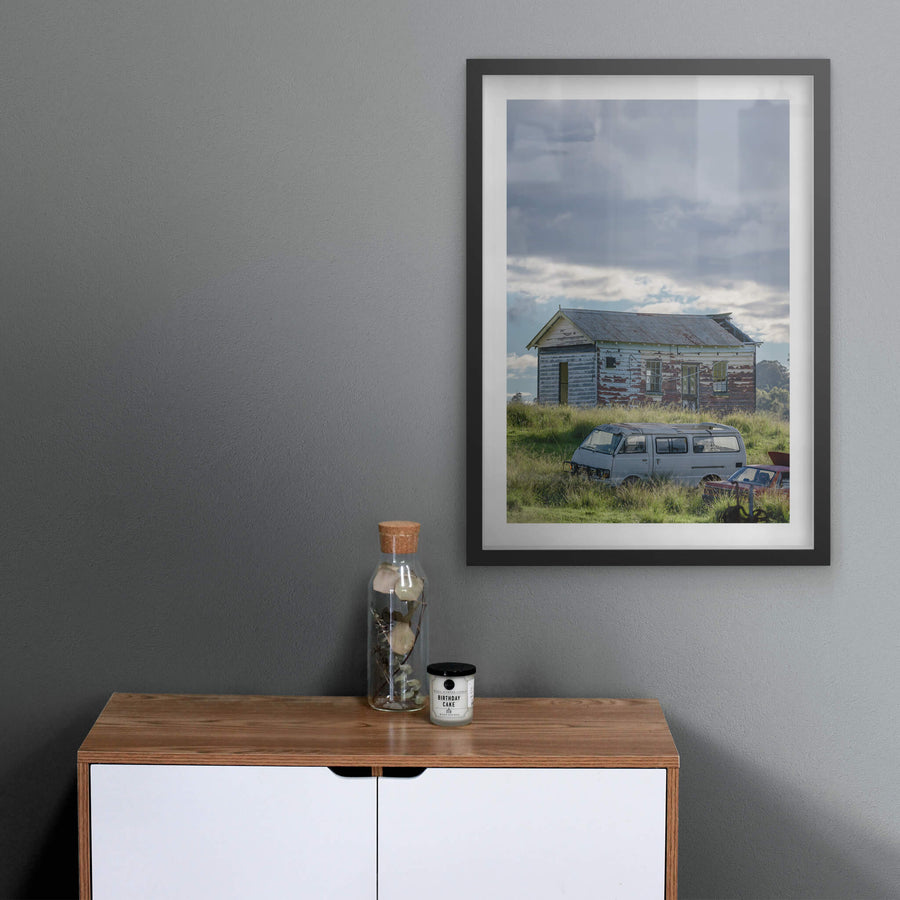
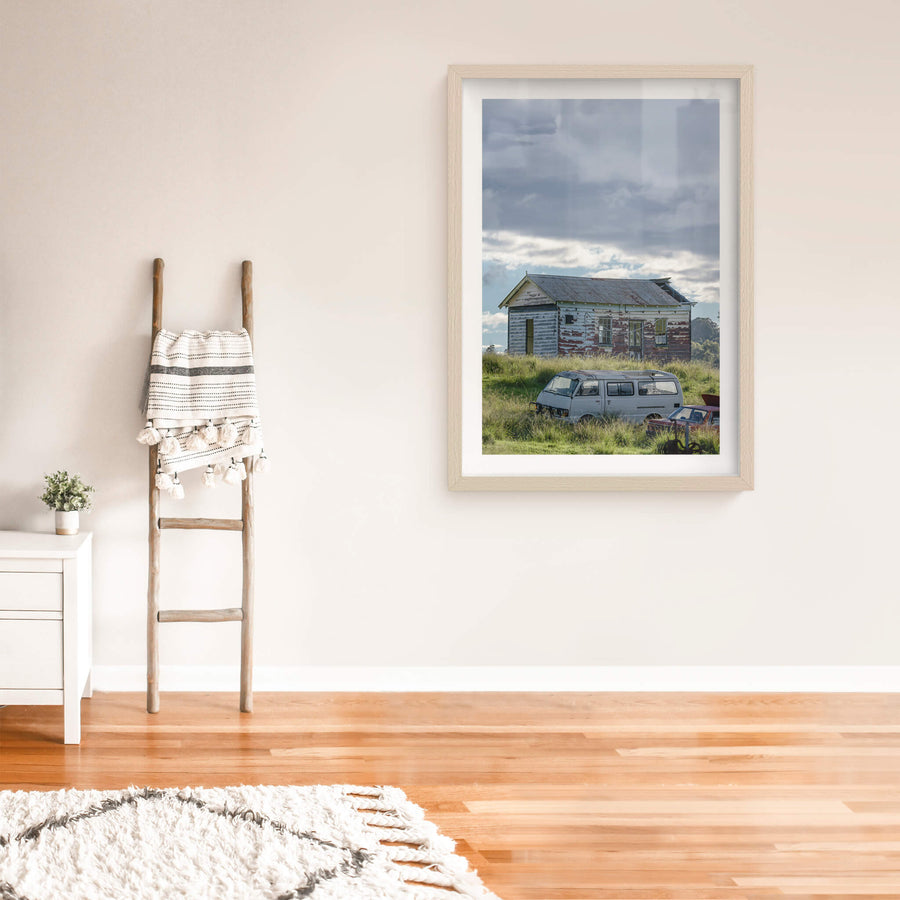
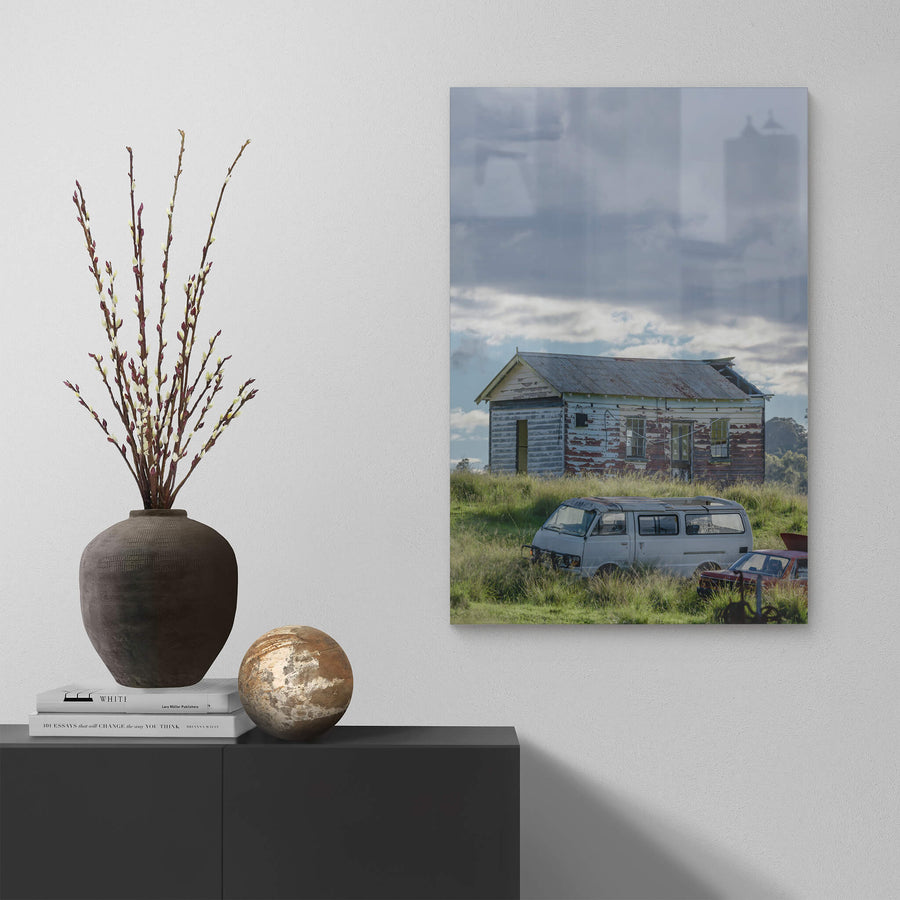
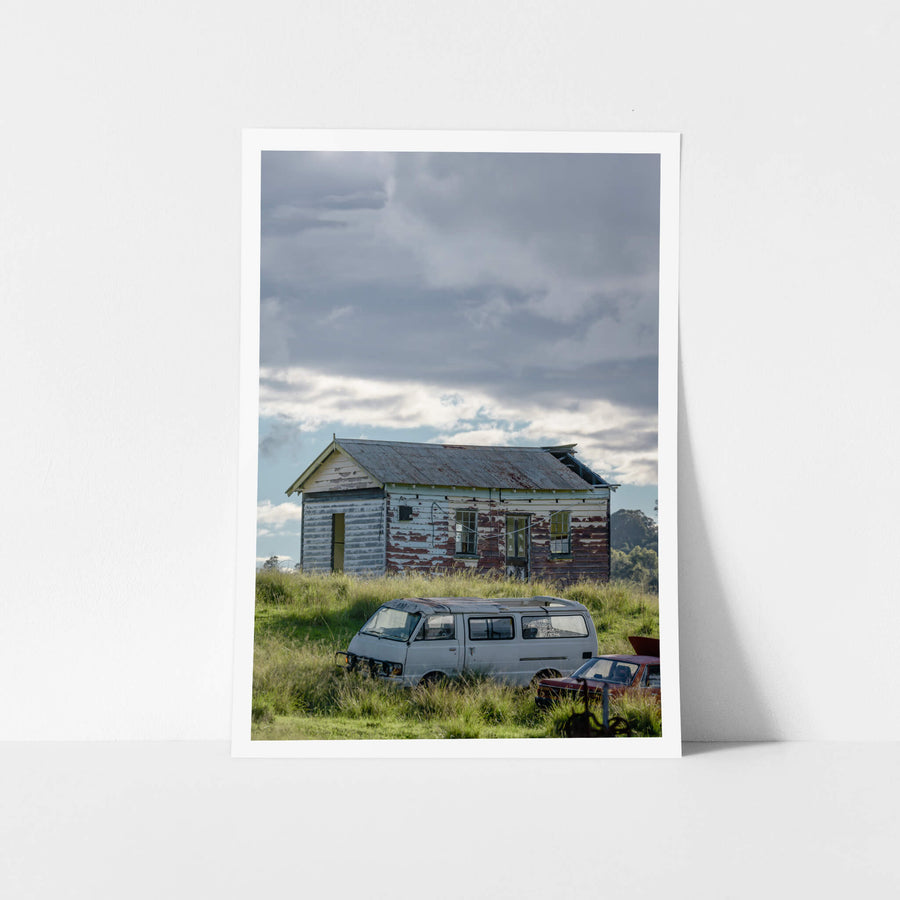
A timber farmhouse with unpainted weatherboards, wood grain visible across the full facade. Open pasture surrounds the building on all sides. A rusted van sits in long grass below the house. A second vehicle is partly visible in the same grass. The sky is open above the low horizon.

Edition
Open edition

Open edition
Printed to order, no fixed quantity. Each print is hand-signed by the photographer.

Limited edition
A fixed number of prints exist. Once sold, the edition closes permanently. Each print is individually numbered and signed.

$100.00 AUD
Size
Type
Colour
Signed, numbered, with COA. Made to order in 5 to 10 business days (unframed). Shipped in protective packaging with edition certificate, paper-stock reference and a printed care guide.
See certificate sample →

Shipping Free shipping over $250. Ships worldwide, rates calculated at checkout.

Returns Damaged in transit? We replace it. Full policy →

Ships within 10 business days · signed & numbered

In situ
Wolumla Sunset at A Place to Call Home, unframed print displayed in situ on a wall.Wolumla Sunset at A Place to Call Home, white-framed print displayed in situ on a wall.Wolumla Sunset at A Place to Call Home, black-framed print displayed in situ on a wall.Wolumla Sunset at A Place to Call Home, raw timber-framed print displayed in situ on a wall.Wolumla Sunset at A Place to Call Home, glass print displayed in situ on a wall.
01 PROVENANCE

Print datasheet

Title
Wolumla Sunset
Series
A Place to Call Home
Catalogue
PCH-028
Process
Giclée
Captured
22 December 2018
Camera
NIKON Z 7
Lens
180.0-400.0 mm f/4.0
Aperture
f/8.0
Shutter
1/500 s
ISO
100
Focal length
240 mm
Paper
Ilford Galerie Smooth Cotton Rag 310 gsm
Paper size
290 × 200 mm
Location
Rural New South Wales and ACT, Australia
Recognised by
Highly Commended in Multimedia at the 2016 National Trust of Australia (NSW) Heritage Awards
03 THE STORY

About this print

The farmhouse at Wolumla sits on flat, open pasture with nothing to shelter it. Its weatherboards have lost their paint entirely, the timber faded and raised along the grain, grey-white against the grass. Below the structure, a rusted van and a second vehicle are half-submerged in the long grass, left in place at the end of whatever use they had. The building is intact enough to read as a house: walls standing, the form of a domestic structure still legible. But the stripped timber and the vehicles in the grass point clearly toward a long period without maintenance, without occupation. Timber weatherboard construction of this type is characteristic of the selector cottages that spread across southern New South Wales from the 1880s onward. The Robertson Land Acts of 1861 opened Crown land to free selection, allowing smaller blocks of up to 320 acres to be taken up by settlers who could not have competed with the established pastoral runs. The buildings that followed were modest, built quickly, and built to last through necessity rather than craft. Weatherboard over a timber frame was a step up from the earlier slab huts of the squatter era, requiring sawn timber rather than hand-split slabs, and signalling a small degree of settled prosperity. Wolumla sits in the Bega Valley, in southern New South Wales, a district that was among the earlier pastoral frontiers beyond the settled regions of the colony. The Bega Valley LEP 2013 lists 261 heritage items across the region, though the isolated rural structures documented in the A Place to Call Home series generally sit outside formal heritage protection, on private pastoral land, with no scheduled maintenance and no restoration programme. The photograph was made in 2018. It records a building that is still standing but no longer in use, with the pasture growing up around the vehicles below it and the timber of the walls returning, slowly, to something closer to raw material than built form. Part of the A Place to Call Home series, which documents 59 subjects across the Snowy Monaro region and Hunter Valley, photographed between 2016 and 2019.

04 FROM THE FIELD NOTES

The weatherboards on the farmhouse at Wolumla have lost their paint down to bare timber, the grain raised by years of sun and weather. Below the structure, a rusted van and a second vehicle sit half-submerged in long grass, left where they stopped. Timber weatherboard construction of this kind is typical of the selector cottages built across southern New South Wales from the 1880s onward, on small blocks carved out of the larger pastoral runs that had dominated the region for decades before them. The photograph, made in 2018, records a place somewhere between standing and gone.

Brett Patman
A Place to Call Home

The series

A Place to Call Home

2015–2020 · 60 photographs

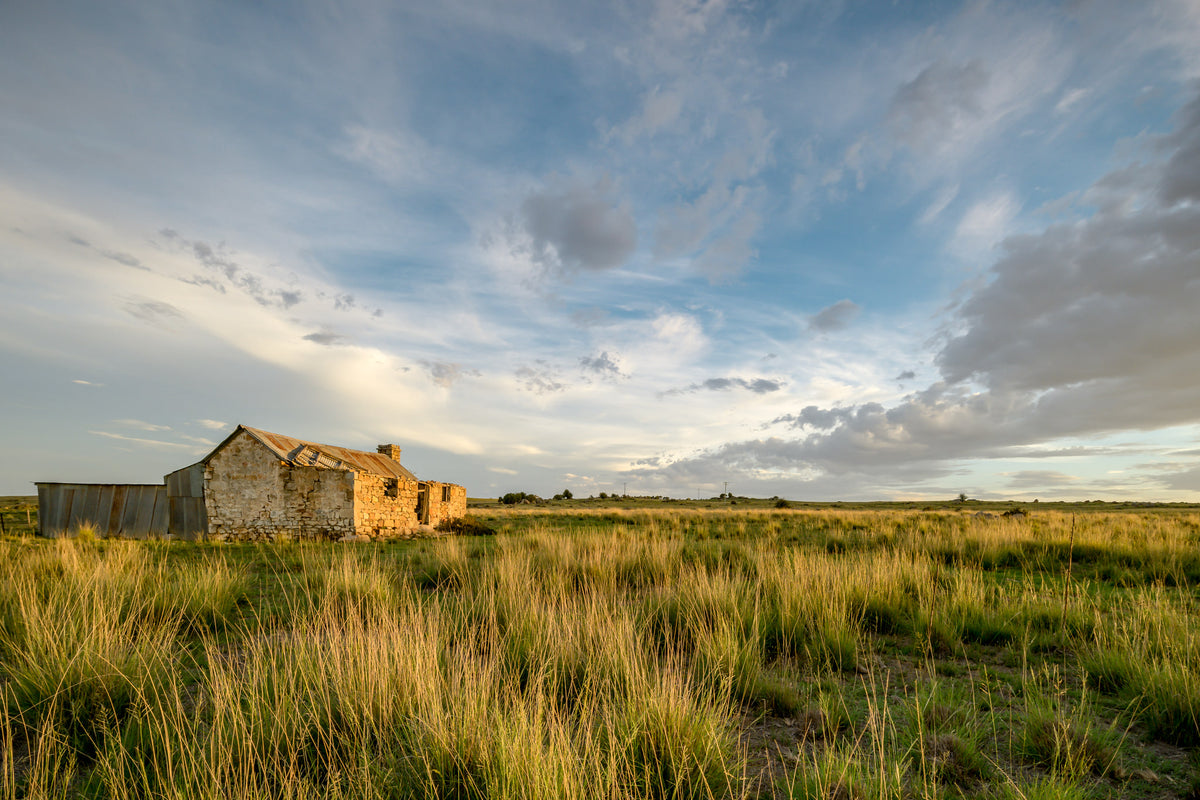
A series of rural homesteads from the Snowy Monaro region of southern New South Wales, with a few from the Hunter Valley. Most were family homes left behind when a generation moved to town; others when the land could no longer be worked. The buildings are smaller than the industrial sites that anchor most of Lost Collective and tend to be older. Most are timber-framed.

View all in this series →

05 SIZE GUIDE

Print sizes

The anatomy view shows what this finish is as a physical object: paper margin, mat band, frame depth, acrylic profile. The comparison strip shows how each size sits relative to the others at true scale. Click a size or a finish to update both.

Anatomy · true ratio
TypeSizeWidthHeight
08 BY POST · NO SPAM

Read the full story

Articles when they're published. The history behind a place. The day of a shoot. The work between prints. No marketing, no schedule.

You're subscribed.