
Sunken
Provenance
- Camera
- NIKON D850
- Lens
- 70.0-200.0 mm f/2.8
- Settings
- 70mm · f/8.0 · 1/80 · ISO 140
- Paper
- Ilford Galerie Smooth Cotton Rag 310 gsm
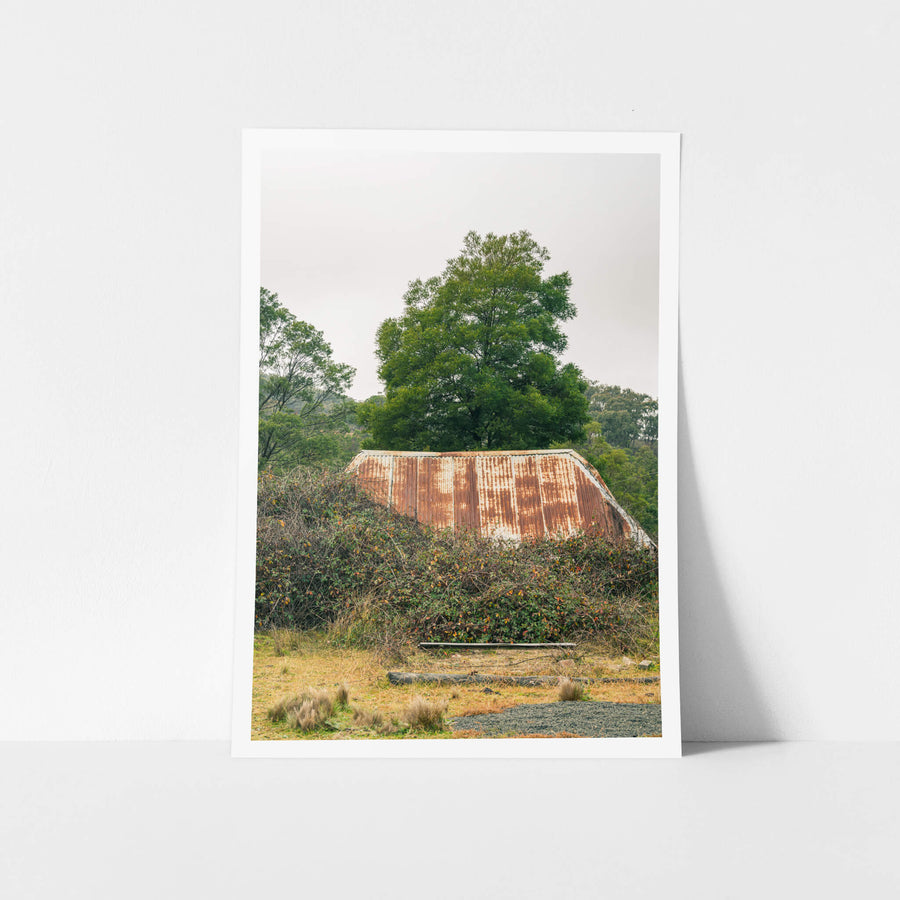
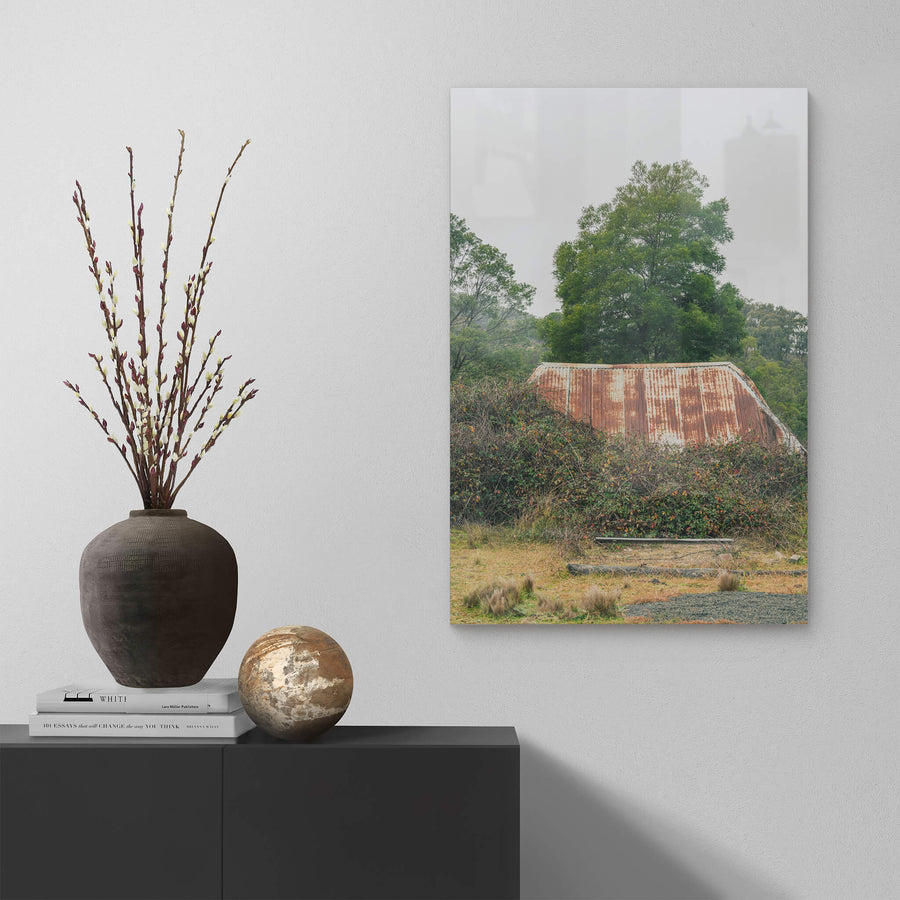
Brambles have taken the lower half of the storage shed at Big Hill Post Office entirely, leaving only the curved, rusted roofline visible above the tangle. A broad-canopied tree rises directly behind it against a flat, overcast sky. The gravel path toward the entrance is fully blocked by thorny growth.
Open edition
Printed to order, no fixed quantity. Each print is hand-signed by the photographer.
Limited edition
A fixed number of prints exist. Once sold, the edition closes permanently. Each print is individually numbered and signed.
Shipping Free shipping over $250. Ships worldwide, rates calculated at checkout.
Returns Damaged in transit? We replace it. Full policy →
Ships within 10 business days · signed & numbered
In situ
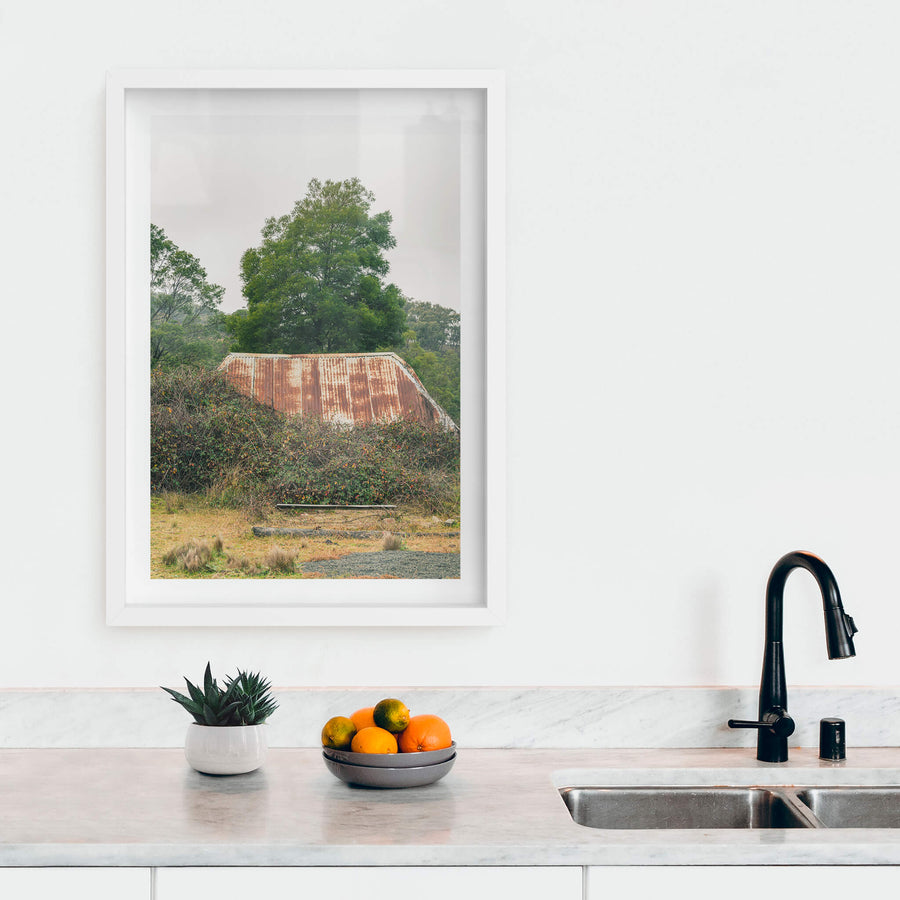
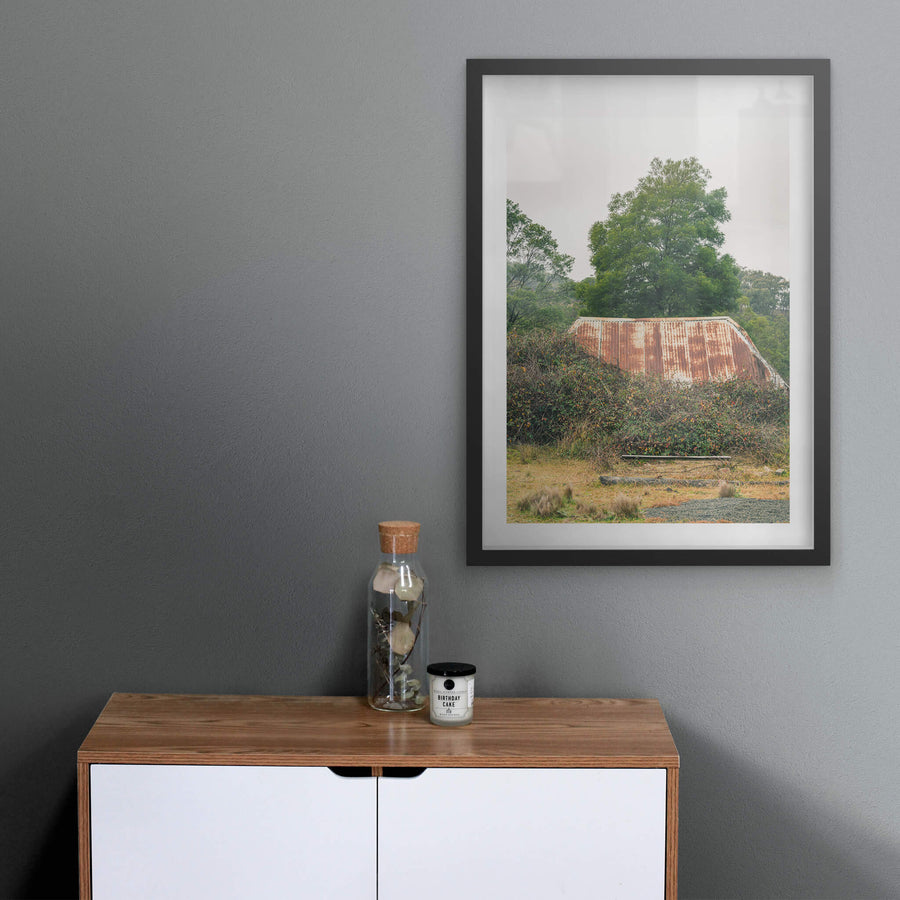
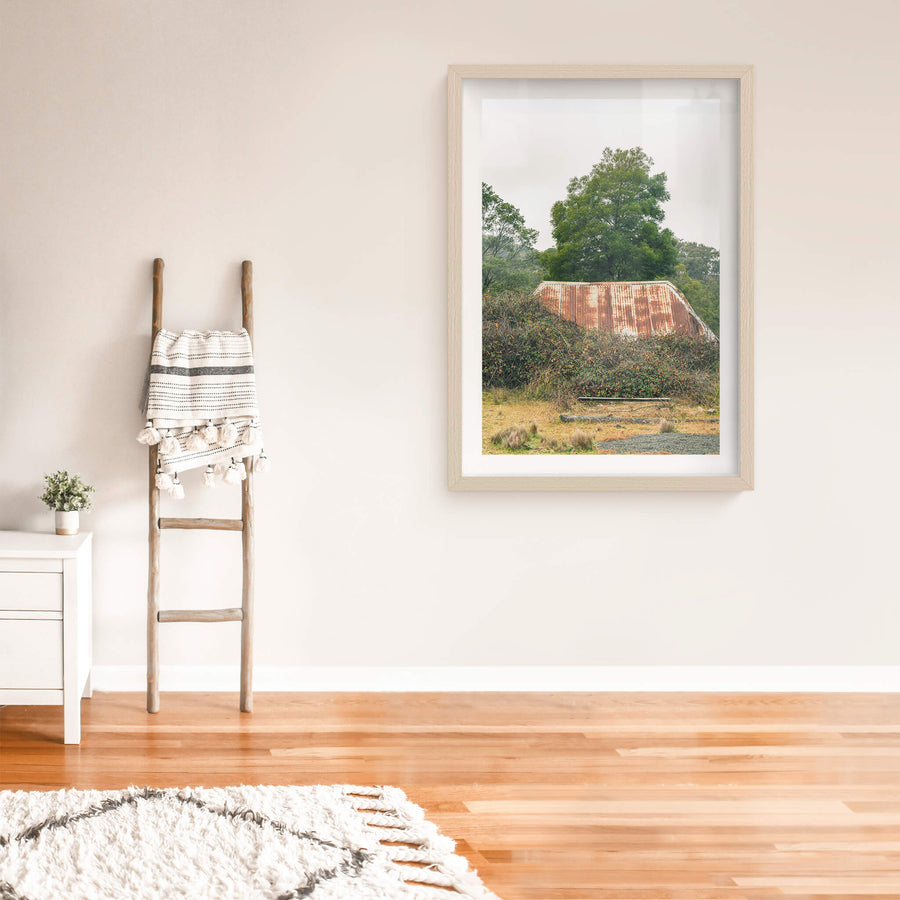
Print datasheet
- Title
- Sunken
- Series
- Big Hill Post Office
- Process
- Giclée
- Captured
- 13 June 2020
- Camera
- NIKON D850
- Lens
- 70.0-200.0 mm f/2.8
- Aperture
- f/8.0
- Shutter
- 1/80 s
- ISO
- 140
- Focal length
- 70 mm
- Paper
- Ilford Galerie Smooth Cotton Rag 310 gsm
- Paper size
- 297 × 210 mm
- Location
- Big Hill, New South Wales, Australia
- Recognised by
- Highly Commended in Multimedia at the 2016 National Trust of Australia (NSW) Heritage Awards
Big Hill, New South Wales, Australia
Map · Mapbox · OpenStreetMap
About this print
Rust-coloured corrugated iron rises from a mass of blackberry canes. The structure is almost entirely consumed. Only the upper half of the walls remain visible, the lower sections buried beneath dense scrub. Dry grass covers the foreground. A single elm stands tall behind the roofline, dwarfing what is left. The sky is flat and grey. Overcast light softens everything.
Brett Patman
Print sizes
The anatomy view shows what this finish is as a physical object: paper margin, mat band, frame depth, acrylic profile. The comparison strip shows how each size sits relative to the others at true scale. Click a size or a finish to update both.
| Type | Size | Width | Height |
|---|


