Final Bow

Provenance

Camera
NIKON D850
Lens
14.0-24.0 mm f/2.8
Settings
14mm · f/8.0 · 2.5 sec · ISO 320
Paper
Ilford Galerie Smooth Cotton Rag 310 gsm

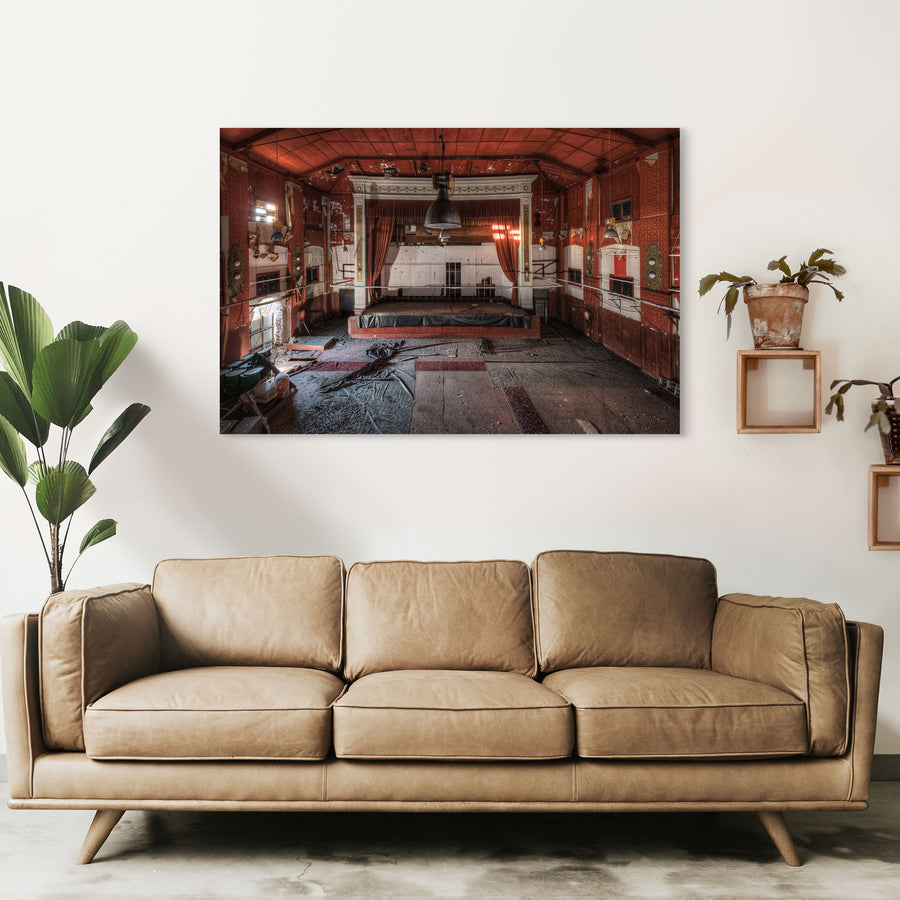
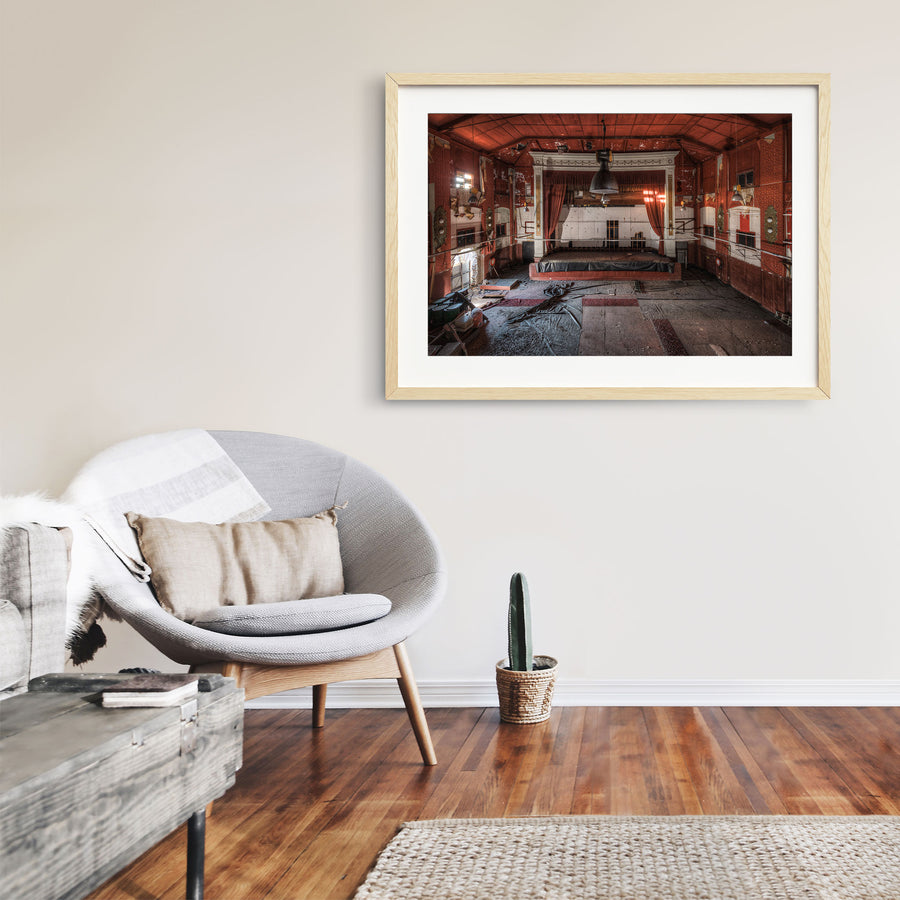
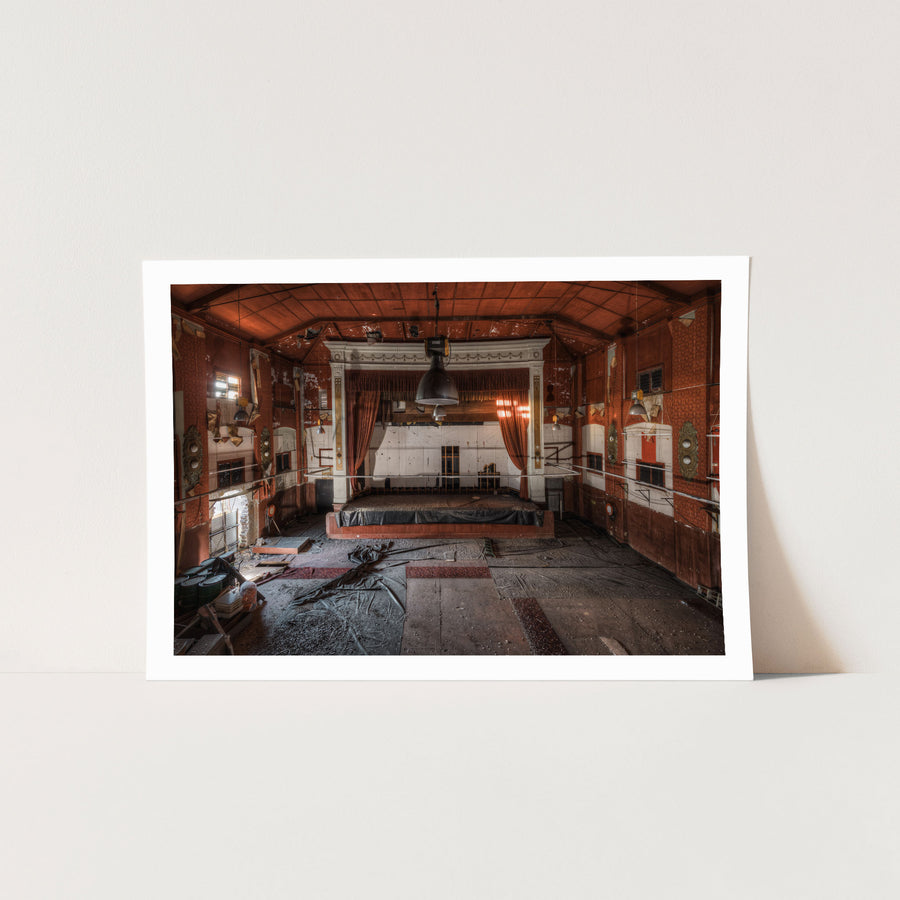
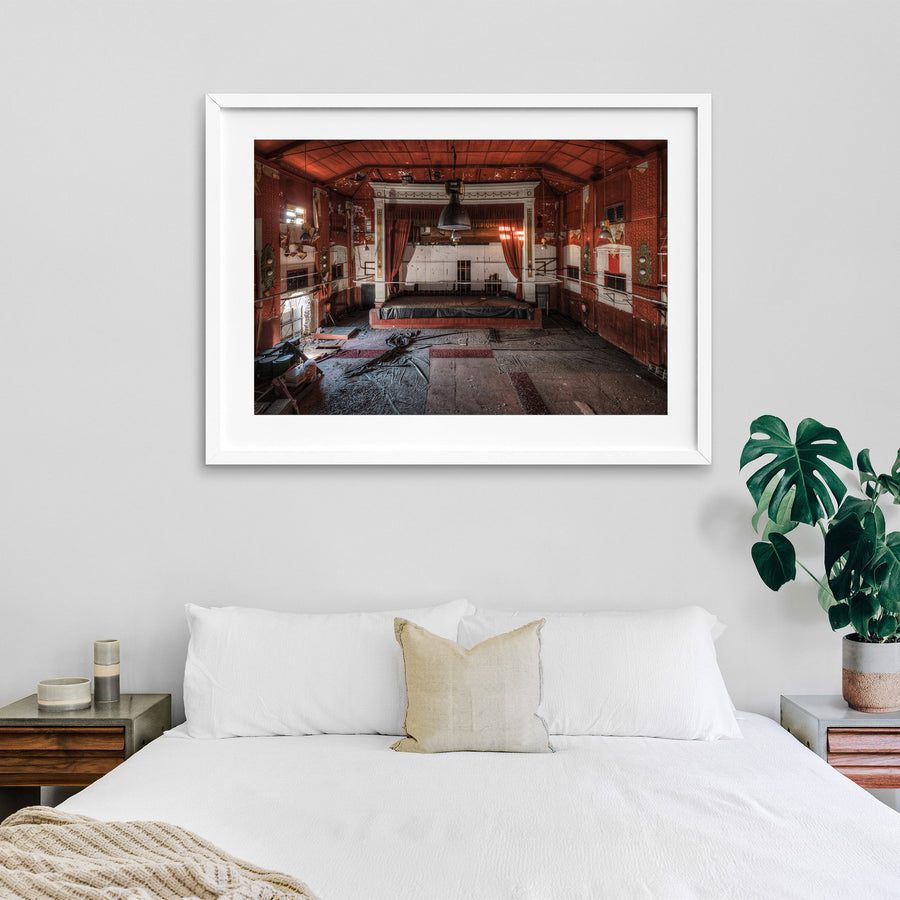
The proscenium arch dominates the frame, its columns visible in low light. The stage beyond sits in near-total darkness. Surfaces show decades of accumulated deterioration. No seating remains in the auditorium; the space is empty and still.

Edition
Open edition

Open edition
Printed to order, no fixed quantity. Each print is hand-signed by the photographer.

Limited edition
A fixed number of prints exist. Once sold, the edition closes permanently. Each print is individually numbered and signed.

$100.00 AUD
Size
Type
Colour
Signed, numbered, with COA. Made to order in 10 to 20 business days (framed). Shipped in protective packaging with edition certificate, paper-stock reference and a printed care guide.
See certificate sample →

Shipping Free shipping over $250. Ships worldwide, rates calculated at checkout.

Returns Damaged in transit? We replace it. Full policy →

Ships within 10 business days · signed & numbered

In situ
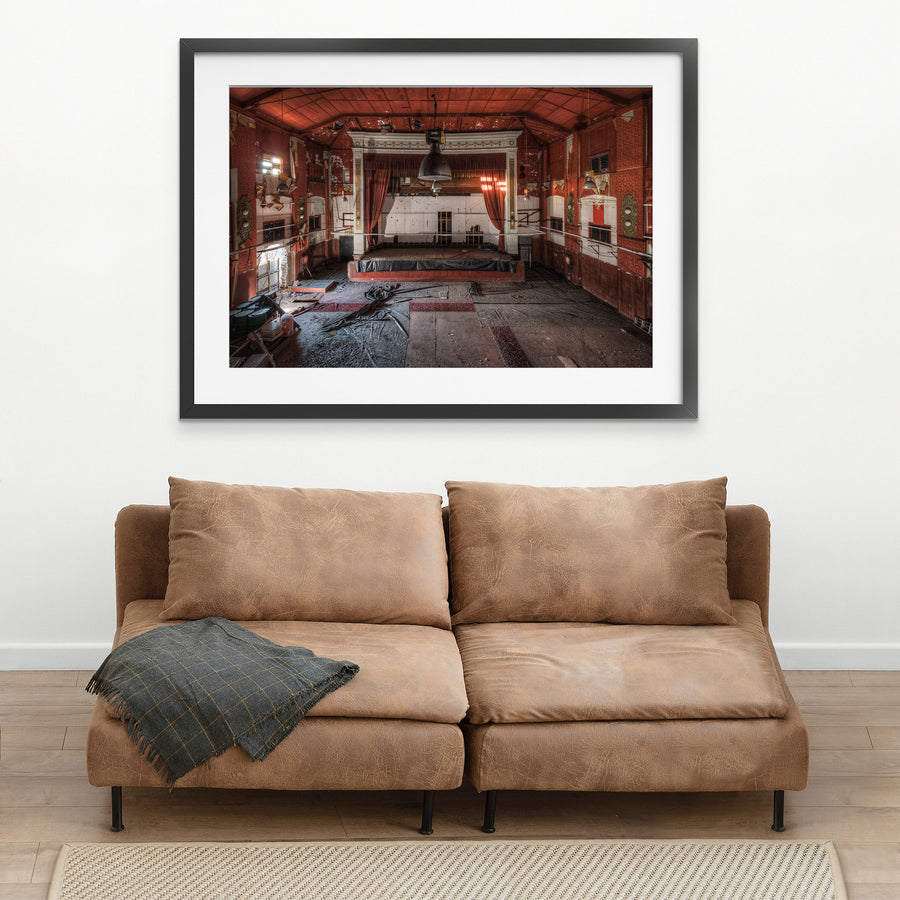
Final Bow at Marina Picture Palace, the decaying stage of Marina Picture Palace.Final Bow at Marina Picture Palace, the decaying stage of Marina Picture Palace.Final Bow at Marina Picture Palace, the decaying stage of Marina Picture Palace.Final Bow at Marina Picture Palace, the decaying stage of Marina Picture Palace.Final Bow at Marina Picture Palace, the decaying stage of Marina Picture Palace.
01 PROVENANCE

Print datasheet

Title
Final Bow
Series
Marina Picture Palace
Catalogue
MPP-002
Process
Giclée
Captured
31 March 2019
Camera
NIKON D850
Lens
14.0-24.0 mm f/2.8
Aperture
f/8.0
Shutter
2.5 sec s
ISO
320
Focal length
14 mm
Paper
Ilford Galerie Smooth Cotton Rag 310 gsm
Paper size
290 × 200 mm
Location
Sydney, New South Wales, Australia
Recognised by
Highly Commended in Multimedia at the 2016 National Trust of Australia (NSW) Heritage Awards
02 LOCATION

Sydney, New South Wales, Australia

Map · Mapbox · OpenStreetMap

03 THE STORY

About this print

The proscenium arch of Marina Picture Palace in Rosebery is the building's defining interior element. Flanked by columns in the Inter-War free-classical style, the arch frames a stage that was built to serve both silent film and live variety performance, with an orchestra pit and dressing rooms below the stage floor. The auditorium ceiling was originally pressed metal Wunderlich panels. In November 1955 the walls were painted deep mushroom on the pillars and misty lilac between panels; the ceiling was repainted midnight blue at the same time. Marina Picture Palace was designed in 1925 by architect William de Putron, who was also a member of the consortium that built and operated it, alongside builder William Henry Rumble and cinema pioneer Eric Christensen. Christensen, holder of NSW Exhibitor's Licence No. 1, placed a gold sovereign in the brickwork during construction. The building opened on 28 May 1927 with a programme that included Mary Pickford in Sparrows and a live performance by Bill Mason. Construction had been delayed in late 1926 by a shortage of steel girders. Ownership passed through several hands across six decades: the Ward brothers purchased it in 1935 after rates went unpaid; Mascot Theatres Pty Ltd under Snider and Dean acquired it in January 1939; and in 1967 Chris and Chaniglia Louis of Louis Film Company bought it, operating it as a Greek-language cinema in the years before SBS television. The cinema closed for the final time on 8 February 1984. The stalls were converted to a video and DVD shop by the Louis family; the dress circle was taken out of use and the projection equipment removed. All original seating was sold and dispersed to other theatres. The shop itself closed around 2002, leaving the building vacant. This photograph, made in 2019, records the proscenium arch as it stood then: the columns intact, the stage in darkness, the auditorium cleared and quiet.

04 FROM THE FIELD NOTES

The proscenium arch of Marina Picture Palace in Rosebery still stands inside a building that last ran a film on 8 February 1984. Designed by architect William de Putron and opened on 28 May 1927, the cinema passed through the hands of independent operators, suburban circuit Snider and Dean, and finally the Louis Film Company before closing. After the cinema shut, the stalls became a video shop; the dress circle and stage were left to deteriorate. By 2019, the auditorium was empty and dark, the arch framing nothing.

Brett Patman

Marina Picture Palace

The series

Marina Picture Palace

2019 · 20 photographs

Marina Picture Palace opened on 24 June 1927 on the corner of Gardeners Road and Sutherland Road, between Mascot and Rosebery. The architect William DePruton, who was also one of the original owners, designed it as a 1,210-seat single-screen picture palace, opening with a double bill of Mary Pickford in *Sparrows* and John Barrymore in *The Beloved Rogue*. The Snider & Dean Circuit ran the cinema from 1939 until the early 1960s. After a series of openings and closings under independent operators, the building reopened as the Rosebery Cinema on 1 October 1982 and closed as a working cinema for the final time on 8 February 1984. The stalls were converted into Videomania, a video shop that traded with much of the cinema's original decoration intact, until that closed by 2002. The building was converted to 47 apartments in the 2010s.

View all in this series →

05 SIZE GUIDE

Print sizes

The anatomy view shows what this finish is as a physical object: paper margin, mat band, frame depth, acrylic profile. The comparison strip shows how each size sits relative to the others at true scale. Click a size or a finish to update both.

Anatomy · true ratio
TypeSizeWidthHeight
08 BY POST · NO SPAM

Read the full story

Articles when they're published. The history behind a place. The day of a shoot. The work between prints. No marketing, no schedule.

You're subscribed.