
Toilets
Provenance
- Camera
- NIKON D850
- Lens
- 14.0-24.0 mm f/2.8
- Settings
- 14mm · f/8.0 · 1.3 sec · ISO 100
- Paper
- Ilford Galerie Smooth Cotton Rag 310 gsm
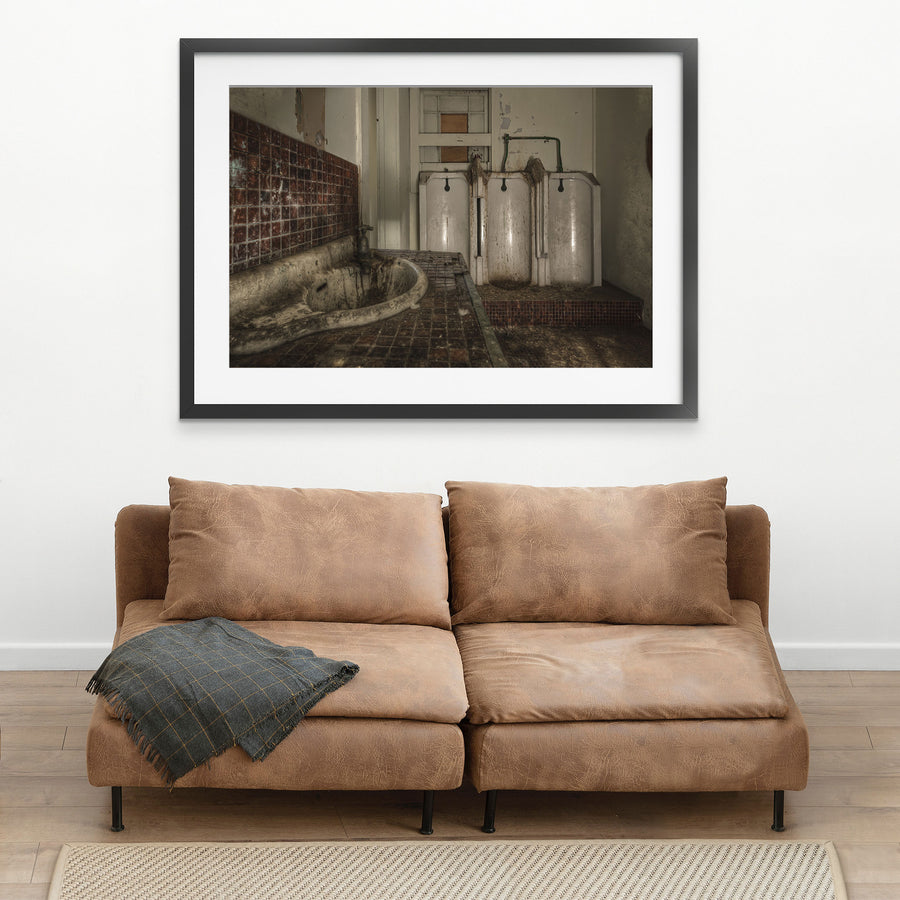
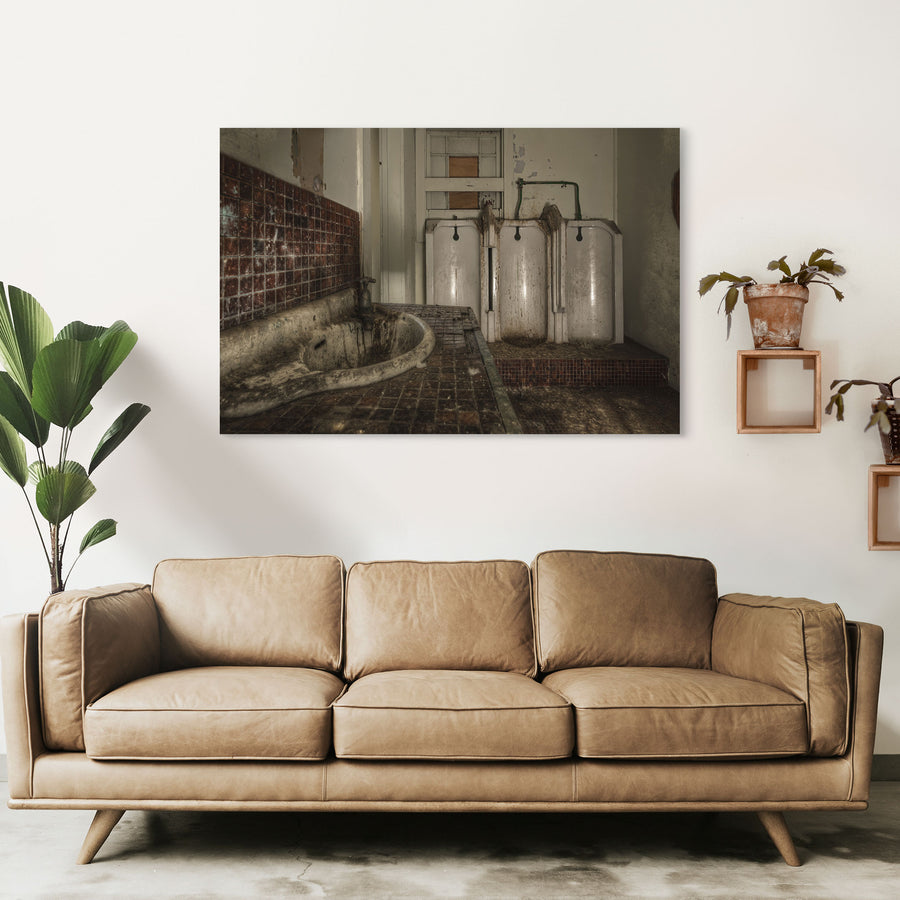
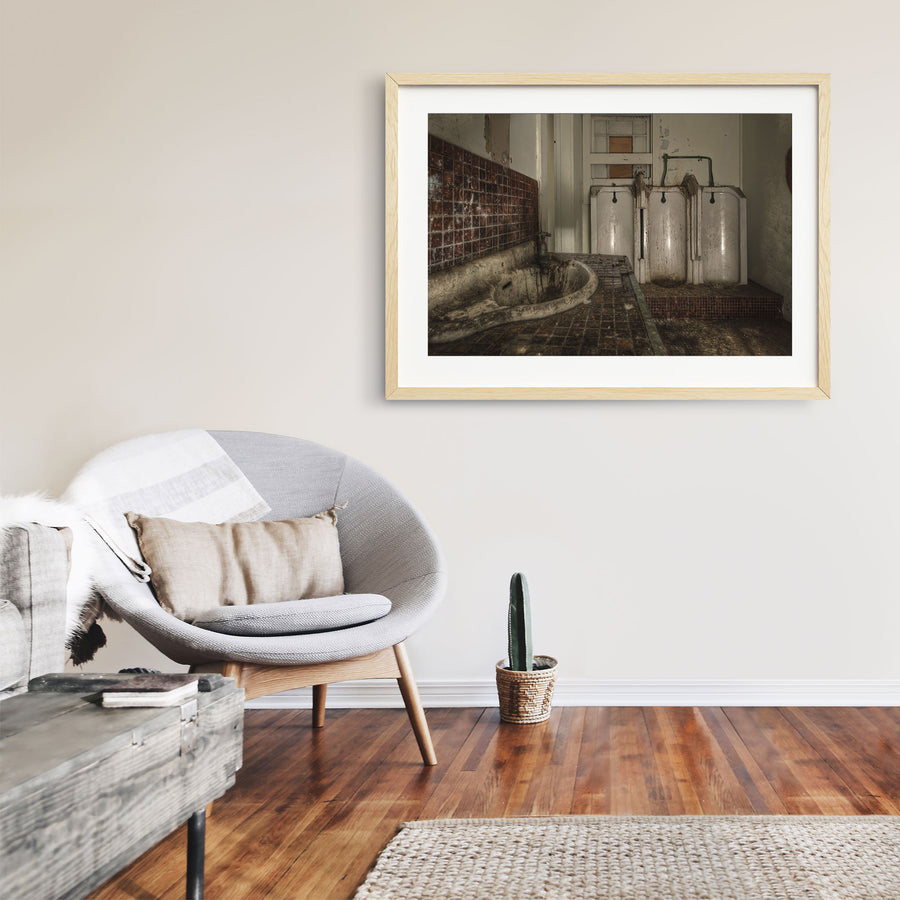
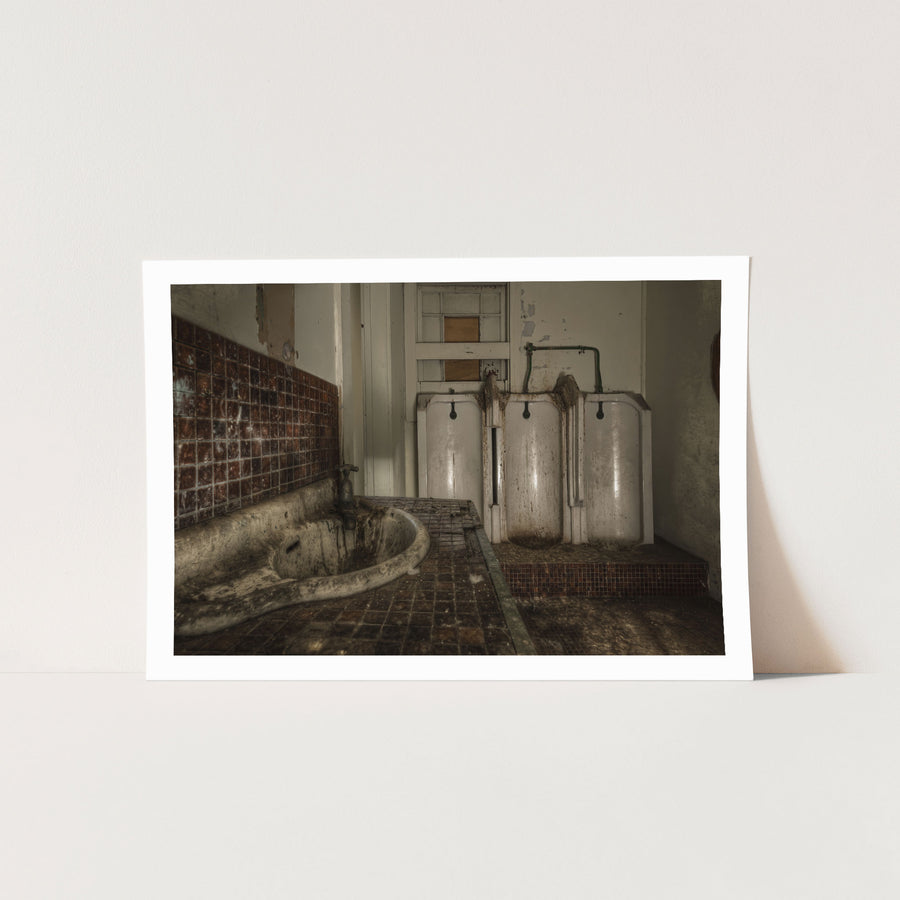
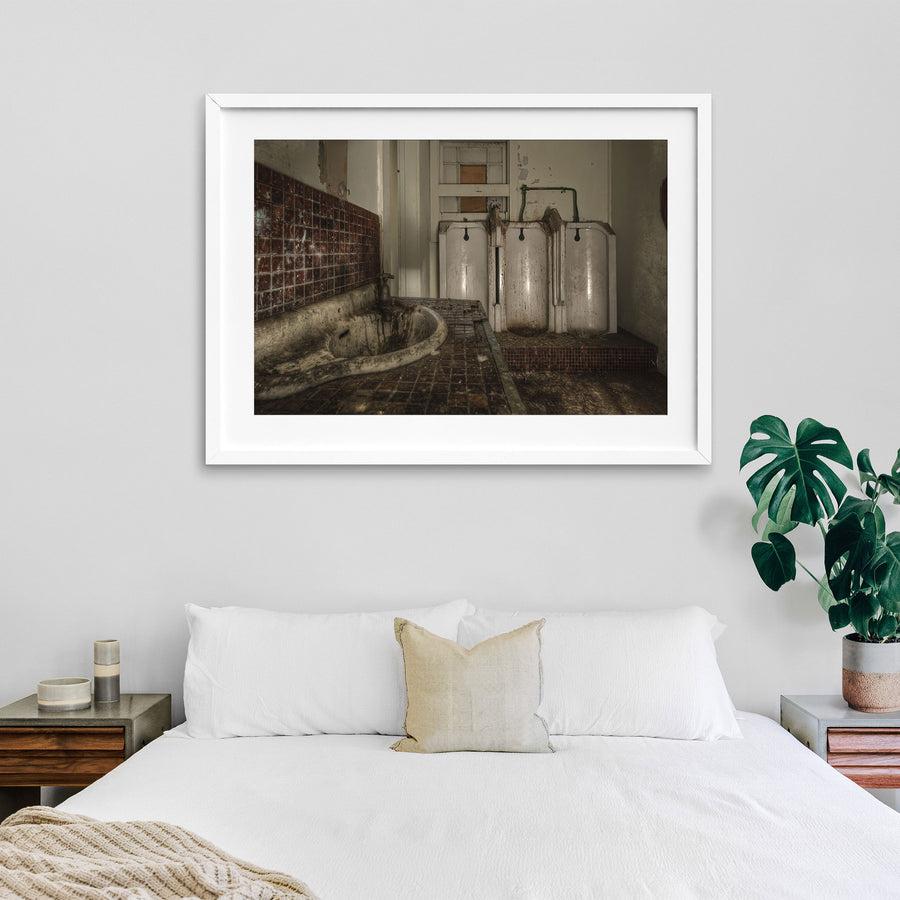
Three white urinals, stained rust-brown and heavily corroded, line a wall clad in dark red square tiles in the toilets of the former Marina Picture Palace at Rosebery. A long, shallow ceramic sink runs beneath a boarded section of window, its single brass tap green with oxidation. Paint peels from the upper walls in long curling strips, exposing the render beneath.
Open edition
Printed to order, no fixed quantity. Each print is hand-signed by the photographer.
Limited edition
A fixed number of prints exist. Once sold, the edition closes permanently. Each print is individually numbered and signed.
Shipping Free shipping over $250. Ships worldwide, rates calculated at checkout.
Returns Damaged in transit? We replace it. Full policy →
Ships within 10 business days · signed & numbered
In situ
Print datasheet
- Title
- Toilets
- Series
- Marina Picture Palace
- Catalogue
- MPP-020
- Process
- Giclée
- Captured
- 31 March 2019
- Camera
- NIKON D850
- Lens
- 14.0-24.0 mm f/2.8
- Aperture
- f/8.0
- Shutter
- 1.3 sec s
- ISO
- 100
- Focal length
- 14 mm
- Paper
- Ilford Galerie Smooth Cotton Rag 310 gsm
- Paper size
- 297 × 210 mm
- Location
- Sydney, New South Wales, Australia
- Recognised by
- Highly Commended in Multimedia at the 2016 National Trust of Australia (NSW) Heritage Awards
Sydney, New South Wales, Australia
Map · Mapbox · OpenStreetMap
About this print
The toilets of Marina Picture Palace sit largely as they were left when the building closed as a video shop around 2002. Dark red square tiles line the walls behind three corroded urinals; a long ceramic sink runs beneath a boarded window, its brass tap green with oxidation. Paint peels from the upper walls in long curling strips. The cinema itself opened on 28 May 1927, designed by architect William de Putron, and served Rosebery for decades before closing as a cinema on 8 February 1984. It is the last surviving pre-World War Two theatre in the former Botany Bay area.
Brett Patman

The series
Marina Picture Palace
Marina Picture Palace opened on 24 June 1927 on the corner of Gardeners Road and Sutherland Road, between Mascot and Rosebery. The architect William DePruton, who was also one of the original owners, designed it as a 1,210-seat single-screen picture palace, opening with a double bill of Mary Pickford in *Sparrows* and John Barrymore in *The Beloved Rogue*. The Snider & Dean Circuit ran the cinema from 1939 until the early 1960s. After a series of openings and closings under independent operators, the building reopened as the Rosebery Cinema on 1 October 1982 and closed as a working cinema for the final time on 8 February 1984. The stalls were converted into Videomania, a video shop that traded with much of the cinema's original decoration intact, until that closed by 2002. The building was converted to 47 apartments in the 2010s.
Print sizes
The anatomy view shows what this finish is as a physical object: paper margin, mat band, frame depth, acrylic profile. The comparison strip shows how each size sits relative to the others at true scale. Click a size or a finish to update both.
| Type | Size | Width | Height |
|---|


