Engine Room Facade

Provenance

Camera
NIKON D7000
Lens
14.0-24.0 mm f/2.8
Settings
21mm · f/8.0 · 1/640 · ISO 100
Paper
Ilford Galerie Smooth Cotton Rag 310 gsm

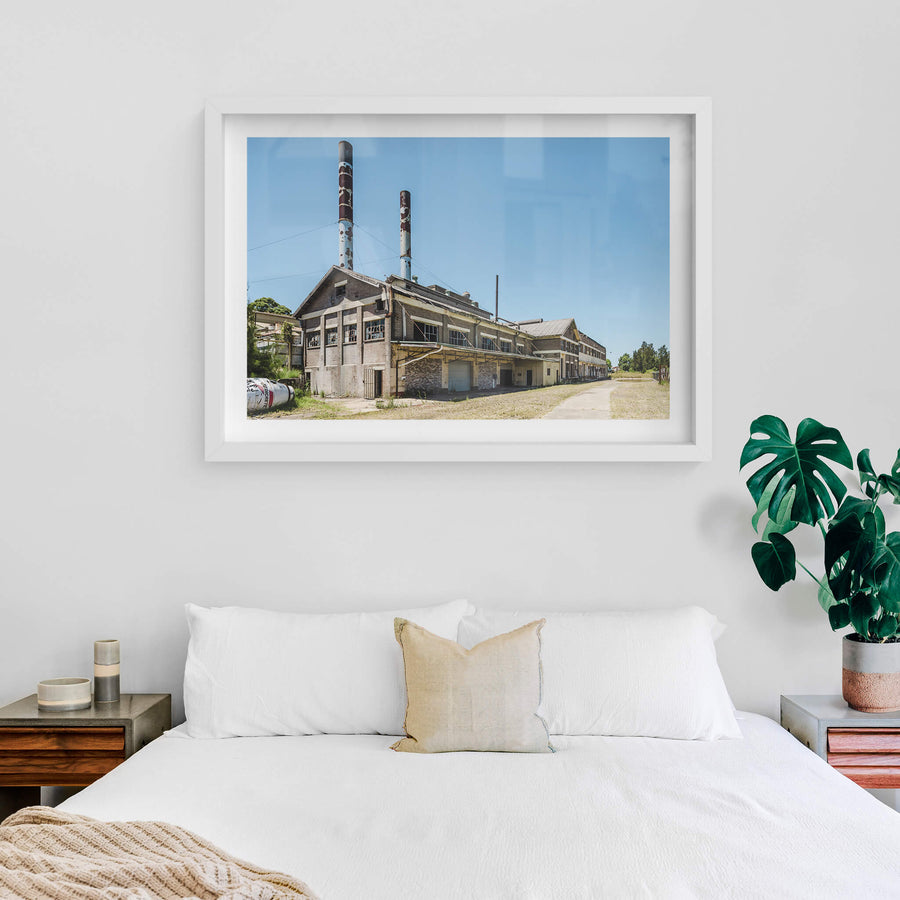
The engine room facade faces into direct sunlight, casting long shadows across corrugated iron cladding. The iron panels are faded and muted, their surface marked by years of weather and exposure. No signage or machinery is visible in the frame. The facade reads as a flat industrial elevation, plain and utilitarian.

Edition
Open edition

Open edition
Printed to order, no fixed quantity. Each print is hand-signed by the photographer.

Limited edition
A fixed number of prints exist. Once sold, the edition closes permanently. Each print is individually numbered and signed.

$100.00 AUD
Size
Type
Colour
Signed, numbered, with COA. Made to order in 5 to 10 business days (unframed). Shipped in protective packaging with edition certificate, paper-stock reference and a printed care guide.
See certificate sample →

Shipping Free shipping over $250. Ships worldwide, rates calculated at checkout.

Returns Damaged in transit? We replace it. Full policy →

Ships within 10 business days · signed & numbered

In situ
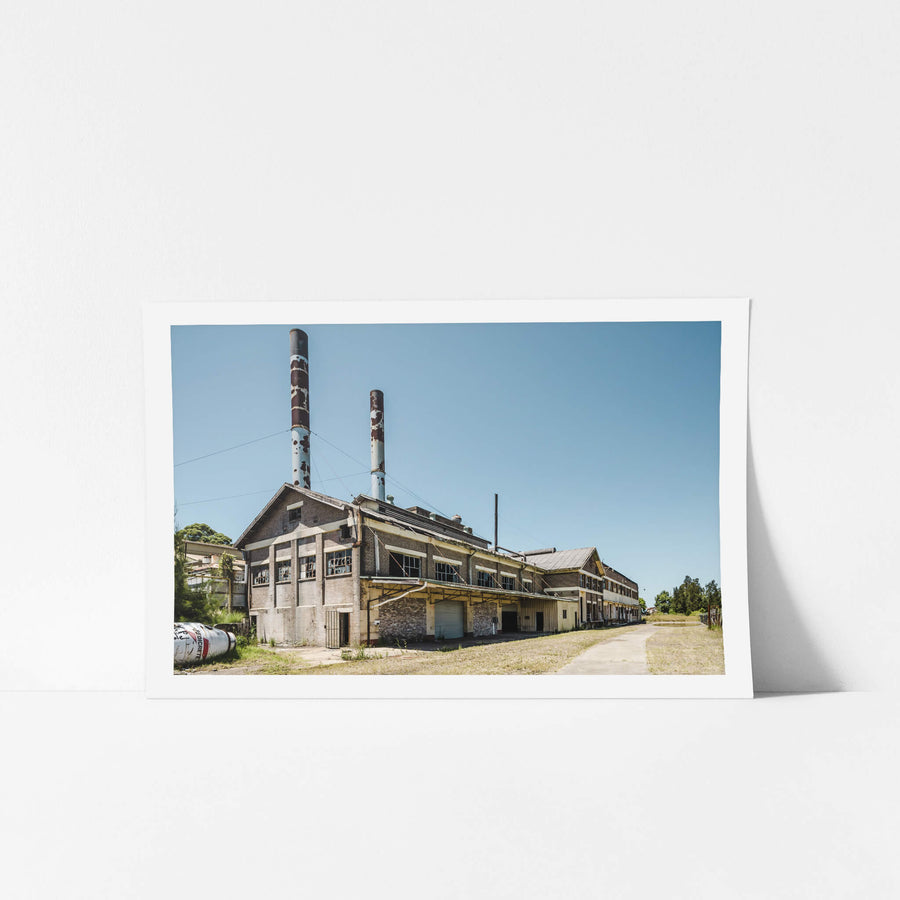
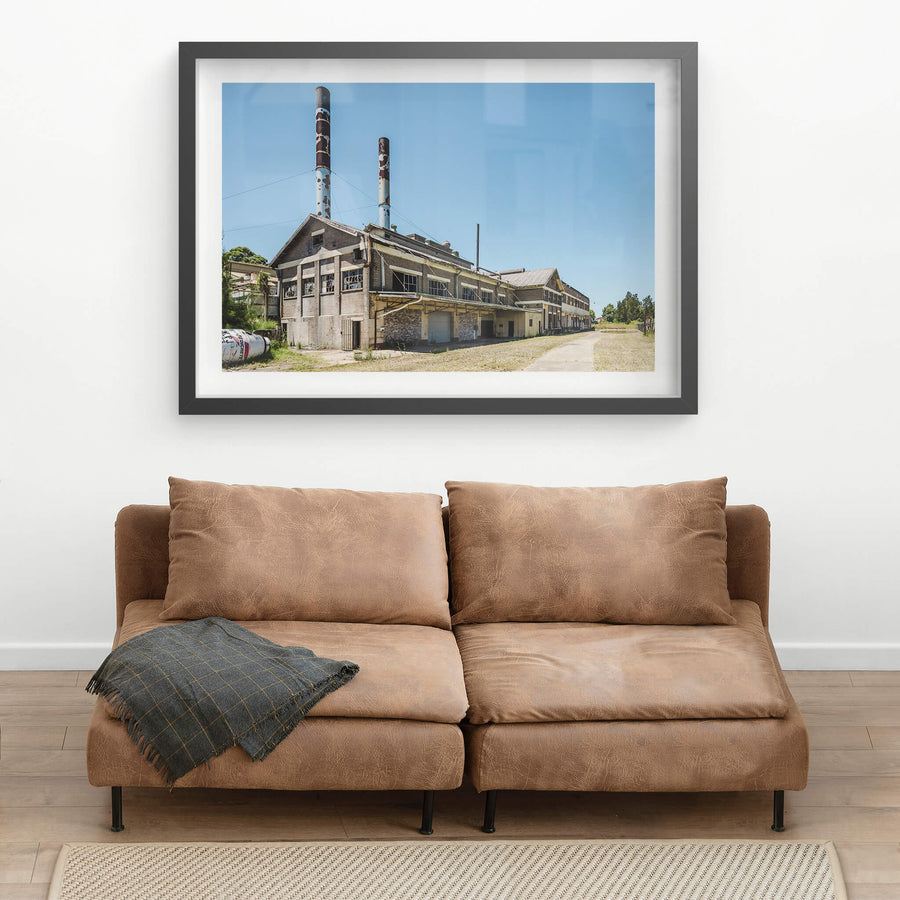
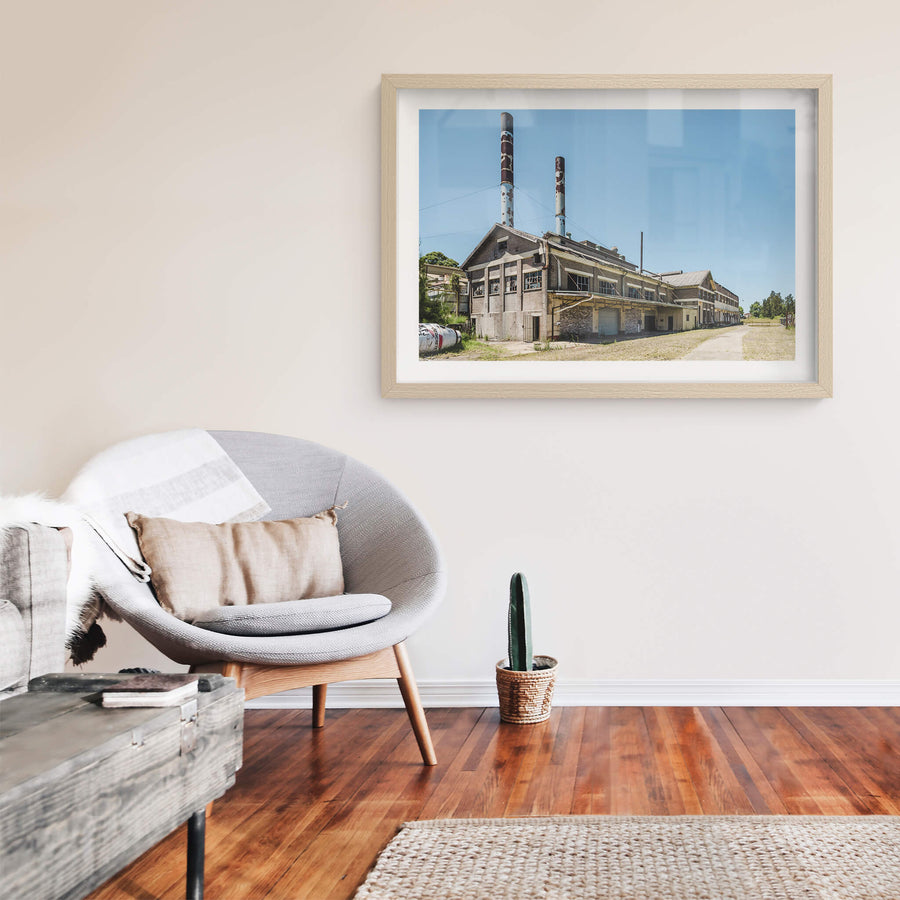
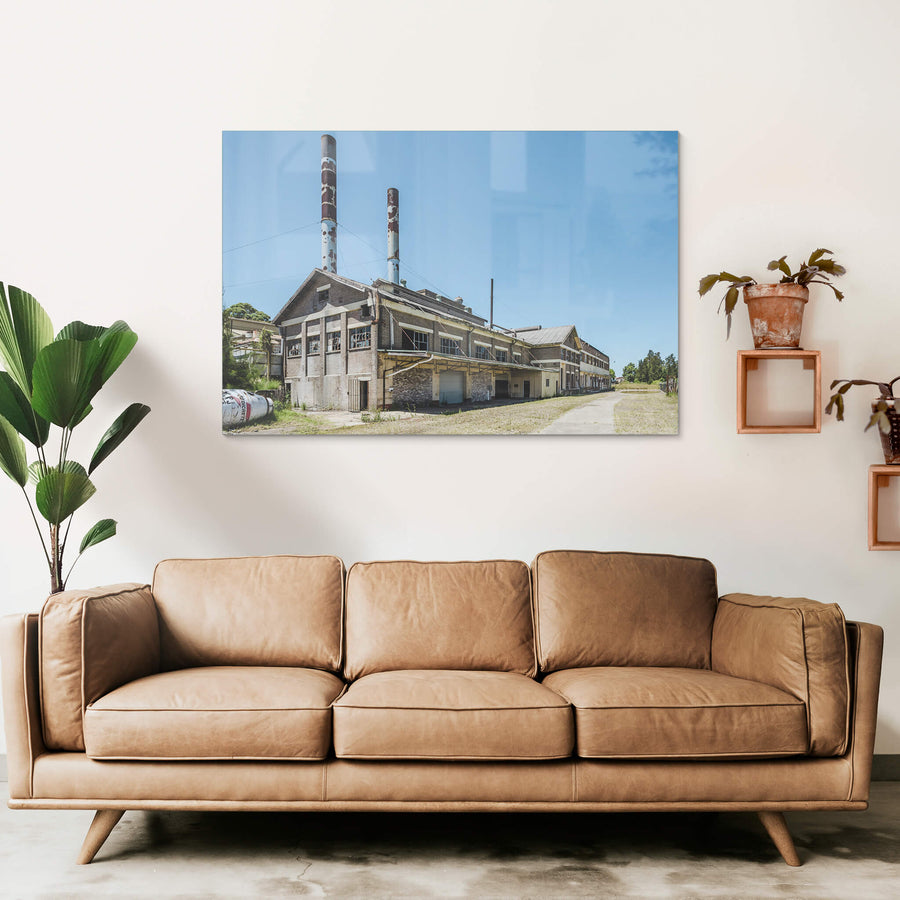
Engine Room Facade at Peters Ice Cream Factory, two steel smokestacks rise above the engine room block, their pale blue paint peeling away in large patches to expose dark rust beneath.Engine Room Facade at Peters Ice Cream Factory, two steel smokestacks rise above the engine room block, their pale blue paint peeling away in large patches to expose dark rust beneath.Engine Room Facade at Peters Ice Cream Factory, two steel smokestacks rise above the engine room block, their pale blue paint peeling away in large patches to expose dark rust beneath.Engine Room Facade at Peters Ice Cream Factory, two steel smokestacks rise above the engine room block, their pale blue paint peeling away in large patches to expose dark rust beneath.Engine Room Facade at Peters Ice Cream Factory, two steel smokestacks rise above the engine room block, their pale blue paint peeling away in large patches to expose dark rust beneath.
01 PROVENANCE

Print datasheet

Title
Engine Room Facade
Series
Peters Ice Cream Factory
Catalogue
PIC-010
Process
Giclée
Captured
14 February 2016
Camera
NIKON D7000
Lens
14.0-24.0 mm f/2.8
Aperture
f/8.0
Shutter
1/640 s
ISO
100
Focal length
21 mm
Paper
Ilford Galerie Smooth Cotton Rag 310 gsm
Paper size
290 × 200 mm
Location
Taree, New South Wales, Australia
Recognised by
Highly Commended in Multimedia at the 2016 National Trust of Australia (NSW) Heritage Awards
02 LOCATION

Taree, New South Wales, Australia

Map · Mapbox · OpenStreetMap

03 THE STORY

About this print

The corrugated iron panels of the engine room facade at Peters Creameries Pty Ltd Factory in Chatham have taken on the muted, washed-out tone that comes from decades of direct sun and coastal weather. Photographed in 2016, the exterior elevation is plain and utilitarian: flat iron sheeting, long shadows, and the kind of industrial plainness that makes no concessions to appearance. The building was never meant to be looked at. It was meant to work. The factory was built in 1938-1939 on Railway Parade, Chatham, on land purchased from Christen Christensen. The building contractor was D. Gallagher, who had extensive dairy factory construction experience but died before the factory was completed. His estate finished the job. The factory opened on 4 November 1939 before a crowd of approximately 5,000 people, with the Minister for Works and Local Government officiating and a temporary stage erected with broadcasting and amplification equipment. The cost was approximately £60,000. Inside the building that this facade enclosed sat four Babcock and Wilcox boilers, two large air compressors, and steam-driven machinery with a capacity of 1,000 gallons of milk per hour. The plant was purpose-built for dairy processing: condensed milk and butter initially, then ice cream, milk powder, oil, and yoghurt across subsequent decades. Milk was collected within a 20-mile radius; cream came from farms up to 50 miles away, including via the Manning River by boat. Peters Creameries Pty Ltd was the operating entity at Chatham, a subsidiary of Peters' American Delicacy Co. Ltd, a national dairy corporation founded in Sydney in 1907 by Frederick Augustus Bolles Peters, an American immigrant credited with introducing commercial ice cream manufacture to Australia. The factory closed in the late 1990s following corporate rationalisation under successive owners. The building has remained standing at Chatham since, largely empty and vandalised. This photograph records the engine room facade as it stood in 2016.

04 FROM THE FIELD NOTES

The engine room facade at Peters Creameries Pty Ltd Factory in Chatham sits in hard sunlight, its corrugated iron panels faded to near-uniformity by decades of exposure. The factory was built in 1938-1939 by contractor D. Gallagher on land purchased from Christen Christensen, opening on 4 November 1939 before a crowd of approximately 5,000 people. Inside, four Babcock and Wilcox boilers drove a steam plant capable of processing 1,000 gallons of milk per hour. The factory closed in the late 1990s and has stood largely empty since.

Brett Patman

Peters Ice Cream Factory

The series

Peters Ice Cream Factory

2016 · 32 photographs

Peters Ice Cream Factory opened on 4 November 1939 on the bank of the Manning River at Chatham, a suburb of Taree. The opening drew approximately 5,000 people. Peters Creameries built the plant for around £60,000, with a steam-driven capacity of 1,000 gallons of milk per hour and a boiler house running four Babcock and Wilcox boilers. Cream was delivered by boat from farms along the Manning River for four decades, a trade that ran until around the 1970s. The factory made ice cream, butter, milk powder, oil, and yoghurt, and was the main employer in the Manning Valley until it closed in the late 1990s. The building still stands at Chatham, deteriorating. Listed in 1990 on the local heritage register (Greater Taree, now MidCoast Council).

View all in this series →

05 SIZE GUIDE

Print sizes

The anatomy view shows what this finish is as a physical object: paper margin, mat band, frame depth, acrylic profile. The comparison strip shows how each size sits relative to the others at true scale. Click a size or a finish to update both.

Anatomy · true ratio
TypeSizeWidthHeight
08 BY POST · NO SPAM

Read the full story

Articles when they're published. The history behind a place. The day of a shoot. The work between prints. No marketing, no schedule.

You're subscribed.