
Top Plate View
Provenance
- Camera
- NIKON D850
- Lens
- 14.0-24.0 mm f/2.8
- Settings
- 14mm · f/7.1 · 0.8s · ISO 64
- Paper
- Ilford Galerie Smooth Cotton Rag 310 gsm
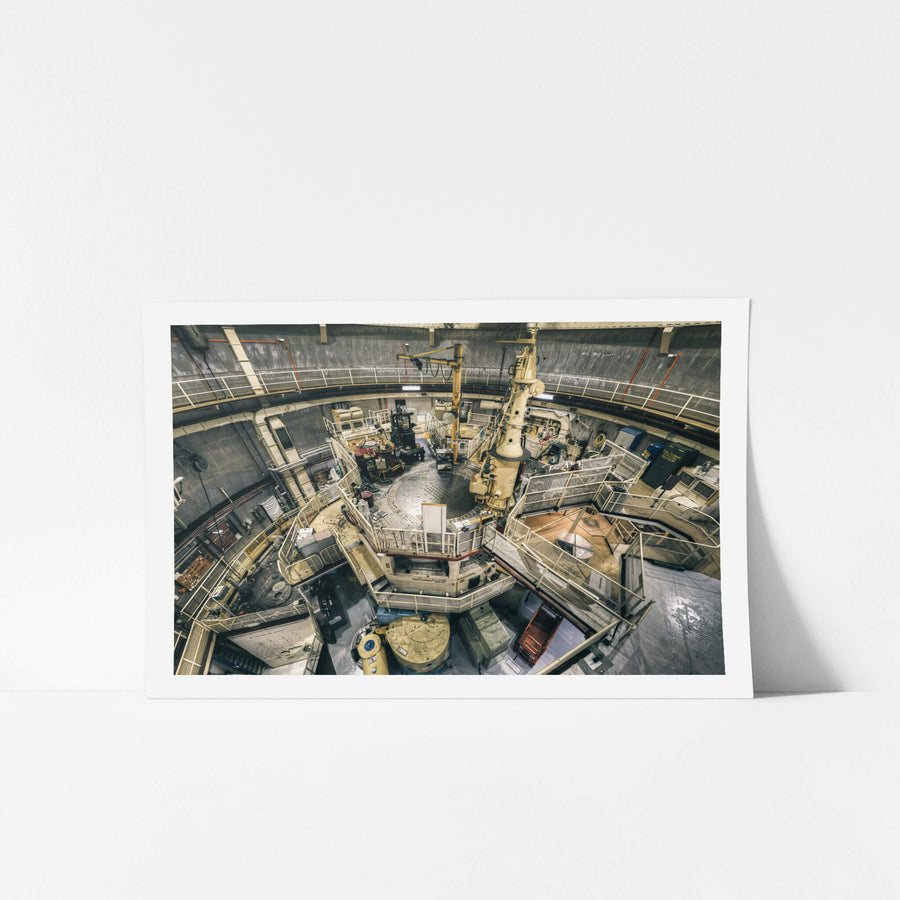
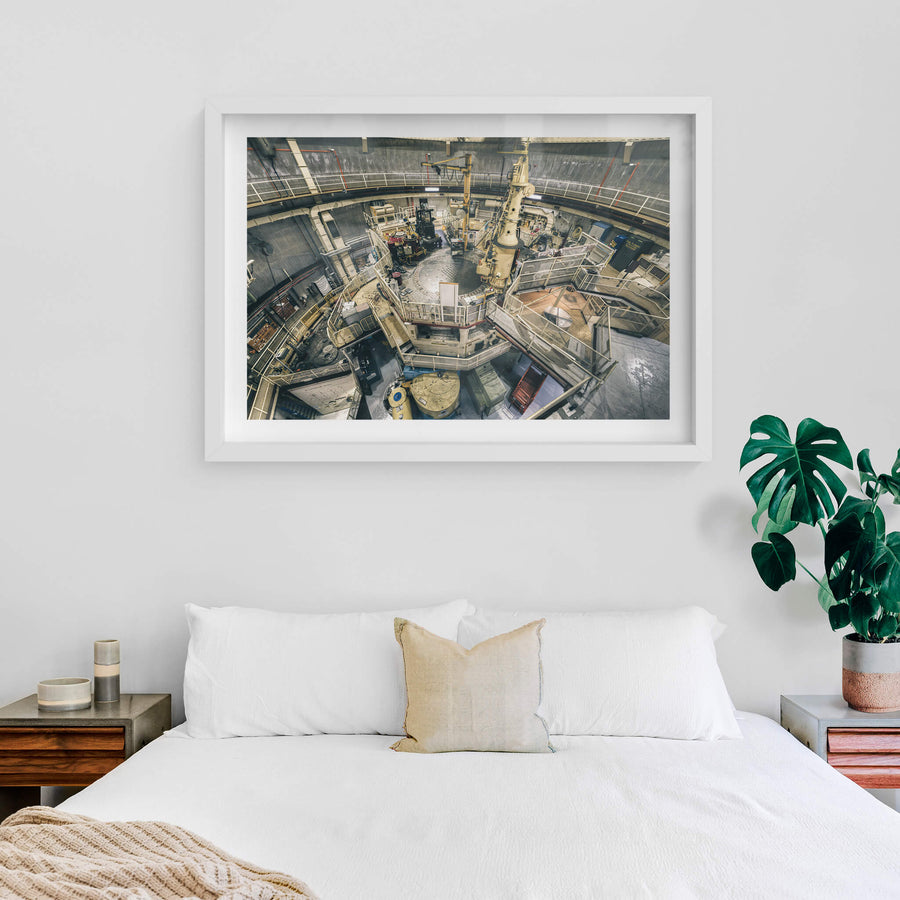
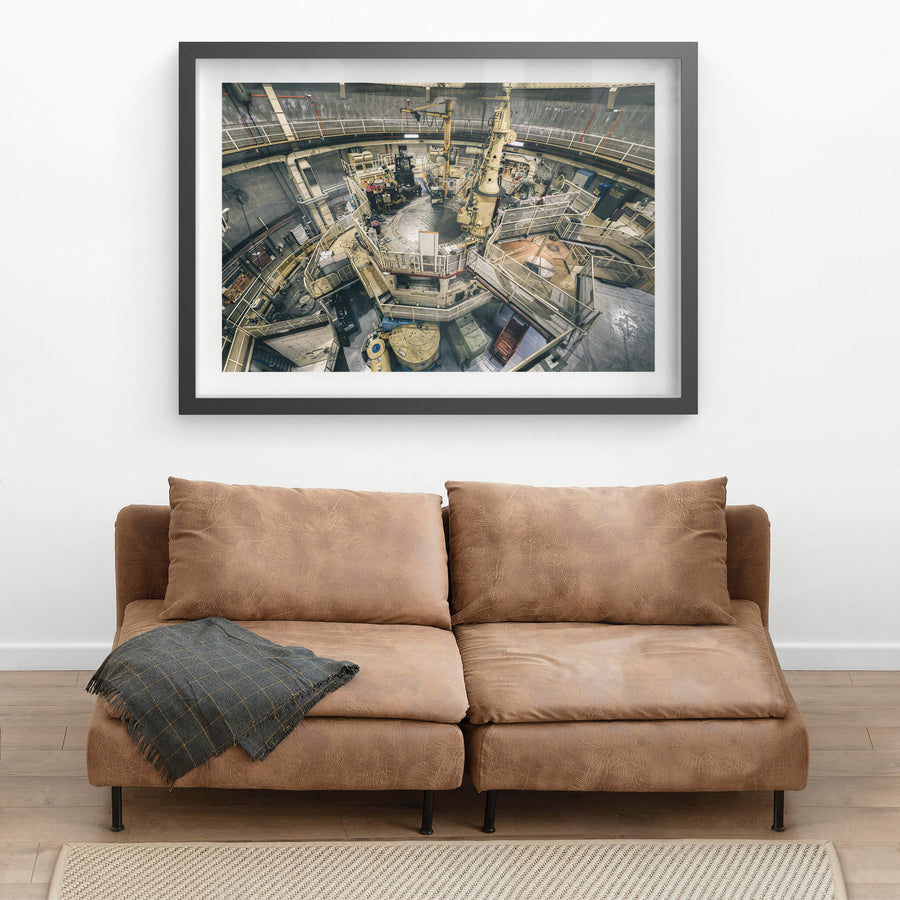
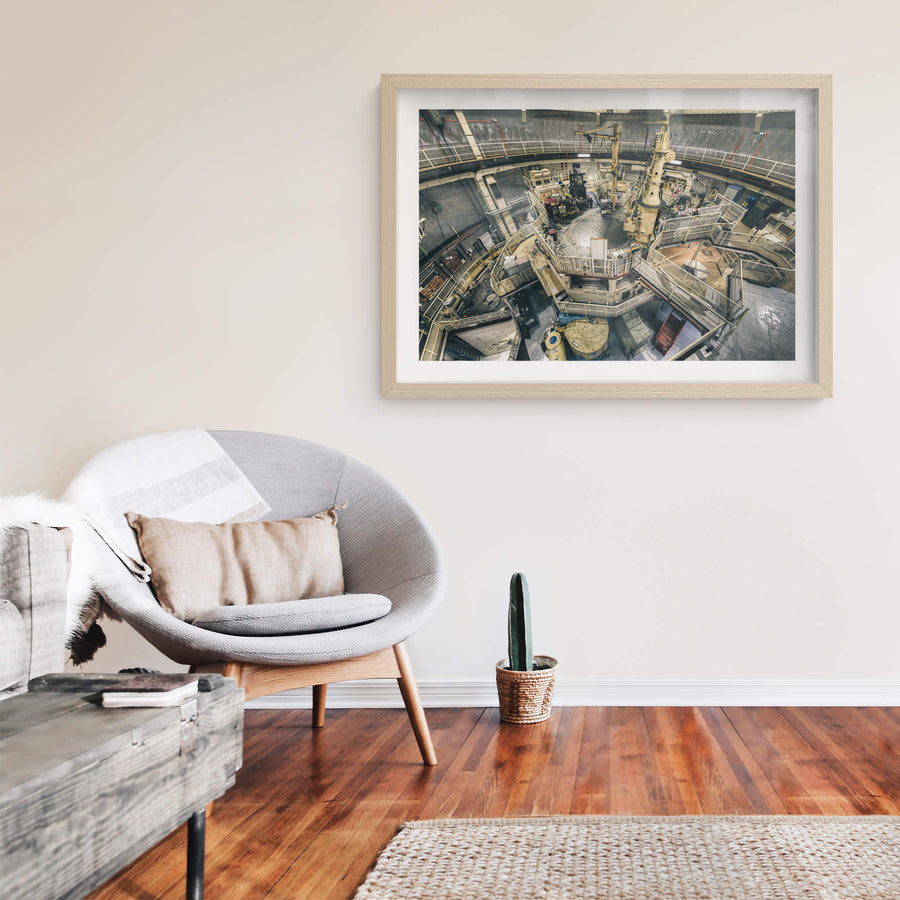
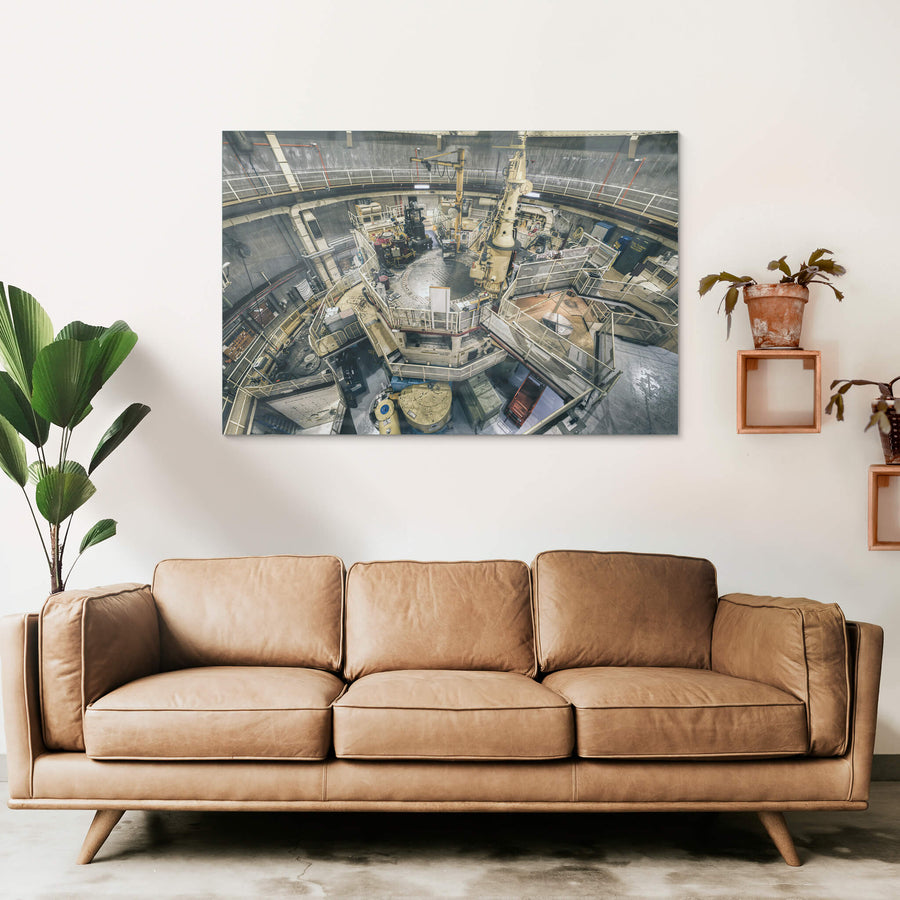
The top plate, seen from the catwalk. Smaller flasks on its left side, used to load silicon billets for irradiation. Fans around the outer walls of the building, each able to remove 80 kW of heat in an emergency.
Open edition
Printed to order, no fixed quantity. Each print is hand-signed by the photographer.
Limited edition
A fixed number of prints exist. Once sold, the edition closes permanently. Each print is individually numbered and signed.
Shipping Free shipping over $250. Ships worldwide, rates calculated at checkout.
Returns Damaged in transit? We replace it. Full policy →
Ships within 10 business days · signed & numbered
In situ
Print datasheet
- Title
- Top Plate View
- Series
- ANSTO HIFAR
- Catalogue
- AHF-035
- Process
- Giclée
- Captured
- 7 October 2022
- Camera
- NIKON D850
- Lens
- 14.0-24.0 mm f/2.8
- Aperture
- f/7.1
- Shutter
- 0.8s s
- ISO
- 64
- Focal length
- 14 mm
- Paper
- Ilford Galerie Smooth Cotton Rag 310 gsm
- Paper size
- 297 × 210 mm
- Location
- Lucas Heights, New South Wales, Australia
- Authenticity
- C2PA verified provenance →
- Recognised by
- Highly Commended in Multimedia at the 2016 National Trust of Australia (NSW) Heritage Awards
Lucas Heights, New South Wales, Australia
Map · Mapbox · OpenStreetMap
About this print
The top plate, seen from the catwalk inside the reactor containment building. The smaller flasks on its left side were used to load silicon billets for irradiation, and the billets were then used by their owners to manufacture chips and electronics.
Brett Patman

The series
ANSTO HIFAR
The High Flux Australian Reactor (HIFAR) was Australia's first nuclear reactor, a research reactor at the Australian Atomic Energy Commission's Lucas Heights establishment in southern Sydney, critical from 26 January 1958 and shut down on 30 January 2007. The British firm Head Wrightson Processes built it to the design of Harwell's DIDO, moderated and cooled by heavy water. Its 25 fuel elements sat in an aluminium tank beneath a round steel top plate, at first-floor level inside a white cylindrical steel containment building under a 20-ton circular crane.
Print sizes
The anatomy view shows what this finish is as a physical object: paper margin, mat band, frame depth, acrylic profile. The comparison strip shows how each size sits relative to the others at true scale. Click a size or a finish to update both.
| Type | Size | Width | Height |
|---|


