Small Arches

Provenance

Camera
NIKON D850
Lens
14.0-24.0 mm f/2.8
Settings
14mm · f/8.0 · 1/5 · ISO 100
Paper
Ilford Galerie Smooth Cotton Rag 310 gsm

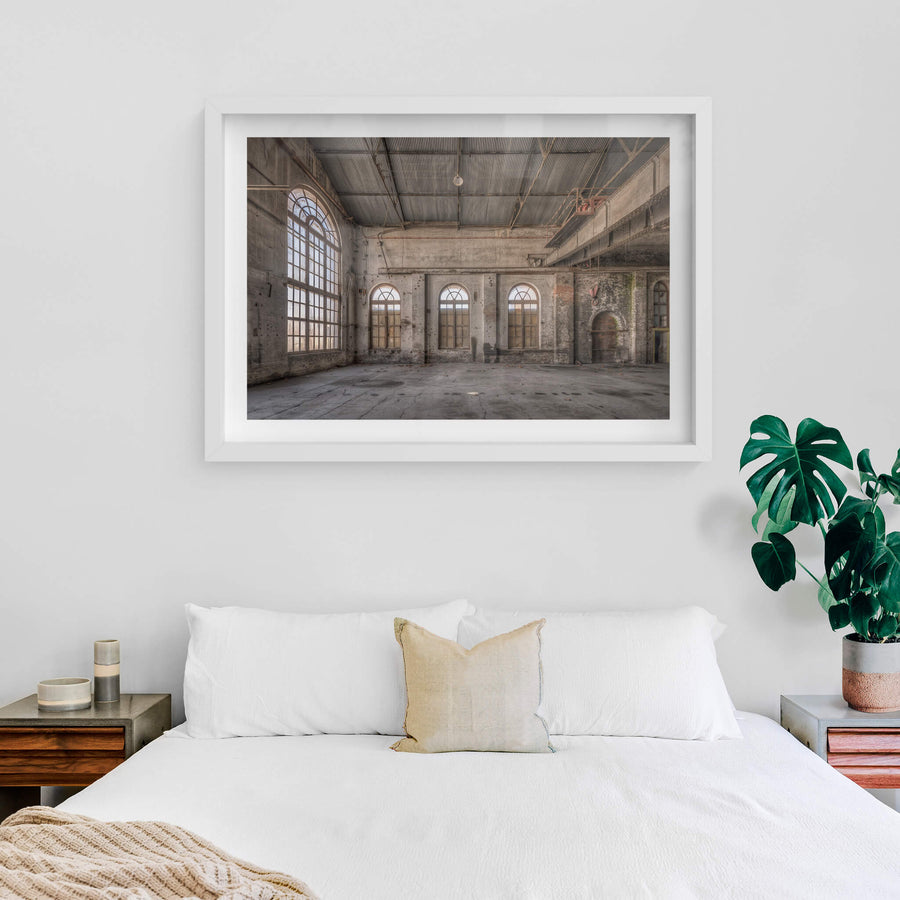
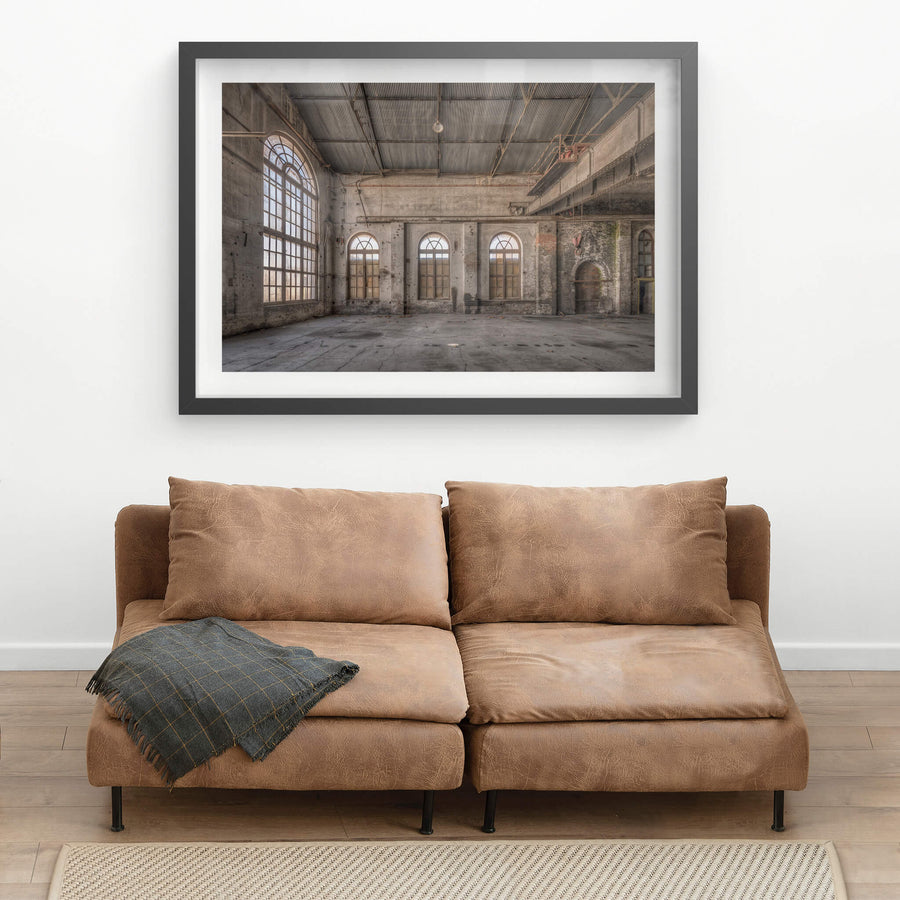
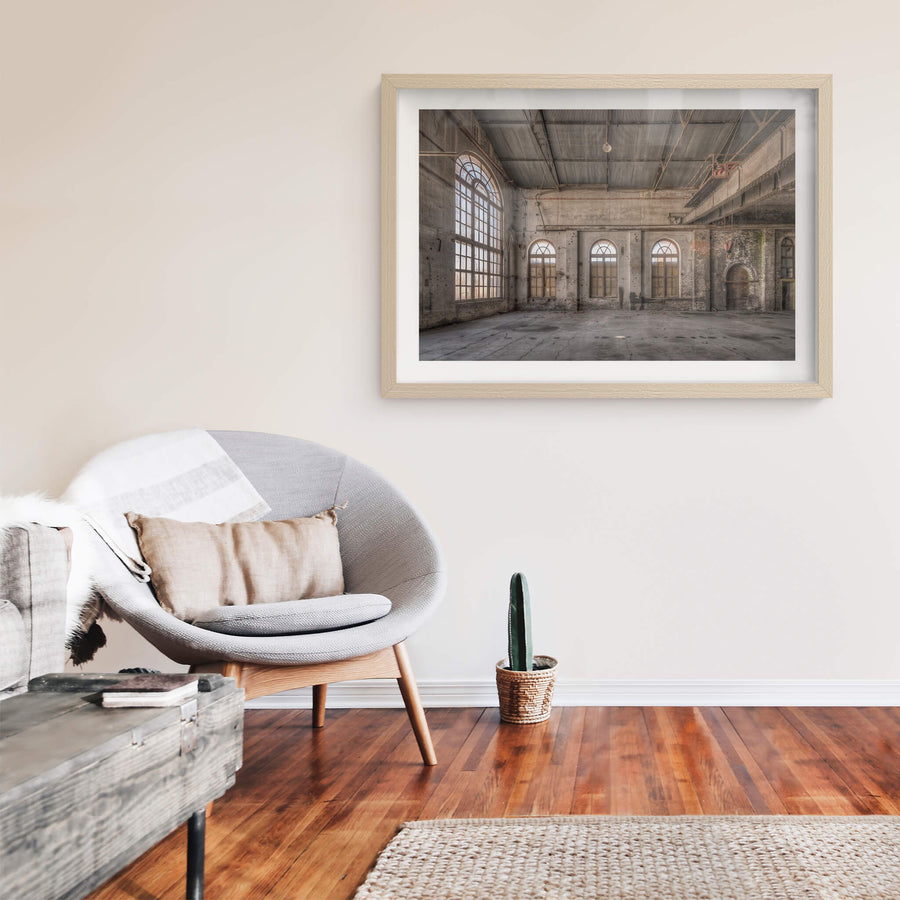
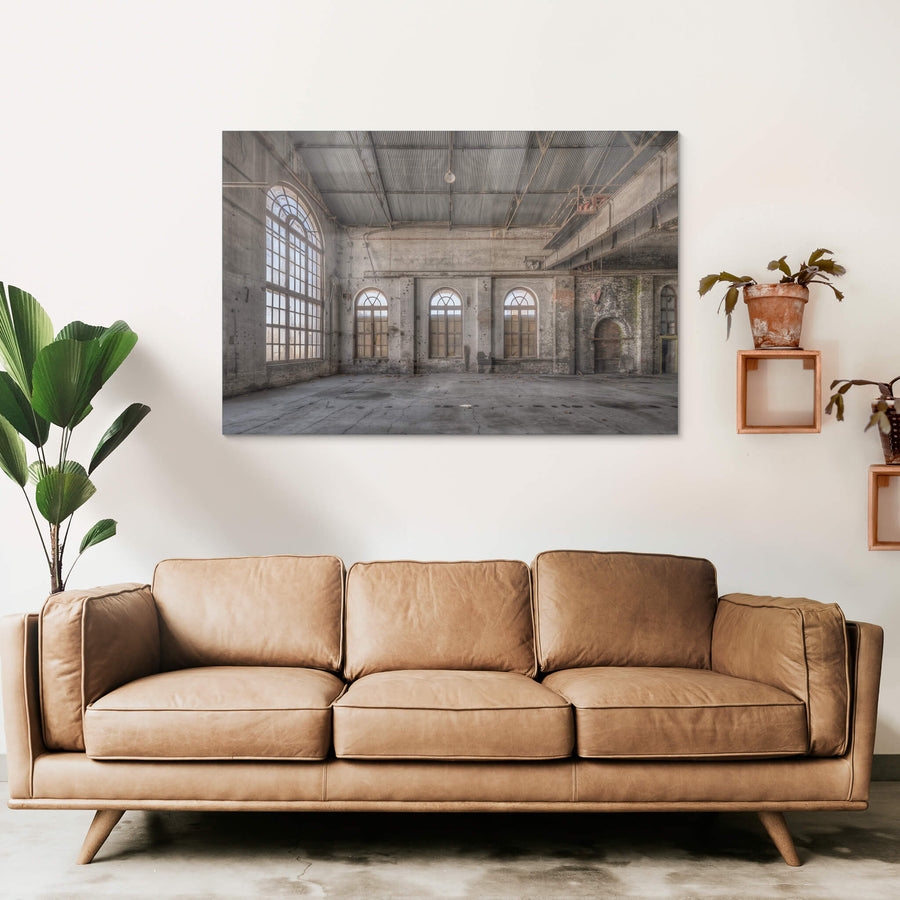
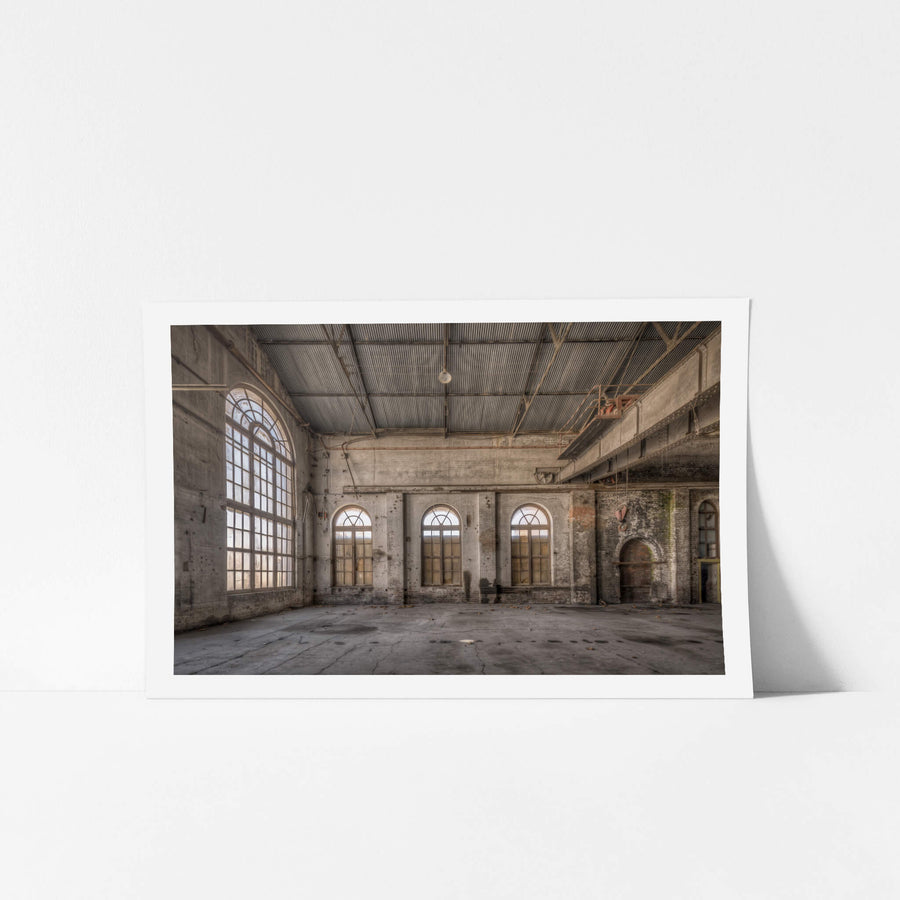
Stone arches stand in the foreground, framing the remains of an earlier structure. Dust coats exposed concrete surfaces. Daylight reaches the interior through open masonry openings. Vegetation is absent from the immediate frame. The stonework shows no recent repair.

Edition
Open edition

Open edition
Printed to order, no fixed quantity. Each print is hand-signed by the photographer.

Limited edition
A fixed number of prints exist. Once sold, the edition closes permanently. Each print is individually numbered and signed.

$100.00 AUD
Size
Type
Colour
Signed, numbered, with COA. Made to order in 5 to 10 business days (unframed). Shipped in protective packaging with edition certificate, paper-stock reference and a printed care guide.
See certificate sample →

Shipping Free shipping over $250. Ships worldwide, rates calculated at checkout.

Returns Damaged in transit? We replace it. Full policy →

Ships within 10 business days · signed & numbered

In situ
Small Arches at Portland Cement Works, unframed print displayed in situ on a wall.Small Arches at Portland Cement Works, white-framed print displayed in situ on a wall.Small Arches at Portland Cement Works, black-framed print displayed in situ on a wall.Small Arches at Portland Cement Works, raw timber-framed print displayed in situ on a wall.Small Arches at Portland Cement Works, glass print displayed in situ on a wall.
01 PROVENANCE

Print datasheet

Title
Small Arches
Series
Portland Cement Works
Catalogue
PCW-038
Process
Giclée
Captured
22 July 2018
Camera
NIKON D850
Lens
14.0-24.0 mm f/2.8
Aperture
f/8.0
Shutter
1/5 s
ISO
100
Focal length
14 mm
Paper
Ilford Galerie Smooth Cotton Rag 310 gsm
Paper size
290 × 200 mm
Location
Portland, New South Wales, Australia
Recognised by
Highly Commended in Multimedia at the 2016 National Trust of Australia (NSW) Heritage Awards
02 LOCATION

Portland, New South Wales, Australia

Map · Mapbox · OpenStreetMap

03 THE STORY

About this print

Stone arches stand at Portland Cement Works in Portland, NSW, framing the remnants of the original structure. Dust has settled across exposed concrete. The masonry openings let daylight reach surfaces that once formed part of a working industrial complex. Nothing has been repaired or cleared. What remains is simply what time and weather have left behind. The site has deep roots. Thomas Murray built the first lime kilns at Portland in 1863. By 1889, the Cullen Bullen Lime and Cement Company was producing Portland cement under the "Kangaroo" brand, making it the first firm in NSW to successfully manufacture Portland cement. That operation failed by 1895. After two further failed ventures, British-owned New Zealand Mines Trust purchased the Portland leases in 1899 and appointed Dr August Wilhelm Karl Scheidel, a metallurgist with a PhD from Freiberg University, to rebuild the plant entirely. The Commonwealth Portland Cement Company registered in December 1900. Cement production commenced on 4 August 1902 under the "Union" brand. The rotary kiln technology Scheidel introduced from Germany was, at that moment, at the global leading edge of cement manufacturing. By 1904, the Lithgow Mercury described Portland as "the largest cement-making plant to be found in the whole of the Commonwealth." By 1912, the works accounted for approximately 40% of all Portland cement manufactured in Australia. Production continued under successive owners: Associated Portland Cement Manufacturers UK from the late 1940s, Blue Circle Southern Cement Ltd from 1974, and Boral Limited from 1992. Cement production ceased in November 1991. The limestone quarries remained operational until 1998, supplying crushing material to the Maldon works. The Portland Cement Works Precinct was added to the NSW State Heritage Register on 3 August 2012. This photograph, made in 2018, records the stone arches as they stood that year: intact, unrestored, and still carrying the weight of what the site once was.

04 FROM THE FIELD NOTES

Stone arches frame what remains of the original structure at Portland Cement Works in Portland, NSW. The Commonwealth Portland Cement Company registered in December 1900 and began cement production on 4 August 1902, using rotary kiln technology that was at the global leading edge at the time. By 1912, the works produced approximately 40% of all Portland cement manufactured in Australia. Cement production ceased in November 1991. The site was added to the NSW State Heritage Register in 2012.

Brett Patman

Portland Cement Works

The series

Portland Cement Works

2018 · 44 photographs

Portland Cement Works in central western NSW began as a limestone quarry in 1863 and produced lime then cement on and off from the late 1880s. The Commonwealth Portland Cement Company, formed in December 1900, completed the main works in 1902 and built the distinctive arched-window powerhouse between 1900 and 1903 - its iron girders shipped from the same English manufacturer that supplied the Eveleigh Railway Yards. The works lit Portland's streets from 1910. The Off White cement that came out of the works in the 1960s became the basis of the Portland Cement brand still used in Australia. Production ran on a dry process until 1928, then a wet process from the 1940s, then under Blue Circle Southern Cement after the 1974 BHP merger. Cement ceased in 1991; quarrying ended in 1998. Listed on the NSW State Heritage Register on 3 August 2012. The site is now owned by AWJ Civil; Guido van Helten's silo murals, painted in April and May 2018, depict six former Portland Cement workers.

View all in this series →

05 SIZE GUIDE

Print sizes

The anatomy view shows what this finish is as a physical object: paper margin, mat band, frame depth, acrylic profile. The comparison strip shows how each size sits relative to the others at true scale. Click a size or a finish to update both.

Anatomy · true ratio
TypeSizeWidthHeight
08 BY POST · NO SPAM

Read the full story

Articles when they're published. The history behind a place. The day of a shoot. The work between prints. No marketing, no schedule.

You're subscribed.