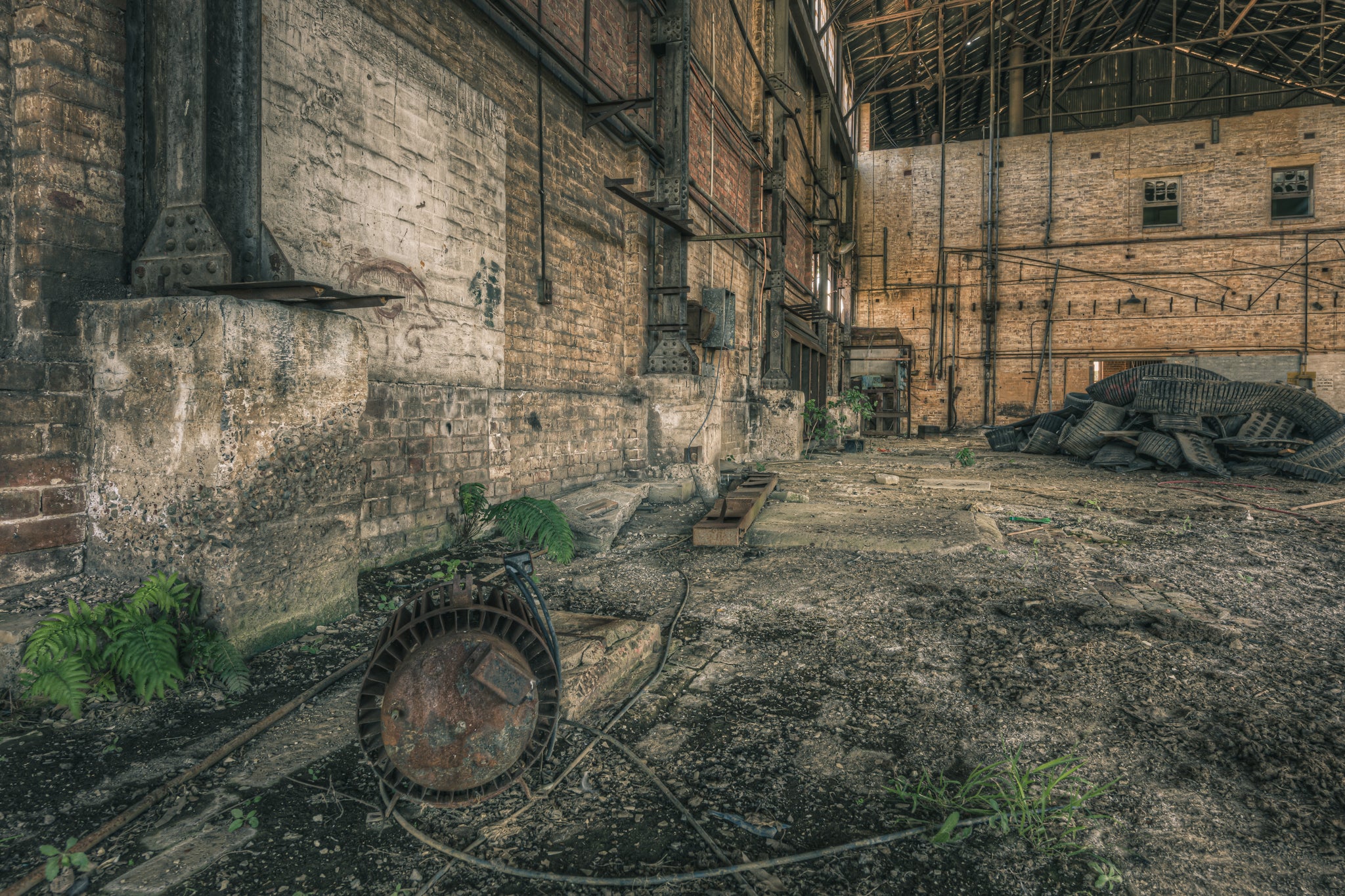
Elrington Colliery was a BHP coal mine near Kearsley and Cessnock in New South Wales, on the South Maitland coalfield. Sinking began in January 1925, and the colliery closed in December 1962. It was established to supply coal to BHP's Newcastle steelworks. Its two shafts were 18 feet in diameter and lined with concrete throughout, where other collieries in the district were lined with brick, and coal was struck 1,195 feet down on 15 December 1927. It was planned to produce 3,000 tonnes a day and never did.
BHP Collieries Pty Ltd, in which Hebburn Ltd held shares, owned Elrington Colliery and a holding of 3,900 acres. BHP meant the mine to pioneer modern methods of coal extraction, and in 1935 its jubilee review found 'an early impression of modernity' in surface buildings of brick and steel. The Greta seam was worked by bord and pillar, and 8-ton battery locomotives hauled trains of three-ton steel skips on 3 ft 6 in gauge track to the No. 2 shaft.
Before the Coal Commission in November 1929 the manager said Elrington Colliery should have been raising 300 to 500 tons a day but had never exceeded 40, and blamed labour disputes that had cost 460 working days since sinking began. In June 1954, when the Newcastle Morning Herald said it produced some of Australia's best gas coal, 20 mineworkers were to be laid off, and in 1957 its 245 mine workers were on strike for six weeks.
By late October 1962 the closure of Elrington pit, with 250 mineworkers, had been announced for the end of the year, and more than 1,500 people met at Weston in protest. The miners were dismissed on 20 December 1962. From 17 June 1964 Elrington Engineering Pty Ltd gave the surface facilities 'a new lease of life'; it later became Elrington Industries, and by June 1997 a council report referred to the former Elrington Industries. The photographs show the engine house, workshops, washhouse, lamp cabin and two-storey pay and manager's office, heritage listed since 3 November 1989 and now within Cessnock LEP 2011 item I215.